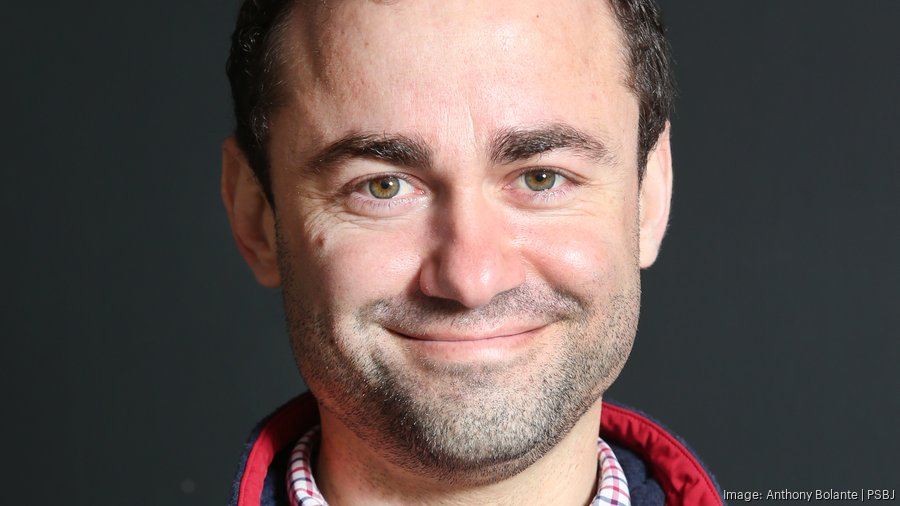
Matthew Oppenheimer
About Matthew Oppenheimer
Matthew Oppenheimer, 42, co‑founded Remitly in 2011 and serves as Chairman and Chief Executive Officer; he previously worked at Barclays plc from 2009–2011 and holds an MBA from Harvard Business School and a BA from Dartmouth College . Remitly reported 2024 revenue of $1.264 billion (+34% YoY), with customers up 32% to 7.8 million and send volume up 38% to $54.6B, while GAAP net loss was $36.98M in 2024; since the 2021 IPO, company TSR (value of $100 initial investment) was $47 at 12/31/2024 versus $40 at 12/31/2023 . The board cites his banking experience and founder/CEO tenure as qualifications for service on the board .
Past Roles
| Organization | Role | Years | Strategic Impact |
|---|---|---|---|
| Remitly Global, Inc. | Co‑Founder, Chairman & CEO | 2011–Present | Board highlights his banking industry experience and service as co‑founder/CEO as qualifications for board service . |
| Barclays plc | Employee (banking) | 2009–2011 | Pre-Remitly experience at a multinational bank . |
External Roles
| Organization | Role | Years | Notes |
|---|---|---|---|
| BECU (Boeing Employees’ Credit Union) | Director | Current | Remitly discloses current service on BECU’s board . |
Fixed Compensation
| Metric (USD) | 2022 | 2023 | 2024 |
|---|---|---|---|
| Base Salary | $290,000 | $290,000 | $290,000 |
| Annual Bonus | — | — | — |
| All Other Compensation | $3,125 | $1,149 | $6,100 |
| Total Reported Compensation | $293,125 | $291,149 | $296,100 |
Notes:
- Remitly does not provide annual cash bonuses or non‑equity incentive plans; equity is the primary at‑risk element for executives .
- CEO pay ratio: 10.3:1 in 2024 (CEO $296,100 vs median employee $28,684) and 17.2:1 in 2023 .
Performance Compensation
- Program design: No annual cash incentive plan; emphasis on multi‑year equity vesting to align with long‑term value creation .
- CEO equity awards: Oppenheimer declined new equity awards in 2023 and 2024 to limit dilution and support broader employee equity grants .
- Pay vs performance: Company discloses it does not use specific financial performance measures to link “compensation actually paid” to Company performance under SEC Item 402(v) .
| Incentive Element | Metric(s) | Weighting | Target | Actual/Payout | Vesting Terms |
|---|---|---|---|---|---|
| Annual Cash Incentive | Not offered | N/A | N/A | N/A | N/A |
| Long‑term Equity (CEO 2023–2024) | N/A (no new grants accepted) | N/A | N/A | N/A | N/A |
| Legacy Options (granted prior years) | Stock price appreciation | N/A | N/A | N/A | See “Outstanding Awards & Vesting” below |
Equity Ownership & Alignment
| Ownership Metric | As of 3/31/2024 | As of 3/31/2025 |
|---|---|---|
| Beneficial Ownership (shares) | 7,181,048 | 6,817,957 |
| Beneficial Ownership (%) | 3.7% (out of 192,294,023 shares) | 3.3% (out of 203,825,893 shares) |
| Options Exercisable within 60 days | 2,503,027 (incl. 354,167 early‑exercisable subject to repurchase) | 2,503,027 |
| Shares Pledged | None disclosed for Oppenheimer (pledge noted for another director) | |
| Hedging Policy | Hedging prohibited for directors/officers/employees |
Implications:
- Significant founder ownership (3.3%) and large in‑the‑money option position indicate material alignment with equity value creation .
- No disclosed pledging by Oppenheimer; company allows pledges only with pre‑approval under strict guidelines; a separate director (not the CEO) has a pledge .
Outstanding Awards & Vesting (CEO)
| Grant | Exercisable / Unexercisable | Exercise Price | Expiration | Vesting Terms |
|---|---|---|---|---|
| Option (7/13/2018) | 1,703,027 / — | $1.70 | 7/13/2028 | Monthly tranches: 10% in year 1 from 4/1/2018; 15% in year 2; 20% in year 3; 25% in year 4; 30% in year 5 . |
| Option (5/11/2021) | 375,000 / — | $6.55 | 5/11/2031 | 1/11 vested 5/1/2023; then 1/11 monthly thereafter . |
| Option (8/12/2021) | 318,750 / 106,250 | $14.11 | 8/12/2031 | 1/12 vested 4/1/2024; then 1/12 monthly thereafter . |
Observations:
- CEO holds only options (no RSUs outstanding), with a majority already vested; next material time‑based vesting relates to the 8/12/2021 grant through 2031 .
- Potential near‑term “forced selling” from large RSU cliffs is unlikely given absence of CEO RSUs; option exercises and tax‑related sales may still occur opportunistically .
Employment Terms
| Scenario | Cash (Salary Multiple) | COBRA Coverage | Bonus Multiple | Equity Acceleration |
|---|---|---|---|---|
| Termination (outside CIC) | 12 months (lump sum) | Up to 12 months | — (no annual cash bonus plan) | 25% of unvested equity accelerates (CEO only) |
| Double‑Trigger CIC (termination within CIC window) | 18 months (lump sum) | Up to 18 months | 150% of target bonus (CEO) | 100% of unvested equity accelerates |
Estimated benefits if terminated as of 12/31/2024:
- Outside CIC: Cash $290,000; Health $26,235; Equity acceleration $224,723 .
- Within CIC: Cash $435,000; Health $39,352; Equity acceleration $898,875 .
Notes:
- Agreements are double‑trigger for CIC; CEO is the only NEO with “good reason” protection outside the CIC period .
- Remitly does not provide excise tax “gross‑ups” on CIC payments .
Board Governance (Service, Roles, Dual‑Role Implications)
- Director class and term: Class III; term to 2027 .
- Roles: Chairman of the Board and CEO (dual role); Phillip Riese serves as Lead Independent Director to enhance independent oversight and preside at executive sessions; the board views this structure as appropriate given experience and oversight needs .
- Independence: All directors except Oppenheimer and co‑founder Joshua Hug are independent under Nasdaq standards .
- Committees: CEO serves on no committees; all committees are composed of independent directors (Audit & Risk; Talent & Compensation; Nominating & Corporate Governance) .
- Meeting attendance: Each director attended at least 75% of board/committee meetings in 2024; seven of nine directors attended the 2024 annual meeting .
Performance & Track Record
| Metric | 2023 | 2024 |
|---|---|---|
| Customers (Q4, millions) | 5.9 (+41% YoY) | 7.8 (+32% YoY) |
| Send Volume (FY, $B) | 39.5 (+38% YoY) | 54.6 (+38% YoY) |
| Revenue (FY, $B) | 0.944 (+44% YoY) | 1.264 (+34% YoY) |
| GAAP Net Loss (FY, $M) | (117.84) | (36.98) |
| TSR (Value of $100 since IPO) | $40 (to 12/31/2023) | $47 (to 12/31/2024) |
Compensation Committee & Peer Benchmarking
- Independent T&C Committee; uses Compensia as independent consultant; conducts annual reviews of compensation structure, peer group selection, equity vesting norms, and risk assessments .
- 2024 peer group for setting 2024 NEO pay included: ACIW, AFRM, BILL, BL, EVTC, FLYW, LC, LSPD, MQ, NRDS, PCTY, PAY, PAYO, QTWO, FOUR, Smartsheet Inc., Squarespace Inc., Wise plc, ZoomInfo; changes made for comparability .
- Say‑on‑Pay: ~98% approval at 2024 annual meeting for 2023 NEO compensation .
Related‑Party Transactions and Policies
- No related‑party transactions requiring disclosure since January 1, 2024, other than standard compensation arrangements .
- Insider Trading Policy prohibits hedging; pledging allowed only with pre‑approval and within T&C‑approved limits; one director (not the CEO) has a line‑of‑credit pledge .
Investment Implications
- Alignment and dilution discipline: Founder‑CEO with 3.3% ownership and significant in‑the‑money options creates strong equity alignment; declining new equity awards in 2023–2024 reduces dilution risk and signals confidence in long‑term value creation .
- Limited cash/leverage to performance: Fixed salary of $290k and no annual bonus concentrates CEO compensation on stock performance; however, Remitly does not tie pay to explicit financial targets under Item 402(v), limiting direct pay‑for‑performance optics despite equity orientation .
- Retention/change‑of‑control: Double‑trigger CIC fully accelerates CEO equity and provides 18 months’ salary (plus 150% target bonus per agreement), offering robust protection in a sale scenario and potentially smoothing CEO transition risk; outside CIC, only 25% equity acceleration applies, moderating turnover costs .
- Trading signals: CEO has no RSUs and already‑vested options dominate, so large scheduled RSU‑driven selling pressure is unlikely; watch optional exercises/sales around tax planning and approaching 2028/2031 option expirations .
- Governance: Dual Chairman/CEO model is mitigated by a lead independent director and fully independent committees; CEO is non‑independent, which some governance frameworks flag, but Remitly’s structure mirrors many founder‑led fintechs .
- Performance backdrop: Strong topline growth and improving losses underpin equity‑based alignment; TSR improved from $40 to $47 (2023 to 2024), but continued GAAP losses warrant monitoring of profitability milestones in future cycles .