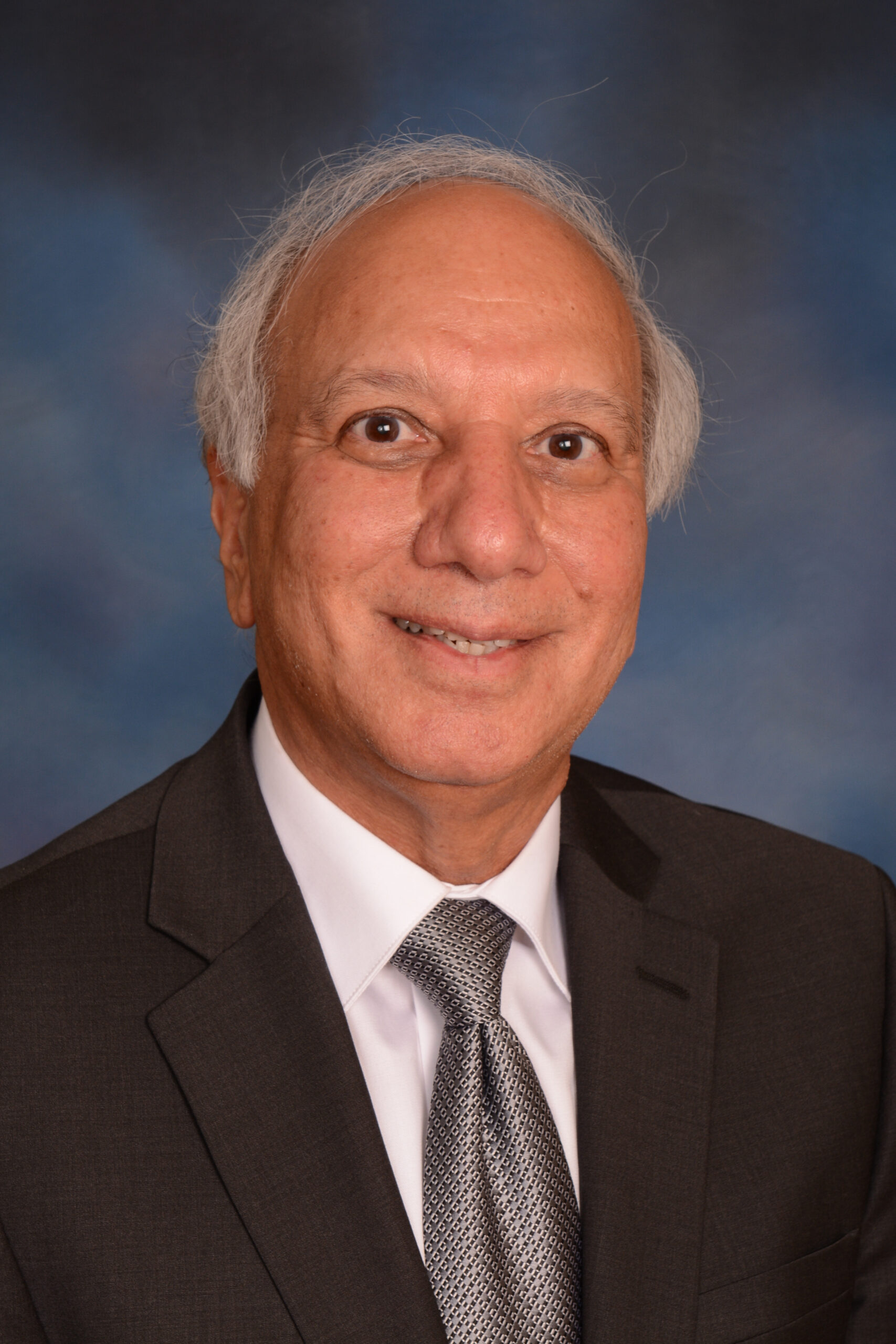
Zafar Rizvi
About Zafar Rizvi
Zafar A. Rizvi, 75, is Chief Executive Officer (since 2015), President (since 2010), and a director of REX American Resources; prior roles include President of Farmers Energy (since 2006), VP (2006–2010), and VP—Loss Prevention (1991–2006) . He is a management (non‑independent) director and serves on the Board’s Executive Committee; the Board employs an independent Lead Director structure with David S. Harris as Lead Director since 2015 to counterbalance executive influence . Pay-versus-performance disclosures show CEO “compensation actually paid” tracks company outcomes, with TSR compounding from $100 to $166.04 over 2020–2024; Net Income and Adjusted Net Income have also increased since 2022 .
Company performance snapshot (fiscal years ended Jan 31):
| Metric | FY 2022 | FY 2023 | FY 2024 |
|---|---|---|---|
| Total Shareholder Return – $100 initial value | $130.26 | $164.75 | $166.04 |
| Net Income ($) | $27,697,000 | $60,935,000 | $58,167,000 |
| Adjusted Net Income (Company-selected measure) ($) | $41,730,719 | $93,933,283 | $88,047,834 |
| Revenues ($) | $855,000,000* | $833,384,000* | $642,491,000* |
| EBITDA ($) | $43,751,000* | $86,633,000* | $80,256,000* |
*Values retrieved from S&P Global.
Past Roles
| Organization | Role | Years | Strategic Impact |
|---|---|---|---|
| REX American Resources | Chief Executive Officer; Director | 2015–present | Led strategy/execution; board-level leadership |
| REX American Resources | President & Chief Operating Officer | 2010–2015 | Drove operations and profitability |
| Farmers Energy Inc. (REX subsidiary) | President | 2006–present | Oversight of alternative energy investments |
| REX American Resources | Vice President | 2006–2010 | Corporate management roles |
| REX American Resources | VP—Loss Prevention | 1991–2006 | Risk and operational controls |
External Roles
- No external public company directorships disclosed in the proxy filings reviewed .
Fixed Compensation
- Base salary: $275,000; unchanged in FY 2024; increased from $225,000 in May 2022 per Pearl Meyer market assessment .
Summary Compensation Table – CEO (grant-date values; fiscal years ended Jan 31)
| Year | Salary ($) | Stock Awards ($) | Non‑Equity Incentive ($) | All Other ($) | Total ($) |
|---|---|---|---|---|---|
| 2022 | 275,000 | 2,292,721 | 1,408,412 | 200 | 3,976,333 |
| 2023 | 275,000 | 2,617,799 | 3,170,248 | 200 | 6,063,247 |
| 2024 | 275,000 | 990,538 | 2,971,614 | 200 | 4,237,352 |
Notes:
- Base salary levels for CEO/CFO/Executive Chairman remained the same in FY 2024; the 2022 amendment set CEO salary at $275,000 .
Performance Compensation
Annual Incentive Program (Formulaic, company-wide)
- Metric and formula: 4.5% of Adjusted Net Income (non‑GAAP), subject to a $5,000,000 annual cap; awards are purely formulaic with no discretionary adjustments . Adjusted Net Income adds back incentive and stock comp, applies a 1.33 multiplier to net income, and excludes defined development losses for certain new projects through year two of operations .
- Payout mix: 75% cash, 25% time‑vested restricted stock granted mid‑June following year-end, vesting in three equal annual tranches .
- FY 2024 outcome for CEO: Total annual incentive earned $3,962,152; cash paid $2,971,614; grant-date fair value of stock portion $990,538 .
Annual Incentive Structure and FY 2024 Outcome (CEO)
| Metric | Weighting | Target/Formula | Actual | Payout | Vesting |
|---|---|---|---|---|---|
| Adjusted Net Income | N/A (formulaic) | 4.5% of Adjusted Net Income; max $5,000,000 | As reported; calculated per plan | $3,962,152 (75% cash; 25% RS) | RS vests 1/3 on each of first 3 anniversaries |
Clawbacks:
- NYSE‑compliant Compensation Recovery Policy effective Nov 15, 2023 for incentive comp tied to financial reporting metrics; recovery regardless of fault .
- Additional programmatic clawback: future bonuses reduced to recoup 50% of any prior pre‑tax losses before paying a new bonus .
Long‑Term Incentive (Performance‑based RSUs – granted 2022)
- 2022 TSR Awards (grant adjusted for 3‑for‑1 split): CEO target 45,000 RSUs; performance vs Russell 2000 TSR over 1/1/2022–12/31/2024; payout 0–200% (max 100% if Company TSR negative); earned at 148% (74th percentile), resulting in 66,600 shares vested on Feb 25, 2025 .
- FY 2024: no new LTIP grants to NEOs (only the annual incentive RS grants) .
2022 TSR Award Design and Outcome (CEO)
| Performance Metric | Period | Target RSUs | Payout Curve | Actual Percentile | Payout % | Shares Vested |
|---|---|---|---|---|---|---|
| Relative TSR vs Russell 2000 | 1/1/2022–12/31/2024 | 45,000 | 0% ≤40th; 50% >40th; 100% >50th; 150% >75th; 200% ≥90th (cap 100% if negative TSR) | 74th percentile | 148% | 66,600 (2/25/2025) |
Change‑in‑Control (CIC) treatment for 2022 TSR Awards:
- If CIC occurs during the performance period: deemed satisfied at greater of 150% of target or actual percentile; vesting/payment timing then depends on assumption/substitution by acquirer, with full vesting if not assumed .
Equity Ownership & Alignment
- Beneficial ownership: 359,547 shares (2.16% of 16,615,879 shares outstanding as of April 15, 2025); includes 69,905 unvested restricted shares that vote but cannot be disposed prior to vesting .
- Outstanding unvested time‑based restricted stock and vesting schedule (as of Jan 31, 2025): 69,905 shares; tranches scheduled on 6/16/2025 (34,958), 6/15/2026 (27,229), 6/15/2027 (7,718) .
- Insider trading, hedging, pledging: Directors and executive officers are prohibited from pledging REX securities, from holding them on margin, and from engaging in hedging or derivative transactions involving REX stock .
Unvested Time‑Based RS and Vesting (as of 1/31/2025)
| Unvested RS at FY‑end | Market Value Ref. (1/31/2025 close) | Vesting 6/16/2025 | Vesting 6/15/2026 | Vesting 6/15/2027 |
|---|---|---|---|---|
| 69,905 | $2,916,437 | 34,958 | 27,229 | 7,718 |
Potential selling pressure watchpoints:
- Annual RS grants occur mid‑June with three‑year ratable vesting; monitor trading windows around mid‑June vest dates and 10b5‑1 plan activity, noting policy constraints on hedging/pledging .
Employment Terms
Key terms (as amended effective Feb 1, 2022):
- Base salary: $275,000 .
- Annual incentive: 4.5% of Adjusted Net Income; annual cap $5,000,000 .
- CIC/Severance economics: If terminated without cause or for good reason within 12 months post‑CIC, entitled to (i) balance of salary for remainder of employment period, (ii) 200% of prior-year incentive, but not less than $1,000,000 and capped at $6,000,000 for CEO (paid in cash, calculated without respect to annual cap), and (iii) full exercisability/vesting of incentive awards .
- Non‑compete: one year post‑termination; confidentiality applies .
- Employment period reference date: January 31, 2025 noted as last day of an employment period in current agreements (agreements historically auto‑renewed in one‑year increments unless terminated) .
As‑of January 31, 2025 “Potential Payments” Illustrations (CEO)
| Scenario | Salary | Incentive Payment | Accelerated RS Vesting | 2022 TSR Awards | Total |
|---|---|---|---|---|---|
| Termination w/o Cause or for Good Reason (post‑CIC) | — | $6,000,000 | $2,916,437 | $2,778,552 | $11,694,989 |
| Death/Disability/Voluntary Termination | — | $3,962,152 | $2,916,437 | $2,778,552 | $9,657,141 |
Change‑in‑control equity impact:
- Unvested restricted stock generally vests upon death, disability, termination without cause, voluntary termination after 20 years of service and age 55, or for good reason within 12 months post‑CIC; subject to definitive agreement terms at CIC .
- 2022 TSR Awards: at CIC, deemed achieved at ≥150% or actual TSR; vesting depends on assumption/substitution; otherwise vests on CIC .
Board Governance
- Board service: Director since 2015; currently CEO and director (management director) .
- Committee roles: Member, Executive Committee (with Executive Chairman Stuart A. Rose) .
- Independence and counterbalances: Independence matrix does not mark Rizvi as independent; Board employs a Lead Independent Director (David S. Harris) with defined powers over agendas, executive sessions, and shareholder communication; Board evaluates combined/split Chair/CEO structure and currently separates roles (Executive Chairman: Rose; CEO: Rizvi) .
- Attendance: Board held six meetings in FY 2024; all directors attended 100% of Board and committee meetings except one director who exceeded 80% .
- Say‑on‑pay: Company notes supportive shareholder approval in 2024 .
Compensation Structure Analysis
- Heavy pay‑for‑profitability orientation: CEO annual incentive is a direct percentage of Adjusted Net Income, paid formulaically with no discretion and capped annually; 25% is delivered in time‑vested equity to build alignment .
- Long‑term alignment via relative TSR: 2022 TSR Awards paid at 148% on 74th percentile vs Russell 2000, converting to 66,600 vested shares; no new LTIP grants in FY 2024, increasing reliance on the annual formula and time‑vested RS from that program .
- Clawbacks and loss recoup provisions reduce windfall risk and emphasize multi‑year stewardship .
- Potential leniency in incentive construct: Adjusted Net Income definition applies a multiplier and excludes designated development losses; this can sustain bonuses during early‑stage investments, which investors should monitor .
Risk Indicators & Red Flags
- Pledging/hedging prohibited for directors/executives (mitigates alignment risk) .
- CIC treatment: TSR awards can vest at or above target upon CIC; broad acceleration of equity on certain terminations could raise transaction‑incentive concerns .
- Incentive metric adjustments: 1.33 multiplier and development loss carve‑outs merit scrutiny relative to “true” economic performance .
- Governance countermeasures: Independent Lead Director structure and full attendance help mitigate dual‑role influence (Executive Chairman and CEO are separate) .
Compensation Peer Group and Process
- Process: Pearl Meyer engaged to assess programs and recommend 2022 updates; resulted in salary/bonus market adjustments and adoption of relative TSR LTIP .
- 2022 peer group included companies across chemicals/energy/renewables (e.g., Aemetis, Green Plains, Intrepid Potash, U.S. Silica, etc.) .
- Role of executives: Compensation Committee sets CEO pay; approves all executive incentive payments; CEO provides recommendations for non‑executive officers .
Equity Ownership & Beneficial Holders (Context)
| Holder | Shares | % Outstanding |
|---|---|---|
| Zafar A. Rizvi (includes 69,905 unvested RS) | 359,547 | 2.16% (of 16,615,879) |
| All Directors/Officers (10 persons) | 2,311,509 | 13.91% |
| BlackRock, Inc. | 3,107,049 | 18.70% |
| Dimensional Fund Advisors LP | 1,233,671 | 7.42% |
| The Vanguard Group | 1,133,199 | 6.82% |
Investment Implications
- Alignment: Strong leverage to profitability via formulaic Adjusted Net Income bonus, with 25% equity delivery and a robust clawback framework; relative TSR LTIP achieved above target (148%), indicating outperformance versus small‑cap peers over 2022–2024 .
- Retention and potential overhang: Meaningful unvested RS tranches through 2027 and recently vested 66,600 TSR shares; watch mid‑June vest dates and 10b5‑1 activity for supply dynamics, subject to hedging/pledging prohibitions .
- Transaction dynamics: CIC terms (cash bonus up to $6M plus equity acceleration) and TSR award acceleration may create event‑driven optionality; model potential dilution/overhang and executive incentives in M&A scenarios .
- Governance comfort: Separation of Executive Chairman and CEO, Lead Independent Director oversight, and high attendance support governance; say‑on‑pay feedback has been supportive .
- Performance linkage: TSR and income measures have improved since 2022; however, investors should normalize for Adjusted Net Income methodology (multiplier/add‑backs) and track core profitability and cash generation trends alongside CAP disclosures .
SPGI financials note: Revenue and EBITDA figures marked with an asterisk (*) are values retrieved from S&P Global.