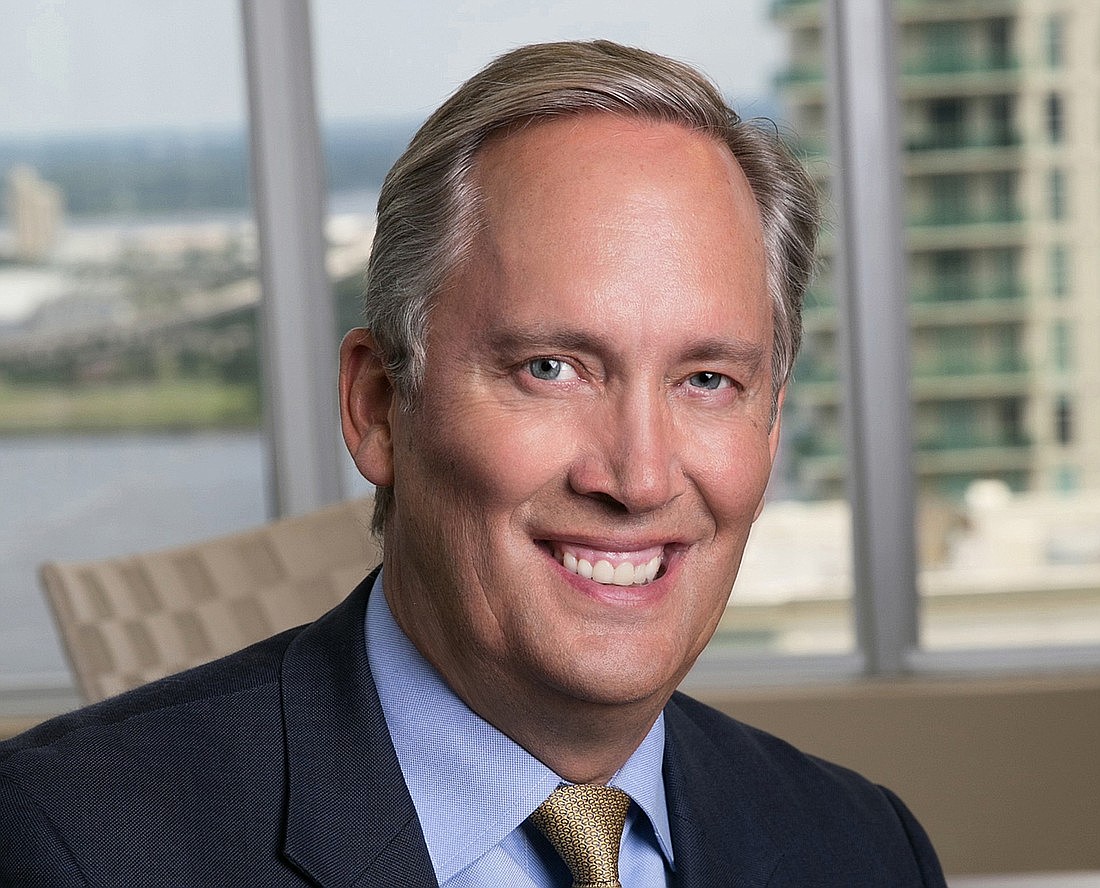
De Lyle W. Bloomquist
About De Lyle W. Bloomquist
President & CEO of Rayonier Advanced Materials (RYAM) since May 28, 2022; director since 2014; age 66; B.S., Brigham Young University; MBA, Carnegie Mellon University (Tepper) . Under his leadership, 2024 one-year TSR was 104% and adjusted EBITDA increased 60% year-over-year as the company reduced loss from continuing operations and strengthened liquidity, reflecting execution on the “Value over Volume” HPC strategy and biomaterials initiatives . In Q3 2025, core Cellulose Specialties approached normalized margins and management reiterated a plan to reach $300M+ run-rate EBITDA by end-2027, with targeted pricing resets, cost reductions (~$30M by 2026, additional $20M by 2027), and biomaterials EBITDA contribution ($31M proportional exiting 2027) .
Past Roles
| Organization | Role | Years | Strategic impact |
|---|---|---|---|
| Tata Chemicals Limited | President, Global Chemical Business | 2009–Mar 2015 | Led international inorganic chemical and fertilizer operations; retired Mar 2015 . |
| General Chemical Industrial Products Inc. | President & CEO | 2004–2009 | CEO through acquisition by Tata; executed industrial chemicals strategy . |
| General Chemical Group Inc. | Division VP & GM, Industrial Chemicals; VP & COO (roles of increasing responsibility) | 1991–2004 | Operations, finance, logistics, strategy and business development leadership across chemicals and materials . |
External Roles
| Organization | Role | Years | Notes |
|---|---|---|---|
| Şişecam Wyoming LLC (f/k/a Ciner Wyoming LLC) | Director | Current | Board oversight in soda ash/minerals . |
| Evoq Nano, Inc. | Director | Current | Advanced materials/nanotech oversight . |
| Carnegie Mellon University, Tepper School of Business | Board of Business Advisors | Current | Business school advisory board . |
| Sonoran Capital | Board of Advisors | Current | Advisory role . |
| Crystal Peak Minerals (f/k/a EPM Mining Ventures Inc.) | Director | Oct 2011–Nov 2021 | Resource project development governance . |
| PDS Biotechnology (f/k/a Edge Therapeutics Inc.) | Director | Dec 2006–Mar 2019 | Biotech governance . |
| Scientia Vascular LLC | Director | Oct 2017–May 2021 | Medtech oversight . |
| Huber Engineered Materials | Director | Jul 2010–Nov 2020 | Specialty materials board . |
| Vivos Therapeutics Inc. | Director | Apr 2018–Mar 2019 | Short tenure; dental sleep medicine . |
| Costa Farms, Inc. | Director | Jul 2016–Jul 2017 | Horticulture operations oversight . |
Fixed Compensation
| Year | Salary ($) | Non-Equity Incentive Paid ($) | All Other Compensation ($) | Total ($) |
|---|---|---|---|---|
| 2022 | 590,278 | 695,000 | 198,140 | 3,164,731 |
| 2023 | 1,000,000 | 606,000 | 54,611 | 3,732,138 |
| 2024 | 1,000,000 | 1,387,000 | 140,639 | 3,669,650 |
Additional 2024 “All Other” detail: tax/financial planning $0; 401(k) contributions $13,800; enhanced match $20,700; Excess Savings Plan company contribution $101,860; executive physical $3,050; miscellaneous $1,229 .
Target Bonus: CEO 100% of base salary (unchanged in 2024) .
Performance Compensation
| Metric | Weight | Threshold | Target | Maximum | Actual (2024) | Payout contribution |
|---|---|---|---|---|---|---|
| Adjusted EBITDA ($mm) | 50% | 166.4 | 208.0 | 249.6 | 211.5 | 53.7% |
| Adjusted Operating Cash Flow ($mm) | 20% | 53.7 | 67.1 | 87.2 | 97.2 | 40.0% |
| Strategic Objectives (Safety, Sustainability, Diversity) | 15% | Achieve 1 | Achieve 2 | Achieve 3 | Achieved 3 | 30.0% |
| Individual Objectives | 15% | — | — | — | CEO payout at 100% | 15.0% |
| Aggregate payout (% of target) | — | — | — | Cap 200% | — | 138.7% for CEO |
2024 Long-Term Incentive mix: CEO 65% PSUs, 35% performance cash; RSUs 0% (others receive RSUs) . PSU metrics: Relative TSR vs S&P SmallCap 600 Capped Materials Index (50%) and 3-year cumulative adjusted EBITDA (50%); TSR payout: 25th percentile=30%, 50th=100%, 75th=200% (cap at 100% if absolute TSR negative at ≥75th; 150% cap if >75th) . PSU performance period: Mar 1, 2024–Feb 28, 2027 .
2021 PSU outcome: Relative TSR and Adjusted HPC Segment EBITDA Margin both at 0% payout; awards not earned .
Equity Grants and Vesting
| Grant Year | Instrument | Grant Date | Target/Units | Fair Value ($) | Vesting |
|---|---|---|---|---|---|
| 2024 | PSUs | 3/1/2024 | 250,716 target units | 1,142,011 | 3-year cliff, performance-based (TSR/EBITDA) . |
| 2024 | Performance Cash Units | 3/1/2024 | $945,000 target; $283,500 threshold; $1,890,000 max | — | 3-year cliff (payout per performance) . |
| 2023 | RSUs | 3/1/2023 | 96,544 units | 810,004 | Time-based, 3-year cliff . |
| 2023 | PSUs | 3/1/2023 | 112,636 target units | 1,261,523 | 3-year cliff (TSR/EBITDA) . |
Outstanding equity at 12/31/2024 (selected): Unvested RSUs 130,209 (5/28/2022) and 96,544 (3/1/2023); unearned PSUs include 108,508 (5/28/2022), 167,506 (6/13/2022), 117,925 (7/13/2022), 112,636 and 56,318 (3/1/2023), and 250,716 (two lines for 2024 PSU tranches) .
Equity practices: No stock options granted since inception in 2014 .
Equity Ownership & Alignment
| Item | Detail |
|---|---|
| Beneficial ownership | 422,733 common shares; <1% of outstanding (percent denoted “*”) . |
| Unvested RSUs (excluded from beneficial ownership) | 96,544 shares (as of 3/17/2025) . |
| Stock ownership guidelines (CEO) | 6x base salary; executives must retain stock until guideline met; all executive officers in compliance as of Jan 1, 2025 . |
| Anti-hedging/anti-pledging | Hedging, short sales, options/trading strategies, and pledging prohibited for officers/directors (and immediate family/controlled entities); standing/limit orders only via approved Rule 10b5‑1 plans . |
Employment Terms
| Scenario | Cash Severance ($) | Annual Cash Incentive Severance ($) | Pension/401(k) ($) | Medical/Tax/Outplacement ($) | Equity Acceleration ($) |
|---|---|---|---|---|---|
| Involuntary termination (non-CIC) | 2,000,000 | 3,387,000 | — | 47,984 | 3,977,536 |
| Involuntary termination or Good Reason after CIC | 3,000,000 | 5,548,000 | 341,613 | 89,658 | 10,336,408 |
Change-in-control severance plan uses double-trigger (termination within 24 months of CIC) and “best net” excise tax approach; PSUs vest at target if ≤50% of performance period complete, else greater of target or actual achieved; RSUs do not auto-vest on CIC absent qualifying termination .
Deferred compensation: CEO contributions $49,500; company contributions $101,860; aggregate balance $355,372 (2024) .
Restrictive covenants/clawback: Long-term awards subject to clawback for accounting restatements (Dodd-Frank/NYSE) and “detrimental conduct”; restrictive covenants include repayment obligations if employed by a competitor within one year of award exercise/receipt; awards may be subject to forfeiture/adjustment per plan terms .
Board Governance
- Director since 2014 (Class III); not independent (only non-independent director in 2024) .
- Committee membership: Finance & Strategic Planning Committee (members: Kirsch, Bloomquist, Mariano, Smith); 5 meetings in 2024; oversight of capital structure, strategic planning, financings, equity issuance policy, pension assets, benefits, growth through innovation, tax strategy, hedging, insurance .
- Independent Chair (Lisa M. Palumbo) elected May 16, 2024; separation of Chair/CEO roles with 5 independent director executive sessions in 2024 .
- Board held 11 meetings in 2024; all directors met ≥75% attendance thresholds .
- Anti-hedging/anti-pledging; directors stock ownership and retention requirements; all directors in compliance as of Mar 17, 2025 .
Dual-role implications: CEO serving on Finance & Strategic Planning Committee centralizes strategic/capital oversight with management; mitigated by independent Chair, majority independent board (89% in 2024), and fully independent Audit/Compensation/Nominating/Sustainability committees .
Director Compensation (Bloomquist as director)
- Not compensated for board service while serving as executive officer .
Compensation Peer Group & Say-on-Pay
- Peer group (2024/2025 benchmarking): AdvanSix, Ecovyst, Glatfelter, H.B. Fuller, Hawkins, Ingevity, Innospec, Koppers, Mercer International, Minerals Technologies, Quaker Chemical, Sensient Technologies, Stepan, Tredegar .
- Say-on-Pay approvals: 2023—86.7% ; 2024—96.7% .
Performance & Strategy Highlights
- 2024 achievements: loss from continuing operations improved (from $(102)mm to $(42)mm); adjusted EBITDA +60%; 1-year TSR +104%; debt refinanced with $700mm secured term loan; €67mm green capital secured for biomaterials; first 2G bioethanol production in France; improved safety (-30% incident rate) .
- Q3 2025 snapshot: net sales $353mm; adjusted EBITDA $42mm; total liquidity $140mm; FY25 adjusted EBITDA guidance $135–$140mm; plan to more than double EBITDA over two years via pricing resets, ~$30mm 2026 structural cost savings, ~$20mm additional 2027 savings, and biomaterials projects .
Risk Indicators & Red Flags
- Performance awards truly at-risk: 2021 PSUs paid 0% (relative TSR and HPC EBITDA margin below threshold) .
- Commodity exposure/tariff sensitivity: Chinese fluff tariffs pressuring mix; mitigation underway (geographic mix; exploring dissolving wood pulp fluff to bypass tariffs, though cost currently exceeds tariff burden) .
- No hedging/pledging permitted, lowering alignment risk; robust clawback policies in place .
About Compensation Structure and Alignment
- High proportion of at-risk pay (target mix emphasizes PSUs and performance cash for CEO) tied to multi-year TSR and EBITDA; bonus metrics emphasize Adjusted EBITDA (50%) and cash conversion (20%), plus safety/sustainability/diversity (15%) and individual goals (15%) .
- Equity grants use $7 share price floor to conserve share usage (2024 grants) and avoid outsized dilution at depressed prices .
Investment Implications
- Alignment: CEO’s pay is heavily performance-based (PSUs/performance cash with rigorous TSR/EBITDA targets), anti-pledging/hedging policy, and 6x salary ownership guideline (in compliance), supporting long-term value creation .
- Near-term watch items: 2026 pricing reset success (management targets significant increases beyond inflation to recapture ~9–10 years of lost value), biomaterials FIDs and funding (AGE equity ~$46mm; ~$31mm proportional biomaterials EBITDA by 2027), and delivery of $30mm+ cost savings by 2026 .
- Risk: Performance awards can zero-out if targets missed (2021 precedent); tariff/FX headwinds and any delay in strategic pricing reset or biomaterials monetization could pressure payouts and insider selling dynamics around vesting windows .
- Governance: Independent Chair and fully independent key committees mitigate dual-role risks from CEO’s committee membership; majority-independent board and frequent executive sessions support oversight quality .