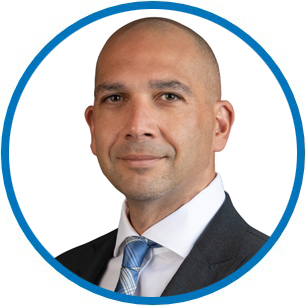
Ural Yal
About Ural Yal
Ural Yal, 48, is Chief Executive Officer of Shimmick Corporation and a director since 2024; he was appointed CEO effective December 2, 2024, and holds a civil engineering degree from Istanbul Technical University and an MBA from California State University, Dominguez Hills; he is also a licensed California civil engineer . FY2024 company context: Shimmick reported $480 million in revenue, ended the year with >$822 million backlog, and entered 2025 with ~$100 million liquidity following a 2024 Transformation Plan .
Past Roles
| Organization | Role | Years | Strategic Impact |
|---|---|---|---|
| Flatiron Construction | Executive Vice President; prior senior roles | 2017–2024 | Led expansion into new markets and projects delivered via risk-balanced, collaborative methods across large water and heavy civil infrastructure; drove growth initiatives |
| Prior career (various) | Field Engineer → Area Manager | n/a | Ground-up operating leadership, emphasis on California market project execution |
External Roles
- None disclosed for public company boards or external directorships beyond Shimmick .
Fixed Compensation
| Component | Terms | Source |
|---|---|---|
| Base Salary | $800,000 (per CEO offer letter) | |
| 2025 Annual Bonus Minimum | Guaranteed minimum equal to 80% of base salary (for 2025) | |
| Target Annual Bonus | 120% of base salary, metrics set by Board/CHC | |
| 2024 Salary Paid | $46,154 (prorated from 12/2/2024 start) | |
| Benefits/Perquisites | Executive life and AD&D (100% employer paid, 400% of annual earnings up to $2M); executive long-term disability (100% employer paid; 60% of monthly earnings up to $25,000) |
Performance Compensation
Cash Incentives
| Metric | Weighting | Target | Actual | Payout | Vesting/Timing |
|---|---|---|---|---|---|
| Annual Incentive (2025) | Not disclosed | 120% of base | n/a | Min 80% of base guaranteed for 2025 | Annual (per plan) |
| Annual Incentive (2024) | n/a | n/a | n/a | $0 for Yal (no non-equity incentive reported) | n/a |
Equity Awards (RSUs)
| Grant | Grant Date | Shares/Units | Fair Value at Grant | Vesting Schedule |
|---|---|---|---|---|
| Sign-on RSUs | 12/2/2024 | 180,180 | Part of $400,000 sign-on value | Cliff vest 12/2/2025, continued employment required |
| Annual RSUs (FY2024 award) | 12/2/2024 | 270,270 | Part of $600,000 annual value | 1/3 each on 12/2/2025, 12/2/2026, 12/2/2027, continued employment required |
Outstanding RSU market value at FY2024 year-end close ($2.96): Sign-on $533,333; Annual $799,999 .
Options
- No option awards reported for Yal; 2024 option award table lists options only for prior executives .
Equity Ownership & Alignment
| Category | Detail |
|---|---|
| Total Beneficial Ownership (as of 4/22/2025) | “-” (less than 1%); no common stock beneficially owned reported for Yal at record date |
| Vested vs. Unvested | Vested: 0; Unvested: 180,180 (sign-on) + 270,270 (annual) RSUs |
| Pledging/Hedging | Company policy prohibits pledging and hedging of Company securities by directors and certain senior officers |
| Ownership Guidelines | Not disclosed in proxy; no guidelines referenced |
Vesting calendar and potential supply considerations:
- 12/2/2025: 180,180 (sign-on) + 90,090 (first annual tranche) = 270,270 units eligible to vest, subject to service
- 12/2/2026: 90,090 units
- 12/2/2027: 90,090 units
Note: Actual sales are subject to blackout policies and 10b5-1 plans; all director/officer trades require pre-clearance .
Employment Terms
| Term | Detail |
|---|---|
| Start Date | CEO effective December 2, 2024 |
| Base Salary | $800,000 |
| Annual Bonus | Target 120% of base; guaranteed minimum of 80% for 2025 |
| Equity | One-time $400,000 sign-on RSU (vest 12/2/2025); $600,000 annual RSU (vesting 1/3 annually 2025–2027) |
| Severance / Change-in-Control | Company states NEOs (including CEO) are not party to agreements providing payments or severance at, following, or in connection with termination or change in control |
| Other Benefits | Executive life/AD&D and long-term disability (see Fixed Compensation) |
Board Governance and Service
- Board service: Director since 2024; no committee assignments listed for Yal .
- Dual-role implications: CEO and Executive Chairman roles are separated (Executive Chairman: Mitchell B. Goldsteen). Lead Independent Director role established (Peter Kravitz) to enhance independent oversight and serve as liaison with Executive Chairman .
- Independence/controlled company: Shimmick is a “controlled company” under Nasdaq rules; after the 2025 Annual Meeting, the company will rely on the exemption from the majority-independent board requirement, though CHC and Governance Committees remain fully independent .
- Attendance: Each Board member attended 100% of Board meetings (12 in 2024) and their committee meetings .
Performance & Track Record
- Prior achievements: At Flatiron Construction, Yal led teams executing large, complex water and heavy civil projects, expanding into new markets and adopting collaborative, risk-balanced delivery methods .
- Company operating context entering his tenure: FY2024 revenue $480M; backlog >$822M; liquidity ~$100M after a transformation plan—providing resources for 2025 execution focus on water and critical infrastructure .
Compensation Structure Analysis
- Cash vs equity mix: 2024 CEO compensation was primarily equity (RSUs) with a modest prorated salary; no 2024 cash bonus reported for Yal .
- Guaranteed bonus floor: The 2025 minimum bonus of 80% of base introduces partial decoupling from pure pay-for-performance in the first full year (retention/transition rationale), while target remains performance-based at 120% of base .
- Equity form: RSUs (not options), which are lower-risk equity vehicles emphasizing retention; cliff vesting and annual tranches through 2027 align with multi-year tenure .
- Clawback/recoup: No clawback policy disclosure identified in proxy; insider trading and anti-hedging/pledging controls are described .
Risk Indicators & Red Flags
- Governance: Controlled company status reduces majority-independent board requirement, though independent committee structures and a Lead Director mitigate oversight concerns .
- Ownership alignment: As of record date, CEO held no vested common shares; alignment is primarily via unvested RSUs through 2027 .
- Insider selling pressure: First significant vest date is 12/2/2025 (270,270 units eligible), which may create event-driven liquidity/supply if sales occur (subject to trading windows/10b5-1) .
- Severance economics: Absence of severance/CoC protections reduces “golden parachute” risk but may elevate retention risk in adverse scenarios .
Director Compensation (for context; CEO is an employee director)
- Non-employee director pay (2024): $90,000 cash retainer; $150,000 equity retainer (RSUs); committee and lead director premia; Special Committee fees $82,000–$120,000; sample director totals: $252,499–$364,165 .
Equity Plan Context
| Plan | Outstanding Rights (A) | Wtd. Avg. Exercise Price (B) | Remaining Available (C) |
|---|---|---|---|
| 2023 Omnibus Incentive Plan | 2,617,110 | $2.88 | 1,304,472 |
| 2021 Stock Plan | 3,337,150 | $1.26 | 1,126,136 |
Investment Implications
- Alignment: Near-term equity exposure is via unvested RSUs; lack of current share ownership at record date shifts alignment toward retention-based equity, with meaningful vest in Dec-2025 and through 2027, aligning multi-year value creation .
- Pay design and signals: The one-year guaranteed 2025 bonus floor supports leadership transition but dilutes strict pay-for-performance; monitoring CHC’s 2026+ bonus metrics and disclosure will be important for assessing incentive rigor .
- Trading/flow considerations: Vest dates (12/2/2025, 12/2/2026, 12/2/2027) create identifiable supply windows; any 10b5-1 adoption and pre-clearances will shape realized selling dynamics .
- Governance quality: Chair/CEO separation, independent committees, and Lead Director are positives; reliance on controlled company exemption reduces majority-independent board protection—ongoing monitoring of Special Committee oversight and related-party dynamics advisable given AECOM/BHSI financing relationships .
Recommended monitoring:
- 2025 bonus plan metrics and payout disclosure (to assess pay-performance alignment) .
- Form 4s around RSU vest dates; any 10b5-1 plan adoptions/terminations .
- Board composition changes and continued independence of CHC/Governance committees under controlled company status .
- Execution on backlog conversion and liquidity under the Credit Agreement structure with Special Committee oversight .