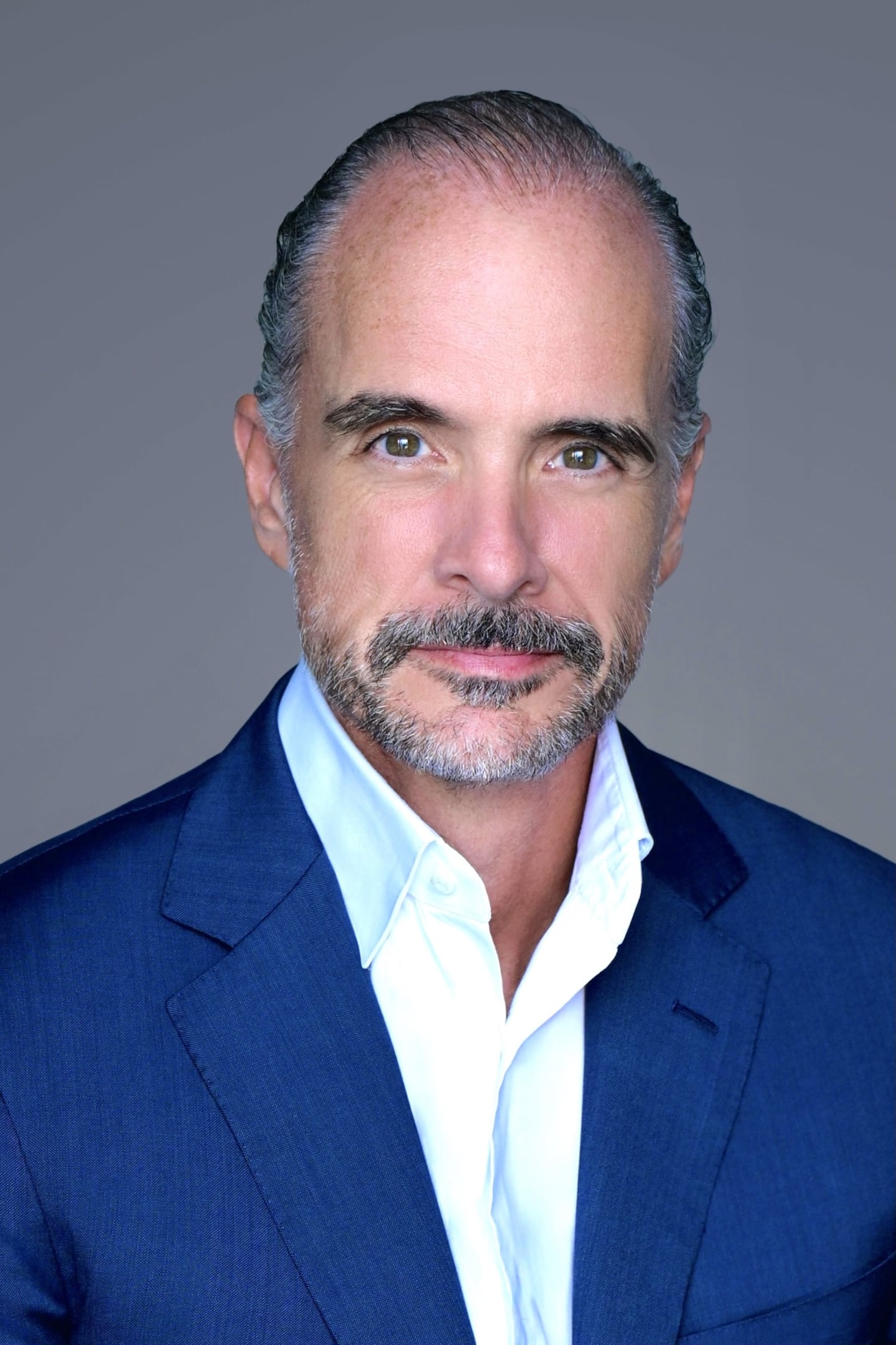
Pedro Malha
 Beauty Health
About Pedro Malha
Pedro Malha (age 53) was appointed President and Chief Executive Officer of The Beauty Health Company (NASDAQ: SKIN) and joined its Board of Directors effective October 1, 2025 . He previously led global divisions at Abbott Laboratories and Zimmer Biomet, with earlier senior roles at Johnson & Johnson; he holds an MBA from Boston University and a BS from Bentley University . Company performance context preceding his tenure showed declining revenue and improving EBITDA loss from FY 2023 to FY 2024, providing the baseline for pay-for-performance assessment [Values retrieved from S&P Global].
| Metric | FY 2023 | FY 2024 |
|---|---|---|
| Revenues ($USD) | $397,991,000* | $334,294,000* |
| EBITDA ($USD) | $(96,242,000)* | $(34,094,000)* |
*Values retrieved from S&P Global.
Past Roles
| Organization | Role | Years | Strategic Impact |
|---|---|---|---|
| Abbott Laboratories | Worldwide Division President; Corporate Officer | Sep 2021 – Sep 2025 | Led neuromodulation; global P&L and operations |
| Zimmer Biomet Holdings | Worldwide Group President; Division President | May 2017 – Sep 2021 | Led multiple global business units; operational excellence and growth |
| Abbott Laboratories | Divisional VP; various senior leadership roles | 2008 – 2016 | Oversaw commercial orgs and strategic functions across Americas/EMEA |
| Johnson & Johnson | Positions of increasing responsibility (Europe) | ~6 years (prior to 2008) | Regional leadership in healthcare businesses |
External Roles
No current public company board roles disclosed beyond SKIN; prior roles were operating executive positions at large-cap healthcare companies .
Fixed Compensation
| Component | Terms | Notes |
|---|---|---|
| Base Salary | $800,000 per year | Reviewed annually; cannot be reduced |
| Special Signing Bonus | $450,000 lump sum | Repayable pro rata if resigns without Good Reason or terminated for Cause within 12 months of start |
| Target Annual Bonus | 125% of base salary | 2025 pro-rata target guaranteed if formula would pay less; thereafter based on performance goals set by Board/Comp Committee |
| Benefits | Health, dental, vision, disability, life insurance; standard executive plans | Legal fee reimbursement up to $20,000 for agreement negotiation; standard expense reimbursement |
Performance Compensation
| Instrument | Metric/Structure | Target/Scale | Vesting/Accelerators |
|---|---|---|---|
| Initial RSUs (2025) | Time-based equity | 75% of $2,556,000 grant | 1/3 per year over 3 years; full vesting if death/disability; or if terminated without Cause or resign for Good Reason with release |
| Initial PSUs (2025) | Relative TSR vs blended peer group (Company’s compensation peers + Dow Jones US Select Medical Equipment Index) | 0–200% of target based on percentile (85th=200%; 55th=100%; 20th=25%; negative TSR caps at 100%) | Earn/vest at end of 3-year period; special treatment at Change in Control; double-trigger full vest on qualifying termination with release |
| 2025 Annual RSUs | Time-based equity | 75% of $2,000,000 grant | 1/3 per year over 3 years; similar acceleration and CIC provisions |
| 2025 Annual PSUs | Relative TSR (same schedule as above) | 25% of $2,000,000 grant | 3-year vest based on TSR; CIC and termination provisions as above |
Company cash incentive framework (context): 2024 annual plan was weighted 60% revenue, 30% adjusted EBITDA, 10% consumables sales growth; aggregate payout achieved 7.05% of target (with revenue and EBITDA below threshold, consumables growth above threshold) .
Equity Ownership & Alignment
- Equity Grants: Initial equity grant of $2,556,000 (75% RSUs; 25% PSUs) plus a 2025 annual grant of $2,000,000 (75% RSUs; 25% PSUs); expected 2026 LTI target value approximately $4,000,000 (at committee discretion) .
- Vesting/Acceleration: RSUs vest in 3 annual tranches; PSUs vest based on 3-year Relative TSR; double-trigger protection provides full vesting upon qualifying termination within 24 months post-Change in Control with an executed release .
- Dividend Equivalents: PSUs include dividend equivalents payable upon vesting; treated separately under Section 409A .
- Ownership Guidelines: CEO must hold stock equal to 6x base salary; five years to comply. Other NEOs 3x; directors 5x cash retainer, five years to comply .
- Hedging/Pledging: Insider Trading Policy prohibits hedging (puts/calls/short sales) and pledging (including margin accounts) by directors, officers, and employees .
- Director Fees: Employee directors do not receive separate board compensation (non-employee director program applies only to outside directors) .
Employment Terms
- At-Will; Term and Notice: Employment is at-will; Company or executive may terminate at any time. Executive must provide 60 days’ notice if resigning without Good Reason .
- Severance (non-CIC): If terminated without Cause or resign for Good Reason (outside CIC window), pro-rata bonus (timing varies by termination date), 18 months base-salary continuation, and up to 18 months COBRA subsidy/cash equivalent with release requirement and 409A timing rules .
- CIC Economics: If terminated without Cause or resign for Good Reason within 12 months post-Change in Control, severance equals 18 months base salary plus 1.5x target bonus, pro-rata target bonus, and up to 18 months COBRA subsidy/cash equivalent; equity awards feature double-trigger vesting as described above .
- 280G Cutback: Best-pay cap provision to avoid excise tax under Section 4999 if net-after-tax is higher with reduction; ordering rules specified .
- Restrictive Covenants: Confidentiality, non-compete, and non-solicitation covenants; standard proprietary information/inventions assignment agreement .
- Governing Law/Dispute Resolution: Florida law governs; binding arbitration (JAMS Employment Arbitration Rules) in Miami-Dade County; class/representative action waivers; Section 409A six-month delay for specified employees .
Board Governance
- Board Role: Appointed as a director effective October 1, 2025, serving until the 2026 Annual Meeting . As an executive officer, he would not be considered independent under Nasdaq standards; the Company’s independent directors are explicitly listed separately in the 2025 proxy .
- Leadership Structure: Chairman is Brent Saunders; CEO role is separate from Chair, supporting independent oversight .
- Committee Service: 2025 proxy shows management directors did not serve on committees (e.g., CEO Beck); no committee assignments for Malha were disclosed at appointment .
- Executive Sessions: Board meets regularly in executive session without management; independent directors also meet in executive session .
Compensation Governance, Peer Group, and Shareholder Feedback
- Compensation Consultant and Peer Groups: FW Cook advises the Compensation Committee; 2024 and 2025 compensation peer groups are disclosed (with changes to better align with industry/size) .
- Clawback Policy: Amended and restated clawback for incentive-based cash and equity compensation in case of material restatement; PSU agreements include recoupment provisions for cause-related harms .
- Say-on-Pay: Approval rates were ~85.54% in 2023 and ~88.23% in 2024, indicating solid investor support for the pay program .
Investment Implications
- Alignment: Large at-risk mix via RSUs/PSUs (75/25) and high bonus target (125% of salary) tie pay to TSR and business outcomes; ownership guidelines, hedging/pledging bans, and dividend-equivalent design enhance long-term alignment .
- Retention Risk vs. Pressure: The $450k signing bonus has a one-year clawback if he resigns without Good Reason or is terminated for Cause, increasing near-term retention; double-trigger CIC vesting and robust severance may mitigate departure risk but can create event-driven payout optionality .
- Pay-for-Performance: Relative TSR PSUs with capped vesting when TSR is negative and peer-based percentile targets reduce windfall risk; time-based RSUs provide retention ballast during transformation with clearer line-of-sight .
- Governance Quality: Separation of Chair/CEO and independent committee oversight mitigate dual-role independence concerns; strong say-on-pay support suggests investor confidence in comp framework heading into Malha’s tenure .
- Execution Focus: Baseline fundamentals ahead of his start show revenue pressure but improved EBITDA losses, making the TSR- and performance-linked structure a credible driver of value creation if operational execution improves [Values retrieved from S&P Global].
Citations
- Appointment, role, and background:
- Compensation terms and severance/CIC:
- RSU/PSU vesting, TSR schedule, dividend equivalents, and clawback:
- Ownership guidelines, hedging/pledging, governance, committee structures:
- Compensation consultant and peer groups:
- Say-on-pay approvals:
- Company performance (financials): Values retrieved from S&P Global.