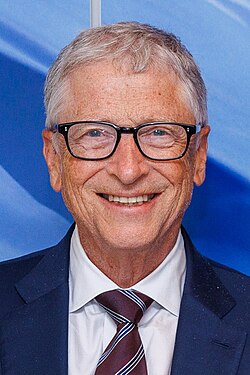
Charles E. Young
About Charles E. Young
Charles E. Young (age 57 as of April 14, 2025) is Chief Executive Officer of Smart Sand, Inc. (since July 2014) and a Class III director (on the board since September 2011); he founded Smart Sand, LLC (predecessor) and previously served as President and Secretary of the Company . He holds a B.A. in Political Science from Miami University and serves as a director of privately held Gravity Oilfield Services, Inc. . During 2022–2024, total shareholder return (value of initial $100) moved from $101 to $126, while net income moved from $(703)k in 2022 to $2,992k in 2024, framing the context for pay-versus-performance under his tenure as PEO in the disclosed period . Family ties include Smart Sand’s COO (William John Young) and EVP/GC (James D. Young), which the proxy discloses under corporate governance and related-party sections .
Past Roles
| Organization | Role | Years | Strategic impact |
|---|---|---|---|
| Smart Sand, Inc. | President and Secretary | 2011–2014 | Helped transition the predecessor LLC into the public company; operational leadership pre-CEO . |
| Smart Sand, LLC (predecessor) | Founder and President | 2009–2011 | Founded the predecessor entity that became Smart Sand . |
| Premier Building Systems (construction/solar/geothermal) | President and Founder | 2006–2011 | Led energy-related construction and efficiency services prior to Smart Sand . |
| Various (high-tech, telecom, renewable energy) | Executive/entrepreneur | >25 years | Broader operating/entrepreneurial experience cited in biography . |
External Roles
| Organization | Role | Years | Notes |
|---|---|---|---|
| Gravity Oilfield Services, Inc. (private) | Director | Current | Board service at a private oilfield services company . |
Fixed Compensation
| Component | 2023 | 2024 |
|---|---|---|
| Base salary ($) | 567,403 | 577,500 |
| Target bonus (% of salary) | 100% (CEO plan) | 100% (CEO plan) |
| Actual annual bonus ($) | 645,421 | 577,500 |
| All other compensation ($) | 47,385 (auto $3,754, club dues $28,431, 401(k) $13,200) | 71,267 (auto $3,723, club dues $51,744, 401(k) $13,800) |
Notes:
- The 2024 CEO bonus plan targeted 100% of salary (max 200%) based on net free cash flow; the committee disclosed the company exceeded the free cash flow target in 2024 .
- The CEO receives no separate director compensation .
Performance Compensation
Annual Bonus Plan (cash)
| Year | Primary metrics | Target (CEO) | Max | Actual payout |
|---|---|---|---|---|
| 2023 | Adjusted EBITDA, sales volumes, total production costs/ton, free cash flow (company exceeded target on costs/ton; exceeded stretch on FCF; exceeded base on EBITDA and volumes) | 100% of salary | 200% of salary | $645,421 |
| 2024 | Net free cash flow (company exceeded target benchmark) | 100% of salary | 200% of salary | $577,500 |
Long-Term Incentives (equity)
| Grant date | Shares granted | Vehicle/mix | Vesting terms | Performance metrics | Payout range |
|---|---|---|---|---|---|
| Mar 2023 | 190,911 | RS (50% time-based) + RS (50% performance-based) | Time-based: equal installments over 4 years; Performance-based: vest 1/1/2026 | ROIC over 2023–2025 (annual goals) and cumulative free cash flow (benchmarks) | 0%–150% of perf target |
| Feb 2024 | 541,236 | RS (50% time-based) + RS (50% performance-based) | Time-based: equal installments over 4 years; Performance-based: vest 1/1/2027 | Annual ROIC (2024–2026) and annual net free cash flow vs benchmarks | 0%–150% of perf target |
Outstanding Equity Awards (as of 12/31/2024)
| Type | Unvested shares | Market value at $2.25/sh | Key vesting dates/details |
|---|---|---|---|
| Time-based restricted stock | 436,316 | $981,711 | 46,378 (7/30/2025); 47,728 (6/7/2025 & 6/7/2026); 71,591 (3/17/2025–2027); 270,619 (2/22/2025–2028), subject to continued employment . |
| Performance-based restricted stock (unearned) | 461,528 | $1,038,438 | Vest based on company performance through 12/31/2025–2026 per award terms; continued employment required . |
Equity Ownership & Alignment
| Item | Detail |
|---|---|
| Total beneficial ownership | 7,827,632 shares; 17.8% of class (based on 44,083,342 shares outstanding on 4/14/2025) . |
| Composition and vesting status | Includes 1,169,392 shares subject to vesting (596,335 performance-based) and 5,842,700 shares held by Keystone Cranberry, LLC . |
| Control/beneficial structure | Young owns ~67% of Keystone Cranberry and is sole managing member with sole voting/investment power over its shares . |
| Hedging/pledging | Company prohibits hedging and pledging; prohibits holding stock in margin accounts; bans short sales and derivatives for officers/directors . |
| Trading controls | Insider Trading Compliance Policy requires pre-clearance, blackout windows; allows Rule 10b5-1 plans (30-day cooling-off; plan pre-approval) . |
| Registration rights | Keystone Cranberry retains demand and piggyback registration rights; Company obligated to facilitate underwritten offerings ≥$20M for Keystone; subject to conditions/limitations . |
| Stockholders’ agreement | So long as Keystone holds ≥10%/20%/30%, it may designate 1/2/3 directors and at ≥20% must approve change of control; also may designate committee members (subject to rules) . |
Employment Terms
- Change-in-control treatment (restricted stock agreements): performance-based RS vest at target immediately prior to a change-in-control (single trigger for performance awards); time-based RS accelerate only if terminated without cause or for good reason within 18 months post-change-in-control (double trigger for time-based), with “Good Reason” defined as ≥10% reduction in current base salary and target bonus .
- Other cash severance multiples, non-compete, non-solicit, deferred comp, pension/SERP: not disclosed in the proxy; only equity award CoC terms are detailed .
Board Governance
- Board service and elections: Class III director; nominated for re-election in 2025 to serve through 2028; on the board since 2011 .
- Leadership structure: CEO is not Chairman; the board believes an outside director as Chair enhances independent leadership (Chair: Andrew Speaker) .
- Independence and family ties: Independent directors are Spurlin, Pawlenty, Porcelli; CEO is non-independent; disclosed family relationships: CEO is brother to COO and EVP/GC .
- Committees: CEO is not listed on standing committees; Audit (Spurlin—Chair; Pawlenty; Porcelli), Compensation (Porcelli—Chair; Pawlenty; Spurlin), Nominating & Governance (Pawlenty—Chair; Porcelli); charters on company website .
- Attendance: Board met 5 times in 2024; all incumbent directors attended at least 75% of meetings; directors are required to attend the annual meeting .
- Director pay: CEO receives no additional compensation for board service (director compensation applies to non-employee directors) .
Performance & Track Record (disclosed Pay vs Performance)
| Metric | 2022 | 2023 | 2024 |
|---|---|---|---|
| Value of $100 initial investment (TSR) ($) | 101 | 108 | 126 |
| Net Income ($) | (703,000) | 4,649,000 | 2,992,000 |
Related-Party Transactions and Structures
- Family employment and 2024 compensation: William John Young (COO) $614,482 cash; $599,999 equity; James D. Young (EVP/GC) $560,893 cash; $400,001 equity; Thomas Young (HSE) $265,031 cash; $51,900 equity; Charles (CJ) Young (Business Analytics Analyst) $37,488 cash; all 2024 cash includes bonuses paid in 2025; these individuals are CEO’s brothers and son .
- Registration rights and stockholders’ agreement (see Ownership & Alignment): Keystone Cranberry retains rights that can influence board composition and potential liquidity events .
Compensation Structure Analysis
- Mix and design: 2024 total pay of $2.28M combines salary ($577.5k), performance-based annual cash (linked to net free cash flow; paid $577.5k), and equity grants with both service and performance tranches tied to ROIC and free cash flow (with 0–150% outcomes), reinforcing FCF/ROIC discipline .
- Year-over-year equity shift: 2024 grant (541,236 shares) is larger than 2023 grant (190,911 shares), with the same 50/50 mix of time-based and performance-based restricted stock and capped at 150% on the performance side .
- No options: 2024 equity program used restricted stock; the company did not grant stock options in 2024 .
- Hedging/pledging bans and 10b5-1 controls limit misalignment or aggressive trading incentives for executives and directors .
Equity Vesting Schedules and Potential Selling Pressure
| Category | Dates and amounts |
|---|---|
| Time-based tranches | 46,378 (7/30/2025); 47,728 (6/7/2025 & 6/7/2026); 71,591 (3/17/2025–2027); 270,619 (2/22/2025–2028), subject to employment . |
| Performance-based cycles | 2023 grant: perf shares vest 1/1/2026 subject to ROIC and cumulative free cash flow over 2023–2025; 2024 grant: perf shares vest 1/1/2027 subject to annual ROIC and net free cash flow over 2024–2026 (0–150% outcomes) . |
| Registration rights | Keystone Cranberry can demand registration and underwritten offerings (≥$20M) and piggyback in company offerings, subject to limitations—creating potential secondary sale overhang when windows open . |
| Trading policy | Pre-clearance and blackout windows apply; Rule 10b5-1 permitted with cooling-off; hedging/pledging prohibited . |
Director Service, Roles, and Dual-Role Implications
- Board history and roles: Director since 2011; Class III; up for re-election in 2025; CEO since 2014 .
- Committee service: Not listed on any board committee; independent directors chair all committees .
- Leadership/independence: Separation of Chair and CEO (Chair is independent director Andrew Speaker), which mitigates CEO/Chair concentration; however, CEO’s significant ownership and family members in senior roles concentrate influence and raise independence and related-party considerations, managed via disclosed governance structures .
Investment Implications
- Alignment vs. control: Young’s sizable beneficial stake (17.8%) and control over Keystone Cranberry (which holds 5.84M shares) align incentives with long-term equity value but also consolidate influence and enable demand/piggyback registrations that can create supply overhang when utilized .
- Pay-for-performance levers: Annual cash comp tied to free cash flow and LTIs tied to ROIC and free cash flow should reinforce disciplined capital allocation and cost control; 0–150% PSU range adds asymmetry to outcomes and focus on cash generation and returns .
- Trading/overhang risk: Upcoming time-based vesting tranches through 2028 and PSU cliffs in 2026/2027 are identifiable potential liquidity events; however, anti-hedging/pledging policies and pre-clearance/blackout controls temper opportunistic trading risk .
- Governance risk: Separation of Chair/CEO is positive, yet multiple family members in executive roles and Keystone’s board designation/change-of-control consent rights warrant continued monitoring of independence and minority shareholder protections .
- Performance context: Disclosed TSR improved from $101 to $126 over 2022–2024 with positive net income in 2023–2024, supporting pay-versus-performance narratives in the proxy period; continuation depends on sustaining free cash flow and ROIC targets embedded in awards .
Appendix: Selected Tables
Summary Compensation (CEO)
| Year | Salary ($) | Bonus ($) | Stock Awards ($) | All other comp ($) | Total ($) |
|---|---|---|---|---|---|
| 2023 | 567,403 | 645,421 | 315,003 | 47,385 | 1,575,212 |
| 2024 | 577,500 | 577,500 | 1,050,000 | 71,267 | 2,276,267 |
Beneficial Ownership (CEO)
| Holder | Shares | % of class | Notes |
|---|---|---|---|
| Charles E. Young | 7,827,632 | 17.8% | Includes 1,169,392 subject to vesting (596,335 performance) and 5,842,700 held by Keystone Cranberry; Young owns ~67% of Keystone and is sole managing member . |
| Shares outstanding (record date 4/14/2025) | 44,083,342 | — | Basis for % calculations . |
Pay vs Performance (Company-level disclosure)
| Year | CAP to PEO ($) | Avg CAP to non-PEO NEOs ($) | TSR ($100 basis) | Net Income ($) |
|---|---|---|---|---|
| 2022 | 894,576 | 557,806 | 101 | (703,000) |
| 2023 | 1,751,558 | 915,335 | 108 | 4,649,000 |
| 2024 | 2,348,904 | 1,269,476 | 126 | 2,992,000 |