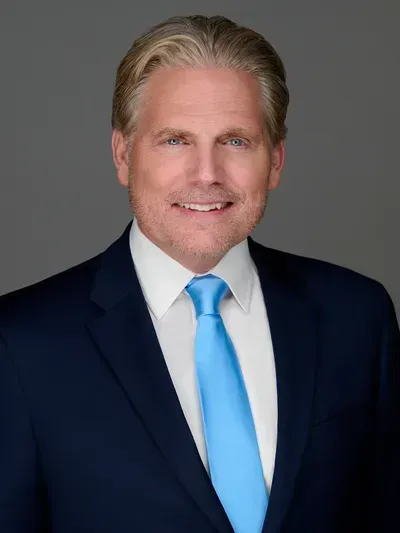
William Koppelmann
About William Koppelmann
William J. Koppelmann is Chairman of the Board, President, and Chief Executive Officer of Standard Premium Finance Holdings, Inc. (SPFX), roles he has held since the company’s formation in May 2017; he previously co‑founded and has served as President of Standard Premium Finance Management Corporation since its inception in 1997 . He attended Barry University and Miami Dade College and completed his Property & Casualty insurance certification; he has over 30 years’ experience in premium finance focused on receivables management, capital‑raising and debt restructuring (age 60 as disclosed in 2023) . SPFX confirms a combined Chairman/CEO leadership structure with no Lead Independent Director, a governance consideration for investors assessing board independence and oversight . Current incentive design for Mr. Koppelmann emphasizes annual diluted EPS improvement, credit facility size and rate, and achieving a Nasdaq listing, aligning pay with financing capacity and earnings outcomes rather than TSR; performance‑based equity includes RSUs tied primarily to EPS improvement and listing milestones .
Past Roles
| Organization | Role | Years | Strategic Impact |
|---|---|---|---|
| Standard Premium Finance Holdings, Inc. | Chairman, President & CEO | Since May 2017 | Provides core strategic oversight across operations; leveraged capital‑raising and restructuring experience to lead the public holding company . |
| Standard Premium Finance Management Corp. | Co‑Founder; President | Since 1997 | Built premium finance platform; expertise in receivables management, capital‑raising, and debt restructuring . |
External Roles
| Organization | Role | Years | Strategic Impact |
|---|---|---|---|
| Florida Premium Finance Association | Director; Immediate Past President (three successive terms) | >15 years | Industry leadership and policy influence in premium finance across Florida; governance and advocacy exposure . |
Fixed Compensation
- Employment agreements: Amended and Restated in March 2025 with an initial five‑year term and auto‑renewal each year absent notice; includes non‑compete, non‑solicit, non‑disparagement, and proprietary information and inventions assignment agreements .
- Base salary: $275,000 per year under the March 2025 A&R agreement (supersedes prior stepped schedule) .
- Historical salary: Paid $275,000 for 2023 and 2024 per Summary Compensation Table .
- Cash bonus construct: Target annual bonus 100% of base salary .
| Year | Salary ($) | Bonus ($) | Option Awards ($) | Total ($) |
|---|---|---|---|---|
| 2023 | 275,000 | 7,168 | — | 282,168 |
| 2024 | 275,000 | 7,168 | — | 282,168 |
Notes:
- In prior disclosures, he declined a $25,000 cash bonus and 20,000 stock options offered in 2023 under the earlier (2022) agreement; the 2025 A&R agreement reset the program with new targets and instruments .
Performance Compensation
Annual Cash Incentive (Target = 100% of base salary)
| Metric | Weight | Target Definition | Payout Determination |
|---|---|---|---|
| Size of Company’s credit facility | Up to 20% | Based on facility size achieved in year | Up to 20% of target bonus |
| Interest rate on credit facility | Up to 10% | Based on facility interest cost | Up to 10% of target bonus |
| Improvement of annual diluted EPS | Up to 50% | EPS improvement versus prior year | Up to 50% of target bonus |
| Listing of common stock on Nasdaq | Up to 20% | Completion of listing | Up to 20% of target bonus |
Equity Awards
| Instrument | Grant Size | Vesting / Conditions | Notes |
|---|---|---|---|
| Performance RSUs | 25,000 | Vest based on growth rate of improvement in annual diluted EPS (70% weight) and Nasdaq listing (30% weight) | One‑time grant under Equity Incentive Plan; 1 RSU = 1 share upon vest . |
| Time‑based RSUs | 5,000 | 1,000 per year, vesting on Dec 31 of 2025–2029; accelerated vesting on termination without cause, for good reason, or after change of control; for‑cause or voluntary resignation without good reason forfeits unvested RSUs | Retention‑oriented; provides multi‑year cadence . |
Vesting schedule (Time‑based RSUs):
| Year | Units Vesting |
|---|---|
| 2025 | 1,000 |
| 2026 | 1,000 |
| 2027 | 1,000 |
| 2028 | 1,000 |
| 2029 | 1,000 |
Additional context:
- The company’s 2019 Equity Incentive Plan reserves 300,000 shares; 77,350 shares remained available as of Sept 8, 2025 .
- Earlier 2023 proxy noted 92,600 shares available as of April 15, 2023 .
Equity Ownership & Alignment
- Beneficial ownership as of the latest annual report (2024 10‑K reference date March 15, 2024): 908,655 shares (22.0% of class), consisting of 803,655 shares held directly, 25,000 Class W4 five‑year warrants at $4.00, 75,000 Class W12 five‑year warrants at $12.00, and 5,000 stock options at $4.95 exercisable within 60 days .
- Historical beneficial ownership trend is stable near ~22% from 2021–2023 .
| Metric | FY 2021 (as of Mar 25, 2021) | FY 2022 (as of Mar 17, 2023) | FY 2023 (as of Mar 15, 2024) |
|---|---|---|---|
| Direct common shares | 805,855 | 803,655 | 803,655 |
| Warrants | 25,000 W4 @ $4.00; 75,000 W12 @ $12.00 | 25,000 W4 @ $4.00; 75,000 W12 @ $12.00 | 25,000 W4 @ $4.00; 75,000 W12 @ $12.00 |
| Stock options | — | — | 5,000 @ $4.95 (exercisable within 60 days) |
| Total beneficial ownership | 905,855 | 903,655 | 908,655 |
| Percent of class | 22.3% | 21.9% | 22.0% |
Hedging/pledging:
- Insider trading guidelines prohibit short sales and trading/writing “put” or “call” options by directors/officers/employees; no explicit pledging disclosures identified in the cited materials .
Potential selling pressure signals:
- Time‑based RSUs vest 1,000 shares annually 2025–2029, creating periodic incremental liquidity; blackout policies apply per insider trading guidelines .
Employment Terms
- Term: Five years from March 2025, with automatic one‑year extensions unless non‑renewal notice is given .
- Severance (outside change in control): One (1) times base salary plus 18 months of COBRA if terminated without cause or for good reason; non‑renewal within 30 days after term end is treated as termination without cause .
- Change‑in‑control (double‑trigger within 18 months): Two (2) times base salary plus target annual bonus, 18 months COBRA, and prorated target bonus for year of termination; immediate vesting of time‑based equity, while performance‑based awards follow their award terms .
Severance economics (assumed termination date Dec 31, 2024, per proxy methodology):
| Scenario | Severance Payments ($) | Equity Benefits ($) |
|---|---|---|
| Termination after non‑renewal within 30 days | 825,000 | 56,400 |
| Termination without cause / for good reason (no CIC) | 825,000 | 56,400 |
| Termination without cause / for good reason within 18 months of CIC | 1,100,000 | 56,400 |
Board Governance
- Roles: Chairman and CEO (dual role); the Board has not appointed a Lead Outside Director .
- Committees (composed of independent directors):
- Audit Committee: Scott Howell, MD (financial expert), Mark Kutner, MD, John Leavitt, DBA; 4 meetings in FY2024 .
- Compensation Committee: Scott Howell, MD; Mark Kutner, MD; Christian Hoechner (all independent) .
- Nominating Committee: standing since 2020 .
- Attendance: Board held five meetings in FY2024; no director attended fewer than 75% .
- Director pay: No compensation paid for Board service during 2024; executives received no additional Board compensation .
- Independence: Board identifies independent directors consistent with Nasdaq standards (Howell, Kutner, Wall, Perrucci, Leavitt, Hoechner cited across proxies) .
Related Party Transactions (Governance Red Flags to Monitor)
- Headquarters lease: Company leases Miami office from Marlenko Acquisitions, LLC, owned/managed by Director/Officer William Koppelmann, Corporate Secretary Margaret Ruiz, and >5% holder MaryLea Boatwright; rent is $7,472/month; company pays utilities, taxes, and maintenance .
- Officer/Director loans: CEO advanced $202,000 to the company via notes maturing 2026–2028 at 8% interest; similar advances by other insiders (interest paid monthly, current on payments) .
- Related‑party transactions are reviewed/approved by independent directors per policy .
Performance & Track Record (selected disclosures)
- Operating focus and credentials: 30+ years in premium finance; leadership in receivables management, capital‑raising, and debt restructuring; oversight of company operations .
- Compensation metrics center on earnings quality and financing scale/cost (EPS improvement, credit facility size/rate) and strategic milestone (Nasdaq listing), signalling emphasis on profitable growth and capital access over TSR .
Compensation Structure Analysis
- Cash vs equity mix: 2023–2024 pay is predominantly salary with minimal cash bonus and no option grant expense reported; 2025 A&R introduces significant at‑risk components (100% target cash bonus; 25k performance RSUs), increasing performance sensitivity .
- Shift in vehicles: From options contemplated under 2022 agreement (declined by CEO for 2023) to RSUs in 2025 A&R, suggesting lower risk equity with clearer performance conditions .
- Performance metrics: New plan weights EPS improvement most heavily (50% cash bonus; 70% of RSU performance test), plus financing capacity/cost and listing status—targets emphasize scalable funding and earnings trajectory .
- Governance overlays: Insider hedging restrictions and independent committee oversight of related‑party matters partly mitigate dual‑role concentration risk .
Investment Implications
- Alignment: High insider ownership (~22%) aligns CEO incentives with shareholders; new 2025 structure adds clear earnings and financing‑linked targets and performance RSUs, potentially improving pay‑for‑performance sensitivity .
- Retention and supply overhang: Five‑year RSU vesting (1,000 shares annually 2025–2029) and performance RSUs create predictable vesting cadence; monitor 10b5‑1 plans and windows for potential selling pressure as awards vest .
- Governance risk: CEO/Chair dual role without a Lead Independent Director and ongoing related‑party lease and insider lending represent continuing governance risk factors; oversight by independent committees is disclosed, but investors may seek enhanced independence structures .
- Downside protection: Severance of 1x salary (no CIC) and 2x salary + target bonus (CIC) with COBRA and time‑based equity acceleration is moderate for a micro‑cap context; double‑trigger design under CIC reduces windfall risk .
Data sources: SPFX DEF 14A (2025, 2024, 2023), SPFX 10‑K (2024, 2023, 2022), and SPFX 8‑K (Employment Agreements). See citations inline.