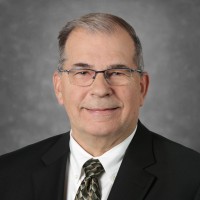
Richard Smith
About Richard Smith
Richard P. Smith, age 67, is Chairman of the Board (since May 2020) and President & CEO of TriCo Bancshares and Tri Counties Bank (since 1999); he joined the Bank in 1994 as VP & CIO and rose through senior roles before becoming CEO . Under his leadership, TriCo’s 5-year total shareholder return was ~23%, outperforming the KBW Nasdaq Regional Banking Index at ~11% over the same period . 2024 operating performance showed resilient profitability: net income of $114.9M vs. $117.4M in 2023, dividends increased to $1.32/share, and risk metrics remained strong (e.g., NPAs/Assets 0.48%) despite margin pressure (NIM 3.71% vs. 3.96% in 2023) . Smith was honored as the California Bankers Association’s 2024 Distinguished Banker of the Year, reflecting his industry credentials and governance stature .
Past Roles
| Organization | Role | Years | Strategic Impact |
|---|---|---|---|
| Tri Counties Bank | Vice President & Chief Information Officer | 1994–1997 | Led technology and information systems foundational to scaling operations |
| Tri Counties Bank | SVP – Customer/Employee Support & Control | 1997–1998 | Strengthened customer and employee support infrastructure |
| Tri Counties Bank / TriCo | EVP; then President of the Bank and EVP of TriCo | 1998–1999 | Operational leadership ahead of CEO transition |
| TriCo Bancshares & Tri Counties Bank | President & CEO | 1999–present | Long-tenured CEO overseeing growth, M&A and disciplined risk management |
External Roles
| Organization | Role | Years | Strategic Impact |
|---|---|---|---|
| California Bankers Association (CBA) | Chairman (2011); Director; committee service | 2011; ongoing | Industry advocacy, policy engagement, governance leadership |
Fixed Compensation
| Metric | 2022 | 2023 | 2024 |
|---|---|---|---|
| Base Salary ($) | $975,000 | $995,000 | $1,015,000 |
| Director Fees | Not applicable (CEO receives no additional director compensation) | Not applicable | Not applicable |
Performance Compensation
| Metric | Weighting | Threshold | Target | Maximum | Actual 2024 | Payout vs Target |
|---|---|---|---|---|---|---|
| ROATCE | 30% | 9.9% | 11.6% | 13.3% | 13.3% | 114.5% |
| PPNR / Avg Assets | 30% | 1.5% | 1.6% | 1.8% | 1.7% | 100.5% |
| Efficiency Ratio | 20% | 63.4% | 59.0% | 54.6% | 59.1% | 99.8% |
| NPAs / Avg Assets | 20% | 1.3% | 1.0% | 0.8% | 0.5% | 200.0% |
| Annual Incentive Design | 2022 | 2023 | 2024 |
|---|---|---|---|
| Target Bonus (% of Base) | 70.0% | 70.0% | 70.0% |
| Total Payout (% of Base) | 136.5% | 106.7% | 111.6% |
| 2024 Discretionary Adjustment | — | — | +6% applied by the Committee for CEO leadership and regulatory excellence |
Equity Compensation
| Grant Type | Grant Date | Shares / Range | Grant-Date Fair Value ($) | Vesting | Performance Basis |
|---|---|---|---|---|---|
| RSUs | 3/1/2024 | 12,805 | $423,461 | 3 equal annual installments (Mar 1, 2025–2027) | Time-based |
| PSUs (Target) | 3/1/2024 | 12,805 | $267,112 (valued at $20.86 via Monte Carlo) | Single vest at 3 years (Mar 1, 2027), 0–150% earned | Relative TSR vs. KBW Nasdaq Regional Banking Index with symmetrical 2% slope and ±25% band |
| CEO Equity Mix | 2024 | Equity at 90% of base (50% RSUs/50% PSUs) | — | Annual awards with 3–4 year vesting; holding period on 50% of after-tax shares for 12 months |
Selected Outstanding Awards at 12/31/2024 (CEO):
| Award | Shares Not Vested | Market Value ($) | Vesting Details |
|---|---|---|---|
| RSUs (line item) | 13,238 | $578,501 (at $43.70) | Vests Mar 1, 2025–2027 |
| PSUs (line item) | 15,200 (max assumption per SEC rule) | $664,240 (at $43.70) | Vests Mar 1, 2027, subject to performance |
| Additional RSU/PSU tranches | See full table | See full table | June 12, 2025–2026; Oct 21, 2025 |
Program safeguards:
- No option repricing or discounted options; double-trigger CIC; 280G “net best” cutback; no tax gross-ups .
- Plan permits CIC acceleration at Administrator discretion; 12-month holding for 50% of after-tax shares; minimum one-year vesting; no evergreen or liberal recycling .
Equity Ownership & Alignment
| Item | Detail |
|---|---|
| Total Beneficial Ownership (shares) | 313,854 (includes 269 spouse; 2,362 RSUs vesting within 60 days; 42,972 ESOP allocation) |
| Shares Outstanding | 32,970,425 (as of Feb 28, 2025) |
| Ownership as % of Outstanding | ~0.95% (calculated from 313,854 / 32,970,425) |
| Stock Ownership Guidelines | CEO minimum 3.0x base salary; executives must retain ≥50% of vested shares until compliant; all covered executives in compliance |
| Hedging/Pledging | Prohibited for directors and executive officers (no hedging, short sales, margin accounts, or pledges) |
| Trading Controls | Blackout windows, preclearance for directors/executive officers, 10b5‑1 plan eligibility after cooling-off |
Employment Terms
| Provision | Key Terms |
|---|---|
| CEO Employment Agreement | Amended & restated April 2021; auto-renews annually unless notice ≥6 months prior |
| Base Salary & Incentives | Base subject to annual review; eligible for annual cash incentive and equity awards under plan |
| Severance (without cause, not in CIC) | 2× current base salary paid over 24 months; prior-year bonus if unpaid (lump sum); prorated target bonus to termination date; release required |
| CIC Treatment | Company-wide executive design: double-trigger; CIC may accelerate vesting at Plan Administrator’s discretion |
| Restrictive Covenants | Confidentiality; 12-month non-solicit of employees/customers post-termination |
| Clawback | Nasdaq-compliant clawback policy and plan-level clawbacks (restatements; excess incentive recoupment; Section 10D) |
Board Governance
- Roles: Chairman of the Board (since May 2020), President & CEO; Executive Committee member .
- Independence: Smith is not independent; Board re-elected Smith as Chair in May 2024 and affirmed the empowered Independent Lead Director role (Cory W. Giese) with robust duties covering agendas, executive sessions, and governance processes .
- Committee leadership is independent; all committees chaired by independent directors .
- Board/committee attendance: ~97% aggregate attendance by nominees in 2024; annual elections with majority-withhold resignation policy .
- Director compensation policy: Smith receives no additional compensation for director service; non-employee director retainers and RSUs disclosed (for benchmarking governance pay) .
Director Compensation (Smith-specific note)
- As an employee-director, Smith receives no separate director cash retainers or equity for Board service; compensation is presented within NEO tables .
Compensation Peer Group (Benchmarking context)
- 23-bank national peer set (assets ~$7.4B–$16.5B) used to inform 2024 decisions; examples include CVB Financial (CVBF), Banner (BANR), BancFirst (BANF), NBT Bancorp (NBTB), NBH (NBHC), and others; Committee does not target specific percentiles, emphasizing holistic pay-for-performance .
Say-on-Pay & Shareholder Feedback
- 2024 Say-on-Pay approved by over 97% of votes cast; approvals ≥95% since 2017; Committee continued emphasis on performance-contingent pay and PSU design tied to relative TSR .
Risk Indicators & Safeguards
- Hedging/pledging prohibited; blackout trading controls; minimum vesting and mandatory holding periods; no option repricing; clawback policy implemented per Nasdaq 10D rule .
- Stock ownership guidelines enforced; annual compliance confirmation .
Performance & Track Record
| Metric | 2023 | 2024 |
|---|---|---|
| Net Income ($M) | $117.4 | $114.9 |
| Net Revenues ($M) | $418.1 | $395.8 |
| NIM (%) | 3.96 | 3.71 |
| Efficiency Ratio (%) | 55.77 | 59.14 |
| NPAs / Total Assets (%) | 0.35 | 0.48 |
| Dividends Declared per Share ($) | $1.20 | $1.32 |
| 5-year TSR (TriCo vs. KBW Regional Banks) | 117.37→123.34 vs. 101.73→111.49 index points |
Investment Implications
- Pay-for-performance alignment: High equity-at-risk with 50% PSUs tied to relative TSR and multi-year vesting; 12-month post-vesting holding requirements and clawbacks enhance long-term alignment and reduce near-term selling pressure .
- Incentive metrics target core banking value drivers (ROATCE, PPNR, efficiency, NPAs), with 2024 outcomes at or above target, supporting bonus payout at 111.6% of base amid a challenging rate environment .
- Retention/transition risk mitigants: Severance economics (2× base, prorated target) and double-trigger CIC terms balance leadership continuity with shareholder protections; no excise tax gross-ups; 280G net-best cutback .
- Governance: Combined Chair/CEO structure is offset by a robust Independent Lead Director role and fully independent committees; strong attendance and majority-withhold policy improve accountability .
- Ownership and trading policy: Prohibitions on hedging/pledging plus blackout/preclearance indicate low forced-sale risk; confirmed guideline compliance suggests solid “skin in the game” (~0.95% personal stake calculated from disclosed share counts) .
Overall, Smith’s compensation design and governance framework emphasize long-term shareholder value creation through performance-based equity and disciplined risk controls, while severance/CIC terms avoid shareholder-unfriendly features, supporting durable alignment amid macro and regulatory volatility .