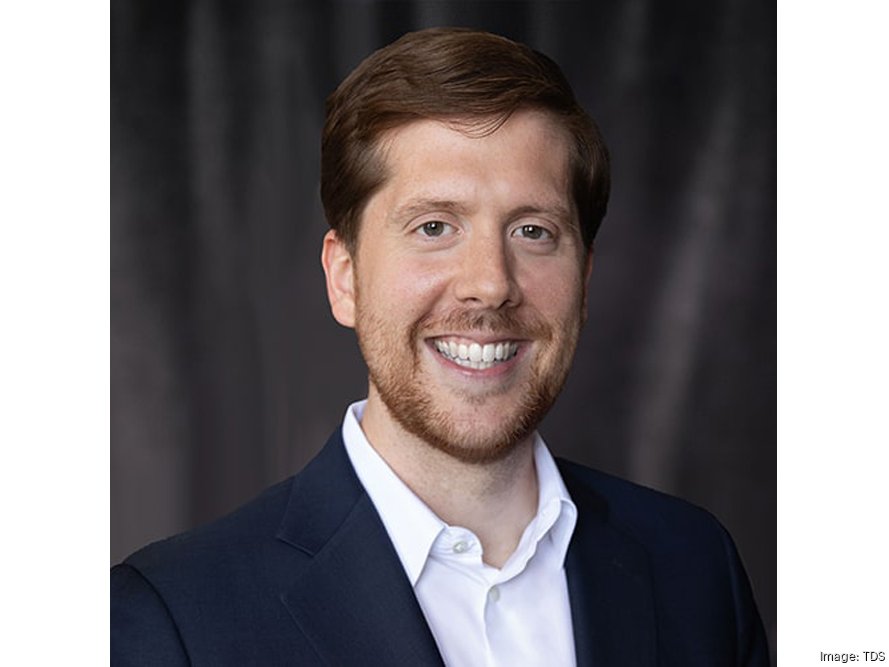
Walter C. D. Carlson
 TELEPHONE & DATA SYSTEMS INC /DE/
About Walter C. D. Carlson
Walter C. D. Carlson is Chair of the Board and, since February 1, 2025, President and Chief Executive Officer of Telephone and Data Systems (TDS); he is 71 years old, has served as a TDS director since 1981, was non‑executive Chair from 2002–Jan 2025, and became Chair+CEO in Feb 2025; he holds a J.D. from Harvard University and has long been a trustee/beneficiary of the TDS Voting Trust that controls TDS . TDS’ 2024 operational execution included agreements to sell UScellular’s wireless operations and spectrum to T‑Mobile and additional spectrum to AT&T and Verizon, divested OneNeck IT Solutions, and executed sales of certain ILEC/cable properties, while 2024 company bonus performance scored 104.2% of target on weighted UScellular/TDS Telecom metrics (a mix of service revenue/EBITDA/capex and net adds) . TDS emphasizes pay‑for‑performance using Return on Capital, Total Operating Revenues, Adjusted EBITDA and relative TSR in its long‑term incentives, with oversight by an independent CHRC and a Dodd‑Frank‑compliant clawback adopted in 2023 . Governance is shaped by a dual‑class, controlled structure (Voting Trust aggregate 56.8% voting power in matters other than director elections) and a combined Chair/CEO model with a Lead Independent Director to bolster independent oversight .
Past Roles
| Organization | Role | Years | Strategic impact |
|---|---|---|---|
| Telephone and Data Systems (TDS) | Director; Chair of the Board (non‑executive 2002–Jan 2025; Chair+CEO from Feb 1, 2025) | Director since 1981; Chair since 2002; CEO since Feb 1, 2025 | Long‑tenured board leadership during major strategic transactions (UScellular asset sales; portfolio reshaping); provides shareholder perspective as Voting Trust trustee . |
| Sidley Austin LLP | Senior Counsel (previously Partner >5 years) | Senior Counsel 2023–Jan 2025; Partner prior 5+ years | External legal/advisory experience; firm provides legal services to TDS and UScellular (see related‑party) . |
| United States Cellular (UScellular) | Director | Since 1989 | Oversight of wireless subsidiary during strategic alternatives review and spectrum/operations sale processes . |
External Roles
| Organization | Role | Years | Notes |
|---|---|---|---|
| UScellular | Director | Since 1989 | Current public company board . |
| Aerial Communications, Inc. | Director (former) | n/a | Prior public board service . |
| TDS Voting Trust | Trustee/Beneficiary | Current | Trustee/beneficiary of controlling trust (expires June 30, 2035) . |
Fixed Compensation
| Component | 2024 | 2025 (CEO) |
|---|---|---|
| Base salary | n/a (non‑employee director) | $850,000 . |
| Annual cash retainer (director) | $169,000 (as non‑employee director) | n/a (becomes employee CEO) . |
| Director equity retainer | $121,660 (6,320 TDS shares at $19.25) | n/a (CEO) . |
| Target annual bonus | n/a (director) | 115% of base salary (discretionary determination by CHRC) . |
| Long‑term incentive target | n/a (director) | $3,000,000 target; anticipated 60% PSUs / 40% RSUs . |
Notes: Non‑employee director pay schedule in 2024 was $90,000 cash retainer, $25,000 Lead Independent Director premium (if applicable), $1,750 per meeting, and $120,000 equity retainer in TDS shares; Chair of the Board retainer $110,000 (when non‑employee); Walter received $169,000 fees and $121,660 stock in 2024 before becoming CEO .
Performance Compensation
- 2025 CEO bonus design: Target of 115% of base; CHRC retains discretion on amount; CEO will participate in standard TDS executive bonus framework that weights company and individual performance (recent NEO programs: 80% company / 20% individual) .
- 2025 LTI design: Anticipated $3.0M target delivered 60% in performance share units (PSUs) and 40% in restricted stock units (RSUs), with vesting schedules consistent with TDS’ 2025 grants (RSUs pro‑rata 1/3 over 3 years; PSUs vest on 3rd anniversary after performance certification) .
Recent PSU structure (reference for expected metrics/vesting cadence):
| Metric | Weighting | Performance period | Payout range | Vesting |
|---|---|---|---|---|
| UScellular’s Performance Award Payout % | 32% | 1‑year (2024) | 0%–175% | Settled on 3rd grant anniversary (time‑based vest after certification) . |
| TDS Telecom Performance Award Payout % | 48% | 2‑year (2024–2025) | 0%–200% | Settled on 3rd grant anniversary (time‑based vest after certification) . |
| Relative TSR (vs peer group) | 20% | 3‑year (2024–2026) | 0%–200% | Settled on 3rd grant anniversary (time‑based vest after certification) . |
Oversight and guardrails:
- Clawback policy (Aug 2023) for erroneously awarded incentive compensation upon certain financial restatements (Dodd‑Frank/NYSE compliant) .
- Hedging/pledging prohibited and insider trading policy applies to directors/officers (no hedging, no pledging, no short sales or monetization/margin transactions) .
Context on committee discretion (signal for plan rigor):
- 2022 TDS PSUs certified at 85% payout after a 45% discretionary upward adjustment due to industry dynamics during UScellular strategic review; absent discretion, payout would have been 40% .
- For the 2024 UScellular component of TDS PSUs, attainment of 145.9% included a 24.8% adjustment (license impairment exclusion and mid‑band deployment pacing) .
Equity Ownership & Alignment
| Item | Detail (as of Mar 3, 2025, unless noted) |
|---|---|
| Direct beneficial ownership (Walter C. D. Carlson) | 218,147 TDS Common Shares; 28,739 Series A Common Shares (<1% of each class) . |
| Interests via TDS Voting Trust (for Walter’s benefit) | Voting Trust aggregate holds 7,206,297 Series A and 6,298,354 Common; for Walter’s benefit within the Trust: 2,445,655 Series A and 2,089,948 Common (not counted in his direct line; see footnotes) . |
| Voting control context | Voting Trust has ~54.2% voting power in matters other than director elections; aggregate Series A voting power 56.7% in such matters . |
| Vested/unvested awards (Walter) | As a 2024 non‑employee director, he received shares (not RSUs/PSUs); CEO equity grants to begin with 2025 cycle; RSUs typically vest 1/3 per year, PSUs settle after 3 years subject to performance . |
| Pledging/hedging | Prohibited for directors/officers; policy bars pledging, hedging, short sales, monetization/margin transactions . |
| Share pledges | Proxy indicates “none of the above shares are pledged as security” absent footnote exceptions; no pledging flagged for Carlson . |
| Director stock ownership guidelines | Directors must hold TDS shares valued at $270,000 (3× $90,000 retainer) within 3 years of becoming a director; applies to Walter as a director . |
Employment Terms
| Term | Provision | Notes |
|---|---|---|
| Employment agreement | Not disclosed | 2025 management transition outlines salary/bonus/LTI targets; no fixed‑term contract disclosed . |
| Severance policy | TDS has no general severance plan for NEOs; potential payments primarily from equity acceleration under LTIP upon qualifying events | Designed so executives are “neither harmed nor given a windfall”; controlled‑company context cited . |
| Change‑in‑control (CIC) equity treatment | Under LTIP, equity may accelerate upon CIC/qualified termination; PSUs paid based on greater of target or actual after restriction period; acceleration on death/disability/qualified retirement/good reason or without cause during restriction period . | |
| Clawback | Companywide clawback adopted Aug 2023 per SEC/NYSE rules . | |
| Non‑compete / non‑solicit | Not disclosed for TDS executives in proxy; UScellular CEO has separate letter agreement (informational) . | |
| Insider trading | Strict policy; prohibits hedging/pledging/shorts by directors/officers . |
Board Governance
- Dual role: Carlson serves as both Chair and CEO effective Feb 1, 2025; Board deemed combined roles appropriate given his Voting Trust position, ownership, and tenure as non‑executive Chair; Lead Independent Director (Christopher D. O’Leary) designated concurrently to reinforce independent oversight .
- Committee roles: Carlson chairs the Corporate Governance & Nominating Committee (CGNC); CGNC includes both independent and non‑independent directors consistent with controlled‑company exemptions .
- Independence and structure: TDS is a controlled company under NYSE rules; maintains an all‑independent CHRC and Audit Committee; overall Board currently 6 independent and 6 non‑independent directors .
- Meetings/attendance: In 2024, the Board held 23 meetings (7 regular, 16 special) with each director attending at least 75% of Board and assigned committee meetings (elevated activity related to UScellular’s strategic review) .
Director Compensation (2024 context, pre‑CEO)
| Item | Amount |
|---|---|
| Fees earned (cash) | $169,000 . |
| Stock awards | $121,660 (6,320 shares at $19.25) . |
| All other compensation (life insurance premium) | $107 . |
| Total | $290,767 . |
Non‑employee director program schedule (for reference): $90,000 cash retainer; $110,000 if non‑employee Chair; $25,000 Lead Independent Director premium; $1,750 per Board/committee meeting; Audit/CHRC/CGNC chair/member retainers; $120,000 annual equity grant in TDS shares .
Performance & Track Record (company results under board leadership)
- 2024 strategic actions: Transactions to sell UScellular’s wireless operations and spectrum to T‑Mobile; additional spectrum sales to AT&T and Verizon; sale of OneNeck IT Solutions; TDS Telecom executed sales of certain small ILEC/cable properties—portfolio simplification and cash generation focus .
- Incentive outcomes: 2024 TDS corporate bonus performance calculated at 104.2% of target, reflecting UScellular (113%) and TDS Telecom (90.9%) sub‑scores across revenue/EBITDA/capex and broadband net adds metrics .
- Pay‑versus‑performance linkages: Company highlights Return on Capital, Total Operating Revenues, and Adjusted EBITDA as most important measures linking compensation to performance; relative TSR is also embedded in PSUs .
Compensation Structure Analysis (signals)
- At‑risk mix: As CEO, 2025 pay mix skews to variable compensation—target bonus 115% of base and $3.0M LTI (60% PSUs) indicating performance orientation .
- Discretion use: 2022 TDS PSUs were increased by 45% at certification due to industry dynamics; and 2024 UScellular performance attainment included a 24.8% adjustment—this discretion improves retention but can dilute pay‑for‑performance purity (monitor CHRC rationale) .
- Equity vehicle shift: Current LTI uses PSUs and RSUs; RSUs vest ratably, which reduces risk vs options; PSUs maintain performance leverage via multi‑metric design (0–200% caps) .
- Perquisites and tax gross‑ups: Company highlights “few perquisites” and generally no gross‑ups; prohibits hedging/pledging—shareholder‑friendly features .
Compensation Peer Group (benchmarking)
TDS/CHRC used Compensation Strategies’ 2024 industry peer group for competitive review: Altice USA, American Tower, ATN International, Cable One, Consolidated Communications, Crown Castle, DISH, EchoStar, Equinix, IDT, Iridium, Lumen, SBA Communications, ViaSat, WideOpenWest; plus WTW survey data; no conflicts found with advisors .
Say‑on‑Pay & Shareholder Feedback
- 2024 Say‑on‑Pay support: ~77% approval; CHRC made no significant program changes in response .
- Board refreshment and tenure: Shareholder concerns about tenure prompted addition of new independent director (Napoleon B. Rutledge, Jr.) in Dec 2024 and election of a Lead Independent Director in early 2025 .
Related‑Party Transactions (governance considerations)
- Sidley Austin LLP legal services to TDS/UScellular: $19M (2024), $16M (2023), $8M (2022); Walter Carlson was Senior Counsel at Sidley through Jan 31, 2025; TDS GC (or Assistant Secretary) is a Sidley partner—ongoing related‑party engagement to monitor .
- Family employment: Anthony J. M. Carlson (Voting Trust trustee and family member) employed at UScellular (Senior Director Growth Marketing) and transferred to TDS Telecom (VP Organizational Transformation) in 2024; 2024 salary ~$219,981 and 2024 bonus $91,300; received $101,527 in 2024 stock awards .
Equity Vesting & Insider Selling Pressure
- Upcoming vesting cadence (CEO grants beginning 2025): RSUs typically vest 1/3 annually on grant anniversaries; PSUs settle after 3 years subject to performance; this creates discrete vesting dates (potential liquidity windows) from 2026 onward for Carlson’s CEO awards .
- Pledging/hedging risk: Policy prohibits pledging/hedging; proxy footnotes indicate no pledged shares absent disclosure; reduces forced‑sale risk .
Board Governance: Dual‑Role Implications
- Combined Chair/CEO with CGNC chaired by the CEO raises independence optics, mitigated by Lead Independent Director authority (exec sessions, agenda review, CEO evaluation leadership) and independent Audit/CHRC structures; TDS relies on controlled‑company exemptions but voluntarily maintains independent CHRC .
- Voting Trust control (56.8% voting power in non‑director matters) limits outside shareholder influence and can stabilize long‑term strategy while constraining activist outcomes .
Investment Implications
- Alignment: 2025 CEO package (115% target bonus; $3.0M LTI with 60% PSUs) and multi‑metric PSU design (operational and relative TSR) align pay with performance; strict anti‑hedging/pledging and clawback bolster alignment .
- Watch items: Discretionary PSU adjustments (e.g., 45% uplift on 2022 awards; 24.8% in 2024 UScellular component) and combined Chair/CEO with CEO‑chaired CGNC merit continued scrutiny for governance rigor and pay‑for‑performance fidelity .
- Retention and overhang: Equity vests over 3 years with meaningful PSU weighting, supporting retention; absence of large severance/CIC cash multiples reduces parachute risk but equity acceleration can still be material in a CIC/termination scenario .
- Control dynamics: Voting Trust control and dual‑class structure provide strategic continuity through portfolio reshaping (UScellular transaction set) but constrain external governance levers; performance delivery and transparent CHRC judgment will be key to sustain say‑on‑pay support (~77% in 2024) .