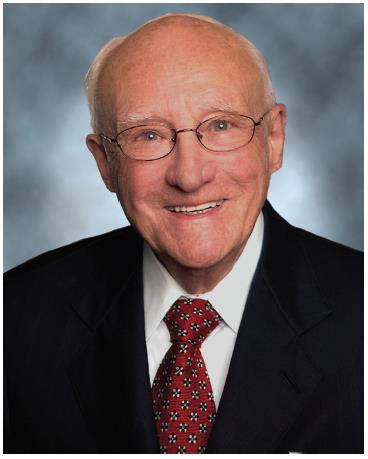
Ellen Gordon
 TOOTSIE ROLL INDUSTRIES
About Ellen Gordon
Ellen R. Gordon (age 93) is Chairman of the Board and Chief Executive Officer of Tootsie Roll Industries, Inc. (TR). She has been a director since 1969, served as President and Chief Operating Officer since 1978, and became Chairman and CEO in January 2015 . She is also Director and Vice-President of HDI Investment Corp., has served on boards of several nationally recognized graduate business and medical schools, and previously served on the board of a large public company where she chaired its audit committee . Under her leadership, TR emphasizes conservative finance and long-term brand building; pay-versus-performance disclosures highlight multi-year trends in sales, net earnings, margins, and TSR used in compensation deliberations .
Company performance context during the last five fiscal years:
| Metric | 2020 | 2021 | 2022 | 2023 | 2024 |
|---|---|---|---|---|---|
| Sales ($000s) | 467,427 | 566,043 | 681,440 | 763,252 | 715,530 |
| Net Earnings ($000s) | 58,974 | 65,308 | 75,892 | 91,886 | 97,819 (ex-NCI and per MIP definition; 2024 also excludes a $11.0M non-cash DTA write-off) |
| Net Earnings as % of Sales | 12.6% | 11.5% | 11.1% | 12.0% | 13.7% |
| Company TSR (Indexed to $100) | 91 | 115 | 141 | 114 | 116 |
Notes: 2024 MIP “Net Earnings” excludes extraordinary/non-recurring items per plan; EPS for 2024 referenced in MIP assessment was $1.37 .
Past Roles
| Organization | Role | Years | Strategic Impact |
|---|---|---|---|
| Tootsie Roll Industries, Inc. | Chairman & CEO | 2015–present | Combined leadership and strategy execution; board chair role central to governance and oversight . |
| Tootsie Roll Industries, Inc. | President & COO | 1978–2014 | Led operations and growth of core confectionery brands . |
| Tootsie Roll Industries, Inc. | Director | 1969–present | Long-tenured director with deep industry knowledge . |
External Roles
| Organization | Role | Years | Strategic Impact |
|---|---|---|---|
| HDI Investment Corp. | Director and Vice-President | Not disclosed | Family investment company; governance and capital stewardship . |
| Large public company (name not disclosed) | Director; Audit Committee Chair | Not disclosed | Financial oversight leadership as audit chair . |
| Graduate business and medical schools (various) | Board member | Not disclosed | External network and talent/academic engagement . |
Fixed Compensation
- Program design: TR does not grant equity to any employees, including the CEO; the Board emphasizes cash salary, MIP bonuses, and nonqualified plans. CEO salary is capped at $999,000; due to tax law changes, the CEO no longer accrues CAP/EBP and receives a discretionary cash replacement to avoid economic loss .
| Component ($) | 2022 | 2023 | 2024 |
|---|---|---|---|
| Salary | 999,000 | 999,000 | 999,000 |
| All Other Compensation | 1,934,172 (incl. nonqualified plan earnings/perqs) | 2,129,683 | 1,960,551 |
| Total Compensation | 6,793,272 | 7,289,683 | 7,204,551 |
Perquisites (2024):
- Company aircraft for business travel between headquarters and other executive-office locations: $1,678,458; limited personal travel: $80,999; Board approved for efficiency/security (aggregate incremental cost basis) .
- Company apartment while working at HQ: $101,513 .
- Automobile and driver for the CEO when in Chicago .
Clawback: Adopted effective December 1, 2023, covering certain executive compensation in case of material accounting misstatements or non-compliance with financial reporting requirements under NYSE Rule 303A-14 and Exchange Act Section 10D .
Performance Compensation
Design and 2024 outcomes:
- Management Incentive Plan (MIP): Discretionary annual cash bonus; no pre-set weightings; committee considers Net Earnings, EPS, sales growth (core and total), margins, cost savings, acquisitions, and other strategic objectives. 2024 MIP evaluation cited net earnings of $97,837,000 and EPS of $1.37; net product sales of $715,530,000; net earnings margin 13.7% .
- CEO supplemental discretionary bonus: $1,177,000 to replace CAP/EBP accruals foregone due to tax-driven design changes .
- No stock options, RSUs, PSUs or other equity awards are granted to any employees, including the CEO .
| Metric | Target | Actual (2024) | Weighting | Payout Mechanics | CEO Payouts |
|---|---|---|---|---|---|
| Net Earnings | Not pre-set (discretionary) | $97,837,000 (per MIP definition) | Discretionary | Committee discretion; considers YoY changes | Included in MIP bonus: $4,245,000 (2024) |
| EPS | Not pre-set | $1.37 (per MIP definition) | Discretionary | Committee discretion | Included in MIP bonus |
| Sales (Core/Total) | Not pre-set | $715,530,000 total sales | Discretionary | Committee discretion | Included in MIP bonus |
| Margin (Net earnings % sales) | Not pre-set | 13.7% | Discretionary | Committee discretion | Included in MIP bonus |
| CAP (deferred cash) | Not applicable to CEO in 2024 | N/A | N/A | CEO excluded; replaced by discretionary cash | $1,177,000 supplemental |
Benchmarking and committee process:
- Consultant: Compensation Strategies, Inc. (management-selected, Board-approved); no conflicts reported .
- Peer group: 18 public companies across snack/food/beverage; Board found total executive compensation at median vs peers after adjusting for size (Feb 28, 2025 market caps; revenues span $341M–$19.9B) .
- Say-on-pay: ~96.4% approval in 2023; Board made no significant changes as a result .
Equity Ownership & Alignment
- Anti-hedging: Directors and executive officers are prohibited from hedging Company stock via derivative securities .
- Equity-based pay: None granted to any employees, including CEO .
- Director fees: CEO receives no director/committee fees .
Beneficial ownership (as of March 5, 2025):
| Holder | Class | Direct Shares | Indirect/Fiduciary Shares | % of Class |
|---|---|---|---|---|
| Ellen R. Gordon | Common | 13,475,338 | 104,673 (trust) | 33.5% (for Common) |
| Ellen R. Gordon | Class B | 14,898,954 | — | 49.2% (for Class B) |
| Ellen R. Gordon (as fiduciary) | Common | — | 6,175,631 (incl. family fiduciary and foundation) | 15.2% (for Common) |
| Ellen R. Gordon (as fiduciary) | Class B | — | 6,035,147 | 19.9% (for Class B) |
Nonqualified plans — CEO balances (12/31/2024):
| Plan | Company Contributions (Last FY) | Aggregate Earnings (Last FY) | Balance at FYE |
|---|---|---|---|
| Excess Benefit Plan (EBP) | $0 | $7,064,042 | $35,362,950 |
| Career Achievement Plan (CAP) | $0 | $3,828,138 | $23,547,436 |
| Supplemental Savings Plan (SSP) | $0 | $674,372 | $3,728,928 |
Notes: CEO ceased accruing CAP/EBP after design changes; balances reflect long-term accruals and investment returns. CAP distributions (for participants) are subject to non-compete/non-solicit; CEO no longer participates prospectively but holds legacy balances .
Pledging: No explicit share-pledging disclosure or anti-pledging policy identified in the proxy; anti-hedging policy is in place .
Employment Terms
- Employment agreement: None; no severance agreements for CEO .
- Change-in-control: CEO has no CIC agreement (Board cites significant equity stake); CIC agreements and excise tax gross-ups exist for two other officers (Ember, Bowen), not for CEO .
- Clawback: Compensation clawback policy effective Dec 1, 2023 .
- Non-compete/non-solicit: Apply to CAP distributions; CAP vests 20% annually over 5 years with accelerated vesting upon death, disability, or retirement after age 65; CIC triggers immediate lump sum CAP payout for participants .
Board Governance (Director-Service Specifics and Dual-Role Implications)
- Role: Combined Chairman & CEO; no lead independent director; Board believes combined role suits company size/circumstances and facilitates strategy and information flow .
- Controlled company: Gordon family collectively holds >50% of voting power; certain NYSE independence requirements not applicable; Compensation Committee operates without a formal charter with full Board making CEO and officer pay decisions (CEO recuses on her pay) .
- Committee memberships: CEO is not an Audit or Compensation Committee member; non-management directors (Chodos, Lewis-Brent, Wardynski) serve on Audit and Compensation Committees .
- Independence: All non-management directors except Virginia L. Gordon are independent under NYSE standards .
- Meetings: Board met 4 times in 2024; all directors attended at least 75% of Board/committee meetings except one director at 70%; CEO attended the 2024 Annual Meeting .
- Director compensation (non-management 2024): Annual board retainer $125,000; $2,000 per Board meeting; Audit Committee retainer $10,000 ($18,000 for Chair); $2,000 per Compensation Committee meeting; CEO received no director fees .
Dual-role implications: The combined Chair/CEO role without a lead independent director and controlled-company status can concentrate authority and limit independent oversight; the Board cites size and continuity benefits, but investors should weigh governance trade-offs and potential independence concerns .
Compensation Committee & Peer Benchmarking
- Governance: Compensation Committee administers the MIP; full Board determines executive compensation; CEO recuses on her own compensation .
- Consultant: Compensation Strategies, Inc. engaged; no conflicts reported .
- Peer group (selected examples): Hershey, Campbell Soup, Kellanova, McCormick, J.M. Smucker, Post Holdings, TreeHouse Foods; peer revenues ~$0.34B–$19.86B, market caps ~$0.06B–$33.76B (as of 2/28/2025) .
- Competitive positioning: Total executive compensation at median vs peers after size adjustment; no targeted percentile used .
Say-on-Pay & Shareholder Feedback
- 2023 say-on-pay support: ~96.4% approval; Board made no significant changes in response .
Investment Implications
- Alignment and selling pressure: CEO has substantial long-term ownership across both classes (33.5% of Common and 49.2% of Class B directly; additional fiduciary holdings), and TR grants no equity—reducing mechanical vesting/selling overhang; anti-hedging policy mitigates misalignment risk .
- Governance risk: Controlled-company status, combined Chair/CEO without a lead independent director, and discretionary bonus design (including replacement cash for CAP/EBP) elevate governance and pay-for-performance scrutiny despite strong say-on-pay support .
- Performance linkage: The MIP is discretionary but anchored to Net Earnings, EPS, sales growth, and margins; 2024 results showed higher net earnings and margin with a slight sales decline versus 2023, which supported CEO bonus outcomes .
- Succession considerations: At age 93, CEO remains “vigorously engaged” with no present intention to retire; Board reviews succession planning periodically—investors should monitor continuity plans and potential transition catalysts .
Overall, the combination of concentrated ownership, cash-based and discretionary incentive design, and controlled-company governance can support long-term stability but warrants continued monitoring of capital allocation, succession, and independent oversight quality .