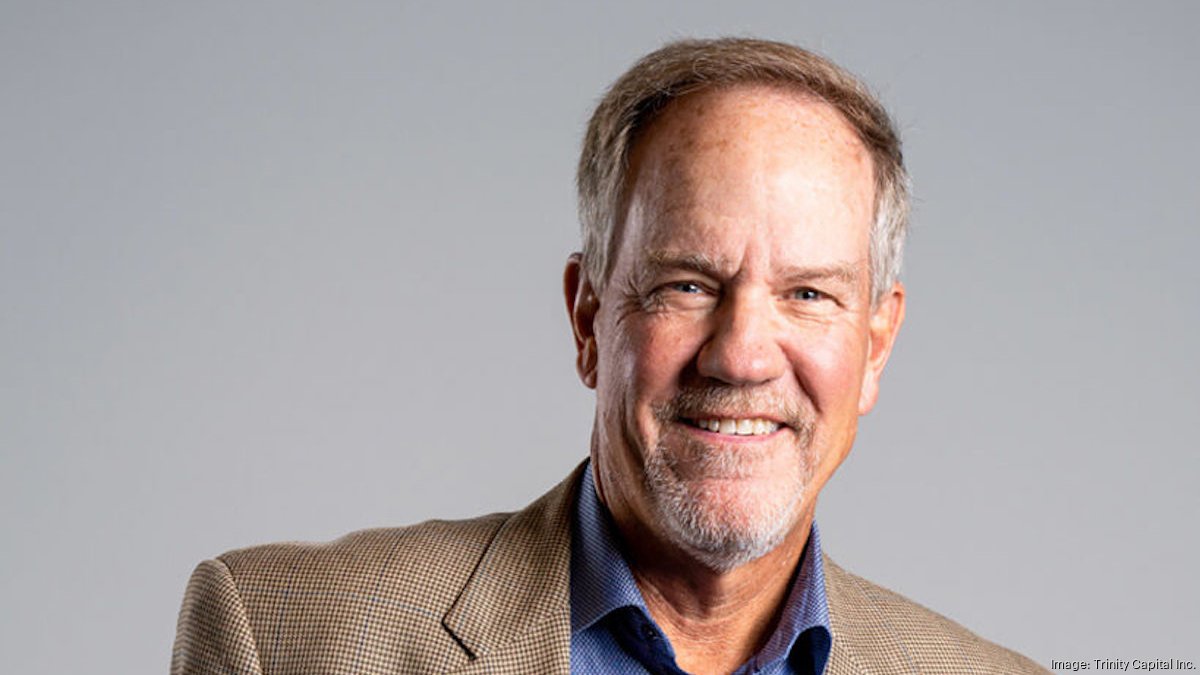
Kyle Brown
About Kyle Brown
Kyle Brown (age 41) is Chief Executive Officer (since Jan 1, 2024), President and Chief Investment Officer (since Aug 2019), and a Class 2 director of Trinity Capital Inc. (director since Sep 2019; term expires 2027) . Prior to Trinity Capital Inc., he served as Managing Partner at Trinity Capital Investments (predecessor) and founded multiple ventures; education not disclosed in the proxy . The Compensation Committee evaluates performance against BDC-relevant metrics — net investment income, return on average equity, dividend yield, net asset value growth, assets under management growth and operational deployment — with 2024 bonuses paid at 110% of target, evidencing above-plan execution . Governance note: Kyle is an “interested” director and son of Executive Chairman Steven L. Brown, creating independence considerations mitigated by a Lead Independent Director and fully independent Audit/Compensation/Nominating Committees .
Past Roles
| Organization | Role | Years | Strategic impact |
|---|---|---|---|
| Trinity Capital Investments (predecessor) | Managing Partner; Investment Committee member | 2015–2019 | Managed investment activities to meet deployment goals; built VC and tech bank relationships |
| Brown Equity, LLC | Founder & CEO | 2006–2015 | Led real estate financial investment firm; entrepreneurial operating experience |
| Sharp Equity Homes, LLC | Co‑founder/Manager | 2007–2012 | Built web-based MLS for trustee sale auctions; tech-enabled deal flow |
| Several additional startups | Founder/Co‑founder | Prior to 2015 | Serial entrepreneurship; sourcing and execution expertise |
External Roles
| Organization | Role | Years | Notes |
|---|---|---|---|
| — | — | — | No other public-company directorships disclosed for Kyle Brown |
Fixed Compensation
| Metric | FY 2022 | FY 2023 | FY 2024 |
|---|---|---|---|
| Base Salary ($) | 650,000 | 650,000 | 733,333 (reflects increase to $750,000 upon CEO promotion) |
| Target Bonus ($) | n/d | n/d | 1,650,000 (target for 2024 set by Comp Committee) |
| Actual Bonus Paid ($) | 1,255,350 | 1,343,400 | 1,815,000 (110% of target for 2024 performance) |
| Stock Awards ($ grant-date fair value) | 3,599,992 | 2,673,982 | 4,410,811 |
Notes:
- 2024 base salary increased to $750,000 upon becoming CEO; table reflects earned portion for the year .
- 2024 bonuses paid at 110% of target based on company/individual performance versus plan and peers .
Performance Compensation
Annual Cash/Bonus Design (2024)
| Metric considered | Guidance | Outcome/Payout |
|---|---|---|
| Net investment income; ROAE; dividend yield; NAV growth; AUM growth; operational deployment and capitalization | Committee must retain discretion under the 1940 Act; metrics used as directional inputs, not formulaic weights | Committee awarded 2024 bonuses at 110% of target for NEOs, including Kyle Brown |
Equity Awards and Vesting
| Element | Grant timing | Amount/Status | Vesting terms |
|---|---|---|---|
| Annual restricted stock (NEOs) | Typically Q1 each year | 2024 RSU grant to Kyle Brown valued $4,410,811 (grant-date FV) | Standard: 25% on 1st anniversary; remainder vests quarterly over next 3 years |
| 2024 “Pull‑Forward” restricted stock | Dec 2024 | Portion of 2025 cycle pulled forward into Dec 2024 | For Kyle Brown: combined 4‑yr schedule — restricted cash vests in years 1–2; pulled‑forward restricted stock vests in years 3–4 |
| Special one‑time stock options (approved) | Approved in late 2024 in lieu of some 2025 RS for certain NEOs incl. Kyle | Approved by Compensation Committee to align LT incentives and manage plan limits | As of 12/31/2024, no options were outstanding company‑wide; later grants subject to plan terms (10‑yr max, FMV exercise) |
Outstanding Unvested Equity (Year-End)
| As of 12/31/2024 | Unvested shares (#) | Market value ($) |
|---|---|---|
| Kyle Brown | 482,081 | 6,975,712 (valued at $14.47 YE close) |
Equity Ownership & Alignment
| Ownership snapshot (Record Date) | Shares | % of outstanding | Composition |
|---|---|---|---|
| Beneficial ownership (Apr 15, 2025) | 1,081,929 | 1.67% (out of 64,654,247 shares) | 1,019,285 direct; 10,825 via KBIZ Corp.; 51,819 via Kyle & Amy Brown Family Trust |
Additional alignment factors:
- Hedging banned; pledging prohibited except with pre‑approval and demonstrable ability to repay without resort to pledged securities .
- Insider policy prohibits short-term trading, short sales, and derivatives on company stock .
- No executive ownership guideline disclosure found in the proxy; no pledges disclosed .
Insider reporting:
- Company reported certain late Form 4 filings (including for Kyle Brown) due to administrative error; no willful noncompliance indicated .
Employment Terms
Potential Payments Upon Termination (as of 12/31/2024)
| Scenario | Severance ($) | Bonus ($) | Equity Acceleration ($) |
|---|---|---|---|
| Death | 1,355,555 | 2,392,500 | 7,003,090 |
| Disability | 1,355,555 | 2,392,500 | 7,003,090 |
| Termination without Cause or Good Reason | 1,355,555 | 2,392,500 | 7,003,090 |
| Within 1 year after Change in Control; terminated without Cause or Good Reason | 1,355,555 | 2,392,500 | 7,003,090 |
A&R NEO Agreements (effective Mar 14, 2025) highlights:
- Base salary set at $750,000 for Kyle Brown, subject to annual review .
- Severance if terminated without Cause or for Good Reason: 24 months of base salary for Kyle (increases to 3× base salary if within 24 months after a “Covered Transaction”); bonus: earned but unpaid plus pro‑rata bonus, replaced by 2× three‑year average (and 2× for Kyle) if within 24 months post‑transaction; equity vesting: accelerates any portion vesting within 2 years (full acceleration within 24 months post‑transaction); COBRA premium equivalents for 24 months (36 months if within 24 months post‑transaction) .
- Confidentiality, non‑compete, and non‑solicit covenants apply .
- Equity plan provides single‑trigger full acceleration upon “covered transactions” (e.g., merger/sale/change in board majority) unless award specifies otherwise — governance caution for acceleration without termination .
Board Governance
| Attribute | Detail |
|---|---|
| Board seat | Class 2 director; term expires at 2027 Annual Meeting |
| Independence | “Interested” director (company executive) under 1940 Act |
| Committees | Investment Committee member (management-level committee). Audit, Compensation, Nominating committees are fully independent; Kyle not a member |
| Board leadership | Executive Chairman: Steven L. Brown (interested); Lead Independent Director: Ronald E. Estes |
| Attendance | Board met 10x in 2024; all directors attended ≥75% of meetings |
| Classification | Board declassifying by 2027; Kyle’s class already set through 2027 |
| Dual-role implications | CEO + director; father-son relationship with Executive Chairman noted explicitly by the company |
Director compensation: employee directors (including Kyle) receive no director fees; only independent directors receive retainers and equity under a separate plan .
Compensation Structure Analysis
- Mix and magnitude: 2024 total reported comp rose to ~$6.97M driven by larger equity grant and higher target bonus; equity remains the largest component (alignment), but restricted cash was used in 2025 cycle to manage plan limits — introducing more guaranteed elements near-term .
- Program mechanics: Committee retains discretion (required for BDCs), uses multi-metric scorecard; 2024 payout at 110% suggests above-plan performance but no formulaic weights disclosed (limits strict pay-for-performance transparency) .
- Equity program evolution: 2019 LTIP share pool expanded to 9.4M in 2024; minimum one‑year vesting added; special one‑time options approved for certain NEOs including Kyle (potential future dilution, though company maintained no options outstanding at YE 2024) .
- Clawback: Nasdaq/Rule 10D‑1 compliant clawback adopted for restatements .
- Red flags/governance: Single‑trigger plan acceleration upon covered transactions; family relationship at top (Executive Chair is Kyle’s father) elevates independence and succession risk considerations .
Equity Ownership & Director/Executive Policies
- Material ownership: 1.67% beneficial ownership aligns CEO with shareholders; dollar range over $100,000 disclosed for directors, including Kyle .
- Trading policies: Hedging prohibited; pledging tightly restricted with pre‑approval and demonstrated financial capacity; short sales/derivatives prohibited .
Say‑on‑Pay & Peer Benchmarking
- Say‑on‑pay: Trinity is an Emerging Growth Company and not subject to annual say‑on‑pay votes; ongoing shareholder engagement noted .
- Peer benchmarking: Compensation Committee engaged Mercer (2021) and FW Cook (2024); peer set includes internally managed BDCs, internally managed REITs, and similar financials of comparable size (target percentile not disclosed) .
Risk Indicators & Related Party
- Legal/SEC: Company reports no applicable legal proceedings against directors/officers in past 10 years .
- Section 16: Administrative late Form 4s (including Kyle) disclosed; company-filed corrections .
- Related party: Explicit father‑son relationship (Executive Chair and CEO); committees comprised solely of independent directors; Lead Independent Director structure in place .
Investment Implications
- Alignment and retention: High insider ownership (1.67%) and multi‑year vesting support alignment and retention; significant unvested equity ($6.98M YE 2024) creates multi‑year retention hooks and potential future selling cadence as tranches vest (years 3–4 for pulled‑forward stock) .
- Pay momentum vs performance: 2024 above‑target bonus (110%) and larger equity grant suggest the Board viewed execution favorably; however, discretionary structure limits visibility into precise pay-for-performance elasticity .
- Governance risk: Single‑trigger equity acceleration upon covered transactions, combined with enhanced severance/CIC economics in A&R agreements, increases potential change‑of‑control costs; family dual‑role (Exec Chair/CEO) warrants continued monitoring of independent oversight and succession planning .
- Dilution/overhang: LTIP share pool expansion to 9.4M and authorization for options (none outstanding at YE 2024) raise potential dilution; plan incorporates minimum one‑year vesting and SEC BDC guardrails to mitigate abuse .