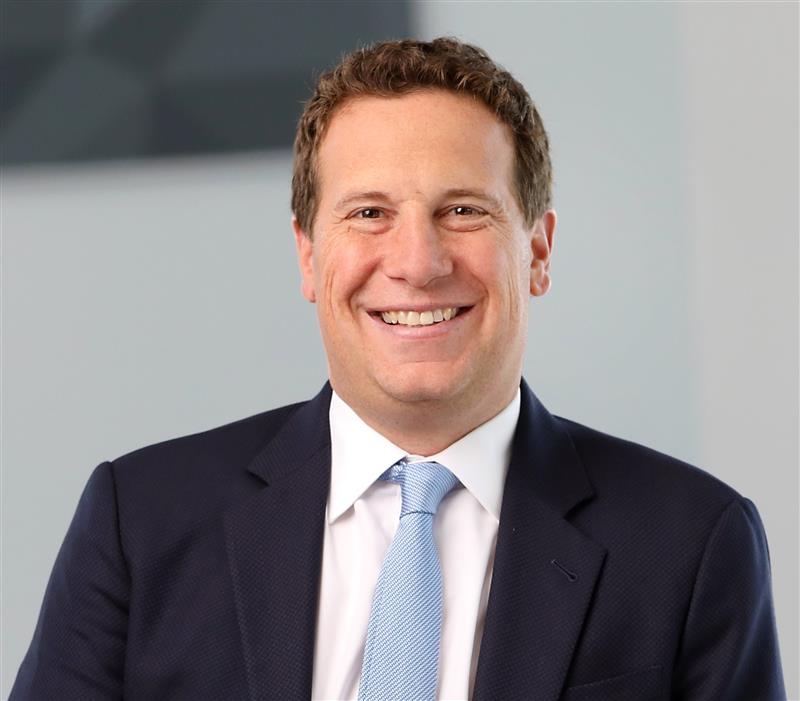
Mat Ishbia
About Mat Ishbia
Mat Ishbia (age 45) is Chairman, Chief Executive Officer and President of UWM Holdings Corporation, serving as CEO since June 2013 and a director since 2021; he holds a bachelor’s degree from Michigan State University and under his leadership UWM became the #1 overall lender in America and has maintained its position as the top wholesale lender for the last decade . UWM is a controlled company: through SFS Holding Corp., for which Ishbia is control person, he holds 79.0% of total voting power, with a certificate “voting limitation” capping that control at 79% even though Class D super-voting shares would otherwise imply ~99% . UWM’s performance context (Pay vs Performance disclosure): 2024 total shareholder return (TSR) value of an initial $100 investment was $62.51 vs peer group $130.88; 2024 net income was $329.4 million and Adjusted EBITDA was $460.0 million; 2023 TSR $77.21 (net loss $69.8 million; Adj. EBITDA $478.3 million); 2022 TSR $33.43 (net income $931.9 million; Adj. EBITDA $282.4 million); 2021 TSR $53.55 (net income $1,568.4 million; Adj. EBITDA $1,418.3 million) .
Past Roles
| Organization | Role | Years | Strategic impact |
|---|---|---|---|
| UWM Holdings / United Wholesale Mortgage | CEO & President | Jun 2013–present | Led UWM to #1 overall lender in America; maintained top wholesale lender position for a decade . |
| UWM | EVP, Wholesale; National Sales Manager; Account Executive | 2003–2013 | Progressively expanded leadership roles after joining UWM full-time in 2003 . |
External Roles
| Organization | Role | Years | Notes |
|---|---|---|---|
| Phoenix Suns (NBA) | Controlling Owner and Governor | Feb 2023–present | Outside operating commitment disclosed in director bio . |
| Author | Author, “Running the Corporate Offense” | — | Book cited in bio . |
Fixed Compensation
| Year | Base Salary ($) | Target Bonus ($) | Notes |
|---|---|---|---|
| 2024 | 600,000 | 8,800,000 | CEO salary unchanged in 2024; other NEOs +~4% effective Feb 10, 2024 . |
| 2023 | 600,000 | — | Target not disclosed in proxy; salary per SCT . |
| 2022 | 600,000 | — | Target not disclosed in proxy; salary per SCT . |
Performance Compensation
| Year | Plan | Metric/Category | Weighting | Target | Actual | Payout ($) | Payout mix | Vesting |
|---|---|---|---|---|---|---|---|---|
| 2024 | Captains Annual Bonus | Multiple operational metrics (People, Service, Processing Time, Compliance, Quality, Production, Purchase Loans, Expenses; plus Leadership, NPS, Broker Channel) | Equal across metrics | Threshold/Target/Max set for each metric (specific levels not disclosed) | Overall achievement 120.97% | 10,658,012 | 90% cash / 10% RSUs | RSU portion granted Feb 6, 2025; RSUs vest ~1 year from grant . |
| 2023 (paid in 2024) | Captains Annual Bonus (equity component) | Equity portion of 2023 bonus | — | — | — | Grant-date fair value $1,032,683 | 100% RSUs (equity component) | 152,990 RSUs granted Feb 9, 2024; vest Mar 1, 2025 . |
Notes
- CEO does not participate in the LTIP; other NEOs have LTIP tied to annual net income and paid over four years if employed on payout dates .
Multi‑Year CEO Summary Compensation
| Metric | 2022 | 2023 | 2024 |
|---|---|---|---|
| Salary ($) | 600,000 | 600,000 | 600,000 |
| Bonus ($) | — | — | — |
| Stock Awards ($) | — | 1,153,600 | 1,032,683 |
| Non‑Equity Incentive Plan ($) | 5,246,400 | 9,153,144 | 9,580,824 |
| All Other Compensation ($) | 1,143,122 | 1,261,375 | 1,937,428 (includes $1,934,928 for personal security) |
| Total ($) | 6,989,522 | 12,168,119 | 13,150,935 |
Equity Ownership & Alignment
| Item | Detail |
|---|---|
| Total beneficial ownership | 1,402,888,990 shares deemed beneficially owned (includes 1,397,782,620 Class D via SFS Corp and 5,106,370 Class A directly/trustee) . |
| Ownership concentration | 100% of Class D; 87.5% of Class A on an as-converted basis; total voting power 79.0% due to voting limitation . |
| Pledging | 841,218,503 shares of Class D (also reflected as as‑converted Class A in footnote) pledged as security for two loan facilities (RED FLAG) . |
| Vested vs unvested (year‑end 2024) | Unvested RSUs: 152,990 (grant 2/9/24; service‑based vest 3/1/25); market value $898,051 at $5.87/share on 12/31/24 . |
| Shares vested in 2024 | 267,037 shares; value realized $1,754,433; shares withheld for taxes: 95,517 . |
| Hedging/pledging policies | Hedging prohibited for officers/directors; pledging not expressly prohibited (pledge disclosed above) . |
Outstanding and Vested Equity Detail
| Category | Grant date | Unvested units (#) | Vesting schedule | Market value at 12/31/24 ($) |
|---|---|---|---|---|
| RSUs (2023 Captains equity) | 2/9/2024 | 152,990 | Service‑based vest on 3/1/2025 | 898,051 (152,990 × $5.87) . |
| Stock vested in 2024 | — | 267,037 | Vested during 2024; tax withholding of 95,517 shares | 1,754,433 value realized . |
Employment Terms
| Term | Disclosure |
|---|---|
| Employment agreement | None; no severance agreements for current executive officers . |
| Severance multiples | None contractually (no salary+bonus multiple) . |
| Change‑of‑control (CoC) | No CoC cash payments; under the 2020 Omnibus Incentive Plan, all outstanding RSUs vest upon a change in control or death/disability; a portion of unpaid, previously‑earned LTIP would vest on death (CEO does not participate in LTIP) . |
| Non‑compete / non‑solicit | Not disclosed in proxy (skip). |
| Clawback | Not disclosed in proxy (skip). |
| Perquisites | Company funds personal security for CEO based on third‑party risk assessment; $1,934,928 in 2024 included in “All Other Compensation” . |
Board Governance
- Board service and roles: Director since 2021; Chairman of the Board; member of the Compensation Committee; dual role as Chair/CEO .
- Controlled company governance: SFS Corp./Mat Ishbia control a majority of voting power; UWM relies on NYSE “controlled company” exemptions (no nominating committee; compensation committee not entirely independent) .
- Compensation oversight: Because CEO sits on Compensation Committee, a two‑independent‑director subcommittee makes all CEO compensation decisions .
- Board leadership and independence: Board combines Chair/CEO and does not maintain a lead independent director due to controlled status; structure reviewed periodically .
- Meetings and attendance: Board held 5 meetings in 2024; all directors met at least 75% attendance; independent directors hold executive sessions, presided over by Robert Verdun .
- Say‑on‑pay: Over 99% approval at 2024 annual meeting .
Pay Versus Performance (Context)
| Metric | 2021 | 2022 | 2023 | 2024 |
|---|---|---|---|---|
| CEO SCT Total Compensation ($) | 7,808,350 | 6,989,522 | 12,168,119 | 13,150,935 |
| Compensation Actually Paid to CEO ($) | 7,808,350 | 6,989,522 | 12,923,834 | 12,829,377 |
| Company TSR (value of $100) | 53.55 | 33.43 | 77.21 | 62.51 |
| Peer Group TSR (value of $100) | 108.23 | 86.36 | 121.92 | 130.88 |
| Net Income (loss) ($000s) | 1,568,400 | 931,858 | (69,782) | 329,375 |
| Adjusted EBITDA ($000s) | 1,418,337 | 282,402 | 478,270 | 459,975 |
Compensation Structure Analysis
- Mix and trends: CEO pay is dominated by annual performance cash (Captains Plan), with a small RSU component (10%) added in 2024; CEO received RSUs beginning in 2023, after no stock awards in 2021–2022 .
- Target changes: 2024 target bonus was increased ~5% vs prior year; 2024 Captains Plan paid at ~120.97% achievement, with 90% cash/10% RSUs for CEO .
- Benchmarking and consultants: Committee does not benchmark to a specific peer group and did not retain a compensation consultant in 2024 (heightened governance sensitivity) .
- Risk controls: Hedging prohibited; CEO compensation set by independent subcommittee due to CEO’s presence on the full Compensation Committee .
Related Party Transactions (Governance Red Flags)
| Transaction | 2023 ($mm) | 2024 ($mm) | Counterparty/Notes |
|---|---|---|---|
| Campus leases (incl. UWM Sports Complex) | 20.0 | 19.5 | Entities controlled by Jeffrey A. and Mat Ishbia; maturities 2027–2037; options to extend . |
| Aircraft usage fees (to Ishbia entities) | 0.2 | 0.2 | Company leases aircraft owned by entities controlled by Mat Ishbia; additional pilot/ancillary services to third parties (0.4 in 2023; 0.2 in 2024) . |
| Legal retainer (Ishbia & Gagleard, P.C.) | 0.6 | 0.6 | Firm where director Jeffrey A. Ishbia is partner . |
| Administrative services (fees to UWM) | 0.3 | 0.3 | Fees earned by UWM for services to entities controlled by Mat/Jeffrey Ishbia . |
Board Service History and Director Compensation Elements
- Service history and committees: Mat Ishbia has served as a Class I director since 2021 and is a member of the Compensation Committee; he also serves as Chairman of the Board and CEO (dual role) .
- Independence implications: As a controlled company, UWM avails itself of NYSE exemptions; compensation committee is not entirely independent, but an independent subcommittee determines CEO pay; no lead independent director is designated .
- Attendance: All directors (including Ishbia) attended at least 75% of Board and committee meetings in 2024; five Board meetings held .
Risk Indicators & Red Flags
- Pledging risk: 841.2 million Class D shares pledged as collateral by SFS Corp. may pose forced‑sale risk under stress (material alignment concern) .
- Controlled company structure: 79% capped voting power and combined Chair/CEO without lead independent director reduce minority shareholder protections .
- Related party transactions: Ongoing leases, aircraft arrangements, and legal retainer with entities affiliated with the Ishbia family .
- Perquisites: High security spend ($1.935 million in 2024) justified by threat assessment; increases headline “All Other Compensation” .
Equity Ownership & Potential Selling Pressure
- Near‑term vesting: 152,990 RSUs vesting March 1, 2025 are modest versus total beneficial holdings, limiting mechanical selling pressure; 2024 RSU vesting saw 95,517 shares withheld for taxes (non‑open‑market) .
- Pledge‑related risk: The large share pledge is a material overhang; adverse price moves could trigger collateral actions independent of open‑market selling preferences .
Say‑on‑Pay & Shareholder Feedback
- Say‑on‑pay support exceeded 99% at the 2024 annual meeting; the committee reviews this feedback annually when setting pay .
Expertise & Qualifications
- Industry experience: 20+ years at UWM across sales and wholesale leadership; recognized advocate for mortgage brokers .
- Education: Bachelor’s degree from Michigan State University; author of a leadership/management book .
- External commitments: NBA Phoenix Suns Governor since Feb 2023 .
Investment Implications
- Alignment vs control: Ishbia’s substantial economic and voting stake aligns long‑term interests but the controlled company structure (and combined Chair/CEO role) concentrates power and limits minority checks; absence of a lead independent director heightens governance risk .
- Compensation design: CEO pay is highly performance‑linked via annual cash bonuses with a small RSU component; CEO is excluded from the LTIP, which reduces multi‑year equity alignment but also mitigates dilution; 2024 payout at 121% reflects strong operational goal attainment but TSR lagged peers, indicating potential pay‑performance timing mismatch at the stock level .
- Pledging overhang: The pledge of 841.2 million Class D shares is a notable red flag; while no explicit pledging ban exists, collateral pressure in downturns could create technical overhang .
- Related party footprint: Campus leases, aircraft arrangements, and legal retainer are recurring and audited but contribute to governance discount risk (optics and potential conflicts), partly offset by transparent disclosure and Audit Committee oversight .
- Shareholder support: >99% say‑on‑pay support and use of an independent subcommittee for CEO pay decisions are positives, though the lack of external consultant in 2024 may be questioned by some investors seeking third‑party benchmarking rigor .