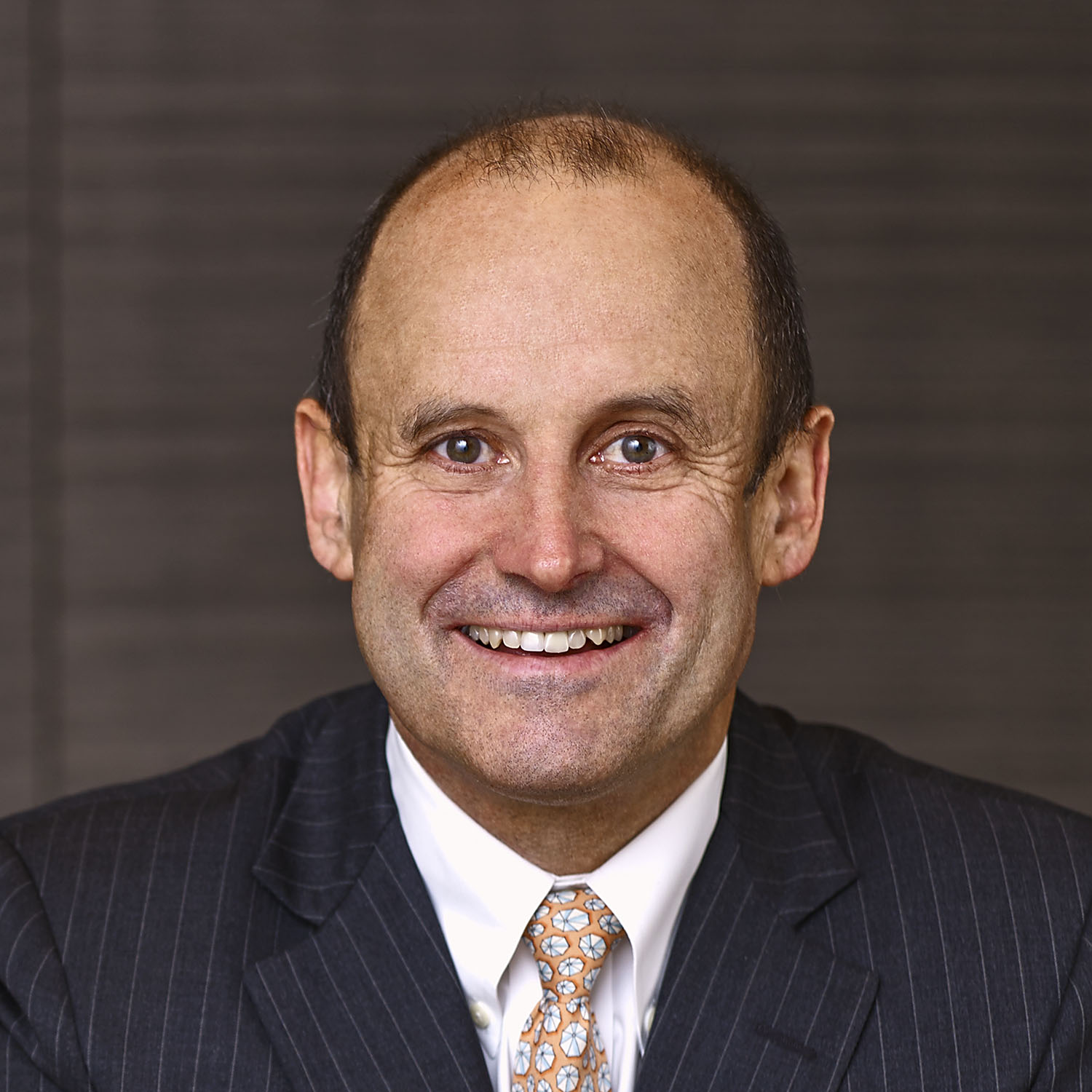
Edward Pitoniak
About Edward Pitoniak
Edward B. Pitoniak, age 69, has served as VICI’s Chief Executive Officer and a director since October 6, 2017; he holds a B.A. from Amherst College and brings deep hospitality, gaming and REIT experience including prior CEO, chair, and trustee roles across public and private entities . Under his tenure, VICI reported five-year total stockholder return of 48.9%, three-year TSR of 13.6%, and one-year TSR of (3.1)%, with 14 consecutive quarters of capital deployment and ~$1.1B of committed capital in 2024; fully diluted AFFO/share reached $2.26 in 2024, driving a 200% STIP payout based on two-year AFFO/share growth (17.5%) . VICI’s governance structure features an independent Chair and fully independent committees, mitigating typical CEO-director dual-role risks .
Past Roles
| Organization | Role | Years | Strategic Impact |
|---|---|---|---|
| bcIMC Hospitality Group / Canadian Hotel Income Properties (CHIP) | President & CEO; Director | 2004–2009; CHIP sale in 2007 | Led four consecutive years of total return leadership among Canadian hotel REITs; executed sale; operational and brand ownership expertise . |
| Intrawest Corporation | Senior Vice President | ~8 years prior to CHIP | Ski and golf resort operations/development; experiential asset operator perspective . |
| Times Mirror Magazines (Ski Magazine) | Editor-in-Chief; Associate Publisher | 9 years prior to Intrawest | Consumer brand leadership; media and marketing discipline . |
| InnVest (Public REIT) | Chair & Trustee; Managing Director/Acting CEO & Trustee | 2014–2016; Chair/Trustee 2015–2016 | Recapitalized REIT; transitioned from external to internal management; supported sale and take-private . |
| Realterm (PE real estate manager) | Vice Chair | 2015–2017 | Logistics real estate investment management experience . |
External Roles
| Organization | Role | Years | Notes |
|---|---|---|---|
| Ritchie Bros. Auctioneers (NYSE: RBA) | Independent Director | 2006–2019 | Global asset management and disposition company board service . |
| Regal Lifestyle Communities (TSE: RLC) | Director | 2012–2015 | Canadian senior housing real estate owner/operator; director through sale . |
Fixed Compensation
| Metric | 2023 | 2024 |
|---|---|---|
| Base Salary ($) | $1,000,000 | $1,000,000 |
| Target Bonus (% of Salary) | 225% (CEO STIP target) | 225% (CEO STIP target) |
| Actual STIP Paid ($) | $4,000,000 | $4,500,000 |
| All Other Compensation ($) | $27,678 | $28,318 |
Notes:
- 2024 STIP opportunity levels: Threshold 112.5%, Target 225%, Superior 450% of base salary; payout capped at 200% for superior performance .
Performance Compensation
Short-Term Incentive Plan (STIP) – 2024
| Metric | Weighting | Target Definition | Actual | Payout | Vesting |
|---|---|---|---|---|---|
| AFFO per share growth (two-year) | 100% | AFFO/share growth thresholds set Feb 2023; rigorous vs triple-net REIT peers and macro backdrop | 2024 AFFO/share $2.26; one-year growth 5.1%; two-year growth 17.5% | 200% of target (capped at 200%) | Cash, paid Feb 2025 |
(“AFFO per share” is non-GAAP; see proxy appendix for definitions.)
Long-Term Incentive Program (LTIP) – 2024 Grants (Performance Period 2024–2026)
| Component | Weight | Grant Date | Award Size | Key Terms | Payout Scale |
|---|---|---|---|---|---|
| Time-Based Restricted Stock | 40% of total LTIP target (CEO: $3,100,000) | Feb 22, 2024 | 105,046 shares | Vests ratably on Feb 22 of 2025, 2026, 2027; dividends accrued and paid only upon vesting | Service-based vesting only |
| PSUs – Absolute TSR | 30% of total LTIP target (half of PSUs) | Feb 22, 2024 | CEO target PSUs total 157,569 (threshold 78,785; superior 315,138) | 3-year performance; compounded annualized TSR including reinvested dividends; linear interpolation; if Absolute TSR is negative, Relative TSR payouts capped at target | Threshold/Target/Superior scales per plan |
| PSUs – Relative TSR vs MSCI US REIT Index (RMZ) | 30% of total LTIP target (half of PSUs) | Feb 22, 2024 | Included in CEO PSUs target totals above | 3-year performance vs RMZ constituents; linear interpolation; cap applies if Absolute TSR is negative | Threshold/Target/Superior scales per plan |
| Performance-Based Grant Date Fair Value (CEO) | — | — | $4,172,427 | Monte Carlo valuation; maximum value at superior $8,344,854 | — |
Status of prior cycle (2022 PSUs):
- Absolute TSR annualized 4.3% (13.6% total); Relative TSR at 75th percentile; aggregate earned at “target” after 3-year period ended Dec 31, 2024 .
Equity Ownership & Alignment
| Item | Detail |
|---|---|
| Beneficial Ownership | 1,263,683 VICI common shares (as of Mar 3, 2025); <1% of outstanding . |
| Ownership Guidelines | CEO required 6x base salary; CEO actual 33x as of Dec 31, 2024 (all execs exceed requirements) . |
| Hedging/Pledging | Robust anti-hedging, anti-short sale, and anti-pledging policies; no margin purchases; Insider Trading Policy enforced . |
| Dividends on Awards | No dividends paid on equity awards unless and until vesting; PSUs dividends accrue and pay only if PSUs vest . |
| Outstanding Equity | Time-based grants and PSUs detailed above; outstanding awards and market values disclosed as of Dec 31, 2024 . |
Employment Terms
| Term | CEO Details |
|---|---|
| Role start date | Appointed CEO Oct 6, 2017 . |
| Agreement term | Amended & restated employment agreements auto-renew annually unless 180-day non-renewal notice; renewed Dec 31, 2022/2023/2024 . |
| STIP/LTIP design | STIP and LTIP targets set by Compensation Committee; consultant Pay Governance LLC engaged; peer benchmarking used . |
| Severance (no CIC) | Cash severance equal to 150% of base salary plus target bonus, paid over 12 months; $40,000 cash payment; accelerated vesting of time-based equity; pro-rata PSUs remain outstanding to end of period . |
| Severance (double-trigger CIC) | Cash severance equal to 200% of base salary plus target bonus (lump sum); pro-rated bonus payable; all PSUs continue to end of period with vesting based on greater of target or actual through CIC (proration rules specific); accelerated time-based equity . |
| Non-compete / Non-solicit | Customary covenants; non-compete generally one year post-termination (shorter in certain non-renewal contexts) . |
| Clawback | Dodd-Frank compliant clawback policy updated Oct 2023; recoups erroneously awarded incentive comp upon required restatement . |
| Excise tax gross-ups | None (disclosed governance practice) . |
Illustrative potential payments for CEO as of Dec 31, 2024:
| Scenario | Cash Severance ($) | Pro-Rata Bonus ($) | Accelerated RS Stock ($) | Accelerated PSUs ($) | Total ($) |
|---|---|---|---|---|---|
| Non-renewal by Company | — | — | $5,380,657 | — | $5,380,657 |
| Termination w/o Cause or for Good Reason (no CIC) | $4,915,000 | $4,500,000 | $5,380,657 | — | $14,795,657 |
| Termination w/o Cause or for Good Reason in connection with CIC | $6,540,000 | $4,500,000 | $5,380,657 | $7,529,841 | $23,950,499 |
| Death or Disability | — | $4,500,000 | $5,380,657 | — | $9,880,657 |
| Qualified Retirement | — | — | $3,068,394 | — (PSUs remain pro-rata outstanding) | $3,068,394 |
Board Governance
- Board role: Director since Oct 2017; not independent (CEO); no committee service .
- Independent Chair structure: James R. Abrahamson as independent Chair; separate Chair and CEO roles; fully independent committees; regular executive sessions; 7 Board meetings in 2024 (Audit 4, Compensation 5, Nominating & Governance 4) .
- Director attendance: All directors attended 2024 annual meeting; ≥75% meeting attendance for 2024 .
- Policy safeguards: Majority voting for directors; proxy access; stockholder right to call special meetings; opted out of certain Maryland anti-takeover statutes .
Compensation Peer Group and Say-on-Pay
- 2024 peer group includes diversified REITs and experiential operators (e.g., Realty Income, W.P. Carey, American Tower, Caesars, Hilton, MGM, Simon) .
- CEO target total compensation at ~30th percentile of peer CEOs and ~17% below peer median in 2024 benchmarking .
- Say-on-Pay approval: ~96% support at 2024 annual meeting; Say-on-Frequency: ~97% support for annual votes .
Director Compensation (for context)
- Non-employee director program: $300,000 annual retainer (approx. 67% equity / 33% cash), plus chair/member retainers; Pitoniak, as employee director, does not receive non-employee director compensation . 2024 director award of $200,000 restricted stock granted Apr 30, 2024 (covering Apr 30, 2024–Apr 29, 2025) .
Performance & Track Record
- 2024 highlights include supporting tenant investments (e.g., up to $700M at The Venetian), new relationships (Homefield/Margaritaville), and mezzanine investment (Great Wolf), reflecting disciplined capital allocation amid a challenging macro and elevated rates .
- Pay vs performance disclosure evidences alignment via TSR and AFFO growth correlations over 2020–2024; CAP metrics reflect equity-heavy compensation .
Risk Indicators & Policies
- No material related party transactions; no family relationships among directors/executives .
- Anti-hedging/pledging; no repricing of underwater options; one-year minimum vesting (with small carve-out) .
- Enterprise risk management, cybersecurity governance, and gaming regulatory compliance oversight integrated with Board committees .
Compensation Committee Analysis
- Compensation Committee: Fully independent; chaired by Craig Macnab; engages Pay Governance LLC as independent consultant; administers clawback policy and reviews human capital programs .
Investment Implications
- Pay-for-performance alignment appears robust: STIP pays strictly on AFFO/share growth over two years; LTIP is majority at-risk PSUs tied to absolute and relative TSR with downside caps when absolute TSR is negative, reducing windfall risk .
- Retention risk is mitigated by multi-year vesting, strong ownership (CEO at 33x salary), strict anti-pledging/hedging, and competitive yet below-median CEO target pay positioning; severance is double-trigger on CIC, with meaningful but standard multiples for REITs .
- Near-term selling pressure risks from insider activity are not disclosed in the proxy; policies limit hedging/pledging and dividends on unvested awards, suggesting lower mechanical selling incentives beyond tax-withholding on vesting .