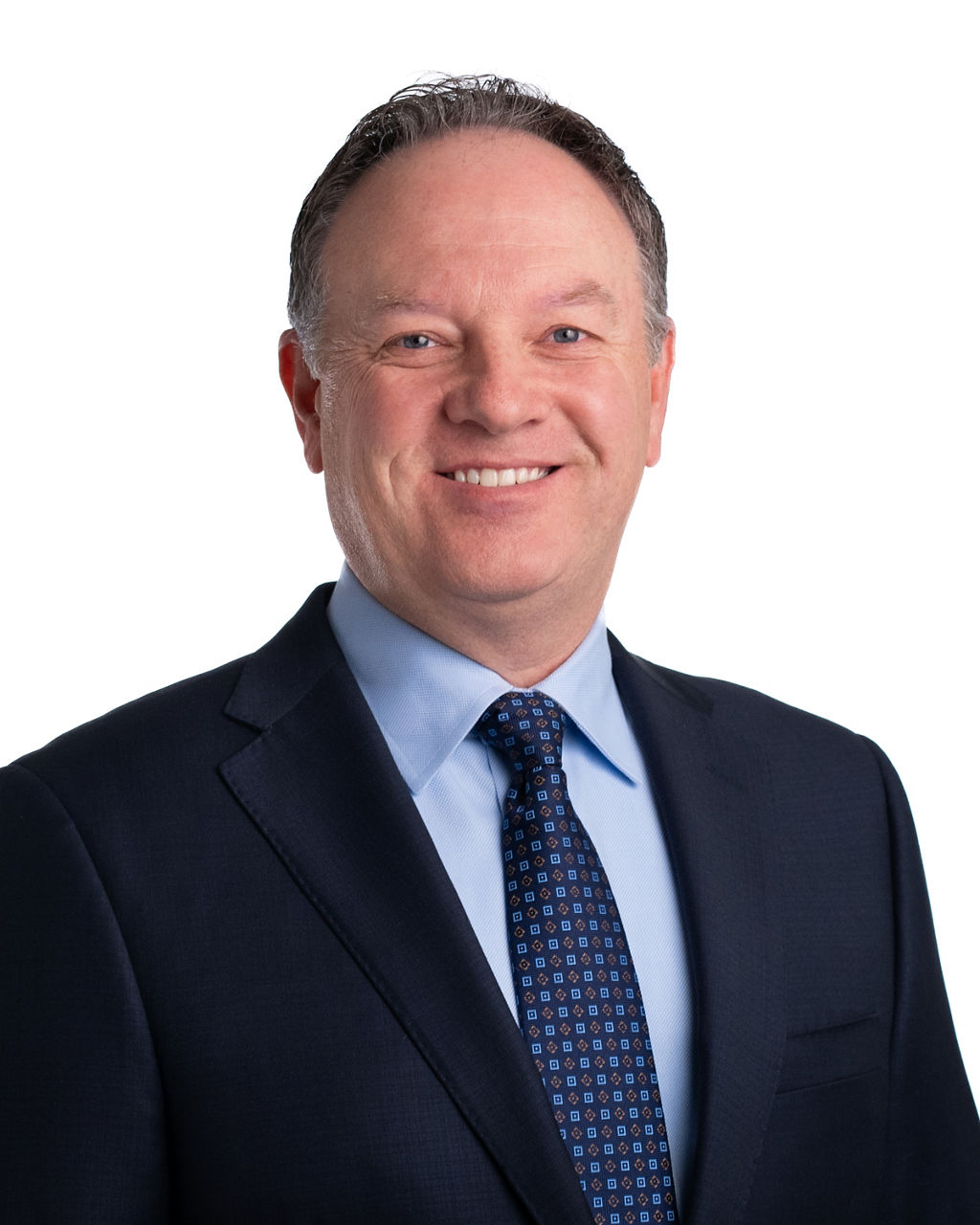
Michael Happe
 WINNEBAGO INDUSTRIES
About Michael Happe
Michael J. Happe, age 54, has been President, CEO, and a director of Winnebago Industries since January 2016. He previously spent 19 years at The Toro Company, ultimately serving as Executive Officer and Group VP of Toro’s Residential and Contractor business; he also serves as a director at H.B. Fuller Company . Under his leadership, Winnebago pursued transformation to an outdoor recreation enterprise through acquisitions (Grand Design RV, Chris-Craft, Newmar, Barletta Boats, Lithionics Battery) and has “grown significantly” in net sales, net income, market share, and TSR per the company’s board biography . Recent performance context: Revenues declined from FY2023 to FY2025 while EBITDA compressed; TSR from a $100 investment benchmark fell to 67.5 by FY2025, reflecting multi-year stock underperformance versus the FY2020 baseline .
| Metric | FY 2023 | FY 2024 | FY 2025 |
|---|---|---|---|
| Revenues ($USD) | $3,490,700,000 | $2,973,500,000 | $2,798,200,000 |
| EBITDA ($USD) | $351,700,000* | $190,200,000* | $119,000,000* |
Values marked with * retrieved from S&P Global.
Past Roles
| Organization | Role | Years | Strategic Impact |
|---|---|---|---|
| The Toro Company | Executive Officer; Group VP – Residential & Contractor | 19 years (ending 2015) | Led major business lines; global leadership roles; experience in brand, channel, and operations |
External Roles
| Organization | Role | Years | Strategic Impact |
|---|---|---|---|
| H.B. Fuller Company | Director | Current | Adds external corporate governance and strategy expertise |
Board Governance (Director Service, Committees, Independence)
- Director since 2016; employee director (not independent) .
- Independent Board Chair (David W. Miles) since June 2019; all committees comprised of independent directors .
- Committees (current): Audit, Human Resources, Nominating & Governance, Technology & Innovation; Happe is not listed on any committee .
- Board met 8 times in FY2025; all directors met the ≥75% attendance standard; executive sessions of independent directors occur at every regular meeting .
- Anti-hedging and anti-pledging policy applies to employees and directors .
- Employee directors receive no additional board compensation .
Fixed Compensation
Summary Compensation for Michael J. Happe
| Component ($) | FY 2023 | FY 2024 | FY 2025 |
|---|---|---|---|
| Salary | 1,050,000 | 1,121,154 | 1,150,000 |
| Stock Awards | 4,249,995 | 4,717,461 | 6,185,000 |
| Option Awards | 749,992 | 832,492 | 915,006 |
| Non-Equity Incentive (OICP) | 550,500 | 505,500 | 704,000 |
| All Other Compensation | 77,241 | 40,624 | 45,892 |
| Total | 6,677,728 | 7,217,231 | 8,999,898 |
Additional mechanics:
- FY2025 base salary increased to $1,150,000 (from $1,100,000) .
- CEO’s target annual incentive is a fixed $1,250,000 (not a percent of salary) .
Performance Compensation
Annual Incentive (OICP) design and FY2025 outcomes
| Metric (Enterprise-wide) | Weight | Threshold (50%) | Target (100%) | Max (200%) | FY2025 Actual | FY2025 Payout % (Weighted) |
|---|---|---|---|---|---|---|
| Net Revenue | 40% | $2,212.5mm | $3,002.7–$3,318.7mm | $3,476.8mm | $2,798.2mm | 34.8% |
| Operating Income | 50% | $104.1mm | $164.8–$182.2mm | $208.2mm | $57.2mm | 0.0% |
| Net Working Capital | 10% | 19.9% | 17.4%–15.8% | 13.3% | 20.7% | 0.0% |
| Total (Full-year period) | — | — | — | — | — | 34.8%; weighted contribution 10.4% of OICP |
- OICP structure: 70% tied to financial metrics (weights above) across three performance windows: first 6 months (30% weight), second 6 months (40%), full year (30%); 30% tied to individual objectives .
- FY2025 payouts: OICP paid 56.3% of CEO target → $704,000; enterprise financial factor total 37.6%; CEO individual objectives paid at 100% of target .
Long-Term Incentive Program (LTIP) and FY2025 grants
- LTIP metrics and weighting: 50% Incentive ROIC, 50% Incentive EPS for FY2025–FY2027 cycle; four “banked” measurement periods to address cyclicality .
- FY2023–FY2025 LTIP cycle: Payout certified at 0% of target (no PSUs earned) .
- FY2025 “one-year” PSUs tied to Adjusted EPS: not earned .
Grant detail (FY2025 annual equity awards – CEO)
| Award Type | Grant Date | Shares/# | Terms | Grant Date Value ($) |
|---|---|---|---|---|
| Stock Options | 10/15/2024 | 38,755 | 10-yr term; vest 1/3 annually over 3 yrs; exercise $58.87/sh | 915,006 |
| RSUs | 10/15/2024 | 36,266 | Vest 1/3 annually over 3 yrs | 2,134,979 |
| LTIP PSUs (2025–2027) | 10/15/2024 | Target 51,809 (Threshold 25,905; Max 103,618) | 50% Incentive ROIC / 50% Incentive EPS; payout 0–200% at end of cycle | 3,049,996 |
| FY2025 PSUs (single-year) | 10/15/2024 | Target 16,987 (Threshold 8,494; Max 33,974) | Tied to FY2025 Adjusted EPS; not earned | 1,000,025 |
Equity Ownership & Alignment
- Beneficial ownership (CEO): 239,959 shares owned outright; 251,246 exercisable options; total 491,205 shares (1.73% of common stock) as of Oct 21, 2025 .
- Stock ownership guidelines and compliance: CEO required to hold 5x base salary; in compliance .
- Anti-hedging/pledging: Directors and employees prohibited from hedging or pledging company shares (margin accounts also prohibited) .
Outstanding awards and vesting/pressure indicators
| Category | Detail |
|---|---|
| Unvested RSUs (CEO) | 36,266 unvested RSUs; vest in equal installments on 10/15/2025, 10/15/2026, 10/15/2027; market value $1,304,851 at $35.98 close (8/29/2025) |
| Unvested FY2025 PSUs | 16,987 target (not earned; no vest) |
| Selected options (exercise price; expiration) | 10,000 @ $16.67 (exp. 1/18/2026) ; 13,300 @ $27.89 (10/11/2026) ; 17,000 @ $35.50 (12/13/2026) ; 42,831 @ $31.70 (10/15/2028) ; 28,015 @ $44.40 (10/18/2027) ; plus later grants up to 10/15/2034 . |
| In/Out of the money context | Based on $35.98 close (8/29/2025), options with strikes below $35.98 are ITM; many later grants (e.g., $44.40, $47.93, $54.49, $56.09, $58.68, $58.87) are OTM, reducing near-term exercise/selling pressure . |
Option exercises and vesting realized FY2025:
- Shares acquired on vesting: 41,722; value realized $2,418,254 .
Employment Terms
| Term | CEO Provision |
|---|---|
| Employment start date | January 2016 (CEO & director) |
| Employment agreement | Amended and restated in Dec 2021 (pre-CIC severance updated) |
| Pre-CIC severance (termination without cause / good reason) | 2x annual base salary, plus 2x target annual bonus, plus COBRA premiums; salary paid over 24 months; bonus+COBRA paid lump sum; 1-year non-compete and non-solicit |
| CIC agreement | Double-trigger; 3x base salary + target annual incentive + COBRA; “net best” cutback; no excise tax gross-ups |
| Equity vesting on CIC | Double-trigger acceleration; if awards not assumed in transaction, vest at greater of target or actual (pro-rata for performance awards) |
| Annual incentive (CIC) | Payout within 15 days post-CIC at greater of actual (if determinable) or target, when award is not assumed/discontinued |
| Clawbacks | Mandatory compensation recovery per SEC/NYSE; supplemental policy allows broader recovery, including time-based awards in certain misconduct scenarios |
Compensation Structure Analysis
- Pay mix emphasizes at-risk/equity: In FY2025, 88% of CEO target compensation was performance-based (including annual incentive and equity), and 75% of CEO target compensation delivered in equity awards .
- Shift in equity vehicles: Annual mix includes 50% PSUs, 35% RSUs, 15% options; FY2025 additional one-year PSUs tied to Adjusted EPS were not earned .
- Performance tightening: 2023–2025 LTIP paid 0% of target amid Incentive EPS and Incentive ROIC underperformance .
- Peer benchmarking and consultant independence: Semler Brossy advises HR Committee; program aimed at competitive market median, with no consultant conflicts .
- Governance safeguards: No option repricing without shareholder approval; anti-hedging/pledging; double-trigger CIC; no tax gross-ups; meaningful ownership guidelines .
Equity Overhang and Burn Rate (Program-level context)
- Existing dilution as of Oct 21, 2025: 12.30%; projected 15.21% if 820,000 additional shares added to 2019 plan .
- Three-year average burn rate (FY2023–FY2025): 1.26% .
Say‑on‑Pay & Shareholder Feedback
- FY2024 say‑on‑pay approval: 97.6% in favor; ongoing investor outreach through calls, conferences, and NDRs .
Performance Metrics Tied to Pay (Summary)
- OICP: Net Revenue (40%), Operating Income (50%), Net Working Capital (10%) at enterprise/business-unit levels; plus 30% individual objectives .
- LTIP: Incentive ROIC (50%) and Incentive EPS (50%) with multi-period structure to address cyclical industry .
Investment Implications
- Alignment strong but realization muted: High equity mix and strict clawbacks/ownership rules align incentives, yet 0% LTIP payout (2023–2025) and missed FY2025 PSUs indicate limited realized performance compensation—a potential positive for pay discipline but reflects operating pressure .
- Near-term selling pressure limited: Many recent options are out-of-the-money at $35.98; upcoming RSU tranches will vest over 2025–2027, creating steady but not outsized supply, with anti-hedging/pledging reducing risk of forced sales .
- Cash incentive sensitivity to margins: FY2025 OICP paid 56.3% of CEO target as operating income missed thresholds across periods, highlighting linkage to profitability recovery and working capital discipline .
- Retention and CIC economics: CEO pre-CIC severance (2x salary + 2x bonus) and CIC (3x) provide meaningful protection; double-trigger equity vesting and no gross-ups are governance-friendly, but 3x multiple is on the higher end—relevant if M&A or strategic shifts occur .
- Governance mitigants to dual role: Independent Chair, independent committees, and executive sessions reduce CEO-director independence concerns .
S&P Global disclaimer: EBITDA values in the “About” table were retrieved from S&P Global.