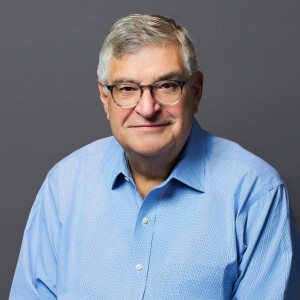
Matt Kissner
About Matt Kissner
Matthew S. Kissner is President and CEO of John Wiley & Sons, Inc., appointed effective July 8, 2024, after serving as Interim CEO from October 10, 2023 to July 2024; he previously served as Interim CEO from May–December 2017, Group Executive (2019–2021), and Board Chair (2015–2019). He is age 71 and has been a Wiley director across two spans (2003–2019; reappointed October 2023) with deep operating experience at Pitney Bowes, Bankers Trust, Citibank, and Morgan Stanley, and private equity operating roles . FY2025 performance against annual incentive metrics was solid: adjusted revenue $1,660 million vs $1,681 million target (99%) and adjusted operating income $252 million vs $244 million target (103%), yielding 102% funding and a CEO annual bonus 102% of target; FY2025 TSR value of a $100 investment was $137.1 vs peer group $205.4, and GAAP Net Income was $84.2 million .
Past Roles
| Organization | Role | Years | Strategic Impact |
|---|---|---|---|
| John Wiley & Sons | President & CEO | Jul 2024–present | Led ongoing transformation; annual incentive funded near target; continued AI initiatives and cost savings |
| John Wiley & Sons | Interim President & CEO | Oct 2023–Jul 2024 | Stabilized operations; set FY25 incentive design; appointed ongoing CEO |
| John Wiley & Sons | Interim President & CEO | May–Dec 2017 | Transitional leadership |
| John Wiley & Sons | Group Executive | 2019–2021 | Operational leadership during transformation |
| John Wiley & Sons | Board Chair (first non-family Chair) | 2015–2019 | Governance and strategic oversight during digital pivot |
External Roles
| Organization | Role | Years | Notes |
|---|---|---|---|
| Regional Plan Association | Director | Current | Listed current outside directorship |
| Pitney Bowes | EVP and Group President | — | Prior leadership role |
| Bankers Trust; Citibank; Morgan Stanley | Leadership positions | — | Prior financial services experience |
| Private Equity (Operating Partner) | Executive Chairman/Director of portfolio companies | — | PE operating and governance roles |
Fixed Compensation
| Fiscal Year | Base Salary ($000s) | Target Bonus % | Target Bonus ($000s) | Actual Bonus ($000s) | All Other Compensation ($000s) | Total ($000s) |
|---|---|---|---|---|---|---|
| 2025 | 900.0 | 150% | 1,350.0 | 1,377.0 | 84.5 | 5,548.3 |
| 2024 | 487.5 | 150% | — | 885.7 | 255.1 | 3,357.7 |
Performance Compensation
Annual Incentive – FY2025 mechanics and outcomes
| Metric | Weighting | Target | Threshold | Outstanding | Adjusted Actual | % of Target Achieved | % Funded |
|---|---|---|---|---|---|---|---|
| Adjusted Revenue ($000s) | 50% | 1,681 | 95% | 105% | 1,660 | 99% | 43.8% |
| Adjusted Operating Income ($000s) | 50% | 244 | 90% | 110% | 252 | 103% | 58.6% |
| Total Funding | — | — | — | — | — | — | 102% |
Key design features:
- Annual incentive funded on Company-level adjusted revenue and adjusted operating income (equally weighted); personal performance modifier applied; target for CEO was 150% of base .
- Most important performance measures linking pay and performance: Adjusted Revenue, Adjusted Operating Income, and Adjusted EBITDA .
Long-Term Incentives – FY2025 grants (ELTIP)
| Grant Date | Instrument | Target # of Units | Grant Date Fair Value ($000s) | Metrics | Weighting | Vesting |
|---|---|---|---|---|---|---|
| 7/15/2024 | PSUs | 40,789 | 1,903 | Adjusted EBITDA; Adjusted Revenue | 50% each | Eligible to vest 6/30/2027 (FY25–27 cycle) |
| 7/15/2024 | RSUs | 27,192 | 1,269 | Time-based | — | 25% per year on 4/30/2026, 4/30/2027, 4/30/2028, following 7/15/2024 grant |
Program snapshot:
- FY2025 LTI mix: 60% PSUs, 40% RSUs; CEO grant values converted using 10-day average as of 7/15/2024 when he became ongoing CEO .
- PSUs in FY23–25 cycles paid out in aggregate ~87% of target; RSUs provide retention value and are stock-price dependent .
Option awards:
- No option grants in FY2025 for CEO; premium-priced options from prior years remain outstanding (see Equity Ownership) .
Equity Ownership & Alignment
| Category | Detail |
|---|---|
| Beneficial ownership | 43,093 Class A shares; less than 1% of class and voting power |
| Ownership composition | Includes 16,550 shares in an IRA (sole voting/investment power) and 3,161 shares held by spouse’s revocable trust |
| RSUs (unvested) | 10,014 (FY2024 RSUs remaining 50% vests 25% on 4/30/2026 and 25% on 4/30/2027) |
| RSUs (FY2025) | 20,394 (remaining 75% vests 25% on 4/30/2026, 25% on 4/30/2027, 25% on 4/30/2028) |
| PSUs (unearned) | 35,538 (FY23–25 tranche accounted plus FY25–27 cycle) with indicative market/payout values referenced; FY25–27 eligible to vest 6/30/2027 |
| Options exercisable | 6,000 at $35.00, expiring 11/2/2033 |
| Options unexercisable | 14,000 at $35.00, expiring 11/2/2033 |
| Valuation basis | Market values referenced at $43.64 (4/30/2025 close) for outstanding award table |
| Ownership guidelines | CEO required to hold stock equal to 6× base salary; executives must retain 50% of net shares from option exercises/RSU/PSU vesting until guideline met; unearned PSUs and options do not count |
| Hedging/pledging | Prohibited for directors and officers under Insider Trading Policy |
Option exercises and vesting activity (FY2025):
| Metric | CEO Value |
|---|---|
| Option exercises (#; $) | —; — |
| Stock awards vested (#; $000s) | 11,805; $515.2 |
Employment Terms
| Term | Detail |
|---|---|
| Start date and role | CEO effective July 8, 2024; reports to Board; may serve as Board member while CEO for no additional compensation |
| Base salary | $900,000 |
| Annual incentive | Eligible under EAIP; target 150% of base; prorated for partial fiscal year |
| FY2025 LTI appointment award | $3,000,000 anticipated value; 60% PSUs, 40% RSUs; if removed as CEO other than for Cause, RSUs continue to vest and PSUs remain eligible for payout based on actual performance |
| At-will status | Employment is at-will |
| Severance eligibility | Not eligible for Executive Severance Plan or any company severance program during tenure or upon conclusion of CEO role |
| Non-compete | 1 year post-employment; prohibits service with competing businesses across Wiley units served |
| Non-solicit | 1 year post-employment; covers employees and key counterparties |
| Confidentiality/IP | Comprehensive confidentiality and IP assignment; likeness release for company works |
| Board resignation | Automatic resignation from Board seat upon transition out of CEO role and/or separation |
| Clawback | Robust clawback for executive officer performance-based cash and stock awards; compliant with SEC/listing rules with enhanced misconduct triggers |
| Change of Control treatment | Double-trigger vesting only (involuntary termination without cause or good reason within two years of CoC, or if awards not assumed/replaced) |
Potential payments upon termination/change of control (illustrative table from proxy):
| Scenario | Target Annual Incentive ($000s) | ELTIP – PSUs ($000s) | RSUs ($000s) | Stock Options ($000s) | Benefits ($000s) | Total ($000s) |
|---|---|---|---|---|---|---|
| Involuntary term without cause (absent CoC) | 1,350.0 | 3,330.9 | 1,327.0 | — | 39.5 | 6,047.4 |
| Involuntary term following CoC | 1,350.0 | 3,330.9 | 1,327.0 | 121.0 | 45.3 | 6,174.2 |
| Death or disability | 1,350.0 | 3,330.9 | 1,327.0 | — | — | 6,007.9 |
Board Governance
- Director independence: Board determined all directors except Mr. Kissner (CEO) and Mr. Jesse Wiley (Chair) are independent; all Audit, Compensation, and Governance committees comprise independent directors .
- Board leadership: Roles are separated with non-executive Chair (Jesse Wiley), enabling CEO focus on operations and Chair focus on oversight; Governance Committee led by independent director (Brian O. Hemphill) acts as liaison and chairs executive sessions of independent directors .
- Committee roles: Kissner is not a member of any standing committee; Board/Committee meeting counts in FY2025 were Board 6, Audit 7, Compensation 6, Governance 8; Governance focused on board refreshment and committee restructuring .
- Dual-role implications: As CEO and director (non-independent), compensation decisions and oversight occur via fully independent committees, mitigating independence concerns; separation of Chair and CEO further reduces consolidation of power .
2025 Annual Meeting voting results:
- Kissner (Class B) re-elected with 8,545,598 “For”, 23 “Withheld”, 108,391 broker non-votes .
- Say-on-Pay advisory vote approved: For 12,410,965; Against 143,821; Abstain 94,980; Broker Non-Votes 284,012 .
- Prior say-on-pay support noted as over 99% at last annual meeting, per CD&A .
Compensation Structure Analysis
- Mix and risk: 76% of NEO target total direct compensation is performance-based; PSUs form the majority of LTI; no option repricing or buyouts; no tax gross-ups on CoC or perquisites (except relocation/tax equalization) .
- Metrics: Annual plan uses adjusted revenue and adjusted operating income (50/50); PSUs use adjusted EBITDA and adjusted revenue (equal weighting) with a three-year cumulative framework .
- Ownership alignment: CEO subject to 6× salary ownership guideline and 50% net share retention; hedging and pledging prohibited, reducing misalignment or leverage risk .
- Clawback: Enhanced clawback policy covers restatements and misconduct beyond exchange/SEC baseline .
- Changes YoY: FY2025 CEO LTI allocated 60% PSUs/40% RSUs with clearly defined vesting, consistent with performance-forward design; CEO received appointment award upon becoming ongoing CEO .
Equity Ownership & Alignment – Detailed Awards
| Instrument | Quantity | Terms |
|---|---|---|
| Options | 6,000 exercisable; 14,000 unexercisable at $35.00; expire 11/2/2033 | |
| RSUs (FY2024) | 10,014 unvested; 25% vests 4/30/2026; 25% vests 4/30/2027 | |
| RSUs (FY2025) | 20,394 unvested; 25% vests on each of 4/30/2026, 4/30/2027, 4/30/2028 | |
| PSUs (FY25–27) | Eligible to vest 6/30/2027 based on cumulative performance | |
| Vested in FY2025 | 11,805 shares vested; value realized $515.2k | |
| Shares excluded from beneficial count | RSUs excluded from beneficial ownership (e.g., Kissner 67,911 RSUs excluded) |
Performance & Track Record
- FY2025 incentives funded at 102% on ongoing businesses reflecting 99% adjusted revenue and 103% adjusted operating income vs higher targets than prior year; PSUs vesting in FY23–25 aggregated ~87% of target due to mixed performance .
- Company message under Kissner: exceeded FY2024 earnings guidance, delivered revenue at high end of range, targeted revenue/profit/FCF growth for FY2025–FY2026, executed two GenAI content rights projects .
- Pay versus performance framework shows CAP tracked with Adjusted Revenue and TSR; FY2025 PEO SCT total $5,548.3k; CAP $5,723.3k; TSR $137.1; GAAP Net Income $84.2m; Adjusted Revenue $1,660m .
Employment & Contracts – Change-of-Control Economics
- Double-trigger vesting only; CEO does not participate in severance programs during tenure; potential payments table shows target annual incentive and equity values under termination scenarios (including CoC) but no base salary or severance cash .
Investment Implications
- Alignment and risk: Strong pay-for-performance architecture (PSUs tied to adjusted EBITDA/revenue), strict clawbacks, and prohibitions on hedging/pledging signal governance discipline; 6× salary ownership guideline supports alignment, though CEO’s beneficial stake is <1% given dual-class structure .
- Retention and transition risk: At-will status and explicit non-eligibility for severance reduce separation costs but could elevate retention/transition risk; however, equity continues vesting if removed other than for Cause, partially mitigating disruption risk .
- Trading signals: Notable vesting events on 4/30/2026, 4/30/2027, 4/30/2028 (RSUs) and 6/30/2027 (PSUs) may create periodic supply; options at $35.00 expiring 2033 are in the money at $43.64 FY2025 close, providing optionality .
- Governance quality: Separate Chair/CEO and fully independent committees manage dual-role independence concerns; recent say-on-pay approvals and committee refresh underscore constructive shareholder/board dynamics .