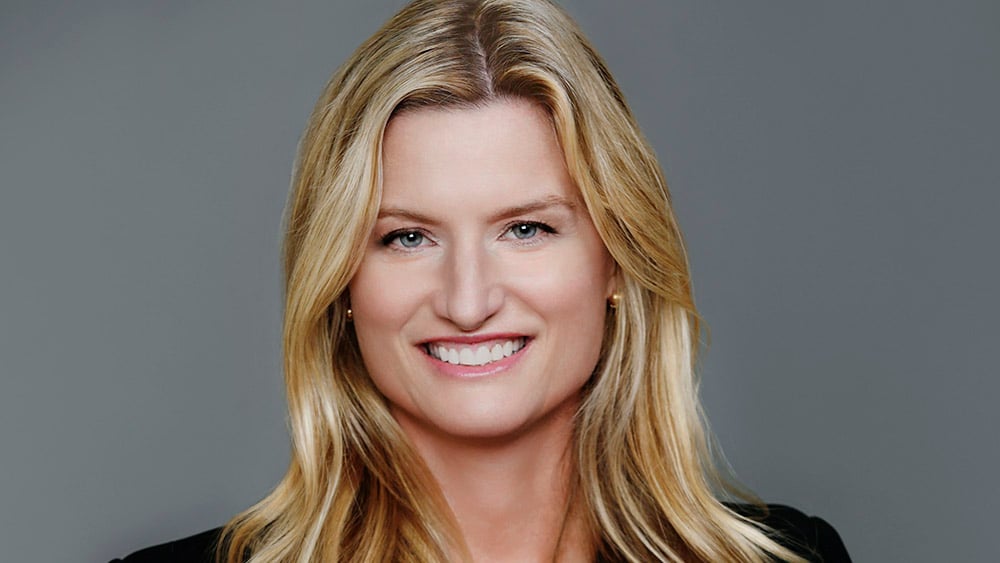
Laura Alber
 WILLIAMS SONOMA
About Laura Alber
Laura Alber is President and CEO of Williams-Sonoma, Inc., age 56, and has served as CEO since 2010 and Director since 2010; she has 29 years at the Company and holds a B.A. from the University of Pennsylvania . Fiscal 2024 performance under her leadership included diluted EPS of $8.50 excluding a $0.29 out-of-period freight adjustment, operating income of ~$1.38B excluding the adjustment, operating margin 17.9%, and comparable brand revenue of -1.6% . TSR was 106% over 1 year and 191% over 3 years, and ROIC reached 54% (non-GAAP) . The Board structure separates CEO and Chair, with an independent Chair and fully independent Board committees .
Past Roles
| Organization | Role | Years | Strategic Impact |
|---|---|---|---|
| Williams-Sonoma, Inc. | Chief Executive Officer | 2010–present | Led digital-first, design-led strategy; record margins/TSR; global expansion; sustainability and associate engagement initiatives |
| Williams-Sonoma, Inc. | President | 2006–present | Enterprise leadership across brands and channels |
| Pottery Barn Brands | President | 2002–2006 | Implemented growth strategies (Pottery Barn Kids/Teen, Bed + Bath) |
| Pottery Barn | EVP | 2000–2002 | Merchandising/operations leadership |
| Pottery Barn Catalog & Pottery Barn Kids Retail | SVP | 1999–2000 | Catalog and retail execution |
External Roles
| Organization | Role | Years | Strategic Impact |
|---|---|---|---|
| Salesforce, Inc. | Director | 2021–present | Technology and omnichannel expertise for enterprise CRM |
| Fitbit, Inc. | Director | 2016–2021 | Consumer hardware/health-tech insights pre-acquisition |
| University of Pennsylvania | Trustee, Board of Trustees | 2018–present | Governance and network with academic stakeholders |
Board Governance
- Board service history: Director since 2010; independence status “Not Independent” as CEO .
- Leadership: Independent Board Chair; CEO and Chair roles separated; all committees independent .
- Committee roles: Alber does not serve on Board committees; Compensation Committee chaired by Scott Dahnke; Audit and Finance chaired by Frits van Paasschen; Nominations chaired by Anne Finucane .
- Attendance: Board held 4 meetings in fiscal 2024; average Board/committee attendance 87%; executive sessions led by the independent Chair .
- Governance practices: Majority voting for directors, proxy access, director 12-year term limit for non-employees, stock ownership requirements for directors, regular independent director sessions .
Fixed Compensation
| Metric | FY 2022 | FY 2023 | FY 2024 |
|---|---|---|---|
| Base Salary ($) | $1,592,307 | $1,600,000 | $1,600,000 |
| Target Bonus % of Salary | 200% | 200% | 200% |
| Non-Equity Incentive Paid ($) | $3,700,000 | $8,000,000 | $10,000,000 |
| Other Annual Compensation ($) | $30,032 | $96,662 | $92,684 |
Perquisites in FY 2024 included life insurance ($10,063), 401(k) match ($10,350), car allowance ($6,000), financial services ($12,000), and personal aircraft usage ($54,271) under a Board-approved cap of $100,000 incremental cost per year .
Performance Compensation
Annual Bonus (FY 2024)
| Component | Threshold | Target | Maximum | Actual | Outcome |
|---|---|---|---|---|---|
| Adjusted EPS (pool funding) ($) | $6.90 | $7.72 | $8.57 | $8.50 | Pool funded 161% then reduced to 151% via negative discretion |
| Eligibility Trigger | Positive CFO (Operating Cash Flow) | — | — | Achieved | Pool eligible |
| CEO Bonus Payout | — | 200% of salary target | — | $10,000,000 | 313% of target |
Notes: “Adjusted EPS” excludes the $0.29 out-of-period freight adjustment; Company applied negative discretion to align pay and performance .
PSU Cycle (FY 2022–FY 2024 performance period; vested March 21, 2025)
| Metric | Weighting | Target | Actual | Payout (% of Target) | Vesting |
|---|---|---|---|---|---|
| Revenue Growth (3-year CAGR) | 20% | 5% | -2.2% | 0% | Cliff vest at 3 years |
| EPS (3-year CAGR) | 20% | 5% | 9.8% | 245% | Cliff vest at 3 years |
| Operating Cash Flow (3-year avg) | 30% | $800M | $1,408M | 300% | Cliff vest at 3 years |
| ROIC (3-year avg) | 30% | 33.5% | 51.5% | 300% | Cliff vest at 3 years |
| Total | — | — | — | 211% | Vested on Mar 21, 2025 |
CEO earned 154,219 PSUs from a target grant of 73,090 PSUs; value at $211.37 closing price on Jan 31, 2025 was $32,597,270 .
2024 LTI Grants (effective Mar 22, 2024)
| Grant Type | Target Equity Value | Units Granted | Vesting |
|---|---|---|---|
| RSUs | $7,000,000 | 44,708 | 25% annually, 2025–2028; dividend equivalents at vest |
| PSUs | $9,000,000 | 57,484 target (up to 172,452 max) | Performance period FY 2024–FY 2026; cliff vest Mar 22, 2027 |
Program design: PSUs weights 63% for CEO beginning 2025 (vs. 56% in 2024), RSUs 37%—emphasizing performance-based pay; no stock options granted .
Equity Ownership & Alignment
| Item | Detail |
|---|---|
| Beneficial Ownership | 1,051,693 common shares; 17,378 RSUs vesting within 60 days; total 1,069,071; <1% of class (122,939,912 shares outstanding) |
| Ownership Guidelines | CEO required to hold 5x base salary; retention of at least 50% of net shares until guideline met |
| Compliance | Held stock worth over 129x base salary at FY 2024 end; over 95x as of Apr 14, 2025—well above guideline |
| Hedging/Pledging | Explicitly prohibited for officers/directors; no margin purchases; trading only in compliance windows or 10b5-1 plans |
| Options | Company ceased options in 2012; no repricing; no SARs; no underwater option cash-outs without shareholder approval |
| Vested in FY 2024 | 294,144 shares vested; value realized $42,606,739 |
Outstanding equity awards (selected):
- RSUs: 44,708 (3/22/2024; vest annually through 2028); 75,580 (3/21/2023; vest through 2027); 36,546 (3/21/2022; vest through 2026); 17,378 (4/15/2021; final vest 4/15/2025) .
- PSUs: 57,484 target (3/22/2024; max shown 172,452); 3/21/2023 PSU grant with max 403,086 depicted; 154,219 earned from 3/21/2022 PSU cycle (211% payout) .
Employment Terms
| Provision | CEO Terms (Employment Agreement) | Change-of-Control (Double Trigger) |
|---|---|---|
| Agreement Term | Extended through Sept 7, 2033 | — |
| Severance (no CoC) | 24 months base salary; 200% of average bonus (36 months lookback); $3,000/month for 18 months in lieu of benefits; time-based RSU acceleration up to 18 months; PSUs remain outstanding to performance certification; non-compete and non-disparagement conditions | — |
| Severance (CoC) | Base salary $3.2M; bonus $12.966M (200% of average bonus); health benefits in lieu $36,000; accelerated vesting of RSUs and PSUs per plan | Equity awards vest; PSUs deemed at target for CoC treatment per plan; vesting terms align to time-based RSUs for severance calculations |
| Triggers | Termination without cause or resignation for good reason; “good reason” defined (salary reduction, diminution of duties, reporting changes, relocation >50 miles) | Termination within 18 months following CoC; “cause,” “good reason,” and CoC defined |
| Clawback | Compensation Recovery Policy adopted Sept 2023 for restatements under Dodd-Frank; applies to current/former executive officers |
Compensation Structure Analysis
- Mix and emphasis: CEO target long-term incentives increased to $16M in FY 2024; strong tilt to PSUs with multi-year scorecard; PSUs increased further to 63% weighting in 2025—raising at-risk, performance-contingent pay .
- Metrics and rigor: Annual bonus funded by Adjusted EPS and requires positive operating cash flow; PSU targets set above peer median historically; FY 2022–2024 PSU payouts 211% driven by EPS CAGR, OCF, ROIC performance despite revenue CAGR -2.2% .
- Governance safeguards: No golden parachute excise tax gross-ups; no hedging/pledging; no options; robust stock ownership and retention requirements; clawback policy in place .
- Peer benchmarking: Retail-focused peer group; compensation not fixed to specific percentiles; reviewed annually with independent consultant (Pay Governance LLC) .
Say-on-Pay & Shareholder Feedback
- Say-on-Pay support was ~94% in 2024; committee maintained pay-for-performance design; increased PSU weighting for CEO in 2025 based on feedback and best practices .
- Outreach: Management requested meetings with holders of ~35% of shares and met with holders of ~18% to discuss compensation, governance, and sustainability .
Risk Indicators & Red Flags
- CEO pay ratio: 1,062:1 (including seasonal/temporary workers); 534:1 when excluding certain employees, which may draw scrutiny despite strong TSR and ROIC .
- Related party transactions: None disclosable under Item 404 in fiscal 2024 to present .
- Cybersecurity oversight: No material incidents in last three fiscal years; Board/Audit receive regular briefings .
- Trading policies: Hedging/pledging prohibited; blackout windows and 10b5-1 permitted; no timing of option grants (none granted) around MNPI .
Compensation Peer Group (Benchmarking)
| Companies (FY 2024 peer group) |
|---|
| Bath & Body Works; Capri Holdings; eBay; The Gap; Levi Strauss; Lululemon; PVH; Ralph Lauren; RH; Tapestry; Ulta Beauty; V.F. Corporation; Wayfair |
Selection criteria updated for FY 2025 (rev/market cap ranges); no changes to peer composition YoY .
Equity Overhang and Vesting Schedule (Insider Selling Pressure)
| Award | Units | Vesting Timing | Market Value Reference |
|---|---|---|---|
| RSUs (3/22/2024) | 44,708 | 25% per year: 2025, 2026, 2027, 2028 | $9,449,930 at $211.37 |
| PSUs (3/22/2024) | 57,484 target; up to 172,452 max | Cliff on 3/22/2027 (FY 2024–2026 performance) | $36,451,179 shown at max scenario |
| RSUs (3/21/2023) | 75,580 | 25% per year through 2027 | $15,975,345 at $211.37 |
| PSUs (3/21/2023) | up to 403,086 (max depiction) | Cliff on 3/21/2026 | $85,200,288 at max scenario |
| RSUs (3/21/2022) | 36,546 | 25% per year through 2026 | $7,724,728 at $211.37 |
| PSUs (3/21/2022) | 154,219 earned (211%) | Vested on 3/21/2025 | $32,597,270 at $211.37 |
| RSUs (4/15/2021) | 17,378 | Final vest 4/15/2025 | $3,673,188 at $211.37 |
Large scheduled RSU releases annually and PSU cliffs can create periodic supply overhangs, though retention requirements and prohibitions on hedging/pledging moderate misalignment risk .
Employment Contracts & Severance Economics (Detail)
| Scenario (as of Feb 2, 2025) | Base Salary | Bonus | Equity Acceleration | Benefits |
|---|---|---|---|---|
| Termination without Cause / Good Reason (No CoC) | $3,200,000 (24 months) | $12,966,667 (200% avg bonus) | $87,725,314 (RSUs+PSUs per terms) | $54,000 ($3,000/mo for 18 months) |
| Termination without Cause / Good Reason (CoC) | $3,200,000 | $12,966,667 | $92,822,713 | $36,000 ($3,000/mo for 12 months) |
Non-compete condition applies to severance receipt, along with confidentiality and non-disparagement obligations; “better after-tax” provision addresses 280G excise tax optimization .
Director Compensation (Executive Director)
As CEO and employee director, Alber does not receive non-employee director cash/equity retainers; non-employee director compensation program emphasizes RSUs with fixed grant values, no performance-based equity, and ownership guideline of $400,000 in stock within five years .
Performance & Track Record
- Financial outcomes: Gross margin 45.8% (ex-adjustment), operating income ~$1.38B (ex-adjustment), EPS $8.50 (ex-adjustment); profitability doubled vs pre-pandemic per Compensation Committee letter .
- Capital returns: ~$4.1B returned via dividends and buybacks over last five years .
- Strategic initiatives: Digital-first platform, retail optimization, supply chain efficiencies, pricing power, and brand portfolio execution .
Expertise & Qualifications
- Education: B.A., University of Pennsylvania .
- Skills: Retail, merchandising, e-commerce, supply chain, sustainability; Board skills matrix highlights growth strategy, marketing/brand building, financial, technology .
Compensation Committee & Consultant
- Committee: Independent members; chaired by Scott Dahnke; interlocks/insider participation not present .
- Consultant: Pay Governance LLC; no conflicts; assisted on design, risk assessment, peer analysis, and disclosure .
- Risk oversight: Programs assessed not reasonably likely to have material adverse effect .
Investment Implications
- Alignment and retention: High stock ownership multiples versus guideline, strict anti-hedging/pledging, and multi-year PSU emphasis support strong alignment and reduce retention risk; severance/change-of-control structures are competitive, double-triggered, and conditioned on non-compete and releases—limiting windfalls .
- Performance-contingent pay: PSU payouts tied to EPS/OCF/ROIC delivered outsized vesting despite top-line softness; forward design increases PSU weighting, reinforcing sensitivity to long-term financial drivers (earnings quality and capital efficiency) .
- Trading signals: Significant scheduled RSU releases and PSU cliffs into 2026–2028 can add periodic supply overhang; however, retention/ownership rules and absence of options mitigate opportunistic selling risk; monitor Form 4 activity around vest dates and blackout windows for timing signals .
- Governance: Separate Chair/CEO, strong say-on-pay (94%), robust shareholder outreach, and absence of related party transactions lower governance risk; CEO pay ratio is elevated and could invite external scrutiny, but performance and returns have been strong .
