Elliott Calls Toyota's $39B Take-Private 40% Undervalued, Proposes Path to Double Value
January 19, 2026 · by Fintool Agent

Elliott Investment Management is publicly opposing Toyota Motor's attempt to take Toyota Industries private, arguing the revised ¥18,800 per share offer undervalues the forklift maker by almost 40% and would represent "a major setback for corporate governance, minority shareholder rights and fair M&A in Japan."
The activist hedge fund, now the largest minority shareholder with a stake above 5%, calculates Toyota Industries' intrinsic net asset value at ¥26,134 per share—and proposes a standalone plan that could push the valuation to more than ¥40,000 by 2028.
The market appears to agree with Elliott's skepticism: Toyota Industries shares closed Monday at ¥19,510, comfortably above the tender offer price.
The Valuation Gap
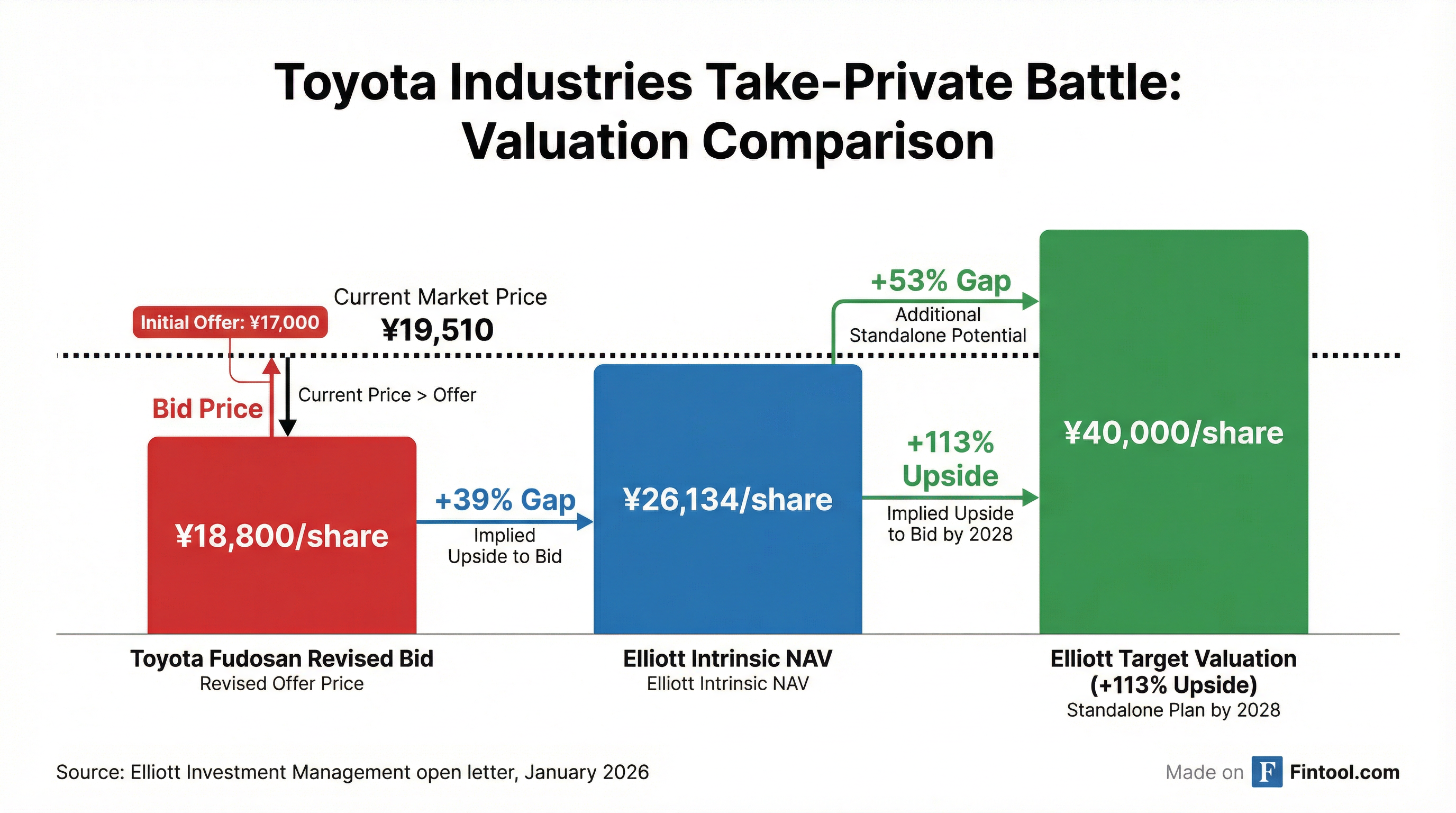
Elliott's analysis reveals a striking disconnect between what Toyota Fudosan is offering and what the hedge fund believes the company is worth:
| Metric | Value | Gap to Offer |
|---|---|---|
| Toyota Fudosan Revised Offer | ¥18,800/share | — |
| Current Market Price (Jan 19) | ¥19,510/share | +3.8% |
| Elliott Intrinsic NAV | ¥26,134/share | +39% |
| Elliott Standalone Plan Target (2028) | ¥40,000+/share | +113% |
The gap has widened since the original tender was announced in June 2025, driven by a sharp rise in the value of Toyota Industries' listed shareholdings and stronger valuations across comparable industrial peers.
 Ask Fintool AI Agent
Deal Structure and Key Players
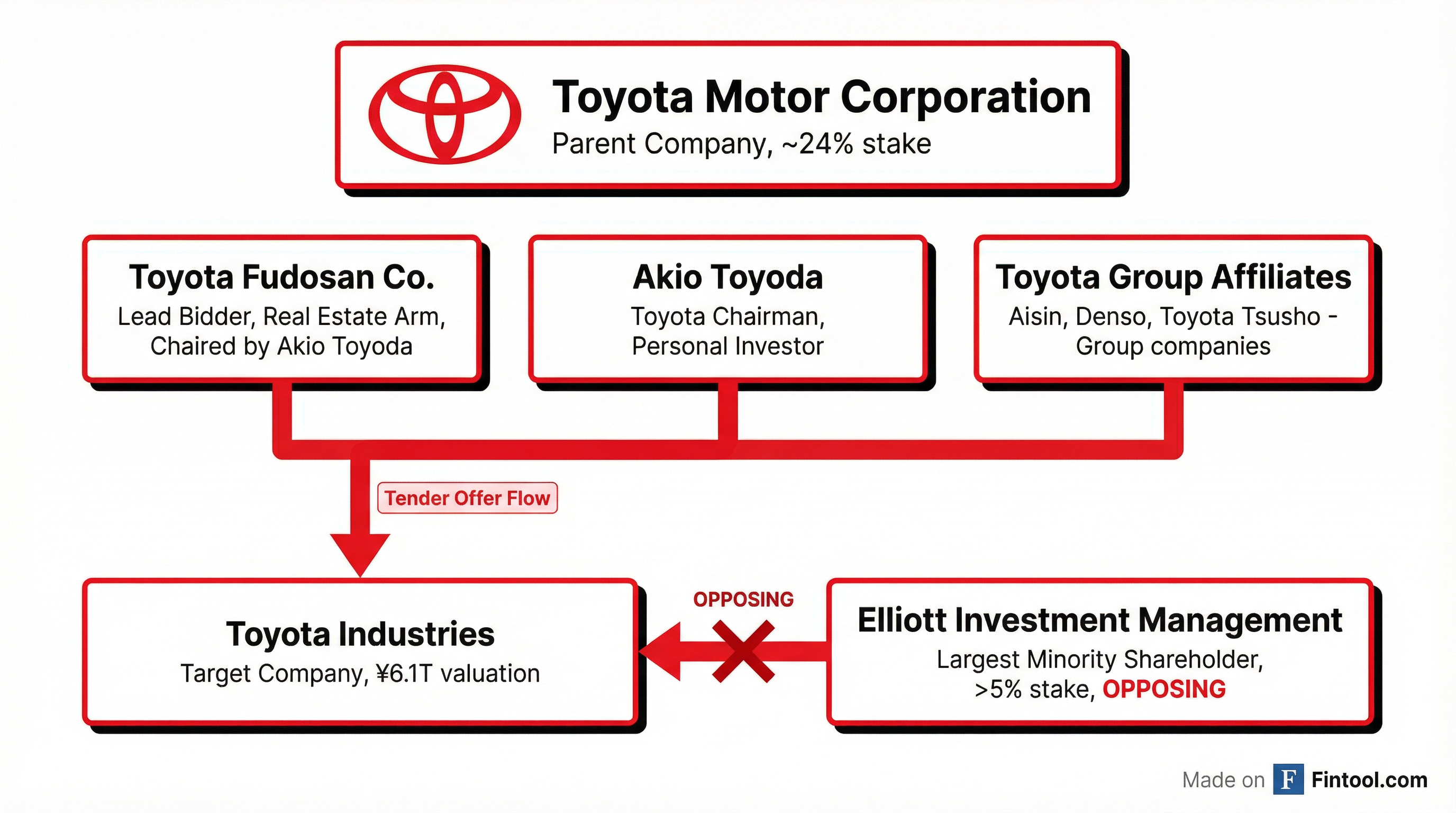
The take-private is being led by Toyota Fudosan Co., a privately held real estate arm chaired by Toyota Motor Chairman Akio Toyoda. The bidding consortium includes Toyota Motor itself (which holds approximately 24% of Toyota Industries) along with group affiliates Aisin, Denso, and Toyota Tsusho.
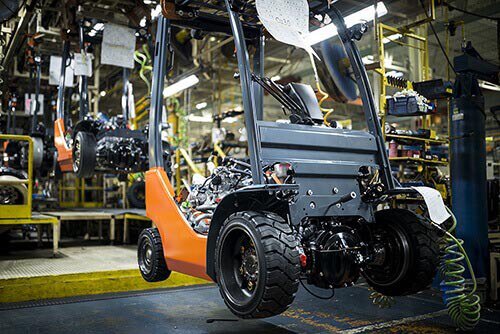
Toyota Industries, founded by Sakichi Toyoda—Akio Toyoda's great-grandfather—was the original Toyota company, with Toyota Motor spinning off in 1937. Today it produces forklifts (the world's largest manufacturer), automotive components, engines, and textile machinery.
Elliott's Case Against the Deal
In an open letter published Sunday, Elliott outlined multiple objections to what it characterized as an attempt to "squeeze out minority shareholders at a deeply discounted and unfair valuation in a coercive transaction":
1. Persistent Undervaluation
The revised ¥18,800 offer represents only a ¥200 increase from a price that Toyota Industries' own board previously said "deviated significantly from its expectations." Elliott notes this cosmetic bump came despite Toyota Motor's share price rising 7.5% on January 13, 2026—the day after the final revised offer was submitted—adding ¥1,005 per share to Toyota Industries' intrinsic value.
2. Governance Deficiencies
Elliott criticized the transaction's governance structure, claiming the process lacks proper minority shareholder protections and involves conflicts of interest among advisers and Toyota Group affiliates. The current minimum acceptance condition, according to Elliott, does not satisfy a true "majority-of-minority" threshold.
3. Japan's Governance Reforms at Risk
If the tender succeeds at current terms, Elliott warns it would "result in a substantial and potentially irreversible setback for Japan's corporate governance reforms and dampen investor interest in the Japanese market."
Ask Fintool AI AgentThe Standalone Plan
Elliott proposes an alternative path that it claims could more than double the company's valuation by 2028:
Key Elements:
- Unwind cross-shareholdings — Toyota Industries holds significant stakes in publicly traded companies that could be monetized
- Improve corporate governance — Enhanced board independence and minority shareholder protections
- Boost operating margins — Operational improvements across the forklift and components businesses
- Reallocate capital — Cease "overinvestment in the automotive segment" and redirect resources to higher-return opportunities
Timeline: The Take-Private Saga
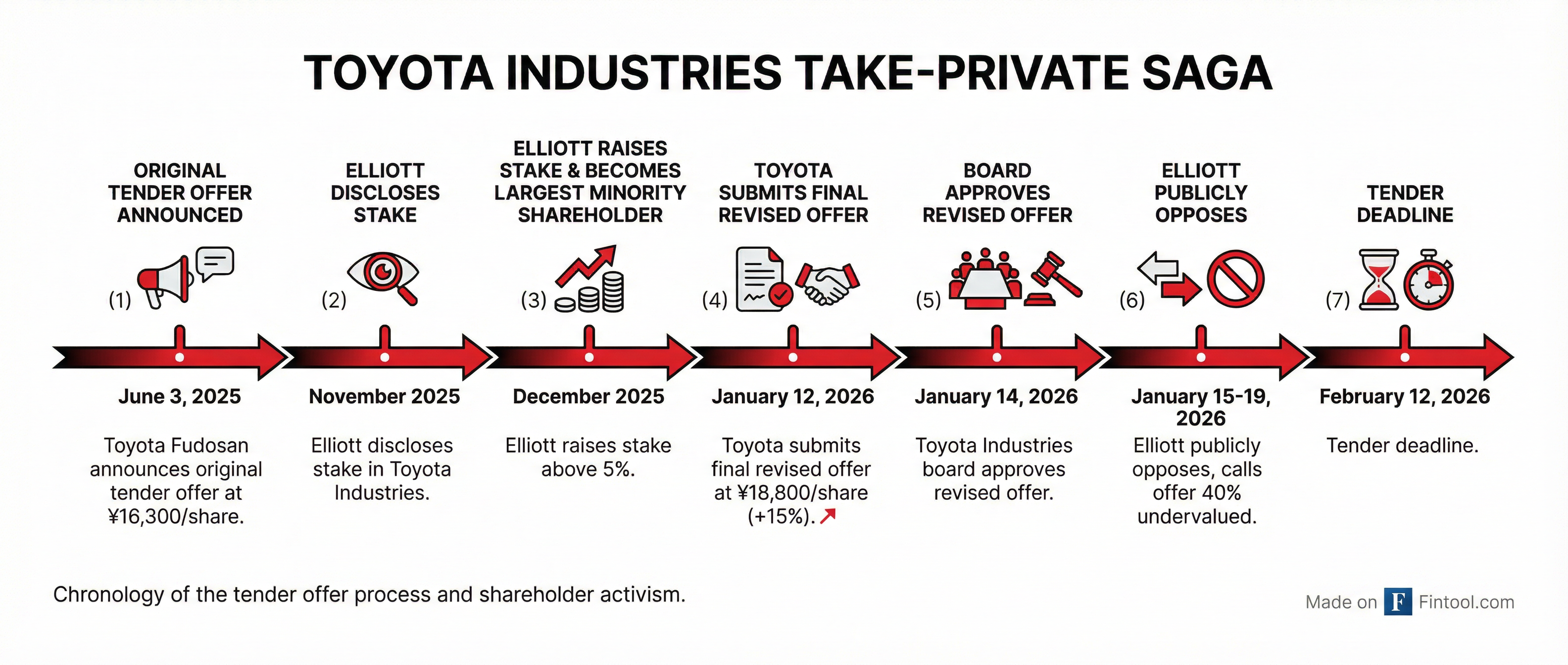
| Date | Event |
|---|---|
| June 3, 2025 | Toyota Fudosan announces original tender at ¥16,300/share |
| November 2025 | Elliott discloses stake in Toyota Industries |
| December 2025 | Elliott raises stake above 5%, becomes largest minority shareholder |
| January 12, 2026 | Toyota submits final revised offer at ¥18,800/share (+15%) |
| January 14, 2026 | Toyota Industries board approves revised offer |
| January 15, 2026 | Tender period opens |
| January 19, 2026 | Elliott publishes open letter urging shareholders to reject |
| February 12, 2026 | Tender deadline |
Toyota Motor: Financial Snapshot
Toyota Motor, the parent company orchestrating this deal, remains one of the world's largest automakers by revenue:
| Metric | FY 2025 | FY 2024 | FY 2023 |
|---|---|---|---|
| Revenue | $291.1B* | $275.4B* | $258.5B* |
| Net Income | $31.8B* | $32.7B* | $18.4B* |
| EBITDA | $44.3B* | $46.5B* | $35.2B* |
| Total Equity | $246.3B* | $233.0B* | $220.1B* |
*Values retrieved from S&P Global
Toyota Motor's current market capitalization stands at approximately $302 billion, with shares trading at $231.42 on the NYSE.
Ask Fintool AI AgentWhat to Watch
Tender Acceptance Rate — The deal requires minimum acceptance from shareholders beyond the Toyota Group's existing holdings. With shares trading above the offer price and Elliott publicly opposing, achieving this threshold faces headwinds.
Additional Bidders or Price Revisions — Elliott's standalone plan essentially represents an alternative "bid" that other shareholders may prefer. Toyota could be forced to raise its offer again before the February 12 deadline.
Japanese Regulatory Response — The outcome will signal whether Japan's governance reforms have real teeth. If a deal this publicly contested by minority shareholders succeeds at these terms, it could discourage foreign investment in Japanese equities.
Elliott's Next Moves — As the largest minority shareholder, Elliott has significant leverage. The fund could acquire additional shares, rally other institutional investors, or pursue legal remedies if it believes process deficiencies exist.