FAT Brands Files Chapter 11 With $1.4 Billion Debt, Only $2.1 Million Cash on Hand
January 29, 2026 · by Fintool Agent
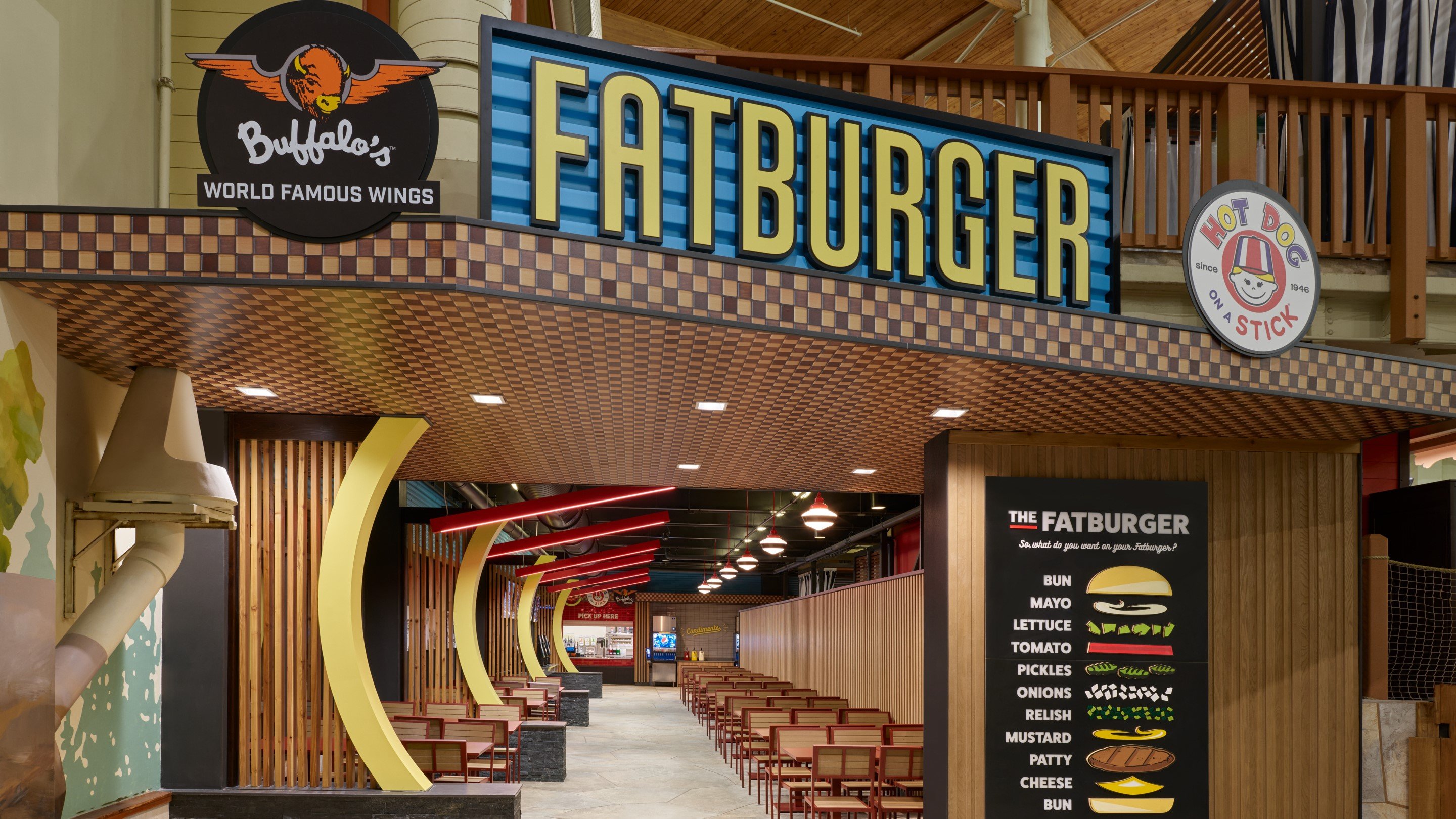
Fat Brands (NASDAQ: FAT), the owner of 18 restaurant chains including Fatburger, Johnny Rockets, and Twin Peaks, filed for Chapter 11 bankruptcy protection on January 26, 2026, with approximately $1.4 billion in debt and just $2.1 million in cash . The Beverly Hills-based company's stock has collapsed over 97% from its 2024 highs, trading at just $0.22 per share as the market prices in the near-certainty of equity wipeout.
The bankruptcy filing marks the culmination of years of mounting financial pressure from an aggressive acquisition strategy, a costly federal investigation, and 25 bondholders who couldn't agree on a restructuring plan outside of court.
The $1.4 Billion Debt Stack
FAT Brands' debt structure is unusually complex—spread across five separate securitization trusts, each secured by different restaurant brands . The largest tranches include:
| Debt Tranche | Amount | Secured By |
|---|---|---|
| Twin Hospitality Notes | $403M | Twin Peaks |
| GFG Royalty Notes | $410M | Global Franchise Group brands |
| FAT Brands Royalty Notes | $201M | Core FAT brands |
| Fazoli's Native Notes | $140M | Fazoli's, Native Grill |
| FB Resid Notes | $110M | Residual interests |
Critically, this debt is non-recourse to the parent company—meaning if a particular brand defaults, bondholders can only seize that brand's assets, not the entire enterprise . CEO Andy Wiederhorn emphasized this point at the ICR Conference just two weeks before filing: "The debt that we're talking about is actually non-recourse to FAT Brands. This is all debt at the brand level only."
 Ask Fintool AI Agent
The Path to Bankruptcy
FAT Brands' troubles trace back to an acquisition binge during COVID-19 when distressed restaurant chains flooded the market. Between 2020 and 2021, the company acquired nine restaurant chains for $917.5 million, transforming from a small operator into an 18-brand empire .
The strategy relied on refinancing the debt at lower rates once the acquisition period ended. But that plan collided with reality when the Federal Reserve raised interest rates 550 basis points in 2022 . As Wiederhorn explained, "Refinancing the debt didn't make sense, because on a rated basis, it would be more expensive than where we were locked in on an unrated basis."
The company burned through cash rapidly:
| Financial Metric | Q4 2023 | Q1 2024 | Q2 2024 | Q3 2024 | Q4 2024 | Q1 2025 | Q2 2025 | Q3 2025 |
|---|---|---|---|---|---|---|---|---|
| Cash ($M) | $37.0 | $39.9 | $16.6 | $16.8 | $23.4 | $12.2 | $7.6 | $2.1 |
| Net Income ($M) | $(26.2) | $(38.3) | $(39.4) | $(44.8) | $(67.4) | $(46.0) | $(54.2) | $(58.2) |
The $85.5 Million Legal Drain
Compounding the debt problem was a federal investigation that consumed $85.5 million in legal fees since 2021 . In 2024, the Department of Justice indicted CEO Andrew Wiederhorn and others, accusing him of taking $47 million in undisclosed loans from the company and avoiding taxes .
The charges were ultimately dismissed in August 2025 after the DOJ moved to drop the case, citing the Trump administration's new policy of prioritizing immigration enforcement and scaling back white-collar crime investigations . But the damage was done—the investigation had already drained nearly $75 million from company coffers .
Wiederhorn stepped down as CEO during the investigation in 2023, returning to the role in 2025 after charges were dropped .
Ask Fintool AI AgentStore Closures Already Underway
While FAT Brands says its 2,200+ locations will continue operating during restructuring , the company is already closing 21 underperforming company-owned locations :
- 14 Smokey Bones locations nationwide
- 2 Johnny Rockets locations in California
- 5 Yalla Mediterranean locations in California
The closures reflect the company's strategy of converting underperforming Smokey Bones locations into higher-volume Twin Peaks sports bars. Wiederhorn noted that converted locations see average unit volumes nearly double, from $3.5 million to approximately $7.8 million .
The 18-Brand Empire
Despite the financial distress, FAT Brands' underlying franchise business shows resilience. The company sold over 213 new franchise units in 2025 and same-store sales declined only 3-3.5%—modest compared to some casual dining peers .
The portfolio spans every casual dining category:
Quick Service/Fast Casual: Fatburger, Johnny Rockets, Round Table Pizza, Fazoli's
Desserts: Great American Cookies, Marble Slab Creamery, Pretzelmaker, Hot Dog on a Stick
Casual Dining: Buffalo's Cafe & Express, Hurricane Grill & Wings, Elevation Burger, Native Grill & Wings, Yalla Mediterranean
Polished Casual/Sports Bars: Twin Peaks (~$6-12M AUVs), Smokey Bones
Steakhouses: Ponderosa, Bonanza
The company is 92% franchised, with roughly 7,500 direct employees and approximately 45,000 employees across its franchise network .
What Happens Next
The company appointed Patrick Bartels and Neal Goldman as Independent Restructuring Directors to oversee the process , alongside Chief Restructuring Officer John DiDonato from Huron Consulting .
The court filing warns equity holders that shares could experience "a complete or significant loss" depending on the bankruptcy outcome . Trading continues on NASDAQ with a "Q" suffix (FATQ) to denote bankruptcy proceedings.
Wiederhorn remains optimistic the underlying business can support a restructured debt load: "If you boil it down to $150 million of revenue and maybe $80 million or $90 million of overhead... you still have $60 million or more of free cash flow or EBITDA. With that, it's a really solid business. It just needs the debt stack restructured to be affordable."
The question is whether the 25 bondholders spread across five different securitization trusts can agree on a restructuring plan—something they failed to do outside of court over 18 months of negotiations .
Ask Fintool AI Agent