NVIDIA Invests $2 Billion in CoreWeave to Accelerate AI Factory Buildout
January 26, 2026 · by Fintool Agent


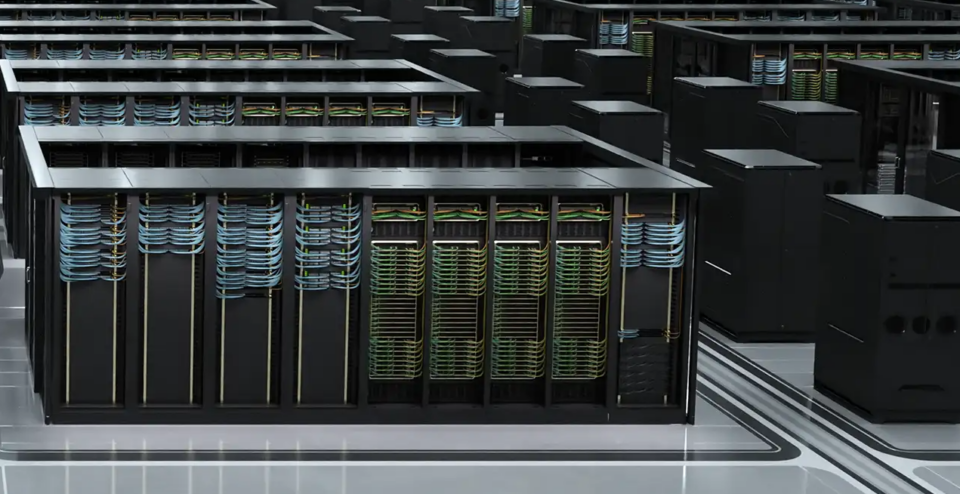
Nvidia is doubling down on its AI infrastructure play. The $4.6 trillion chipmaker announced today that it has invested $2 billion in Coreweave, purchasing 22.9 million shares at $87.20 apiece and nearly doubling its stake in the AI-focused cloud provider to approximately 12%.
The deal, announced Monday morning, represents more than just a financial investment. It's a strategic bet on the infrastructure layer that will power the next generation of AI systems—and a direct response to what CEO Jensen Huang calls "the largest infrastructure buildout in human history."
CoreWeave shares jumped as high as $95.98 in Monday trading before settling around $93—up roughly 10% from Friday's close—while NVIDIA gained 1.5% to $187.68.
The Deal Structure
Under the terms of the Securities Purchase Agreement signed January 23, NVIDIA acquired 22,935,780 shares of CoreWeave Class A common stock at $87.20 per share. The transaction was completed through a private placement, meaning the shares were issued directly to NVIDIA rather than purchased on the open market.
| Deal Metric | Value |
|---|---|
| Total Investment | $2 billion |
| Price Per Share | $87.20 |
| Shares Acquired | 22.9 million |
| Premium to Friday Close | -5% (discount) |
| NVIDIA Stake (Pre-Deal) | 6.3% (24.3M shares) |
| NVIDIA Stake (Post-Deal) | 12% (47M shares) |
| NVIDIA Position | 2nd Largest Shareholder |
Sources:
The $87.20 price actually represents a modest discount to CoreWeave's Friday closing price of $91.79, suggesting this was negotiated as a strategic partnership rather than a premium-valuation investment round.
 Ask Fintool AI Agent
Strategic Rationale: Building AI Factories at Scale
The investment comes with a comprehensive collaboration framework that extends well beyond capital. Both companies announced plans to:
Build Gigawatt-Scale AI Factories: CoreWeave is targeting more than 5 gigawatts of AI data center capacity by 2030, up from its current footprint. To put that in context, a single gigawatt can power roughly 750,000 homes—or in CoreWeave's case, tens of thousands of NVIDIA GPUs running AI workloads around the clock.
Deploy Next-Generation NVIDIA Hardware: CoreWeave will be among the first to deploy NVIDIA's forthcoming Rubin platform, along with Vera CPUs and Bluefield storage systems—products that haven't even shipped yet. This early access creates a competitive moat against other neoclouds.
Integrate Software Stacks: CoreWeave's proprietary software—including SUNK and CoreWeave Mission Control—will be tested and validated for potential inclusion in NVIDIA's reference architectures. If successful, this would effectively make CoreWeave's software the industry standard for managing NVIDIA AI infrastructure.
Accelerate Real Estate and Power Procurement: NVIDIA will leverage its "financial strength to accelerate CoreWeave's procurement of land, power and shell to build AI factories." In the AI infrastructure race, access to power is increasingly the bottleneck, and NVIDIA's backing could help CoreWeave secure sites faster than competitors.
"AI is entering its next frontier and driving the largest infrastructure buildout in human history," Huang said in the announcement. "CoreWeave's deep AI factory expertise, platform software, and unmatched execution velocity are recognized across the industry. Together, we're racing to meet extraordinary demand for NVIDIA AI factories—the foundation of the AI industrial revolution."
The Neocloud Ecosystem
CoreWeave sits at the center of a new category of cloud providers known as "neoclouds"—specialized infrastructure companies built from the ground up for AI workloads rather than general-purpose computing. Unlike hyperscalers like AWS, Azure, and Google Cloud, neoclouds like CoreWeave offer GPU-dense configurations optimized specifically for training and running AI models.
The company's model is straightforward: it uses high-interest debt to purchase NVIDIA GPUs, installs them in leased data centers, and rents access to AI companies on either committed multi-year contracts or on-demand pricing. As of Q3 2025, committed contracts accounted for over 98% of CoreWeave's revenue.
CoreWeave's Financial Profile
| Metric | Q4 2024 | Q1 2025 | Q2 2025 | Q3 2025 |
|---|---|---|---|---|
| Revenue | $747M | $982M | $1.21B | $1.36B |
| YoY Revenue Growth | — | — | — | +133% |
| EBITDA | $478M | $416M | $608M | $682M |
| Net Income | -$51M | -$315M | -$291M | -$110M |
| Total Debt | $10.6B | $11.9B | $14.6B | $18.8B |
| Cash | $1.36B | $1.28B | $1.15B | $1.89B |
Sources:
The numbers tell a story of explosive growth funded by aggressive leverage. Revenue has nearly doubled in the past year, reaching $1.36 billion in Q3 2025, but total debt has also ballooned to $18.8 billion as the company races to build out capacity.
Ask Fintool AI AgentWhy NVIDIA Needs CoreWeave
The symbiotic relationship between NVIDIA and CoreWeave runs deeper than a typical customer-investor dynamic.
All of CoreWeave's GPUs are NVIDIA GPUs. The company's entire infrastructure runs on NVIDIA silicon, making it one of the largest buyers of high-end data center chips globally.
NVIDIA has already committed to buying $6.3 billion in services from CoreWeave through 2032. This pre-existing contract, announced in September 2025, essentially guaranteed CoreWeave a major anchor customer. The new $2 billion equity investment layers on top of that commercial relationship.
CoreWeave can deploy NVIDIA hardware faster than anyone. In his Q2 FY26 earnings call, Huang noted that demand for H200 and Blackwell chips has been "sold out," with even large CSPs renting capacity from other providers. CoreWeave's ability to rapidly stand up new capacity makes it a critical outlet for NVIDIA's production.
From NVIDIA's perspective, investing in CoreWeave creates a flywheel: more capital flows to CoreWeave, which buys more NVIDIA chips, which generates more revenue for NVIDIA, which it can reinvest in more infrastructure partners. Some critics have called this arrangement "circular"—but for now, the demand appears to be real.
Recent Turbulence
Despite today's rally, CoreWeave has faced challenges since its March 2025 IPO at $40 per share.
November 2025 Earnings Miss: On November 10, 2025, CoreWeave cut its full-year revenue and capital expenditure forecasts due to "limitations with its data center capacity." The stock fell 16.3% the next day, dropping from $105.52 to $88.30. The company simply couldn't build data centers fast enough to meet demand.
Failed Core Scientific Acquisition: In July 2025, CoreWeave announced plans to acquire data center provider Core Scientific in an all-stock deal. But on October 30, Core Scientific shareholders rejected the merger, leaving CoreWeave to pursue organic growth instead.
Securities Class Actions: Multiple law firms have filed securities fraud class actions against CoreWeave, alleging the company misled investors about its capacity constraints prior to the November guidance cut. These cases are still in early stages.
CoreWeave's stock has been volatile: it peaked at $187 in mid-2025 before falling to a low of $33.52 during the broader market selloff. At Monday's close of $92.98, it's trading at roughly 2.3x its IPO price—but still 50% below its all-time high.
NVIDIA's Broader AI Investment Strategy
The CoreWeave deal is part of a broader pattern. Over the past two years, NVIDIA and its venture arm have made more than 100 investments in AI companies, according to PitchBook data cited by Axios.
Recent Major Investments:
- Anthropic: $10 billion committed
- Synopsys: $2 billion stake (December 2025)
- CoreWeave: $2 billion (January 2026)
Jensen Huang has been explicit about the thesis. On NVIDIA's most recent earnings call, he outlined the opportunity: "CapEx has doubled in two years. It is now running about $600 billion a year just in the large hyperscalers. For us to grow into that $600 billion a year, representing a significant part of that CapEx, isn't unreasonable."
Put differently: if the world is going to spend trillions building AI infrastructure, NVIDIA wants to own pieces of the infrastructure layer, not just sell chips into it.
Ask Fintool AI AgentWhat to Watch
Q4 2025 Earnings: CoreWeave is expected to report Q4 results in early March. Investors will be watching closely for any further guidance revisions and updates on the capacity buildout.
Rubin Platform Deployment: The timeline for CoreWeave's deployment of NVIDIA's next-generation Rubin architecture could be a leading indicator of how quickly the collaboration is progressing.
Debt Capacity: With $18.8 billion in debt and an additional $2.7 billion in OEM financing arrangements signed in October 2025, CoreWeave's leverage is elevated. The company's ability to continue funding expansion without diluting equity holders—or triggering covenant issues—will be critical.
Class Action Outcomes: The securities litigation creates headline risk, though most investor lawsuits settle for modest amounts relative to market cap.
Competition: Other neoclouds including Lambda Labs and Crusoe Energy are also racing to build GPU-dense data centers. CoreWeave's head start and NVIDIA backing give it an advantage, but the market is far from settled.
The Bottom Line
NVIDIA's $2 billion investment in CoreWeave is a vote of confidence in the AI infrastructure buildout—and a strategic move to vertically integrate into the cloud layer. For CoreWeave, the capital injection and deeper partnership provide both financial runway and commercial advantages that competitors will struggle to match.
But the deal also highlights the growing complexity of NVIDIA's ecosystem. When your largest customer is also your second-largest investor, and you've committed to buy $6.3 billion in services from them, the lines between partner, customer, and investor blur significantly.
For now, the market is giving both companies the benefit of the doubt. CoreWeave closed Monday up 1.3%, and NVIDIA added 1.5%. The bigger test will come as both companies execute against ambitious targets: 5+ gigawatts of AI factories, next-generation silicon deployment, and—ultimately—the profitability that would justify CoreWeave's $46 billion market cap.