NYSE to Launch 24/7 Tokenized Trading Platform in Biggest Market Structure Shift Since Electronic Trading
January 19, 2026 · by Fintool Agent


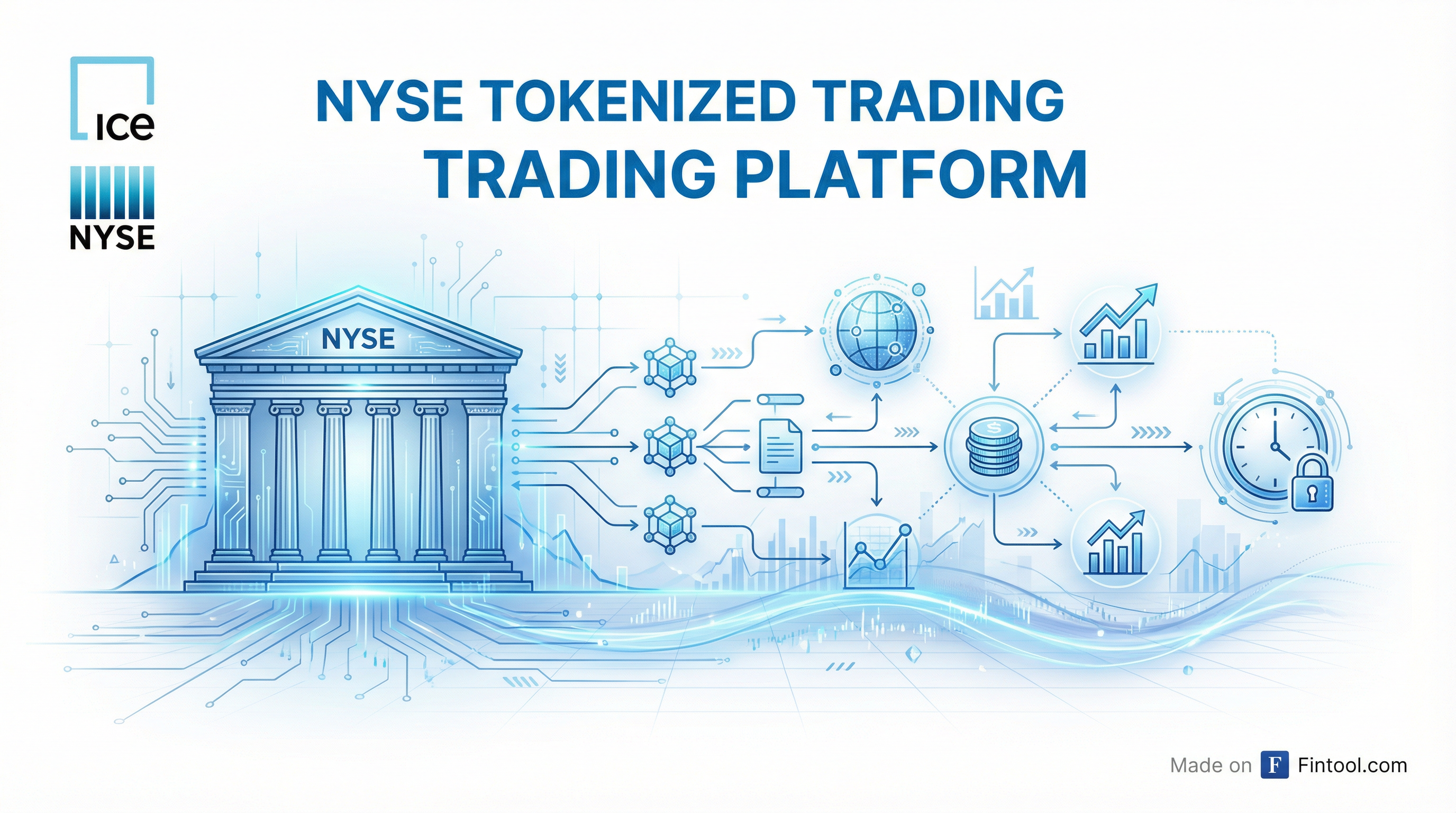
The New York Stock Exchange announced Monday it is developing a blockchain-powered platform that would enable around-the-clock trading of tokenized U.S. equities and ETFs—a move that could represent the most significant restructuring of American market infrastructure since the shift to electronic trading three decades ago.
Intercontinental Exchange (ICE), NYSE's parent company, said the platform will combine its existing Pillar matching engine with blockchain-based post-trade systems to deliver instant settlement, fractional share trading, and stablecoin-based funding. The company is targeting a launch later this year, pending regulatory approval.
ICE shares closed Friday at $173.98, up 0.4% on the day, with the company commanding a market capitalization near $100 billion.
What NYSE Is Building
The new venue will support both tokenized versions of traditionally issued securities and tokens natively issued as digital securities. Tokenized shareholders will retain traditional dividends and governance rights, with the platform providing non-discriminatory access to all qualified broker-dealers.
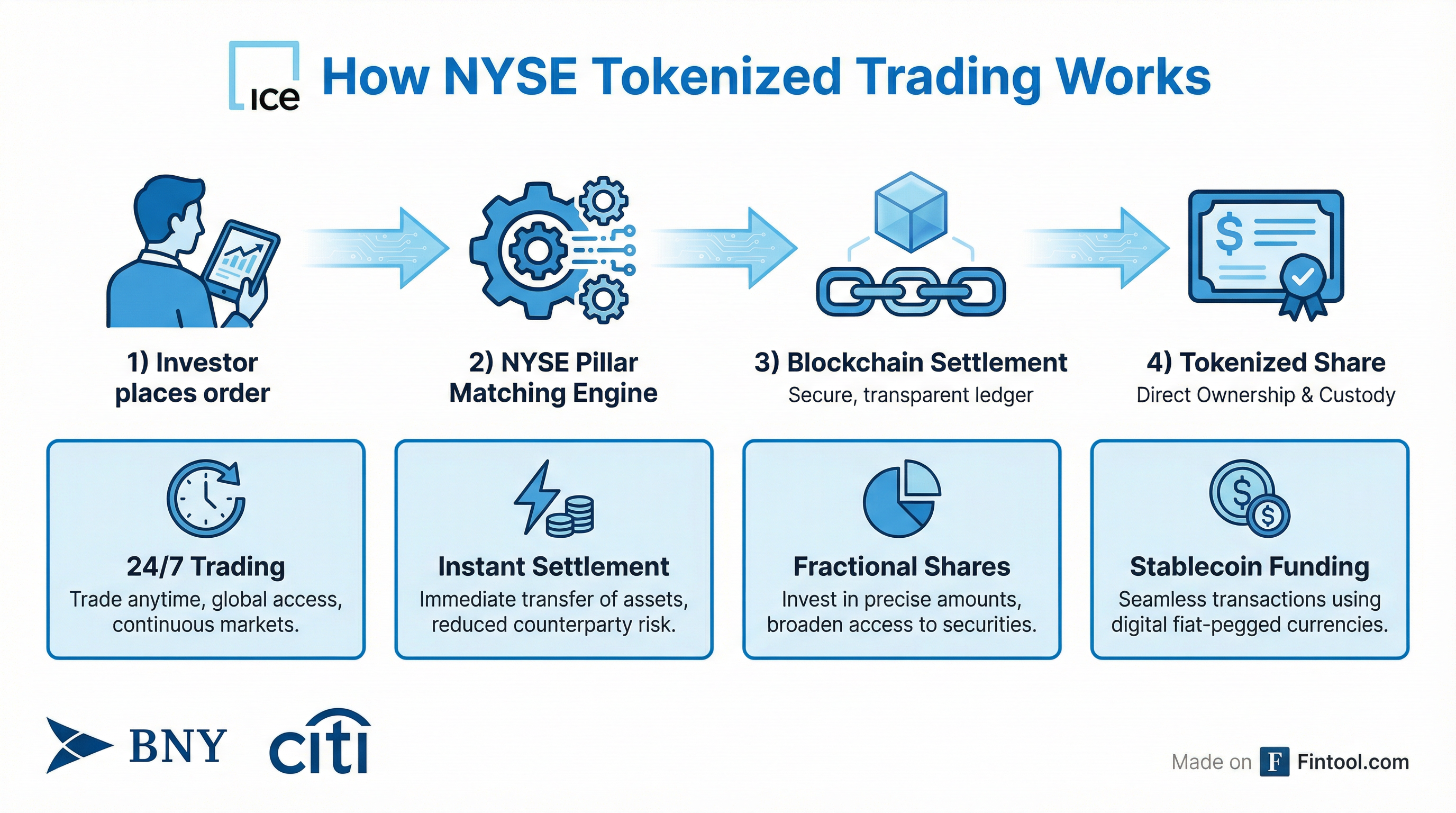
Key capabilities include:
- 24/7 Trading: Markets that never close, eliminating the gap between U.S. closing bells and Asian or European opens
- Instant Settlement: Replacing the current T+1 cycle with immediate on-chain settlement
- Fractional Shares: Orders sized in dollar amounts rather than whole share lots
- Stablecoin Funding: Digital dollar rails for margin and settlement outside banking hours
"For more than two centuries, the NYSE has transformed the way markets operate," said Lynn Martin, President of NYSE Group. "We are leading the industry toward fully on-chain solutions, grounded in the unmatched protections and high regulatory standards that position us to marry trust with state-of-the-art technology."
 Ask Fintool AI Agent
Banking Partners Line Up
ICE is working with BNY Mellon (BK) and Citigroup (C) to support tokenized deposits across its clearinghouses. This infrastructure will allow clearing members to transfer and manage money outside traditional banking hours, meet margin obligations, and accommodate funding requirements across jurisdictions and time zones.
The partnership addresses a critical bottleneck: while crypto markets trade 24/7, the traditional banking system that underlies margin and settlement still operates on business hours. Tokenized deposits solve this by enabling round-the-clock liquidity management.
"Supporting tokenized securities is a pivotal step in ICE's strategy to operate on-chain market infrastructure for trading, settlement, custody, and capital formation in the new era of global finance," said Michael Blaugrund, Vice President of Strategic Initiatives at ICE.
ICE's Digital Strategy Takes Shape
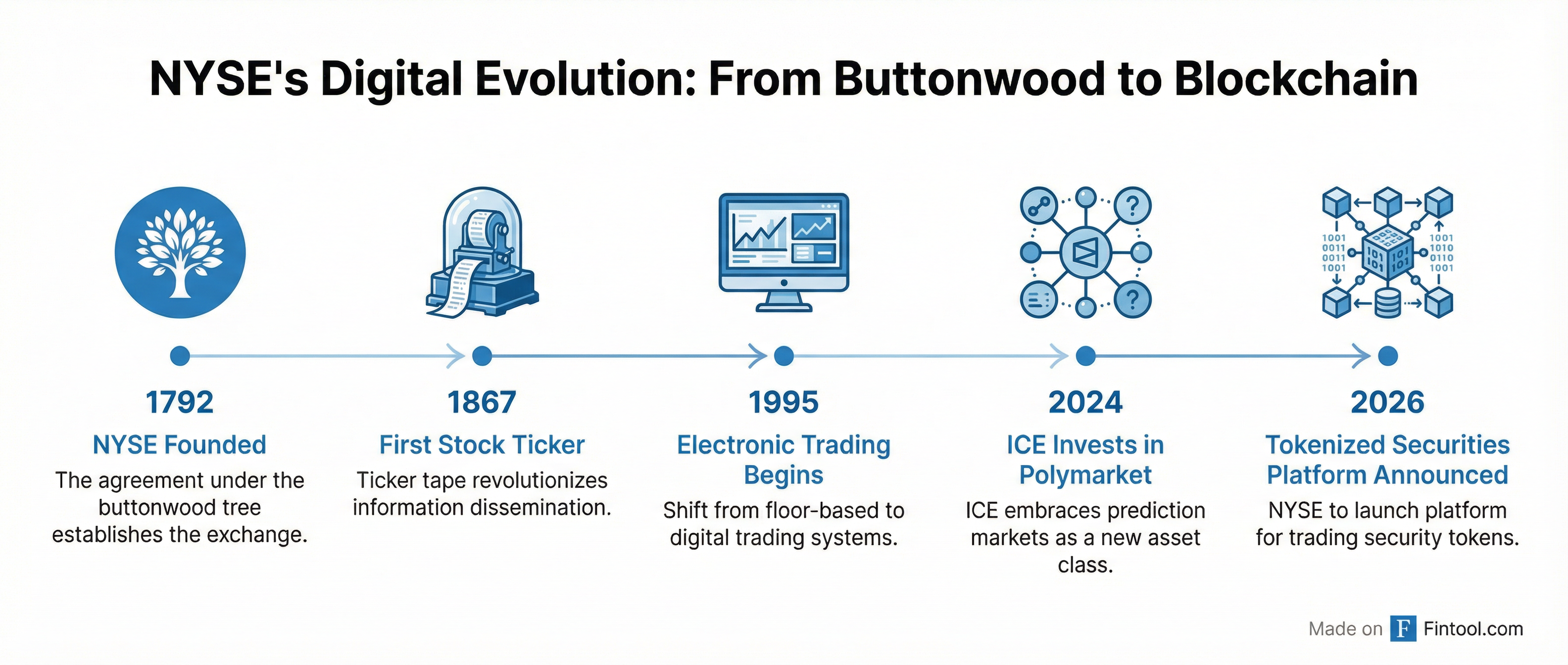
The tokenized securities platform builds on ICE's broader digital strategy. In October 2025, the company announced a strategic investment commitment of up to $2 billion in prediction market platform Polymarket, signaling its intent to expand beyond traditional exchange infrastructure.
ICE operates six clearinghouses globally, including the world's largest energy clearing house and the largest clearing house for credit default swaps. The company has been at the forefront of market innovation for over 25 years, propelling markets "from analog to digital," as Blaugrund noted.
ICE Financial Performance
| Metric | Q4 2024 | Q1 2025 | Q2 2025 | Q3 2025 |
|---|---|---|---|---|
| Revenue ($B) | $2.32* | $2.47* | $2.54* | $2.41* |
| Net Income ($M) | $698* | $797* | $851* | $816* |
| EBITDA Margin | 50.2%* | 66.4%* | 66.9%* | 65.1%* |
*Values retrieved from S&P Global
Ask Fintool AI AgentA $400 Billion Market Takes Shape
NYSE's move comes as the tokenized asset market approaches a critical inflection point. Total on-chain real-world assets reached $18.6 billion in October 2025, and industry executives project the market could expand to $400 billion by the end of 2026.
Major asset managers have already demonstrated the model works:
- BlackRock's BUIDL fund has surpassed $2 billion in assets under management and distributed over $62 million to tokenholders
- Franklin Templeton's BENJI token representing its on-chain U.S. Government Money Fund has grown past $600 million in tokenized AUM
- JPMorgan has deployed its JPM Coin for institutional settlement and recently issued it on a public blockchain
"This is not merely a new trading venue; it's a re-architecting of market infrastructure," noted a Deloitte Center for Financial Services report on the initiative.
What Investors Should Watch
Regulatory Pathway: The SEC's stance on tokenized securities will be decisive. Nasdaq filed an application with the SEC in September 2025 to offer tokenized stocks, and the agency's response will set precedent for NYSE's platform.
Competitive Response: Nasdaq and CBOE will likely accelerate their own digital initiatives. The first mover to achieve regulatory approval and scale could capture significant market share in what may become a new category of trading infrastructure.
Bank Adoption: The involvement of BNY Mellon and Citigroup provides critical custody and settlement infrastructure. Additional bank participation would accelerate institutional adoption.
Infrastructure Buildout: ICE's clearing infrastructure preparations for 24/7 operations—including tokenized collateral integration—will be a key indicator of timeline and capability.
Ask Fintool AI AgentThe Bottom Line
NYSE's tokenized trading platform represents a calculated bet that blockchain infrastructure can deliver meaningful improvements to traditional market structure—not through disruption, but integration. By combining its Pillar matching engine with on-chain settlement and enlisting major bank partners, ICE is positioning itself to capture the next evolution of equity trading.
The question is no longer whether tokenization will transform capital markets, but how quickly regulators will allow that transformation to unfold. For ICE shareholders, the announcement signals the company isn't waiting to find out—it's building the infrastructure now.
Related Companies