Peltz Signals Potential Wendy's Takeover as Stock Surges 15%
February 18, 2026 · by Fintool Agent


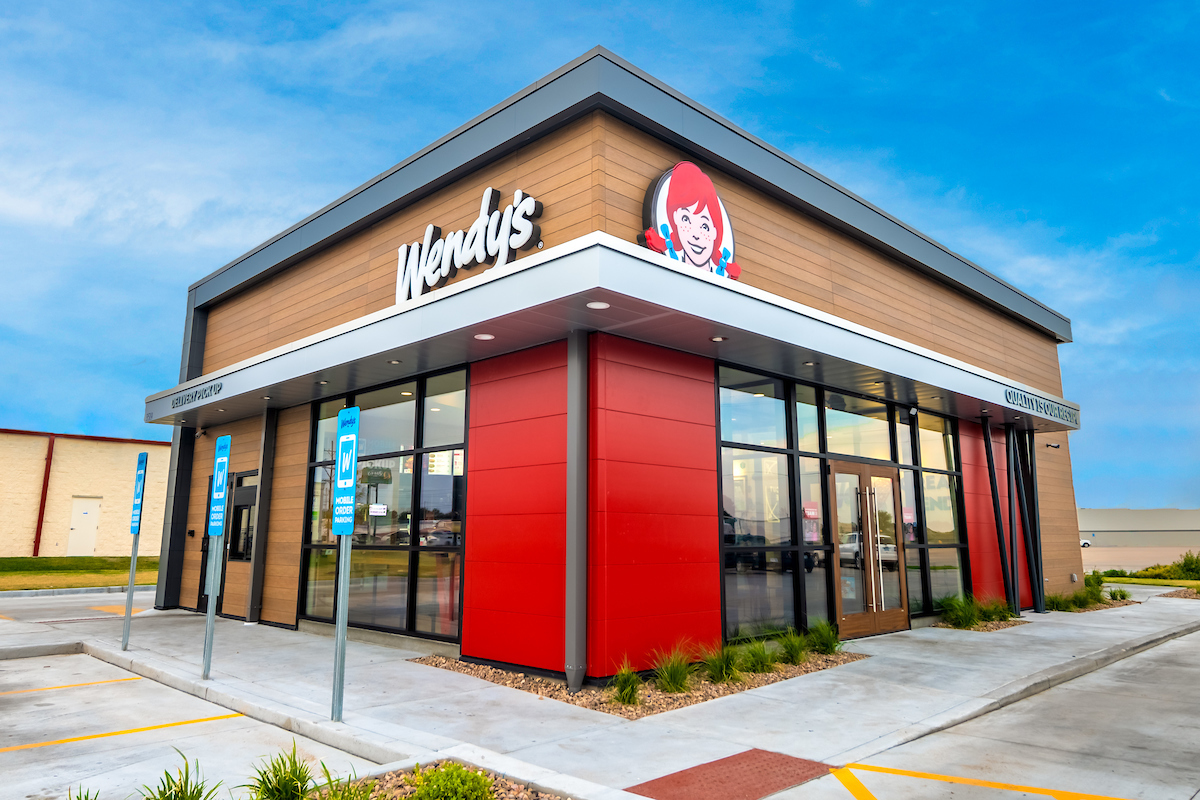
Wendy's stock surged 15% Wednesday after Nelson Peltz disclosed in an SEC filing that he believes the fast-food chain is "currently undervalued" and is exploring potential transactions including an acquisition that could take the company private.
The filing, Amendment No. 64 to Schedule 13D, reveals that Trian Fund Management has been in discussions with "potential financing sources, potential co-investors and certain potential strategic partners" about deals that could give Peltz control of the burger chain.
The disclosure comes just five days after Wendy's posted disastrous Q4 earnings, with US same-restaurant sales plunging 11.3% and 2026 guidance missing Wall Street expectations by nearly 30%.
 Ask Fintool AI Agent
The Filing: M&A Language Unmistakable
Peltz's 13D amendment contains explicit language that signals a potential deal:
"The Filing Persons have exchanged and expect to continue to exchange information with such persons (including Potential Partners) pursuant to confidentiality or similar agreements... which initiatives and transactions could include one or more of the types of transactions described in sub-paragraphs (a) through (j) of Item 4 of Schedule 13D, including an acquisition or other extraordinary transaction resulting in the Filing Person (and/or their affiliates), either alone or with other parties... acquiring control of the Company, and which transactions could result in a de-listing or de-registration of the Company's Common Stock."
The phrase "de-listing or de-registration" is SEC parlance for going private—removing the stock from public markets entirely.
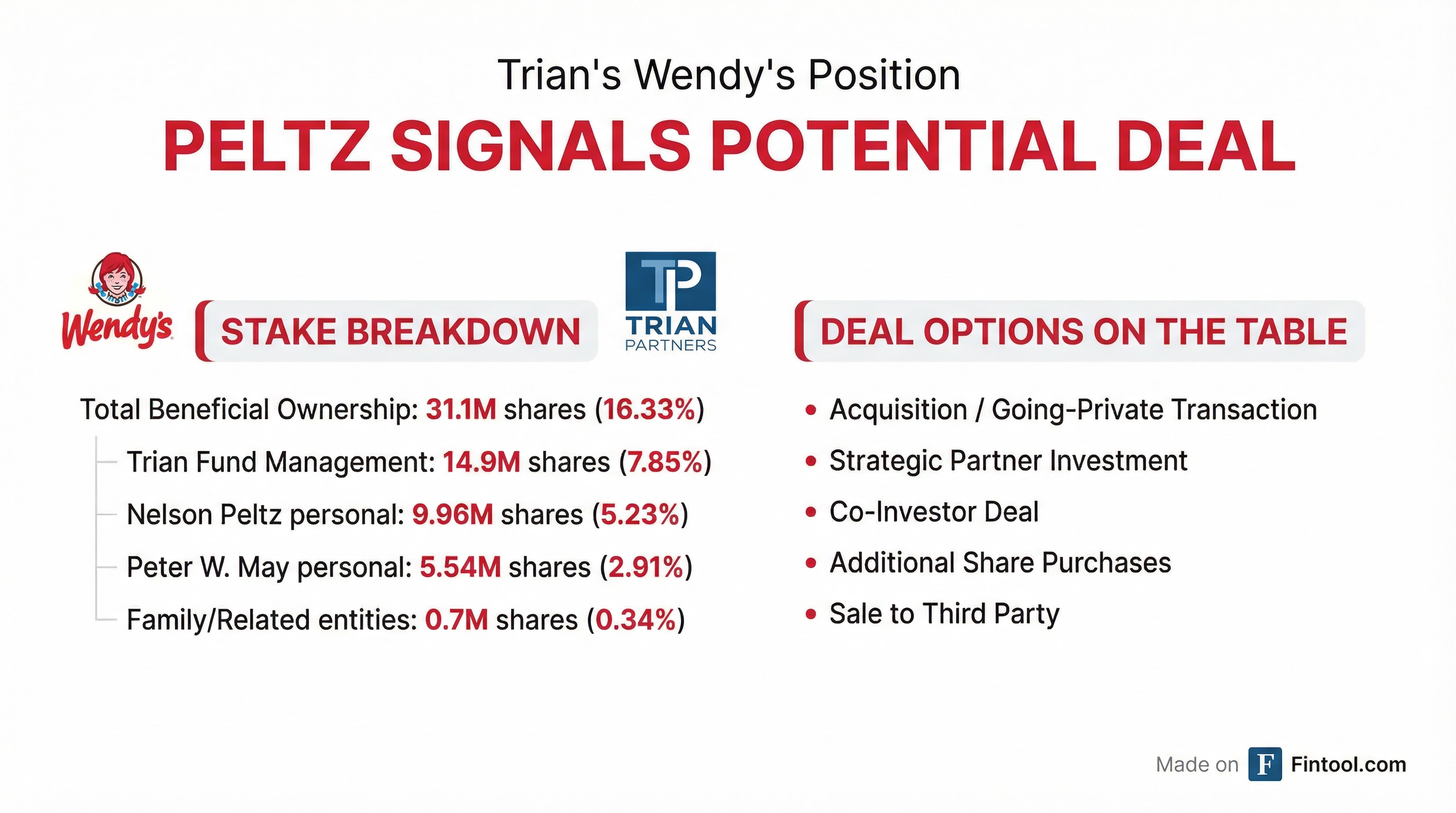
Trian's total beneficial ownership has increased to 31.1 million shares, representing 16.33% of outstanding stock as of February 17, 2026. Peltz personally controls 30.9 million shares (16.24%), while the Trian funds directly hold 14.9 million shares (7.85%).
This isn't Peltz's first time circling Wendy's for a deal. He explored a potential takeover bid in 2022 but never followed through. His involvement with the company dates back to 1992, making this Amendment No. 64—one of the longest-running 13D filing histories on record.
The Backdrop: A Company in Distress
The timing of Peltz's move is no coincidence. Wendy's reported its worst quarterly performance in years on February 13, sending shares to a six-year low before Wednesday's bounce:
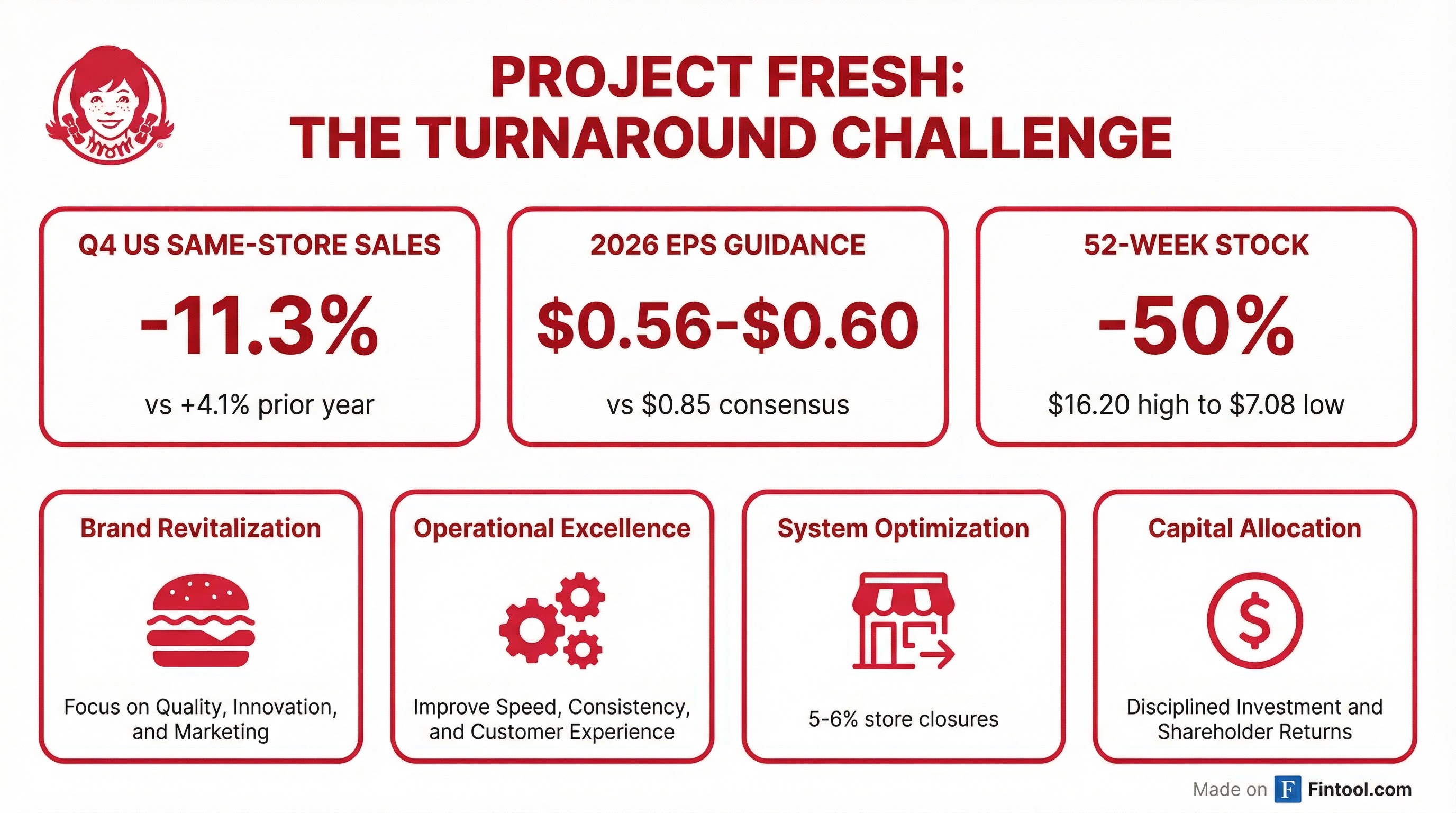
- Q4 US same-restaurant sales: -11.3% versus +4.1% in the prior year
- Global system-wide sales: -8.3% on constant currency basis
- 2026 EPS guidance: $0.56-$0.60 versus consensus of approximately $0.85
- 5-6% of US restaurants closing as part of "Project Fresh" turnaround
| Metric | FY 2023 | FY 2024 | FY 2025 |
|---|---|---|---|
| Revenue | $2.18B | $2.25B | $2.18B |
| Net Income | $204M | $194M | $165M |
| EBITDA Margin | 23.7%* | 23.1%* | 23.3%* |
*Values retrieved from S&P Global
Interim CEO Ken Cook acknowledged the severity on last week's earnings call: "2026 will be a rebuilding year for Wendy's. We are making the right decisions to strengthen our foundation for the long term."
The company blamed reduced marketing spend, tough comparisons against last year's SpongeBob collaboration, and the decision to delay new chicken sandwich launches into 2026.
Ask Fintool AI AgentStock Reaction: From Six-Year Low to Double-Digit Pop
Wendy's shares closed at $8.05 Wednesday, up $1.05 or nearly 15% on volume of 10.3 million shares—more than four times average daily volume.
The stock had touched $7.08 on February 13—its lowest level since 2019—following the earnings disappointment. At current prices, Wendy's market cap stands at approximately $1.5 billion, down from over $3 billion at its 52-week high of $16.20.
| Today's Trading | Value |
|---|---|
| Close | $8.05 |
| Change | +$1.05 (+15%) |
| Volume | 10.3M (4x average) |
| 52-Week High | $16.20 |
| 52-Week Low | $7.08 |
| Market Cap | $1.5B |
The depressed valuation creates an attractive entry point for a take-private transaction. At $8 per share, Wendy's trades at roughly 14x its 2026 EBITDA guidance midpoint of $470 million—well below Mcdonald's at 18x and Yum Brands at 15x.
Deal Math: What a Buyout Could Look Like
For Peltz to take Wendy's private, he would need to acquire the remaining 84% of shares he doesn't already control—approximately 159 million shares.
At a 30% premium to today's price (~$10.50 per share), the equity check would be approximately $1.67 billion. Adding Wendy's net debt of roughly $2.8 billion (4.8x leverage ratio), the total enterprise value would approach $4.5 billion.
That's a digestible transaction for Trian and its network of co-investors. The filing specifically mentions discussions with "potential financing sources" and "potential co-investors"—suggesting a consortium approach is under consideration.
Peltz's QSR Playbook
Nelson Peltz is no stranger to fast-food turnarounds. He served on Wendy's board from 2008 to 2023 and was instrumental in the company's 2008 merger with Arby's and its subsequent spinoff.
His track record with struggling consumer brands is mixed but notable:
- Wendy's (2005-present): Original investment in Triarc, which acquired Wendy's in 2008
- Sysco (2015-2021): Pushed for operational improvements, stock roughly doubled
- Procter & Gamble (2017-2022): Gained board seat, company streamlined portfolio
- Disney (2023-2024): Lost proxy fight but shares rallied during campaign
Ask Fintool AI AgentManagement's Turnaround: Project Fresh
While Peltz weighs his options, Wendy's current leadership is executing "Project Fresh," a four-pillar turnaround plan:
-
Brand Revitalization: Refocusing on hamburger quality and "Fresh, Never Frozen" positioning. "When we look back at 2025, we had zero hamburger innovation in 2025. That is changing in 2026," Cook said.
-
Operational Excellence: Rolling out playbooks from company-operated restaurants (which outperformed franchisees by 310 bps) to the broader system.
-
System Optimization: Closing 5-6% of US restaurants and providing breakfast flexibility to struggling markets.
-
Capital Allocation: Reducing US build-to-suit spending and maintaining the $0.14 quarterly dividend.
The turnaround is already showing signs at company-operated locations. Customer satisfaction scores improved 370 basis points year-over-year in Q4, with gains in accuracy, friendliness, and taste all exceeding 300 basis points.
What Happens Next
Peltz has laid out several paths forward in his filing:
- Acquire additional shares through open market or private transactions
- Enter into derivative or other financial instruments
- Submit acquisition or strategic proposals to the board
- Explore deals with third-party investors or strategic partners
- Take no action and continue monitoring
The filing explicitly reserves Peltz's right to "change their intentions or formulate other plans and proposals" at any time.
For investors, the key question is whether Peltz's move signals an imminent transaction or a long-term positioning play to influence management. The explicit M&A language and reference to potential partners suggests the former, but Peltz is known for patience—his Wendy's filing history spans 34 years.
Wendy's did not immediately respond to requests for comment. The company's next scheduled investor engagement is the Citibank Global Consumer and Retail Conference on March 10 in Miami.
Related Companies: Wendy's (wen) · Mcdonald's (mcd) · Yum Brands (yum) · Darden Restaurants (dri)