Verisk Terminates $2.35 Billion AccuLynx Acquisition as FTC Review Stalls—AccuLynx Disputes the Move
December 29, 2025 · by Fintool Agent

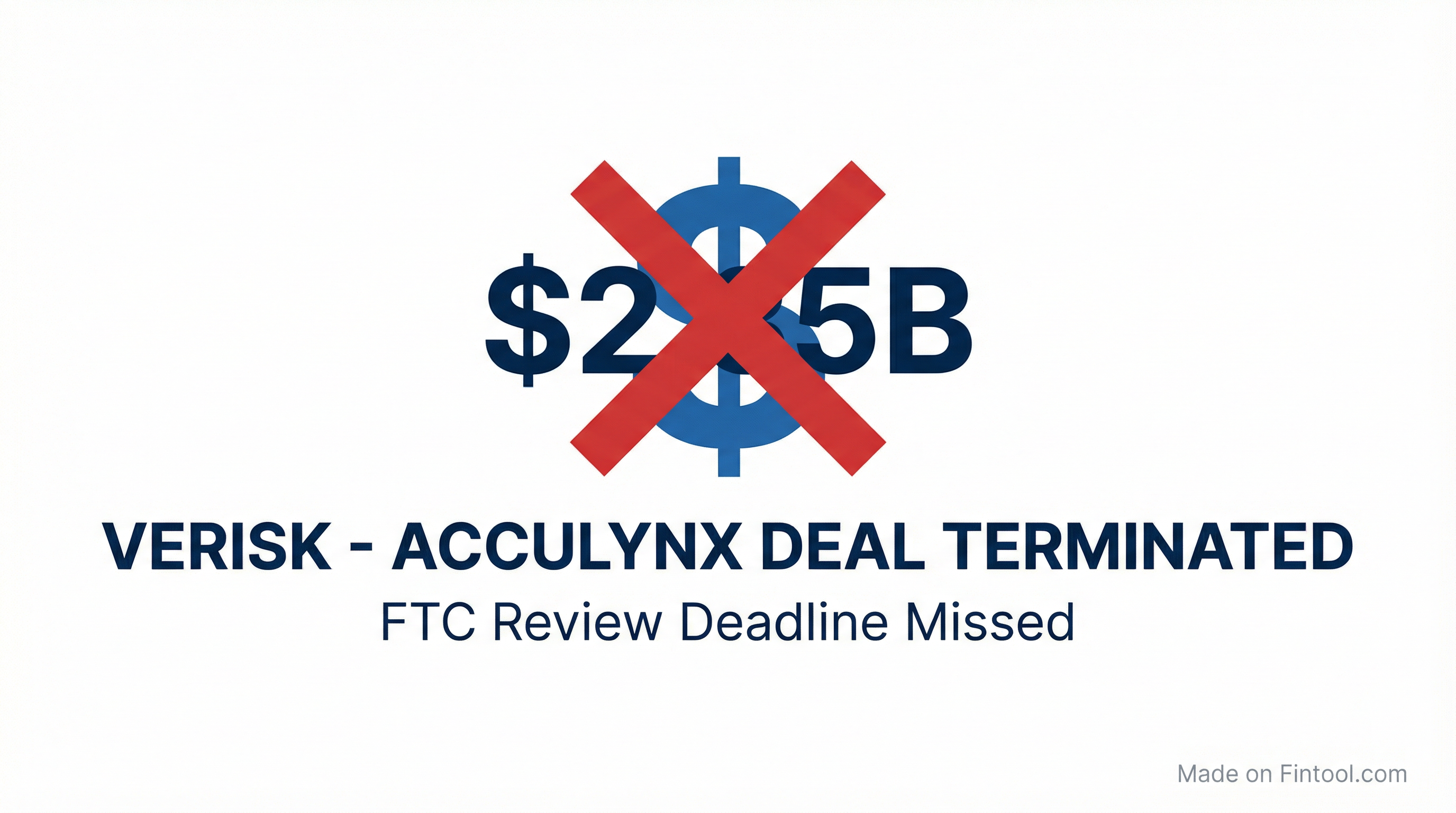
Verisk Analytics pulled the plug on its $2.35 billion cash acquisition of AccuLynx after the Federal Trade Commission failed to complete its antitrust review by the contractual deadline of December 26, 2025. The deal, announced in July 2025 as Verisk's largest acquisition in years, now faces potential litigation as AccuLynx formally disputes the validity of the termination.
VRSK shares traded at approximately $220.34 on December 29, 2025, showing resilience despite the deal collapse.
The Deal That Was
Verisk announced the definitive agreement to acquire AccuLynx on July 30, 2025, for $2.35 billion in cash. The strategic rationale was compelling: AccuLynx operates as a leading software provider for roofing contractors, offering a cloud-based platform that manages everything from job estimation to project completion.
For Verisk—a data analytics company primarily serving the insurance, energy, and financial services sectors—AccuLynx represented a significant expansion into the contractor software space. The acquisition was designed to create synergies between Verisk's property data capabilities and AccuLynx's contractor workflow solutions.
 Ask Fintool AI Agent
The Regulatory Wall
The deal immediately drew regulatory scrutiny. On October 22, 2025, both Verisk and AccuLynx received "Second Requests" from the FTC—a formal demand for additional information that signals the agency is conducting a deeper antitrust investigation.
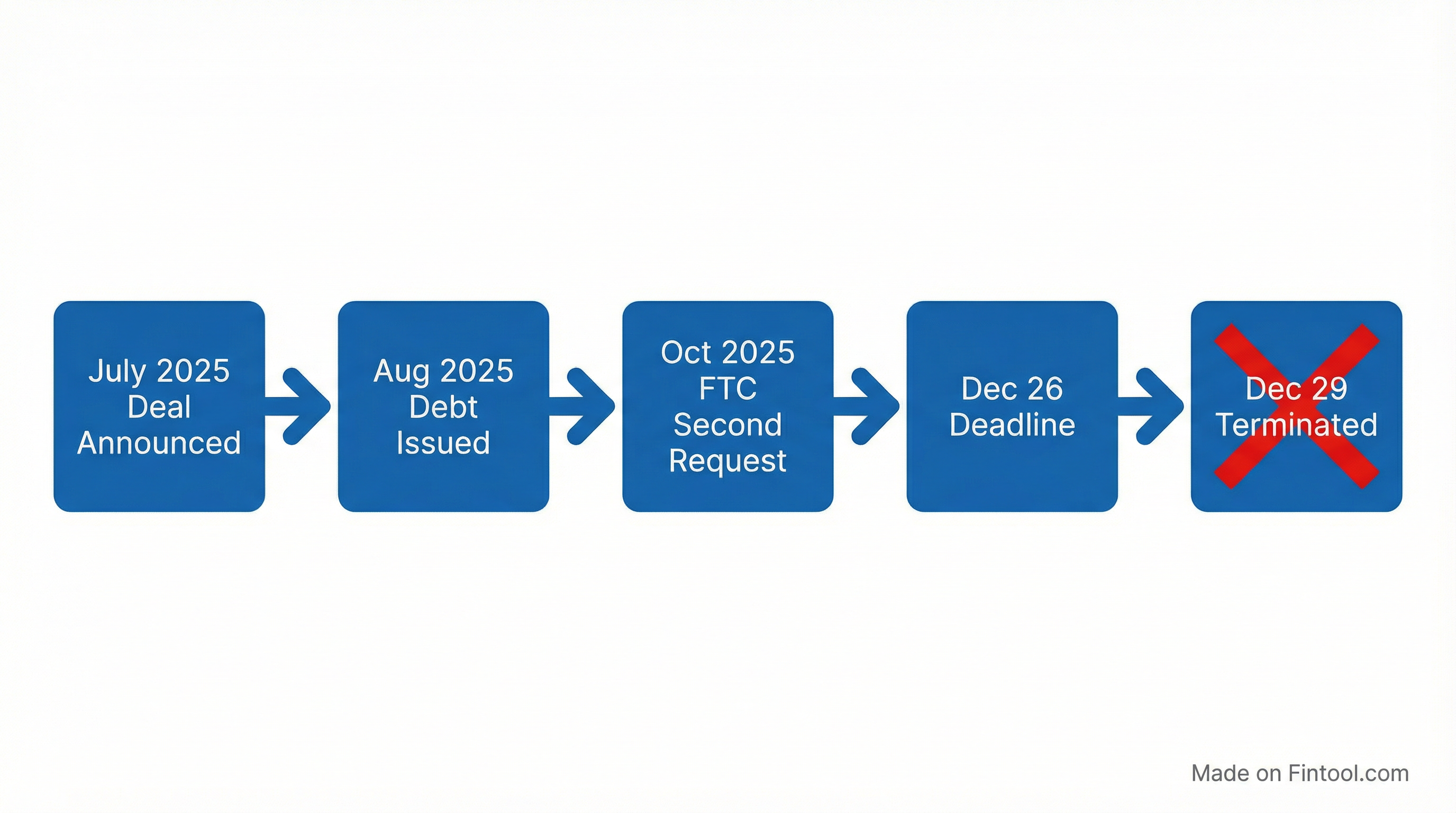
Second Requests are relatively rare, issued in approximately 3-4% of notifiable transactions. They effectively extend the review timeline indefinitely until the companies substantially comply with the information demands. The process can take six months or longer to complete.
Under the original merger agreement, the transaction required HSR Act clearance by December 26, 2025. When the FTC's review remained incomplete by that date, Verisk exercised its right to terminate the agreement.
AccuLynx Fights Back
The termination is not clean. AccuLynx has formally disputed the validity of Verisk's termination notice, setting the stage for potential litigation. Verisk responded by stating it "intends to vigorously defend against any such assertions."
The dispute likely centers on the specific terms of the merger agreement—whether Verisk fulfilled its obligations to cooperate with the regulatory process and whether the termination triggers any break-up fee provisions. Deal agreements typically include detailed covenants around regulatory cooperation, and AccuLynx may argue that Verisk did not meet those obligations.
Ask Fintool AI AgentThe Financial Cleanup
To finance the acquisition, Verisk had issued $1.5 billion in senior notes in August 2025. With the deal terminated, Verisk announced it will redeem this debt at 101% of the principal amount, plus accrued interest. The redemption will occur approximately 30 days following the notice date.
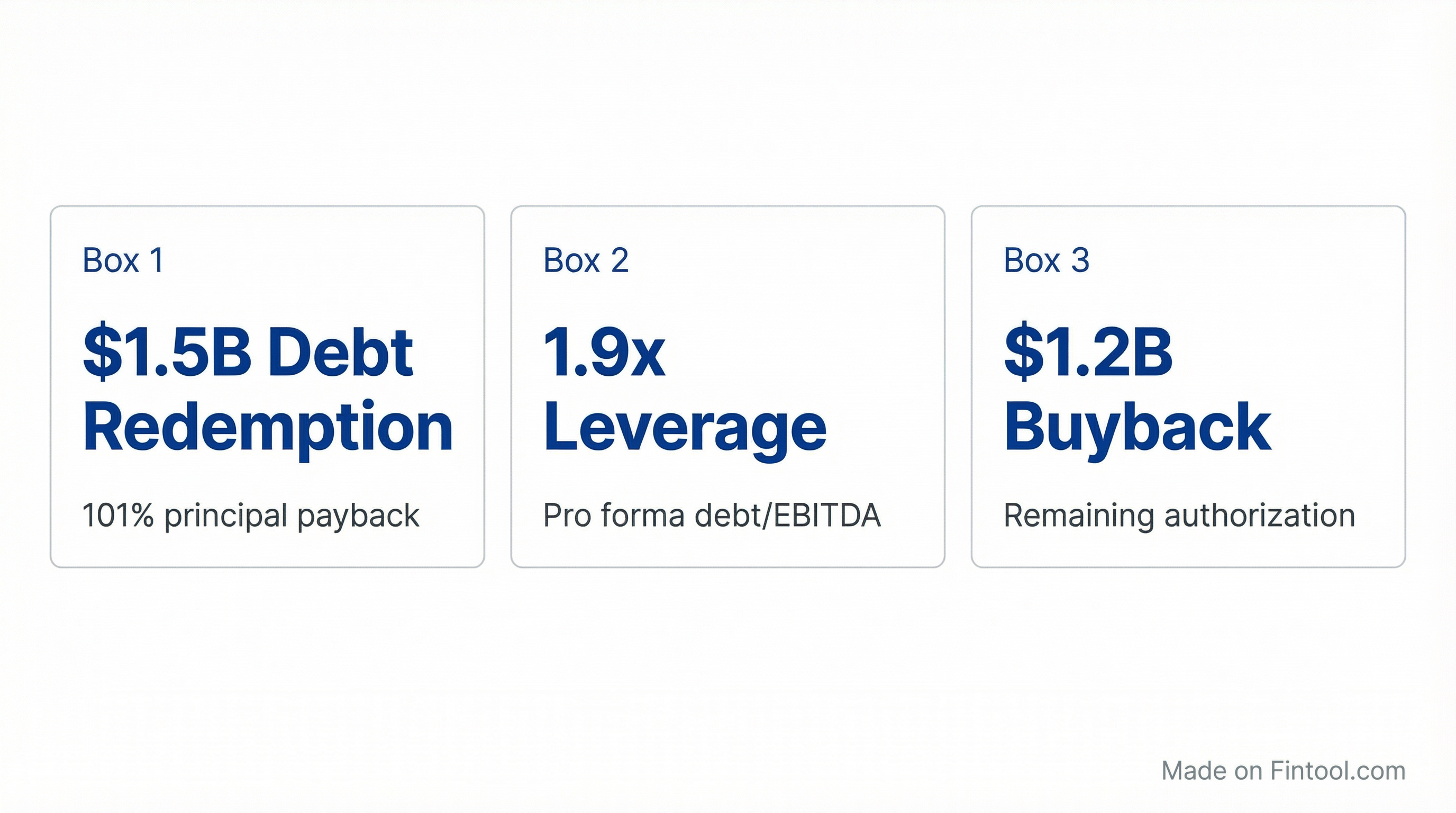
Following the debt redemption, Verisk's pro forma leverage will stand at approximately 1.9x last twelve months (LTM) adjusted EBITDA—a manageable level that maintains financial flexibility for future capital allocation decisions.
Verisk Financial Snapshot
| Metric | Q4 2024 | Q1 2025 | Q2 2025 | Q3 2025 |
|---|---|---|---|---|
| Revenue | $717.4M | $732.9M | $748.9M | $768.3M |
| Net Income | $219.9M | $214.7M | $214.9M | $225.5M |
Verisk's core business remains healthy, with steady revenue growth and solid profitability. The company's Q3 2025 revenue of $768.3M represents approximately 7% year-over-year growth, demonstrating that the underlying data analytics franchise continues to perform even as M&A ambitions face headwinds.
Ask Fintool AI AgentThe Broader Implications
For Verisk
The failed acquisition leaves Verisk with $1.5 billion in cash that was earmarked for AccuLynx. Management must now determine the best use of this capital—whether through alternative acquisitions, share repurchases, or debt paydown beyond the mandatory redemption.
Verisk has been actively reshaping its portfolio in recent years, having divested its Wood Mackenzie energy research business and 3E environmental compliance unit to focus on insurance analytics. The AccuLynx deal represented a strategic expansion into adjacent markets; its collapse may prompt a reassessment of that strategy.
For the FTC
The deal break adds to a growing list of acquisitions abandoned or restructured under heightened FTC scrutiny during the current regulatory environment. The agency has taken a more aggressive stance on vertical integration and data aggregation, particularly where the combined entity could gain competitive advantages through information asymmetries.
For Deal-Making More Broadly
The Verisk-AccuLynx termination underscores the increased execution risk in M&A transactions. Buyers must now price in longer regulatory timelines and the very real possibility that deals will not close. This has implications for:
- Deal premiums: Targets may demand higher prices to compensate for execution risk
- Break-up fees: Negotiated termination provisions become more critical
- Financing structures: Bridge facilities and commitment fees increase deal costs
Ask Fintool AI AgentWhat to Watch
Near-term:
- Whether AccuLynx initiates formal litigation against Verisk
- Details of any break-up fee or termination payment provisions
- Verisk's capital allocation announcements following debt redemption
Medium-term:
- Whether Verisk pursues alternative targets in the contractor software space
- FTC's approach to similar data-focused acquisitions in the insurance sector
- AccuLynx's strategic alternatives as an independent company
For investors:
- Verisk's Q4 2025 earnings call will be critical for understanding management's go-forward strategy
- Watch for any changes to capital return policies given the freed-up balance sheet capacity
Ask Fintool AI AgentThe Bottom Line
Verisk's termination of the AccuLynx acquisition represents a significant setback for the company's expansion strategy but leaves its balance sheet intact and core business unaffected. The dispute over termination validity adds uncertainty, but Verisk's strong financial position—1.9x leverage post-redemption and consistent profitability—provides cushion against any litigation risk.
For the broader market, this deal break serves as another reminder that regulatory scrutiny has fundamentally changed the M&A calculus. The days of assuming deal closure are over; execution risk is now a first-order consideration in every significant acquisition.