Vistra Bets $4 Billion on Gas Power to Feed America's AI Appetite
January 6, 2026 · by Fintool Agent

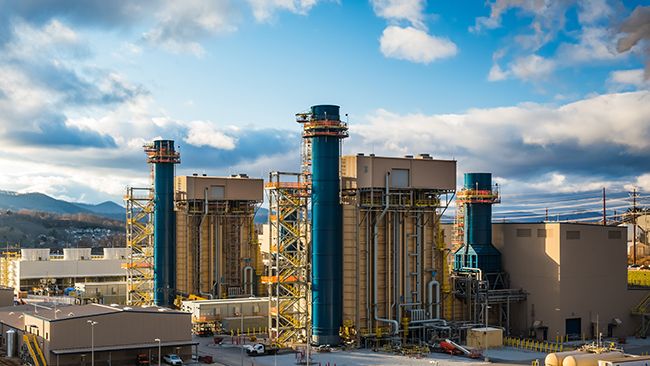
Vistra Corp. is doubling down on natural gas as the bridge fuel for America's AI-driven power surge. The Texas-based power giant announced a $4 billion deal to acquire Cogentrix Energy's portfolio of 10 natural gas plants totaling 5,500 megawatts—its second major generation acquisition in under a year.
Shares rose 3.2% on the news, adding to a 12% gain over the past year as investors bet that dispatchable gas and nuclear power will be the winners in the race to electrify AI data centers.
The Deal at a Glance
Vistra will pay approximately $2.3 billion in cash and issue 5 million shares (valued at $185 per share, or $925 million) to Quantum Capital Group, Cogentrix's owner. The company will also assume roughly $1.5 billion in existing debt, bringing the gross transaction value to $4.7 billion—or approximately $4.0 billion net of an estimated $700 million in tax benefits.
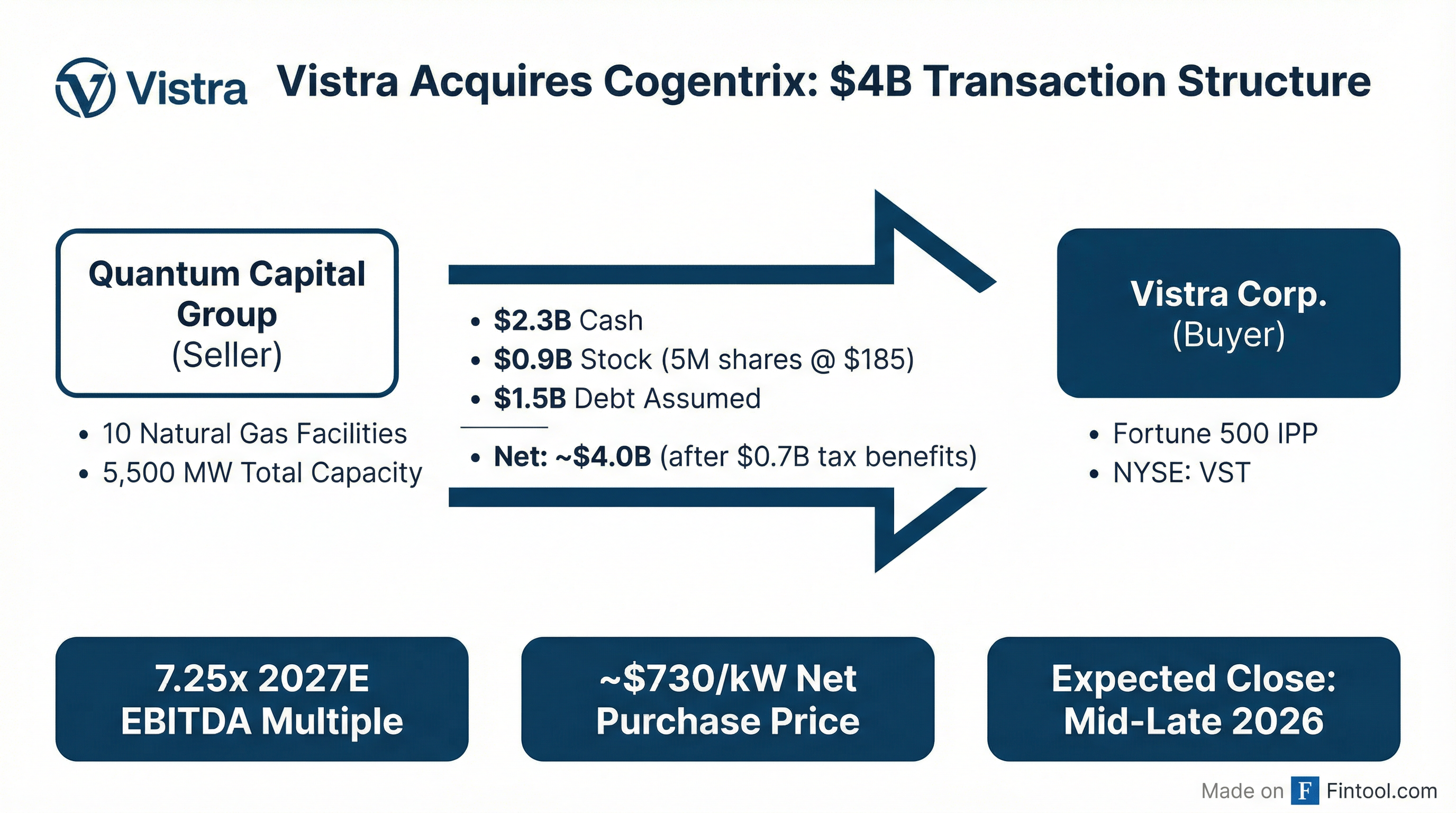
The implied valuation: 7.25x expected 2027 EBITDA and roughly $730 per kilowatt of capacity—a compelling price for modern, dispatchable generation assets in markets facing acute supply constraints.
 Ask Fintool AI Agent
Strategic Fit: Filling the Gaps Where Power Is Scarce
The Cogentrix portfolio is surgically placed in the markets where electricity demand is growing fastest and supply is tightest:
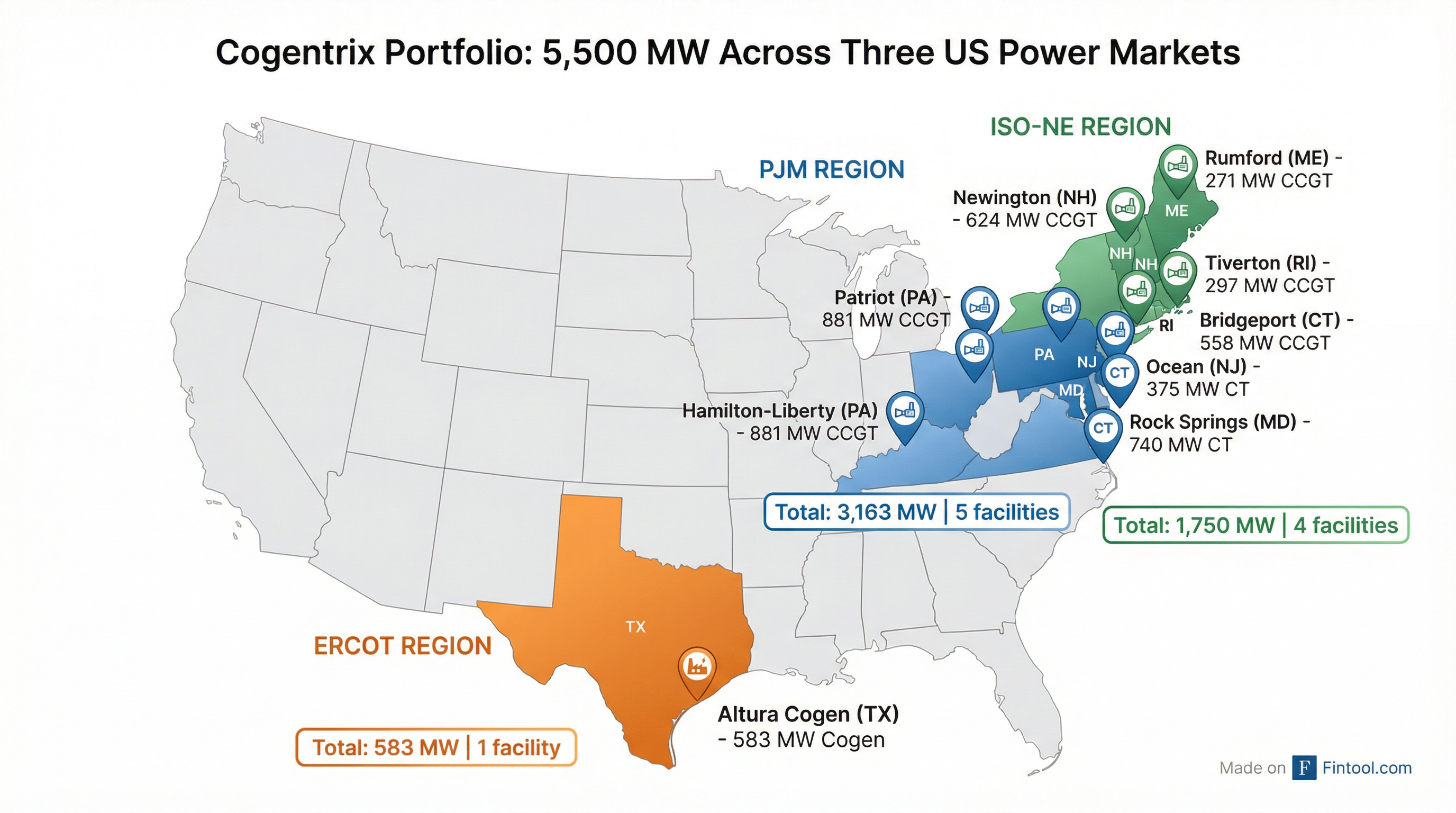
PJM Interconnection (5 plants, 3,163 MW): The mid-Atlantic grid spanning New Jersey to Chicago has seen capacity prices surge as data center demand collides with coal plant retirements. Vistra is adding the 881 MW Patriot and Hamilton-Liberty combined-cycle plants in Pennsylvania, plus facilities in New Jersey and Maryland.
ISO New England (4 plants, 1,750 MW): The region's grid operator has warned of reliability risks as aging generators retire. Vistra gains combined-cycle plants in New Hampshire, Connecticut, Rhode Island, and Maine.
ERCOT Texas (1 plant, 583 MW): The Altura cogeneration facility adds to Vistra's dominant position in its home market.
"The addition of this natural gas portfolio is a great way to start another year of growth for Vistra as we've completed, acquired, or developed projects in each of the competitive power regions where we operate," said CEO Jim Burke.
The AI Power Thesis
Vistra's acquisition spree reflects a fundamental shift in electricity demand that management has been telegraphing for quarters. In its most recent 10-Q, the company noted:
"Emerging electricity demand drivers including the rise of large-scale data centers, the electrification of oil field operations, and electric vehicle load building are contributing to a faster-paced load growth in the regions we serve."
The numbers back this up. Weather-normalized load in PJM grew approximately 2-3% year-over-year in 2025, while ERCOT saw roughly 6% growth—a dramatic reversal from two decades of flat demand.
CEO Burke framed the opportunity on the Q2 2025 earnings call:
"We continue to believe near term demand can be reliably and cost effectively served by the grid we have today, given that electric grids remained underutilized for the vast majority of hours in the year... Our thermal fleet on average runs 50 to 55% capacity factors. These resources can scale to meet additional load requirements."
The math is compelling: hyperscalers have increased AI and data center capex budgets by 50-60% year-over-year, and the PJM capacity auction cleared at $329/MW-day for 2026-2027—a price that signals the market desperately needs more generation.
Ask Fintool AI AgentFinancial Impact: Accretive from Day One
Vistra expects the deal to deliver mid-single digit adjusted free cash flow per share accretion in 2027 and high single-digit accretion on average through 2029.
Importantly, management is maintaining its capital allocation framework:
| Metric | Target |
|---|---|
| Net Leverage | < 3.0x |
| Annual Dividends | $300 million |
| Share Repurchases | ≥ $1 billion/year |
The company will fund the cash portion through a committed $2 billion bridge facility from Goldman Sachs, which it expects to refinance with permanent debt before closing.
Vistra's Recent Financial Performance
| Metric | Q4 2023 | Q1 2024 | Q2 2024 | Q3 2024 | Q4 2024 | Q1 2025 | Q2 2025 | Q3 2025 |
|---|---|---|---|---|---|---|---|---|
| Revenue ($B) | $3.1 | $3.1 | $3.8 | $6.3 | $4.0 | $3.9 | $4.3 | $5.0 |
| EBITDA ($B) | $0.6 | $0.7 | $1.4 | $3.3 | $1.3 | $0.7 | $1.4 | $1.8 |
| EBITDA Margin | 19.2% | 22.0% | 37.7% | 52.8% | 32.9% | 17.0% | 32.2% | 35.3% |
The company generated $17.2 billion in revenue and $6.8 billion in EBITDA in FY 2024, up from $14.8 billion and $4.6 billion respectively in FY 2023.
Second Big Deal in Under a Year
This marks Vistra's second major generation acquisition since May 2025, when it agreed to buy seven natural gas plants (2,600 MW) from Lotus Infrastructure Partners for $1.9 billion. That deal closed in October 2025, adding facilities across PJM, ISO-NE, NYISO, and CAISO.
Combined with the Cogentrix portfolio, Vistra will have added over 8,100 MW of gas-fired generation in less than a year—equivalent to powering roughly 6 million homes.
The company is also pursuing nuclear expansion. In September 2025, Vistra signed a 20-year power purchase agreement to supply 1,200 MW of carbon-free power from its Comanche Peak nuclear plant to a "large, investment-grade company" (widely believed to be a hyperscaler), with deliveries beginning in late 2027.
Management expects to add more than 600 MW to its existing nuclear capacity by the early-to-mid 2030s through plant upgrades.
What to Watch
Regulatory approvals: The deal requires sign-off from FERC, DOJ (Hart-Scott-Rodino), and state regulators in New Hampshire, Texas, and Connecticut. Expected close: mid-to-late 2026.
Integration execution: Vistra absorbed the Lotus assets smoothly; repeating that performance with a larger portfolio will be key.
Power prices and capacity auctions: The investment thesis depends on continued tightness in PJM and ISO-NE markets. Any demand disappointment or supply surge would pressure returns.
Data center demand materialization: While hyperscaler capex commitments are robust, the pace of actual power consumption growth remains uncertain.
Ask Fintool AI AgentThe Bottom Line
Vistra is positioning itself as the utility of choice for AI infrastructure—not by building speculative new plants, but by acquiring proven, modern gas generation in supply-constrained markets at disciplined valuations. At $730/kW, the Cogentrix deal prices in modest expectations; if data center demand materializes as projected, the upside could be substantial.
The stock's 3% pop suggests the market agrees. For investors seeking AI exposure beyond the hyperscalers and chip makers, Vistra offers a picks-and-shovels play on America's electrification—one natural gas turbine at a time.
Related: Vistra Corp. Company Profile