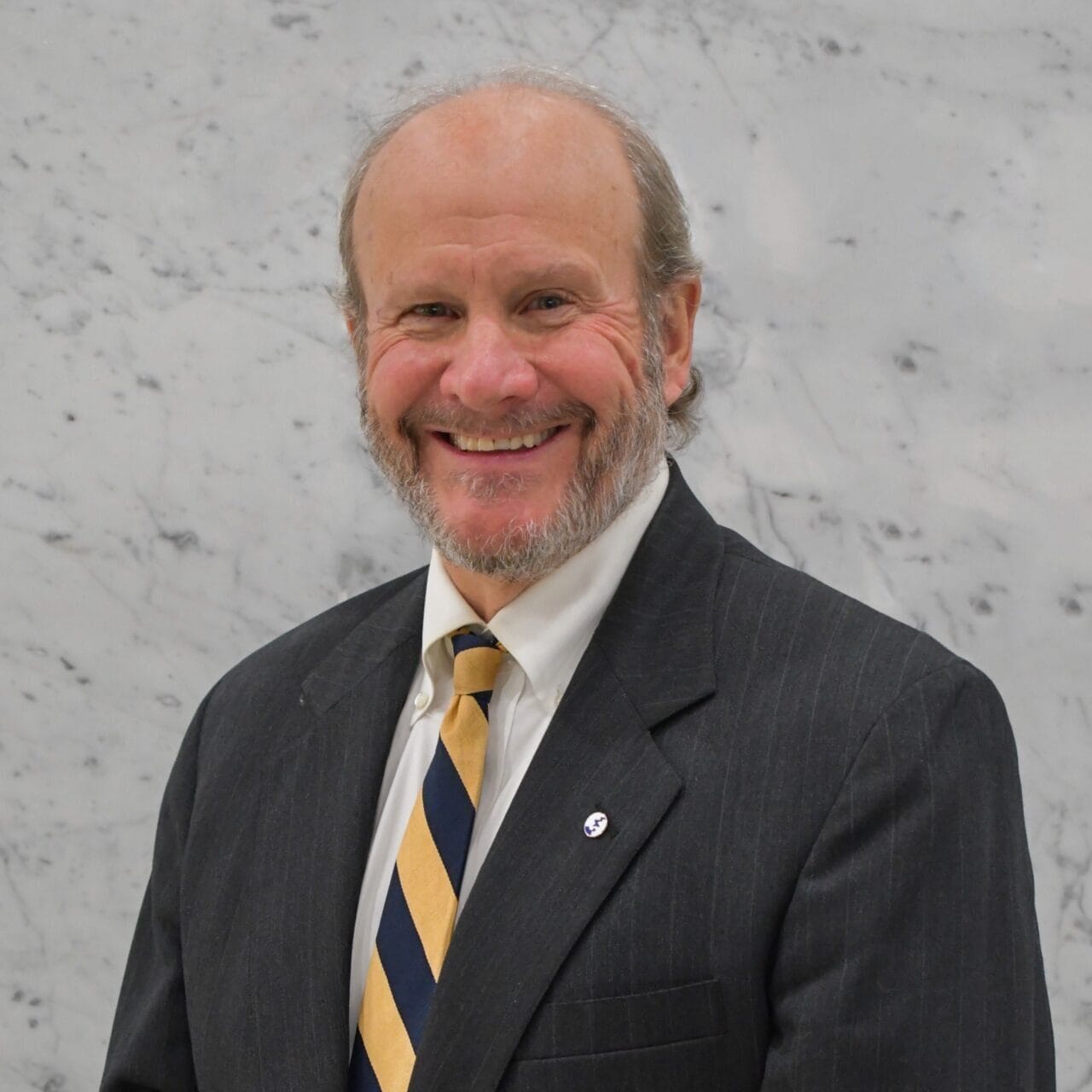
Robert Chapman III
About Robert Chapman III
Robert R. Chapman III, 62, is President of Bank of the James Financial Group, Inc. (“Financial”) and Chief Executive Officer of Bank of the James (“the Bank”). He has been President of Financial since January 2004, CEO of the Bank since January 2003, and was a co‑organizer of Bank of the James in 1999; he previously served as President of the Bank from January 2003 through October 2021. He holds a B.A. in Economics from the Virginia Military Institute, is a graduate of the Stonier Graduate School of Banking, and served as a First Lieutenant in the U.S. Army .
Pay-versus-performance disclosures show cumulative TSR rising 5.29% from 2022→2023 and 29.96% from 2023→2024, while net income declined 2.85% (2022→2023) and 8.16% (2023→2024); Compensation Actually Paid to the PEO decreased 8.63% in 2023 then increased 31.48% in 2024 .
Past Roles
| Organization | Role | Years | Strategic impact |
|---|---|---|---|
| Bank of the James (Bank) | Chief Executive Officer | Jan 2003 – Present | Day‑to‑day management; deep experience in bank administration, ALM, and lending across residential, commercial, and business banking . |
| Bank of the James (Bank) | President | Jan 2003 – Oct 2021 | Led Bank operations for ~18 years during growth of the franchise . |
| Bank of the James (Financial) | Co‑organizer | 1999 | Co‑founded the institution, providing continuity and institutional knowledge . |
| Crestar Bank | VP & Branch Manager; Commercial Account Manager | ~15 years (pre‑1999) | Commercial banking leadership and relationship management foundation . |
External Roles
| Organization | Role | Years | Notes |
|---|---|---|---|
| Pettyjohn, Wood & White, Inc. (SEC‑registered investment advisor) | Director | Current | Also a subsidiary in the corporate structure; Chapman serves on its board . |
| Centra Foundation | Director/Board member | Current | Community health foundation governance . |
| VMI Keydet Club | Board member | Current | Alumni/athletics support organization . |
| Westminster‑Canterbury Foundation | Board member | Current | Community/non‑profit governance . |
Fixed Compensation
| Metric (USD) | 2023 | 2024 |
|---|---|---|
| Base Salary | 340,898 | 400,555 |
| Annual Bonus (paid) | 115,000 | 150,000 |
| All Other Compensation | 108,258 | 191,198 |
| Total Compensation | 564,156 | 741,753 |
All Other Compensation detail for Chapman includes 401(k) match, life insurance premiums, and Salary Continuation Agreement expense: $96,611 (2023) and $178,503 (2024) . In 2024 there was no formal executive bonus plan; bonuses were discretionary based on individual and company performance .
Performance Compensation
- Equity awards: No stock options/RSUs/PSUs granted in 2024; NEOs had no outstanding equity awards at year‑end .
- Bonus framework: No 2024 executive bonus plan; discretionary bonuses were informed by a 2023 Pearl Meyer benchmarking study and a proposed (non‑adopted) bonus matrix used as guidance .
| Incentive | Metric | Weighting | Target | Actual | Payout ($) | Vesting |
|---|---|---|---|---|---|---|
| Annual Cash Bonus (2024) | Discretionary (no formal plan) | N/A | N/A | Committee discretion | 150,000 | N/A |
| Annual Cash Bonus (2023) | Discretionary (no formal plan) | N/A | N/A | Committee discretion | 115,000 | N/A |
Pay-versus-performance disclosure (Company level):
| Year | Summary Compensation Table Total for PEO ($) | Compensation Actually Paid to PEO ($) | TSR Value (Index) ($) | Net Income ($000s) |
|---|---|---|---|---|
| 2022 | 617,413 | 617,413 | 79.11 | 8,959 |
| 2023 | 564,156 | 564,156 | 105.29 | 8,704 |
| 2024 | 741,753 | 741,753 | 135.58 | 7,994 |
Relationship notes: From 2022→2023 TSR +5.29%, net income −2.85%; from 2023→2024 TSR +29.96%, net income −8.16%; PEO CAP −8.63% (2023) then +31.48% (2024) .
Equity Ownership & Alignment
| Holder | Beneficial Shares | % of Class | As of |
|---|---|---|---|
| Robert R. Chapman III | 120,057 | 2.64% | March 25, 2025 |
- Shares outstanding used for calculation: 4,543,338 .
- Anti‑hedging: Directors and officers are prohibited from entering into hedging transactions of company equity under the Trading Restriction Policy .
- Equity plans: 2018 Equity Incentive Plan authorized; 248,049 shares available; however, the Company did not grant equity in 2024 and does not anticipate granting options in the next 12 months; no outstanding equity awards for NEOs .
- Clawback: Policy to recover excess incentive compensation from covered executives for the 3 years preceding an accounting restatement, subject to limited exceptions .
Employment Terms
| Term | Detail |
|---|---|
| Employment agreement | None of the NEOs have employment agreements . |
| Salary Continuation Agreement (Chapman) | Lump sum $2,315,177 payable within 90 days after normal retirement at age 65 or upon death while employed . |
| Early termination (pre‑65, other than cause/death/disability/CIC) | Lump sum equal to Early Termination benefit per Schedule A (amount not specified in proxy; paid within 90 days of termination) . |
| Disability (pre‑65) | Lump sum equal to Disability benefit per Schedule A, paid within 90 days after reaching age 65 . |
| Change‑in‑Control (CIC) | If employment terminates within 24 months following a CIC, lump sum equal to CIC benefit per Schedule A; if terminated on 12/31/2024, amount would have been $2,539,153; paid within 90 days of termination (double‑trigger) . |
| Funding | Obligations funded via bank‑owned life insurance . |
Board Governance (Director Service, Committees, Independence)
- Board role and dual‑role implications: Chapman is an inside director (CEO of the Bank; President of the holding company). The Chairman of the Board is an independent director (Thomas W. Pettyjohn, Jr.), and the Company deliberately separates the CEO and Chair roles so an independent director sets the board agenda .
- Committee memberships (Financial): Chapman serves on the Executive Committee; he is not listed as a member of the Audit, Compensation, or Nominating Committees (all composed of independent directors) .
- Committee leadership and independence: Audit Committee and Compensation Committee members are independent under Nasdaq and SEC rules; Audit Committee Financial Expert designated (Lewis C. Addison) .
- Meetings/attendance: The Financial board held 12 meetings in 2024; each director attended at least 75% of Financial board and committee meetings .
- Director compensation: Employee‑directors (Chapman and Scruggs) receive no additional fees for board/committee service .
Director Compensation (for context; Chapman as employee‑director receives $0)
| Director Fee Element (2024) | Amount |
|---|---|
| Annual retainers: Chair / Vice Chair / Others | $12,000 / $10,000 / $8,000 |
| Committee chair retainers: Loan / Audit-Exec-Compliance / Comp-Nom | $4,000 / $3,000 / $2,000 |
| Board meeting fees: Chair / Vice Chair / Others | $2,000 / $1,500 / $1,000 |
| Committee meeting fee (same day, Financial & Bank) | $400 total |
| Total fees paid to non‑employee directors (aggregate) | ~$347,900 |
| Chapman board fees | $0 (employee‑director) |
Additional Context: Process, Policies, and Peer Benchmarking
- Compensation governance: Compensation Committees oversee goals, evaluate performance of the President of Financial and CEO of the Bank, and recommend pay; senior management compensation includes base salary, benefits, discretionary bonuses, commissions for some roles, and participation in a Salary Continuation Plan; Company states pay is competitive and not incentivizing undue risk .
- 2023 consultant: Pearl Meyer engaged in 2023 for benchmarking and a proposed bonus matrix used as guidance in 2024; no engagement in 2024/2025; Committee determined no conflicts of interest .
- Say‑on‑pay: Advisory vote held annually; Board recommends “FOR”; approval requires a majority of votes cast (no percentage outcome disclosed in this proxy) .
- Audit oversight: Independent Audit Committee (six directors) oversees financial reporting and risk management; recommended inclusion of audited financials in 2024 Form 10‑K .
Investment Implications
- Alignment and ownership: Chapman’s 2.64% beneficial stake is meaningful for a microcap bank and provides alignment, while the no‑equity‑awards policy eliminates vesting‑driven selling pressure; anti‑hedging and clawback policies further align incentives with shareholders .
- Pay vs performance: With TSR up ~30% in 2024 and net income down ~8%, the 31% increase in Compensation Actually Paid to the PEO reflects sensitivity to market alignment (TSR) and adjustments to bring base pay closer to market, but limited direct tie‑ins to operating metrics given the discretionary bonus framework in 2024; investors may monitor any return to formulaic, metric‑based incentives .
- Retention and CIC economics: At age 62, Chapman’s Salary Continuation Agreement provides a $2.315M normal‑retirement lump sum at 65 and a $2.539M double‑trigger CIC benefit (as of a 12/31/2024 termination), creating strong near‑term retention but also potential cash cost in change‑in‑control scenarios; double‑trigger reduces windfall risk absent termination .
- Governance structure: Separation of CEO and independent Chair, independent audit/comp committees, and full‑board risk oversight mitigate classic dual‑role concerns from an independence perspective; Chapman’s executive committee role is consistent with his management position .