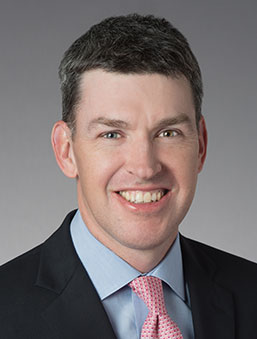
Sean Keohane
 CABOT
CABOTAbout Sean Keohane
Sean D. Keohane (age 57) is President, Chief Executive Officer and Director of Cabot Corporation (since 2016), and has served on Cabot’s Board since 2016; prior roles include EVP/President of Reinforcement Materials (2014–2016) and SVP/President of Performance Chemicals (2012–2014), after joining Cabot in 2002; earlier he held general management roles at Pratt & Whitney (United Technologies) . Cabot’s shareholder value creation during his tenure is reflected in the Pay vs. Performance table: a $100 investment in Cabot grew to $339 in 2024 versus $156 for the peer group; 2024 results included diluted EPS $6.72, adjusted EPS $7.06, income before tax $529M, total segment EBIT $701M, operating cash flow $692M and DFCF $479M, with robust TSR over the period .
Past Roles
| Organization | Role | Years | Strategic Impact |
|---|---|---|---|
| Cabot Corporation | President, CEO and Director | 2016–present | Led “Creating for Tomorrow” strategy; 2024 outcomes included adj. EPS $7.06, total segment EBIT $701M, DFCF $479M; progressed capacity expansion (Cilegon, Indonesia) and secured U.S. DOE grant for battery materials . |
| Cabot Corporation | EVP, President – Reinforcement Materials | 2014–2016 | Drove segment leadership in reinforcing carbons . |
| Cabot Corporation | SVP, President – Performance Chemicals | 2012–2014 | Advanced specialty product portfolio . |
| Cabot Corporation | VP & GM – Performance Chemicals; VP | 2008–2012; 2005 | Built business positioning across chemicals end-markets . |
| Pratt & Whitney (UTC) | General management positions | pre-2002 | Industrial/operations leadership experience . |
External Roles
| Organization | Role | Years | Notes |
|---|---|---|---|
| The Chemours Company | Director (public company) | 2018–present | Board service at global performance chemicals company . |
| American Chemistry Council | Director | 2016–present | Industry trade association leadership engagement . |
Fixed Compensation
| Metric (CEO) | FY2022 | FY2023 | FY2024 |
|---|---|---|---|
| Base Salary ($) | 1,035,000 | 1,083,750 | 1,100,000 |
| STI Target (%) | — | — | 125% of base (raised from 120%) |
| STI Target ($) | — | — | 1,375,000 |
| Actual STI Paid ($) | 1,838,657 | 1,045,704 | 1,951,043 (142% of target) |
| All Other Compensation ($) | 308,354 | 235,251 | 324,558 |
Notes:
- 2024 base salary increase: 0.0% .
- Directors who are Cabot employees (including the CEO) do not receive additional director compensation .
Performance Compensation
Annual Incentive (STI) Design and FY2024 Outcome
- Structure: 70% corporate financial metrics; 30% individual performance; payout range 0–200% of target .
- FY2024 corporate metrics: Adjusted EBIT, Net Working Capital (NWC) days, Discretionary Free Cash Flow (DFCF); Committee did not exercise discretion .
- CEO payout: 138.4% for corporate component; 150% for individual; overall 142% of target, paying $1,951,043 .
| Component | Weighting | Target | Actual/Payout | Notes |
|---|---|---|---|---|
| Corporate Metrics (Adj. EBIT, NWC days, DFCF) | 70% | 100% | 138.4% | Pre-set threshold/target/max; straight-line interpolation |
| Individual Performance | 30% | 100% | 150% | Committee judgment within framework |
| Total STI Payout | — | 100% | 142% of target | Resulting bonus $1,951,043 |
Long-Term Incentive (LTI) Design and FY2024 Grants
- Mix at grant-date value: 35% PSUs, 35% stock options, 30% time-based RSUs (TSUs); 70% of target LTI is performance-based (PSUs + options) .
- FY2024 CEO grants (11/10/2023): 29,166 PSUs ($2,169,950), 79,139 options (exercise $74.40; grant-date fair value $2,170,625), 25,000 TSUs ($1,860,000); total LTI grant value $6.2M .
| Award Type | Grant Date | Target/Count | Key Terms | Grant-Date Value ($) |
|---|---|---|---|---|
| PSUs | 11/10/2023 | 29,166 target | Three 1-year performance tranches (Adj. EPS 65%, Adj. RONA 35%), 0–200% payout, vests at 3 years | 2,169,950 |
| Stock Options | 11/10/2023 | 79,139 | Exercise price $74.40; 10-year term; time-vest | 2,170,625 |
| TSUs | 11/10/2023 | 25,000 | Time-based, retention-focused, generally three-year vest | 1,860,000 |
PSU Performance Achievements (Selected)
| PSU Cohort | Performance Year | Metric (Weight) | Target | Actual | Payout % |
|---|---|---|---|---|---|
| FY2022 grant (vested 11/2024) | FY2024 (Year 3) | Adjusted EPS (65%) | $6.39 | $7.06 | 171.6% |
| Adjusted RONA (35%) | 17.0% | 20.6% | 200.0% | ||
| Composite | — | — | — | 181.5% | |
| FY2023 grant (vests 11/2025) | FY2023 (Year 2) | Composite | — | — | 123.5% |
| FY2024 grant (vests 11/2026) | FY2023 (Year 1) | Composite | — | — | 185.6% |
Multi‑Year CEO Compensation (Summary Compensation Table)
| Year | Salary ($) | Stock Awards ($) | Option Awards ($) | Non‑Equity Incentive ($) | Change in Pension/Deferred ($) | All Other ($) | Total ($) |
|---|---|---|---|---|---|---|---|
| 2022 | 1,035,000 | 3,087,436 | 1,662,485 | 1,838,657 | 16,097 | 308,354 | 7,948,029 |
| 2023 | 1,083,750 | 3,509,911 | 1,890,051 | 1,045,704 | 26,843 | 235,251 | 7,791,510 |
| 2024 | 1,100,000 | 4,029,950 | 2,170,625 | 1,951,043 | 23,978 | 324,558 | 9,600,154 |
Additional realizations (FY2024):
- Options exercised: 43,474 shares; value realized $2,292,081 .
- Stock vested (TSUs/PSUs): 115,937 shares; value realized $8,897,817 .
Equity Ownership & Alignment
| Item | Detail |
|---|---|
| Beneficial Ownership | 1,114,434 shares; 2.02% of class (based on 54,221,416 shares outstanding as of 1/15/2025) . |
| Options exercisable within 60 days | 834,194 shares underlying options . |
| Ownership Guidelines | CEO required ownership = 5x base salary; all executives subject ≥5 years have satisfied guidelines . |
| Hedging/Pledging | Prohibited for directors and LTI participants; no pledging or margin accounts permitted . |
| Deferred/Retirement Plans | Supplemental 401(k) Plan balance $4,708,097; Deferred Compensation Plan balance $3,139,286 as of FY2024; no 2024 elective deferrals by CEO . |
| Pension/SERP | Supplemental Cash Balance Plan frozen; U.S.-based NEOs fully vested in account balances as of 9/30/2024 . |
Selected outstanding awards (as of 9/30/2024):
- Unexercised options (exercisable/unexercisable): e.g., 11/12/2021 grant 62,538/41,693 at $58.27 (exp. 11/11/2031); 11/11/2022 grant 21,575/50,342 at $73.84 (exp. 11/10/2032); 11/10/2023 grant —/79,139 at $74.40 (exp. 11/9/2033) .
- Unvested TSUs: 24,455 (2021 award; $2,733,335), 21,939 (2022; $2,452,122), 25,000 (2023; $2,794,250) market values based on $111.77 on 9/30/2024 .
- PSU status: unearned/earned tranches shown; e.g., 2023 PSU line shows 18,044 units and 38,888 unearned units with corresponding market values .
Employment Terms
| Topic | Terms |
|---|---|
| Employment Agreement | No employment contract (U.S. NEOs other than Mr. Zhu serve without employment agreements) . |
| Severance Plan (CIC) | Lump sum = 3x (base + “bonus,” where bonus is greater of target or highest last 3 years); 3 years continued benefits; pro‑rated bonus; outplacement up to 15% of base; “better‑of” excise tax provision; double‑trigger equity vesting policy . |
| Potential Payments (CIC scenario as of 9/30/2024) | Severance Pay $11,031,556; Accelerated Unvested Equity $26,523,322; Benefits/Perqs $260,479; Total $37,815,357 . |
| Death/Disability (Illustrative) | Accelerated equity $23,396,444; plus $3,000,000 benefits for death; $0 benefits for disability . |
| Retirement Eligibility | CEO eligible for early retirement under U.S. plans; retirement vesting provisions added at start of FY2024 (pro‑rata equity vesting), but no NEO met age/service requirements as of 9/30/2024 . |
| Clawback | Awards subject to Cabot’s incentive compensation recoupment policies; the 2025 LTIP includes clawback/recoupment provisions . |
Board Governance
- Role and Independence: CEO and Director since 2016; member of the Board’s Executive Committee; not independent (all other standing committee members are independent) .
- Chair/CEO Structure: Non‑Executive Chair (Michael M. Morrow) since Oct 1, 2023, providing separation of board leadership from management; if roles are combined in the future, a Lead Independent Director would be appointed under guidelines .
- Board Activity: Board met seven times during fiscal 2024; oversight conducted via Audit, Compensation, Governance & Nominating, and SHE&S committees (independent membership) .
- Director Compensation: Employee directors do not receive director fees; non‑employee directors received $95,000 cash retainer and $155,000 equity retainer in 2024 with committee chair retainers as specified .
Director Compensation (context for dual role)
- Employee directors (including Keohane) are not paid additional board retainers; equity received is via executive LTI, not director plans .
Compensation Peer Group (Benchmarking)
- FY2024 peer group (19 companies): Albemarle; Ashland Global; Avient; Axalta; Celanese; Chemours; Element Solutions; FMC; H.B. Fuller; Huntsman; Innospec; Minerals Technologies; NewMarket; Olin; Orion; RPM; Stepan; Trinseo; Tronox; Eastman Chemical was added for FY2025 review .
- Targeting strategy: total direct compensation targeted to a range around the market 50th percentile; phased adjustments for internal promotions over ~3 years .
Say‑on‑Pay & Shareholder Feedback
- Say‑on‑Pay approval: 98% support at the 2024 Annual Meeting; Committee concluded programs effectively align pay with performance; continued engagement with shareholders .
Performance & Track Record
| Year | Cabot TSR (Value of $100) | Peer Group TSR (Value of $100) | Net Income ($M) | Adjusted EBIT ($M) |
|---|---|---|---|---|
| 2021 | 143 | 136 | 250 | 492 |
| 2022 | 186 | 117 | 209 | 583 |
| 2023 | 206 | 135 | 445 | 553 |
| 2024 | 339 | 156 | 380 | 633 |
Selected FY2024 achievements under Keohane’s leadership:
- Delivered diluted EPS $6.72 and adjusted EPS $7.06; total segment EBIT $701M; CFO $692M; DFCF $479M .
- Advanced key capacity projects (Cilegon, Indonesia) and secured U.S. DOE grant for battery-grade CNTs and conductive dispersions .
- Strengthened investor outreach and sustainability performance against 2025 goals .
Compensation Structure Analysis
- Mix and At‑Risk Pay: In FY2024, 66% of CEO total direct compensation opportunity was performance‑based (STI + PSUs + options) .
- Shift/Trends: 2024 saw higher equity grant values (stock awards $4.03M; options $2.17M) and a higher STI payout (142% of target) versus 2023 (lower STI) consistent with stronger performance metrics .
- Instruments: Balanced use of PSUs (EPS/RONA), options (price appreciation), and TSUs (retention) with multi‑year vesting; no option repricing without shareholder approval .
- Risk Controls: Caps on incentives, diversified metrics (income statement, balance sheet, cash flow), recoupment policies, and stock ownership guidelines .
Risk Indicators & Red Flags
- Hedging/Pledging: Prohibited (reduces misalignment/credit risk) .
- Change‑in‑Control: Double‑trigger equity vesting policy; no excise tax gross‑ups in severance plan; “better‑of” cutback applied .
- Option Repricing: Prohibited without shareholder approval .
- Related Party Transactions/Investigations: Not disclosed in the proxy; none noted in extracted sections (skip).
- Say‑on‑Pay: Strong support (98%) indicates low external concern on pay practices .
Board Service History, Committees, and Dual‑Role Implications
- Board tenure: Director since 2016; Executive Committee member .
- Independence: Not independent (as CEO); all standing board committees are fully independent .
- Governance structure: Non‑Executive Chair model in place since 10/1/2023, mitigating CEO/Chair concentration risks; if combined in future, a Lead Independent Director is required by guidelines .
- Attendance: Board met seven times in FY2024; committee operations and oversight robust per governance disclosures .
Investment Implications
- Alignment: Significant skin‑in‑the‑game (2.02% ownership; 834k options exercisable within 60 days; strong compliance with 5x‑salary ownership guideline), hedging/pledging bans, and pay design tied to EPS/RONA and cash flow suggest incentives aligned with TSR, margin, and capital efficiency .
- Potential Selling Pressure: 2024 realizations (43,474 options exercised; 115,937 shares vested) indicate meaningful liquidity events; continued vesting of sizable TSUs/PSUs and option overhang (e.g., 79,139 2023 options; 50,342 2022 unexercisable) can create episodic supply, though structured vesting mitigates cliff effects .
- Retention/Transition Risk: Robust double‑trigger CIC economics ($37.8M modeled total) and multi‑year vesting support retention; no CEO employment contract reduces rigidity; CEO eligible for early retirement, with newly introduced retirement vesting mechanics designed to smooth transitions .
- Pay Governance: Strong say‑on‑pay backing (98%), independent consultant (Meridian) and median‑oriented benchmarking reduce pay‑inflation and governance risk .
If you want, I can add Form 4 insider trading detail (10b5‑1 plans, transaction timing/prices) and a precise vested/unvested/ITM option valuation snapshot using the insider-trades skill for a trading‑signals appendix.