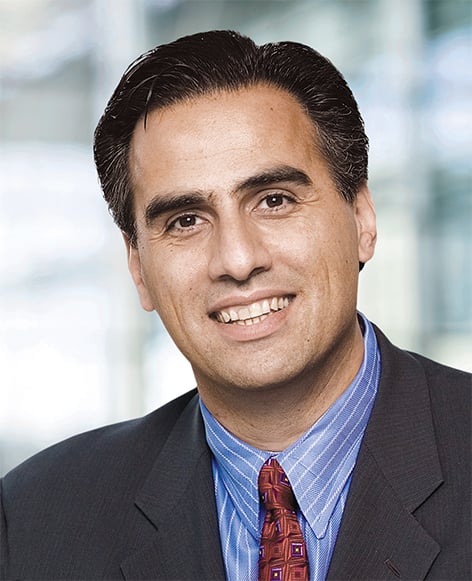
Paul Maleh
About Paul Maleh
Paul Maleh, age 61, is President, Chief Executive Officer, and Chairman of the Board of CRA International, Inc. (CRAI). He joined CRA in 1989, became CEO and a director in November 2009, and was appointed Chairman in July 2020. He holds an MBA from Northeastern University and previously led CRA’s finance practice and platform before serving as COO. Recent company performance metrics used to evaluate executive pay include strong non-GAAP net revenue growth in fiscal 2024 to approximately $687.4 million and Performance Compensation EBITDA of approximately $131.9 million; CRA’s five-year TSR value rose to $375.29 per $100 invested (2019–2024) .
Past Roles
| Organization | Role | Years | Strategic Impact |
|---|---|---|---|
| CRA International, Inc. | President, CEO, Director | Nov 2009–present | Led day-to-day operations and strategic initiatives; deep knowledge of consulting business |
| CRA International, Inc. | Chairman of the Board | Jul 2020–present | Board leadership with Lead Independent Director structure to maintain oversight |
| CRA International, Inc. | Chief Operating Officer | Oct 2008–Nov 2009 | Operational leadership during transition to CEO |
| CRA International, Inc. | Executive Vice President | Oct 2006–Nov 2009 | Senior corporate leadership |
| CRA International, Inc. | Head of Finance Platform | Dec 2006–Jan 2009 | Built finance platform capabilities |
| CRA International, Inc. | Director, Finance Practice | 2000–Dec 2006 | Directed finance consulting practice growth |
| CRA International, Inc. | Vice President | 1999–Oct 2006 | Practice and client leadership |
External Roles
| Organization | Role | Years | Strategic Impact |
|---|---|---|---|
| KIPP Massachusetts | Board Member | Sep 2022–present | Non-profit governance; community engagement |
Fixed Compensation
| Metric | FY 2022 | FY 2023 | FY 2024 |
|---|---|---|---|
| Base Salary ($) | 900,000 | 900,000 | 900,000 |
| Target Annual Bonus ($) | — | — | 1,100,000 |
| Actual Annual Bonus Paid ($) | 1,094,399 | 1,055,000 | 1,160,000 |
Notes:
- Target bonus disclosed for FY 2024; earlier years’ targets not disclosed. CRA indicates CEO’s target bonus constituted ~55% of target cash compensation in FY 2024 .
Performance Compensation
FY 2024 Annual Incentive Design and Outcomes (Cash)
| Metric | Weighting | Target | Actual | Payout vs Target | Vesting/Payment |
|---|---|---|---|---|---|
| Non-GAAP Net Revenue | 35% | $675.9M (adjusted) | ~$687.4M | +2.0% | Paid Mar 2–3, 2025 per plan |
| Performance Compensation EBITDA | 35% | $125.4M (adjusted) | ~$131.9M | +5.2% | Paid Mar 2–3, 2025 per plan |
| Individual Strategic Goals (CEO) | 30% | 3.0 weighted score | 3.24 (implied) | 108% of target | Paid Mar 2–3, 2025 |
Design features:
- 1:1 leverage curve around targets; component caps (200% for financial metrics; 140% for individual) .
- Committee discretion to reduce/eliminate payouts (not exercised for FY 2024) .
FY 2024 LTIP Equity Awards (Structure)
| Award Type | Performance Metrics | Performance Period | Threshold | Target | Max | Vesting Schedule |
|---|---|---|---|---|---|---|
| PRSUs (standard) | Avg Performance Compensation EBITDA margin; non-GAAP cumulative revenue growth (incl. M&A) | FY 2024–FY 2025 | 52% | 100% | 150% | 50% on determination; 50% in two equal annual installments |
| RSUs | Time-based | — | — | — | — | 4 equal annual installments starting year 1 |
Grant values for CEO (Apr 29, 2024): RSUs ~$840,006; PRSUs ~$1,259,935 (target) . Long-term awards since 2019 exclude stock options for NEOs (RSUs/PRSUs only) .
Recent PRSU outcome (granted Apr 11, 2023): Performance share payout certified at 117% (EBITDA margin 18.4%; cumulative revenue growth 8%); 50% vested Mar 3, 2025; remainder vests in two annual installments .
Equity Ownership & Alignment
| Metric | Value |
|---|---|
| Shares Beneficially Owned (Outstanding) | 148,314 |
| Right to Acquire (within 60 days) | 31,477 |
| Total Beneficial Ownership | 179,791 |
| Ownership % of Shares Outstanding | 2.6% (based on 6,808,872 shares) |
| Options Exercisable | 16,304 (exp. 12/18/2027, $44.87) ; 15,173 (exp. 12/6/2028, $47.45) |
| Unvested RSUs (examples) | 2,290 vest 3/22/2025; 3,881 vest in 2 tranches from 3/10/2025; 4,610 vest in 3 tranches from 4/11/2025; 5,707 vest in 4 tranches from 4/29/2025 |
| PRSUs Earned (unvested portions) | 4,123 (FY 2022–2023 cycle; remaining tranches) ; 5,589 (FY 2022–2023 cycle) |
| PRSUs (performance not yet determined) | 13,536 (FY 2023–2024); 12,746 (FY 2024–2025, indicative max pending) |
| Executive Ownership Guidelines | CEO must hold equity = 400% of base salary; compliance reported for exec officers |
| Hedging/Derivatives/Short Sales | Prohibited |
| Pledging | Prohibited without CEO or General Counsel approval |
Dividends: Dividend equivalent rights accrue on RSUs/PRSUs as cash-settled “dividend units” upon vesting; no dividends paid on unvested full-share awards after July 11, 2018 .
Insider selling activity (Form 4): Multiple sales reported in Aug–Sep 2025 under Rule 10b5-1 plans; e.g., Aug 8, 2025 sale of 10,000 shares (remaining beneficial ownership ~131,545), Aug 14, 2025 sale of 7,500 shares; several SEC Form 4 filings in 2024–2025 .
Employment Terms
| Provision | Details |
|---|---|
| Severance (No CIC) | CEO receives cash equal to 2.0x (base salary + target bonus) plus pro-rata current-year target bonus and 12 months of COBRA/life insurance contributions; full acceleration of unvested time-based equity; PRSUs remain outstanding and vest based on actual performance with time-based conditions deemed satisfied at period end; individual performance metrics deemed at target |
| Severance (Within 12 months of CIC) | CEO receives 2.5x (base salary + target bonus) lump-sum plus pro-rata target bonus and 12 months COBRA/life insurance contributions; if equity awards not assumed/substituted, time-based awards fully vest; PRSUs vest based on actual performance through CIC date, pro-rated for completed portion |
| Equity Plan CIC Treatment | No automatic acceleration; double-trigger applies to assumed/substituted awards; non-assumed performance awards accelerate based on actual, prorated performance |
| Clawback | Board may recoup incentive compensation (cash/equity) from current/former NEOs upon accounting restatement due to material noncompliance; three fiscal years look-back; CEO/CFO also subject to SOX 304 |
| Tax Gross-ups | None for NEOs |
| Restrictive Covenants | Executives subject to confidentiality, non-competition, and non-solicitation agreements |
Hypothetical payouts (as of Dec 27, 2024):
- Termination without cause/good reason (no CIC): CEO total ~$14,948,880 .
- Termination within 12 months of CIC: CEO total ~$15,948,880 .
Performance & Track Record
| Metric | FY 2020 | FY 2021 | FY 2022 | FY 2023 | FY 2024 |
|---|---|---|---|---|---|
| TSR ($ value of $100 investment) | 97.13 | 180.35 | 239.76 | 196.45 | 375.29 |
| Peer Group TSR ($) | 110.38 | 140.76 | 138.71 | 156.21 | 158.19 |
| Net Income ($MM) | 24.5 | 41.7 | 43.6 | 38.5 | 46.7 |
| Non-GAAP Net Revenue ($MM) | 508.4 | 565.9 | 590.9 | 624.0 | 687.4 |
Additional FY 2024 operational metrics utilized in incentive plans:
- Performance Compensation EBITDA: ~$131.9 million, +5.2% versus adjusted target .
- Non-GAAP net revenue: ~$687.4 million, +2.0% versus adjusted target .
Governance and risk context:
- CFO change: Daniel Mahoney resigned effective April 11, 2025; Chad Holmes appointed interim CFO and Treasurer .
- Compensation program reviewed for risk; committee concluded no excessive risk-taking encouraged .
Board Governance
- Dual Role: Maleh serves as CEO and Chairman; Board maintains independent oversight via a Lead Independent Director (William Concannon) who coordinates activities of independent directors and acts as liaison with the CEO .
- Independence: All directors except Maleh are independent under Nasdaq standards; committee memberships comprise only independent directors .
- Committees: Maleh chairs the Executive Committee; Compensation Committee chaired by Heather Tookes; Audit Committee chaired by Richard Booth; Nominating & Corporate Governance chaired by Christine Detrick .
- Attendance: In FY 2024, board met 7 times; each incumbent director attended at least 75% of board/committee meetings; all nine directors attended the annual meeting .
- Director Compensation: Employee directors (e.g., CEO) do not receive separate director fees; non-employee directors receive cash retainers and annual RSU grants with four-year vesting .
Say-on-Pay & Shareholder Feedback
- 2024 Say-on-Pay approval: ~94% support (excluding abstentions and broker non-votes), signalling shareholder endorsement of pay-for-performance alignment .
- Frequency: Annual say-on-pay adopted through next frequency vote in 2029 .
Compensation Committee Analysis
- Committee composition: Dr. Heather Tookes (Chair), Thomas Avery, William Concannon, Christine Detrick; all independent .
- Consultant: Semler Brossy engaged; determined independent with no conflicts; advised on peer practices, program design .
- Peer references: Exponent, FTI Consulting, Huron used for benchmarking; committee does not target explicit percentile positioning .
Equity Ownership & Director Policies
- Executive and director ownership guidelines: CEO 400% of base salary; non-employee directors 300% of annual director fee; compliance reported across directors and execs .
- Trading policy prohibits hedging/derivatives/short sales and restricts pledging without approval .
Employment Terms (Additional Details)
- Cash incentive plan provides acceleration upon CIC only if awards are neither assumed nor substituted; equity plan avoids single-trigger acceleration and relies on double-trigger protection for assumed awards .
- Non-employee director equity grants: annual RSU grants valued at $125,000 (effective July 18, 2024), vesting in four equal annual installments; individual grant counts disclosed .
Investment Implications
- Alignment: High at-risk mix and long vesting horizons (four-year RSUs; multi-year PRSUs tied to EBITDA margin and revenue growth) support retention and pay-for-performance; executive ownership guidelines and clawback provisions further align interests .
- Potential selling pressure: Multiple Form 4 sales by Maleh in 2025 under 10b5-1 plans suggest periodic liquidity events; monitor cadence around vesting cycles and blackout windows for trading signal context .
- Retention/CIC economics: CEO severance of 2.0x (no CIC) and 2.5x (within 12 months of CIC) plus equity acceleration terms provide robust protection; absence of tax gross-ups is shareholder-friendly; double-trigger equity acceleration reduces windfall risk .
- Governance: CEO + Chairman structure mitigated via Lead Independent Director and fully independent key committees; consistent attendance and strong say-on-pay support reduce governance red flags .
Key metrics and disclosures are sourced from CRAI’s 2025 DEF 14A and related filings (citations inline).