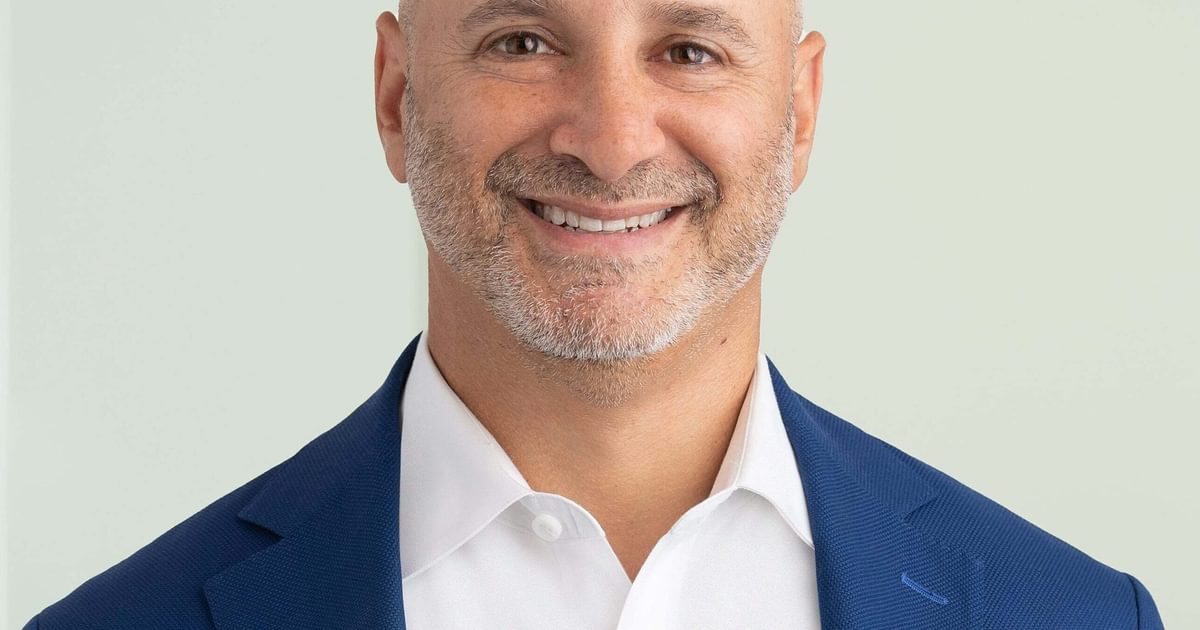
Michael S. Sarner
 CAPITAL SOUTHWEST
About Michael S. Sarner
Michael S. Sarner, 52, is President, Chief Executive Officer, and an “interested” director of Capital Southwest Corporation (CSWC) since February 17, 2025; he previously served as CFO, Chief Compliance Officer, and Secretary (October 2015–February 2025) and joined CSWC as SVP in July 2015 . He holds a BBA in Accounting from James Madison University and an MBA in Finance from George Washington University; he is an inactive CPA in Virginia . Under CSWC’s pay-versus-performance disclosures for FY2025, the company reported Net Investment Income (NII) of $118.2 million, a TSR value of $299.30 for a $100 initial investment baseline, and a dividend yield on NAV of 15.1% . For FY2025, CSWC grew regular dividends by 3.1% to $2.31 per share (plus $0.23 supplemental), raised ~$471.1 million of capital, expanded investments at fair value to $1.8 billion (+20.9% YoY), and maintained operating leverage at 1.7% .
Past Roles
| Organization | Role | Years | Strategic Impact |
|---|---|---|---|
| Capital Southwest Corporation | President & CEO; Director | Feb 2025–present | Appointed CEO and to the Board, succeeding Bowen S. Diehl . |
| Capital Southwest Corporation | CFO, CCO, Secretary | Oct 2015–Feb 2025 | Led capital structure, investment committee participation; key corporate and capitalization strategy execution . |
| Capital Southwest Corporation | Senior Vice President | Jul 2015–Oct 2015 | Senior leadership during transition to internally managed BDC model . |
| American Capital, Ltd. | EVP/Treasurer; SVP, Treasury | 2000–2015 | Raised over $6B debt capital; led restructurings and DCM; liaised with >20 financial institutions . |
External Roles
- No other public company directorships or external board roles for Mr. Sarner are disclosed in the reviewed filings .
Fixed Compensation
| Metric | FY2023 | FY2024 | FY2025 |
|---|---|---|---|
| Base Salary ($) | 425,000 | 425,000 | 500,000 |
Performance Compensation
- Compensation framework (BDC constraints): CSWC cannot maintain formulaic company performance plans alongside equity plans under the 1940 Act; the Compensation Committee exercises discretion using non-formulaic measures (dividend growth, NAV preservation, capital raised, portfolio growth, non-accruals, exits, operating leverage) .
- 2025 context and awards: Target bonus 125% of salary; actual bonus $558,095 (89% of target) based on outcomes including dividend growth, $471.1m capital raised, portfolio FV growth to $1.8b, and 1.7% operating leverage .
- 2024 context and awards: Target bonus 125% of salary; actual bonus $716,072 (135% of target), reflecting dividend and capital formation performance and lower operating leverage .
| Incentive | Metric/Terms | Target | Actual/Payout | Vesting |
|---|---|---|---|---|
| Annual Cash Incentive (FY2025) | Non-formulaic Company/individual goals | 125% of base salary | $558,095 (89% of target) | N/A (cash) |
| Annual Cash Incentive (FY2024) | Non-formulaic Company/individual goals | 125% of base salary | $716,072 (135% of target) | N/A (cash) |
| Restricted Stock (Grant 6/10/2024) | 75,000 shares; grant-date FV $1,965,000 | N/A | N/A | 25% per year, 2025–2028 |
| Restricted Stock (Grant 6/9/2023) | 59,928 shares; grant-date FV $1,190,170 | N/A | N/A | 25% per year, 2024–2027 |
Equity Ownership & Alignment
| As-of Date | Beneficial Ownership (shares) | % of Class | Unvested RS | Pledged? |
|---|---|---|---|---|
| May 28, 2025 (Record Date) | 409,427 | <1% | 151,645 | None pledged (executives) |
| May 29, 2024 (Record Date) | 352,757 | <1% | 126,211 | None pledged (executives) |
| Aug 28, 2023 (Record Date) | 354,626 | <1% | 130,962 | None pledged (execs; Diehl’s separate pledge noted) |
- Ownership policy: CEO must hold stock = 4x base salary; executives must hold 100% of net shares for 12 months post-vest; all NEOs are in compliance .
- Hedging/pledging: Hedging is prohibited by policy; pre-clearance is required for trading; no executive shares are pledged .
- Related-party transactions: No Item 404 transactions involving Mr. Sarner were disclosed upon his appointment as CEO .
Outstanding Vesting Schedule (as of 3/31/2025)
| Vest Date | Shares |
|---|---|
| Jun 10, 2025 | 9,704 + 10,998 + 14,982 + 18,750 (various tranches) |
| Jun 10, 2026 | 10,998 + 14,982 + 18,750 |
| Jun 9, 2025/2026/2027 | 14,982 each year |
| Jun 10, 2027/2028 | 18,750 each year |
Note: RS dividends and voting rights accrue during vest; net share settlement may be used for tax withholding per SEC exemptive relief .
Employment Terms
- Change-in-control and termination: CSWC uses double-trigger vesting (involuntary termination without cause/for good reason within 2 years post-change in control) or single-trigger if awards are not assumed; no cash severance is disclosed for the CEO in CIC/termination scenarios .
- Clawback: Recoupment policy (effective Oct 2, 2023) covering incentive-based compensation, including stock price/TSR measures, upon restatements .
- Stock plans: 2021 Employee RS Plan with annual grants; 2025 proposal increased share reserve to sustain equity-based retention while capping plan use and maintaining minimum 1-year vesting (5% basket for exceptions) .
| Scenario (as of 3/31/2025) | Cash Payments | Equity Acceleration |
|---|---|---|
| Termination for Cause | — | — |
| Termination without Cause | — | — |
| Change in Control (no double-trigger) | — | — |
| Double-Trigger (CIC + qualifying termination) | — | $3,384,716 |
| Death or Disability | — | $3,384,716 |
Multi-Year Compensation Summary (Named Executive Officer)
| Component ($) | FY2023 | FY2024 | FY2025 |
|---|---|---|---|
| Salary | 425,000 | 425,000 | 500,000 |
| Bonus | 795,435 | 716,072 | 558,095 |
| Stock Awards (grant-date FV) | 934,788 | 1,190,170 | 1,965,000 |
| All Other Compensation | 272,456 | 331,856 | 401,544 |
| Total | 2,427,679 | 2,663,098 | 3,424,639 |
All Other Compensation details (FY2025): $16,366 401(k) contributions and $385,178 dividends on unvested RS .
Board Governance
- Role and independence: Mr. Sarner is an “interested person” under the 1940 Act due to his officer role; he is not independent .
- Board leadership: Chair and CEO roles are separated (Chair: David R. Brooks), with majority independent directors and regular executive sessions without management .
- Committees: Audit (Chair Battist), Compensation (Chair Furst), Nominating/Corporate Governance (Chair Thomas) are fully independent; Mr. Sarner does not serve on board committees .
- Meetings: The Board held eight meetings in FY2025; all directors met at least 75% attendance .
Director Service and Dual-Role Implications
- Board service history: Appointed to the Board in February 2025 as CEO; nominated for re-election at the 2025 annual meeting .
- Dual-role considerations: As CEO and director (interested), independence concerns are mitigated by an independent Chair, fully independent key committees, and executive sessions .
Performance & Track Record
| Metric (FY2025) | Result |
|---|---|
| Net Investment Income (NII) | $118,182k |
| Total Shareholder Return (value of $100 since FY2020 baseline) | $299.30 |
| Dividend Yield on NAV | 15.1% |
| Regular Dividends Declared | $2.31/share (+3.1% YoY) |
| Supplemental Dividends Declared | $0.23/share |
| Capital Raised | ~$471.1m (credit facilities, 2029 converts, ATM) |
| Investments at Fair Value | $1.8b (+20.9% YoY) |
| Operating Leverage | 1.7% |
Compensation Structure Analysis
- Mix shift: FY2025 showed higher stock grant value ($1.965m) versus FY2024 ($1.190m), while cash bonus declined as % of target (89% vs 135%)—tilting mix toward long-term equity .
- Performance linkage within constraints: Committee emphasized dividend progression, balance sheet growth/capital formation, credit quality (non-accruals), and efficiency (operating leverage) consistent with BDC limits on formulaic pay .
- Governance features: No tax gross-ups; rigorous ownership; clawback policy; maximum annual incentive cap at 2x target .
Say-on-Pay & Shareholder Feedback
- FY2024 advisory vote: 91.3% support; Compensation Committee considered the result in FY2025 decisions .
- FY2023 advisory vote (reference point in 2024 proxy): 91.5% support .
Compensation Benchmarking Approach
- The Committee reviews compensation practices of internally managed BDCs, investment managers, REITs, and specialty finance firms for context; it does not formally benchmark to a specific peer group .
Risk Indicators & Red Flags
- Hedging/pledging: Prohibited hedging; no pledging by executives reported .
- Equity plan controls: Minimum 1-year vesting; double-trigger CIC vesting; board seeking added share reserve to maintain competitive equity comp for retention .
- Related-party: No Item 404 transactions for Mr. Sarner disclosed; change-in-control or severance cash multiples for CEO are not indicated—equity acceleration only under defined triggers .
Investment Implications
- Alignment and retention: High equity component (multi-year RS vesting, no options) with strict ownership/holding rules and a robust clawback promotes long-term alignment and mitigates short-term selling pressure; absence of pledging and hedging reduces governance risk .
- Incentive focus: While formulaic metrics are constrained, the Committee consistently ties annual incentives to dividend sustainability, capital formation, asset growth, credit performance, and cost discipline—key drivers of BDC valuation and TSR—evidenced by FY2025 outcomes and payouts .
- Governance comfort: Separation of Chair/CEO, majority-independent board, and fully independent key committees help offset dual-role concerns from CEO-director status; continued strong say-on-pay support (≈91%) indicates investor acceptance of pay design .
- Watch items: Equity plan share usage and potential dilution (with proposed increase) should be monitored against sustained NII growth and TSR performance; ongoing capital raises must maintain dividend coverage and leverage targets .