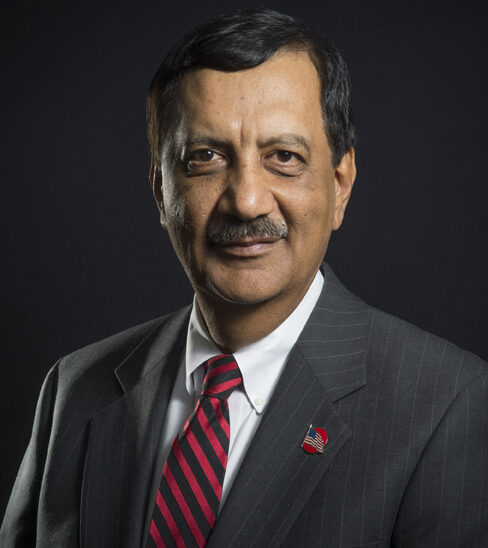
Jay S. Sidhu
 Customers Bancorp
About Jay S. Sidhu
Chairman and CEO of Customers Bancorp (CUBI) since Q2 2009; Director since 2009; age 73. MBA from Wilkes University and graduate of Harvard Business School’s Leadership Course for CEOs. Former CEO/Chairman of Sovereign Bank/Bancorp; recognized by Financial World as CEO of the Year and “Turnaround Entrepreneur of the Year.” Under current leadership, CUBI highlights five-year “awesome annual” growth of revenue 15%, Core EPS 20%, and tangible book value 16% (non-GAAP). Five-year TSR was $226.31 vs $105.26 for the S&P U.S. Mid Cap Bank & Thrift Index; 2024 net income was $181.5M with NIM 3.15% and CET1 12.1% (performance measures used in incentives). Board combines CEO/Chair roles with a Lead Independent Director framework. Father of Sam S. Sidhu (President/Vice Chair).
Past Roles
| Organization | Role | Years | Strategic impact |
|---|---|---|---|
| Sovereign Bank/Bancorp | CEO (1989–2006); Chairman (2002–2006) | 1989–2006 | Led growth/turnaround; recognized by Financial World; numerous industry awards |
| Sidhu Advisors, LLC | Chairman & CEO (consulting) | 2007–2009 | Advised financial companies pre-CUBI tenure |
| Customers Bancorp/Bank | Chairman & CEO; Chair, Executive Committee | 2009–present | Built niche/commercial deposit franchise; five-year CAGR targets met; risk and liquidity focus |
External Roles
| Organization | Capacity | Years | Notes |
|---|---|---|---|
| Megalith Financial Acquisition Corp. | Executive Chairman | n/a | SPAC leadership |
| Grupo Santander (Madrid) | Director | n/a | International banking board experience |
| Atlantic Coast Financial Corporation | Director | n/a | U.S. bank board experience |
Board Governance (CUBI)
- Board service: Director since 2009; Chairman and CEO; Chairs Executive Committee; member: Directors’ Risk Committee, Regulatory Affairs Committee, Customers Bank Board Compliance Committee. Not independent (also an executive; father of the President) .
- Structure: Combined Chair/CEO with a Lead Independent Director (Rothermel) who sets agendas, leads executive sessions, and serves as shareholder liaison; 7 of 8 directors are independent; 17 board meetings in 2024 with 92% attendance; board meets in regular executive sessions .
- Say-on-Pay support: 97% approval at 2024 meeting .
Fixed Compensation
| Metric | 2023 | 2024 |
|---|---|---|
| Base salary ($) | $825,000 | $850,000 (3% increase effective Apr 1, 2024) |
| Target annual bonus (% of salary) | 100% | 100% |
| Max annual bonus (% of salary) | 150% | 150% |
| All Other Compensation ($) | $91,406 (incl. 401k match, auto, country club, etc.) | $40,094 (same categories) |
Performance Compensation
2024 Short‑Term Incentive (STI) – Design and Results
| Metric | Weight | Threshold | Target | Outperform | Max | Result | Multiplier |
|---|---|---|---|---|---|---|---|
| Q4 2024 NIM | 50% | 2.60% | 3.25% | 3.575% | 3.90% | 3.11% | 89.23% |
| Liquidity > Uninsured Deposits | 25% | 120% | 150% | 165% | 180% | 159% | 115.00% (CEO/Pres) |
| CET1 Ratio | 25% | 9.00% | 11.25% | 12.375% | 13.50% | 12.09% | 118.67% (CEO/Pres) |
| Weighted Performance Multiplier | — | — | — | — | — | — | 103.03% (CEO) |
| STI Payout (2024) | Base ($) | Target % | Weighted Mult. | Payout ($) | Form |
|---|---|---|---|---|---|
| Jay S. Sidhu | 850,000 | 100% | 103.03% | 875,800 | 100% RSUs, vest ratably over 3 years (granted Mar 14, 2025) |
- 2025 STI metrics: NIM ≥3.10% (50%); top‑quartile NPL/Loans (25%); Liquidity ≥150% of uninsured deposits (25%) .
Long‑Term Incentives (LTI)
- Mix: 60% Performance‑Based RSUs (3‑year cliff; metrics: Relative TSR 33%, Relative ROACE 33%, Relative Avg NPAs/Assets 34%); 40% Time‑Based RSUs (3‑year ratable) .
| LTI Grant | Grant date | Time‑based RSUs (#/$) | PBRSUs at Target (#/$) | Total (#/$) |
|---|---|---|---|---|
| 2023 LTI (granted in 2024) | Apr 6, 2024 | 10,098 / $495,004 | 15,147 / $746,755 | 25,245 / $1,241,759 |
| 2024 LTI (granted in 2025) | Apr 8, 2025 | 11,135 / $476,021 | 16,702 / $714,011 | 27,837 / $1,190,032 |
Equity Ownership & Alignment
| Item | Detail |
|---|---|
| Beneficial ownership (common) | 2,011,905 shares; 6.37% of outstanding (as of Apr 11, 2025) |
| Unvested RSUs (at target, no vote) | 78,146 |
| Stock options (exercisable) | 620,000 (2017 grants) |
| Option strike prices | $26.65 (500k); $28.24 (120k) |
| CUBI 12/31/24 close | $48.68 |
| In‑the‑money value (approx.) | ≈$13.5M = (48.68–26.65)*500k + (48.68–28.24)*120k (calc using disclosed prices) |
| Shares pledged as collateral | 712,171 (pledged) – RED FLAG for potential margin risk |
| Ownership guidelines | CEO: 6x base salary; executives have 5 years to comply; hedging prohibited |
| Guideline compliance | All NEOs in compliance or within window as of 12/31/24 |
| Hedging/Pledging policy | Hedging prohibited by Code and Insider Trading Policy; pledging not prohibited (pledged shares disclosed) |
Employment Terms
| Provision | Jay S. Sidhu (Amended & Restated Employment Agreement, 12/30/2016) |
|---|---|
| Term | Auto‑renewal annually; base salary plus performance bonus eligibility |
| Severance (no CIC) | If terminated without cause or resigns for good reason: cash equal to base + 3‑yr avg bonus for greater of 3 years or remaining term; equity vests; pro‑rata bonus; continued health benefits for severance period |
| Change‑in‑Control (double‑trigger) | If CIC and termination within 12 months: 3x (base + 3‑yr avg bonus) lump sum; equity vests; pro‑rata bonus; up to 3 years health benefits; legacy excise tax gross‑up (to sunset at CEO retirement) |
| Clawback | Cash and equity subject to clawback on restatement or misconduct (illegal activity, breach of duty, gross negligence) |
| Non‑compete/solicit | Not explicitly disclosed for CEO in proxy summary; SERP agreements for other NEOs include such provisions |
| Potential payouts (12/31/24 assumptions) | Good reason/without cause: $22.65M; CIC termination: $22.65M; Death: $11.23M (includes SERP/life benefits). Company estimated no excise gross‑up owed at current comp levels |
Additional Signals and Risk Indicators
- Pledging: 712,171 shares pledged; while hedging is barred, pledging introduces forced‑sale risk in volatility. Monitor for reductions in pledged levels (governance best practice is to limit/ban pledging) .
- Form 4 timing: One late Form 4 filed Jan 5, 2025 reporting four late transactions; otherwise Section 16 compliance generally in order in 2024 .
- Related party/loans: Routine banking transactions only; related party transactions governed by policy; no report of preferential terms; board reviews per Regulation O and policy .
- Say‑on‑Pay: Strong support (97%), suggesting current pay design acceptable to shareholders .
Compensation Structure Analysis
- Cash vs equity mix: CEO took 100% of 2024 STI in RSUs (7th consecutive year); LTI entirely in RSUs with 60% performance‑based, aligning with long‑term value creation and reducing immediate cash comp (lower near‑term selling pressure) .
- Metric rigor: 2024 STI included bank‑relevant safety metrics (NIM, liquidity vs uninsured deposits, CET1); NIM shortfall reduced multiplier; liquidity and CET1 above target partially offset; weighted multiplier ~103% for CEO .
- 2025 STI shifts: Adds relative credit quality (top‑quartile NPL/Loans), maintaining liquidity and NIM disciplines; aligns with risk management focus .
- Clawbacks and no single‑trigger CIC: Strengthens alignment and risk oversight; independent comp consultant retained .
- Legacy gross‑up: Only in CEO legacy agreement; to sunset at retirement—still a shareholder‑unfriendly artifact to note .
Performance & Track Record
| Metric (5‑yr context) | Company outcome |
|---|---|
| 5‑yr TSR vs index | $226.31 CUBI vs $105.26 S&P U.S. Mid Cap Bank & Thrift (outperformance) |
| 5‑yr growth narrative (non‑GAAP) | Revenue +15% CAGR; Core EPS +20%; Tangible book value +16% CAGR |
| 2024 profitability | Net income $181.5M; NIM 3.15%; CET1 12.1% (strategic focus areas) |
| Liquidity | Immediately available liquidity 159% of uninsured deposits (12/31/24) |
Vesting Schedules and Overhang
| Award type | Key upcoming vesting for CEO |
|---|---|
| Time‑based RSUs | Annual ratable vesting for multiple grants in 2025–2027 (e.g., 3/15/2024 grant 24,920 shares vests 2025–2027) |
| Performance RSUs | Cliff vest after 3 years subject to relative TSR/ROACE/NPAs (e.g., 4/12/2024 PBRSUs 15,147 vest in 2027; 4/6/2023 PBRSUs 34,417 vest in 2026) |
Equity Grants and Director Service Notes
- CEO equity grants summarized above; additional outstanding options: 500,000 at $26.65 expiring 12/20/2027; 120,000 at $28.24 expiring 7/26/2027 (both originally vesting on 5th anniversary; now exercisable) .
- Board meetings: 17 in 2024; 92% attendance; board performs annual self‑assessment; independent committees oversee risk/compensation/governance .
- Peer group for compensation benchmarking covers ~$12–$40B asset banks, reviewed annually; adjusted post‑2022 (e.g., removed Silvergate after liquidation) .
Investment Implications
- Alignment: High equity weighting (STI in RSUs; 60% of LTI performance‑based), stringent clawbacks, and bank‑relevant performance metrics (NIM, liquidity, capital, relative TSR/ROACE/NPAs) support pay‑for‑performance and prudent risk incentives .
- Retention and succession: Auto‑renewing CEO contract with robust severance/CIC protection; SERP paying $300k/year for 15 years; Rule‑of‑65 retirement vesting may reduce abrupt departure risk but increases equity overhang near retirement .
- Red flags to monitor: Large pledged share position (712k) introduces potential forced‑sale risk; continued combined CEO/Chair with family ties requires strong Lead Independent Director oversight, which is in place; legacy excise gross‑up persists until retirement .
- Trading signals: 2025 STI hinges on NIM ≥3.10%, liquidity coverage, and top‑quartile NPLs; progress on deposit cost remixing, asset quality, and capital should inform near‑term equity grant outcomes and potential insider selling around scheduled RSU vesting; strong say‑on‑pay support lowers governance overhang .