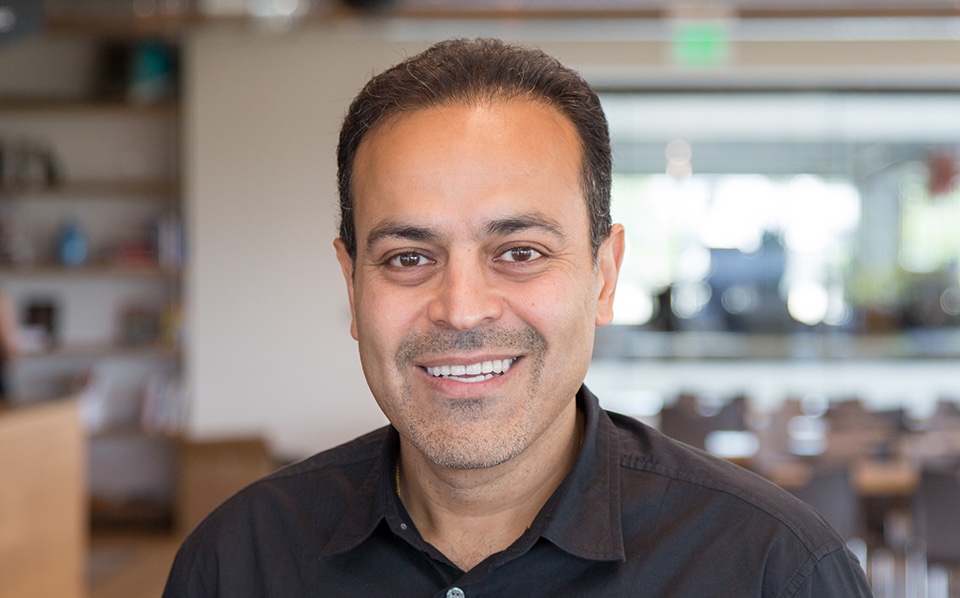
Sanjay Mirchandani
 COMMVAULT SYSTEMS
About Sanjay Mirchandani
Sanjay Mirchandani is Commvault’s President and CEO and has served as a director since February 2019; he is 61 years old with an MBA from the University of Pittsburgh and a BA in Mathematics from Drew University . Under his leadership, fiscal 2025 delivered record results: revenue grew 19% to $996 million, ARR reached $930 million, GAAP EBIT was $74 million, and stock price rose 56% versus fiscal 2024; Commvault also generated non-GAAP EBIT of $210 million, hitting 117.3% of the annual target, with one-year TSR of 63.63% and 94th percentile relative performance on the May 2024 TSR PSU tranche . CEO pay mix emphasizes long-term equity with 89% equity, 5% base salary, and 6% cash bonus, and long-term equity split into 40% time-based RSUs, 30% financial PSUs, and 30% relative TSR PSUs, aligning pay with revenue growth and profitability outcomes .
Past Roles
| Organization | Role | Years | Strategic Impact |
|---|---|---|---|
| Puppet, Inc. | CEO | 2016–2019 | Led an IT automation company prior to joining Commvault, bringing modern DevOps and automation credentials . |
| VMware | Corporate SVP & GM, Asia Pacific & Japan | Oct 2013–Apr 2016 | Ran APJ operations, scaling enterprise software in a key growth region . |
| EMC Corporation | CIO; Leader, Global Centers of Excellence | 2006–2013 | Enterprise IT leadership and global execution muscle; built CoEs . |
| Microsoft Corporation | Various leadership positions | Not disclosed | Added diversified large-cap software operating experience . |
External Roles
| Organization | Role | Years | Strategic Impact |
|---|---|---|---|
| Itron, Inc. | Director | Since 2023 | Board service at a technology company focused on energy/water resource management . |
Board Governance (CVLT)
- Board service history: Director since 2019; not independent; no committee memberships; the Board is led by an independent Chair (Nicola Adamo) to separate CEO and Chair roles .
- Independence and dual-role implications: Only the CEO is non-independent; independent Chair mitigates CEO/Chair concentration risk; CEO presence on the Board provides operational insight but requires robust independent oversight, which is in place via committee independence and executive sessions at every Board meeting .
- Committee structure: Audit, Nominations & Governance, Talent Management & Compensation (TMCC), and Operating Committees; all members independent .
- Attendance: Each director attended at least 75% of Board and committee meetings in fiscal 2025; executive sessions occur at every Board meeting .
- Director compensation: Mirchandani receives no additional Board compensation; non-employee director fees and RSUs are disclosed separately .
Fixed Compensation
FY2025 CEO cash compensation and targets:
| Metric | Value |
|---|---|
| Base Salary | $645,000 |
| Target Bonus % | 125% of salary |
| Target Bonus ($) | $806,250 |
| Actual Bonus Paid | $1,612,500 (200% of target) |
Multi-year CEO compensation:
| Year | Salary ($) | Stock Awards ($) | Non-Equity Incentive ($) | All Other ($) | Total ($) |
|---|---|---|---|---|---|
| 2023 | 645,000 | 9,722,388 | 462,465 | 22,950 | 10,852,803 |
| 2024 | 645,000 | 10,694,658 | 703,050 | 65,052 | 12,107,760 |
| 2025 | 645,000 | 16,522,465 | 1,612,500 | 31,638 | 18,811,603 |
CEO pay mix (design): 5% base salary; 89% equity awards; 6% cash performance bonus; equity split 40% time-based RSUs, 30% financial PSUs, 30% relative TSR PSUs .
Performance Compensation
Annual Incentive Plan (AIP) design (FY2025):
| Metric | Weight | Threshold (50% payout) | Target (100%) | Maximum (200%) |
|---|---|---|---|---|
| Revenue | 60% | 89% | 100% | 105% |
| Non-GAAP EBIT | 40% | 88% | 100% | 110% |
AIP results (FY2025):
| Metric | Achievement ($MM) | Target ($MM) | Achievement vs Target | Payout Factor | Weighting | Weighted Payout |
|---|---|---|---|---|---|---|
| Revenue | 996 | 942 | 105.7% | 200.0% | 60.0% | 120.0% |
| Non-GAAP EBIT | 210 | 179 | 117.3% | 200.0% | 40.0% | 80.0% |
| Total | — | — | — | 200.0% | 100.0% | 200.0% |
Long-term equity awards (FY2025 grants):
| Award Type | Grant Size (#) | Vesting / Measurement |
|---|---|---|
| Time-based RSUs | 45,558 | 33.3% at 1st anniversary; then 8.375% quarterly until fully vested . |
| Relative TSR PSUs | 34,168 (target) | Earned 0–300% based on Russell 3000-relative TSR over overlapping 1-,2-,3-year periods; each year’s tranche vests after certification . |
| Financial PSUs (ARR) | 34,168 (target) | FY2025 ARR target-based; earned shares vest 33.3% at 1st anniversary; then 8.375% quarterly . |
Relative TSR PSU performance vesting history (payout %):
| Grant Year | 1st Annual Tranche | 2nd Annual Tranche | 3rd Annual Tranche |
|---|---|---|---|
| May 2020 | 105% | 101% | 117% |
| May 2021 | 98% | 100% | 194% |
| May 2022 | 100% | 200% | 200% |
| May 2023 | 200% | 200% | TBD |
| May 2024 | 290% | TBD | TBD |
Financial PSUs (ARR) payout (FY2025):
| Target ARR ($MM) | Achievement (% of Target) | Earned (% of Target) |
|---|---|---|
| 922 | 100.9% | 105% |
Vesting schedule and practices:
- RSUs: 33.3% at year 1, then 8.375% quarterly thereafter; PSUs follow same schedule on achieved amounts; Relative TSR PSUs vest annually post-certification; no stock options or SARs granted in the program .
- Equity grant timing: annual cadence; not timed around MNPI; no option repricing permitted without shareholder approval .
Equity Ownership & Alignment
Beneficial ownership (as of May 31, 2025):
| Holder | Shares Owned | % of Outstanding |
|---|---|---|
| Sanjay Mirchandani | 254,493 | <1% |
Outstanding CEO equity (as of March 31, 2025):
| Grant Date | Unvested Time-Based & Achieved Financial RSUs (#) | Market Value ($) | Unearned Relative TSR PSUs (#) | Market/Payout Value ($) |
|---|---|---|---|---|
| 05/15/24 | 81,433 | 12,846,870 | 34,168 | 5,390,344 |
| 05/15/23 | 50,012 | 7,889,893 | 25,936 | 4,091,663 |
| 05/16/22 | 10,644 | 1,679,197 | 12,955 | 2,043,781 |
Stock vested in FY2025:
| Name | Shares Vested (#) | Value Realized ($) |
|---|---|---|
| Sanjay Mirchandani | 194,261 | 25,110,329 |
Ownership alignment controls:
- CEO stock ownership guideline: 5x base salary; CEO exceeds requirement as of March 31, 2025 .
- Hedging and pledging: Prohibited for employees and directors; reduces misalignment risk .
- Director ownership guidelines: Independent directors must hold 5x base retainer; all in compliance .
Employment Terms
Key contractual protections and restrictions:
- Severance (non-CoC): Lump sum equal to 12 months base salary plus target cash incentive; 18 months health premium coverage; 12 months acceleration for time-vesting equity; undetermined performance awards deemed earned at 100% of target .
- Change-in-control (double trigger within 2 years): Immediate vesting of all equity (performance awards at 100% of target if not determinable); 18 months base salary plus target cash incentive; 18 months health coverage, subject to release .
- Death/disability: Immediate vesting of all outstanding equity; undetermined performance awards deemed at 100% target .
- Non-compete/non-solicit: One year post-termination non-compete in the U.S. and non-solicit of employees/customers .
- Clawback: Dodd-Frank/Nasdaq-compliant clawback for incentive-based compensation for current/former Section 16 officers effective Oct 2, 2023; broader restatement clawback policy also in place .
Estimated payments upon termination or CoC (valuation at $157.76 per share):
| Scenario | Base Salary ($) | Target Bonus ($) | Accelerated Equity ($) | Health ($) | Total ($) |
|---|---|---|---|---|---|
| Non-CoC: Involuntary w/o cause or Good Reason | 645,000 | 806,250 | 21,359,915 | 28,920 | 22,840,085 |
| CoC: Involuntary w/o cause, disability, or Good Reason | 967,500 | 967,500 | 33,941,748 | 28,920 | 35,905,668 |
| Death/Disability | — | — | 33,941,748 | — | 33,941,748 |
Compensation Committee Analysis
- TMCC composition and independence: Vivie “YY” Lee (Chair), Keith Geeslin, Chuck Moran, Arlen Shenkman; all independent and meet heightened independence standards .
- Consultant: Compensia engaged for executive and director compensation; TMCC determined no conflicts of interest .
- Peer group and positioning: Targeted U.S. SaaS/application software companies of similar size; examples include ACI Worldwide, Box, Dynatrace, Gitlab, Nutanix, Pure Storage, Qualys, Rapid7, SentinelOne, Tenable, Varonis, etc.; majority of executives paid within the 50th–75th percentile range .
- Say-on-pay feedback: 97% approval in 2024; approach maintained for 2025, emphasizing performance share awards .
- No guaranteed bonuses; no CIC tax gross-ups; no pension/SERP; broad-based benefits parity; hedging prohibited .
Compensation Structure Signals
- Shift and mix: High proportion of performance-based equity (60% of target value in PSUs) versus time-based RSUs (40%), above peer norms, increases at-risk pay tied to TSR and ARR .
- AIP rigor: Revenue (60%) and non-GAAP EBIT (40%) with linear payout scaling; FY2025 achieved max payouts on both metrics, reflecting strong operational execution .
- Options policy: Company does not currently grant stock options or SARs; repricing prohibited absent shareholder approval, mitigating repricing risk .
Related-Party, Legal, and Risk Indicators
- Related-party transactions: None in FY2025 .
- Section 16 filings: Company reports overall compliance in FY2025; a CFO onboarding delay noted and corrected; no CEO issues disclosed .
- Hedging/pledging: Explicit prohibitions for employees and directors .
- Equity plan share usage/reserves: 2.404 million shares available for grant as of May 31, 2025; proposal to add 1.3 million shares to 2016 plan .
- CEO pay ratio: 283:1 for FY2025, driven by global footprint and labor cost mix; methodology disclosed .
Performance & Track Record
- Financial performance: FY2025 revenue $996 million and GAAP cash from operations $207 million; non-GAAP EBIT $210 million exceeded the $179 million target; GAAP EBIT $74 million .
- Capital return: $165 million returned via share repurchases in the year .
- Strategic moves: Acquisitions of Appranix and Clumio to bolster cloud-first cyber resilience; positive stakeholder reception .
- Pay-versus-performance: PEO compensation actually paid tracked rising TSR, revenue and net income; $42.1 million PEO CAP vs $390 value on initial $100 TSR (Company) and $297 peer group TSR in 2025 .
Equity Ownership & Director Compensation (Board)
- Non-employee director compensation: Cash retainers and annual RSU grants (target $215,000; 1,530 RSUs vesting around next annual meeting); roles receive additional cash retainers (e.g., Audit Chair $30,000; Board Chair $110,000) .
- CEO as director: No incremental director compensation .
Employment & Contracts – Additional Terms
- Equity award practices: Annual grants in May; grants for new executives at hire; no MNPI timing; vesting floors of 1 year except limited exceptions; CIC double-trigger vesting under the plan .
- Tax and accounting considerations: Section 162(m) flexibility; ASC 718 fair value accounting; parachute payment considerations .
Investment Implications
- Pay-for-performance alignment: CEO compensation is predominantly performance-based equity (60% PSUs) with metrics directly tied to revenue growth, ARR, TSR, and profitability; FY2025 outcomes drove maximum AIP payouts and strong PSU vesting, signaling effective execution and shareholder value creation incentives .
- Retention and continuity: Significant unvested equity and double-trigger CIC protections, plus a one-year non-compete, reduce near-term retention risk; vesting cadence (three-year schedules with quarterly RSU vesting after year 1) supports continuity but creates periodic supply as awards vest .
- Governance strength: Independent Chair, fully independent committees, clawback policies, and strict hedging/pledging prohibitions mitigate governance and alignment risks; CEO board role balanced by executive sessions and oversight .
- Equity overhang and dilution: Active equity usage with proposal to add 1.3 million shares to the plan; monitor dilution versus ARR and margin expansion trajectory and PSU achievement to ensure accretive outcomes .
- Trading signals: High recent TSR PSU payouts (e.g., 290% on the 2024 tranche) and AIP max factors reflect momentum; observe upcoming RSU/PSU vest schedules and continued ARR/EBIT delivery to gauge sustained performance and potential vest-related supply in the float .