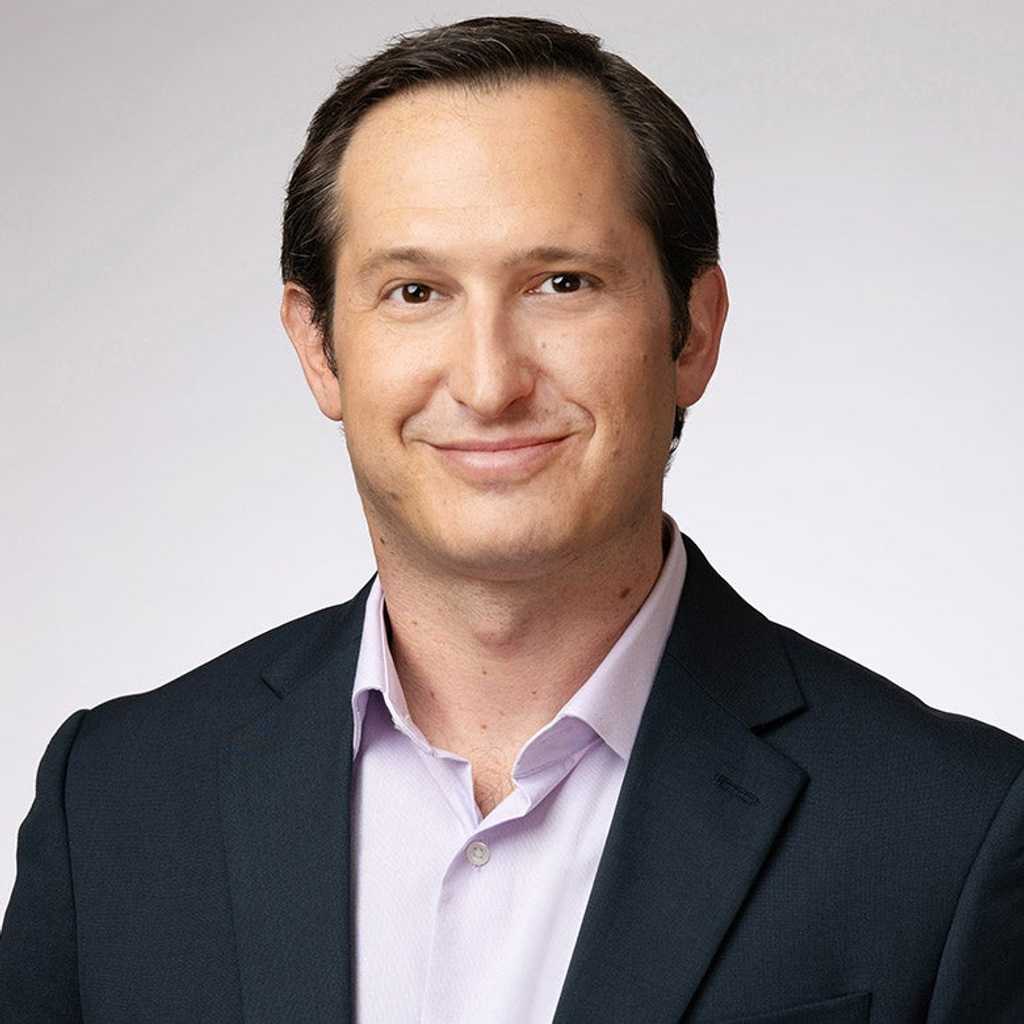
Jason Robins
 DraftKings
About Jason Robins
Jason D. Robins is co-founder, Chief Executive Officer, and Chairman of DraftKings, serving as CEO since inception (December 2011) and as CEO and Chairman since April 2020; he is 44 and holds a B.S. in Economics and Computer Science from Duke University with a math minor . DraftKings delivered 30% year-over-year revenue growth to $4.768 billion in 2024 alongside a significant improvement in Adjusted EBITDA; cumulative TSR value of a $100 investment reached $348 in 2024, with 2024 net loss at approximately $0.5 billion per the pay-versus-performance disclosure . Robins holds approximately 88.8% of total voting power via Class B shares and serves concurrently as Chairman; the board has no lead independent director, a governance factor for investors to monitor .
Past Roles
| Organization | Role | Years | Strategic Impact |
|---|---|---|---|
| DraftKings | Co‑Founder; CEO | 2011–present (CEO since inception) | Led financing, strategic initiatives, regulatory advocacy enabling expansion in fantasy sports, sports betting, and iGaming . |
| DraftKings (public entity) | Chairman | 2020–present | Combined CEO/Chair role guiding strategy and board agendas . |
External Roles
| Organization | Role | Years | Committee/Positions | Strategic Impact |
|---|---|---|---|---|
| Extend, Inc. | Director | Current | — | Consumer extended warranty platform; adds fintech/commerce ecosystem exposure . |
| FirstMark Horizon Acquisition Corp. | Director | 2020–2022 | — | SPAC board experience until merger with Starry, Inc. . |
| Horizon Acquisition Corporation II | Director | 2020–2023 | — | SPAC governance exposure in technology-focused combinations . |
Fixed Compensation
| Metric | 2022 | 2023 | 2024 |
|---|---|---|---|
| Base Salary ($) | $1 | $1 | $1 (voluntary reduction; employment agreement base salary is $650,000) |
| Target Bonus % of Salary | 150% | 150% | 150% |
| Target Bonus ($) | $1,424,475 | $1,950,000 | $975,000 |
| Actual Annual Bonus Paid ($) | $1,424,475 | $1,950,000 | $0 (thresholds not met) |
| Perquisites ($) | $2,300,923 total other comp | $2,667,990 total other comp | $1,824,992 total other comp; includes security ($914,416), air travel ($738,510), 401(k) match ($10,350), financial planning ($15,925), tax reimbursements ($145,791) |
Performance Compensation
| Incentive | Metric | Weighting | Target | Actual | Payout | Vesting/Timing |
|---|---|---|---|---|---|---|
| 2024 Annual Bonus | Revenue | 50% | $5,081mm (adjusted target) | $4,768mm | 0% | Cash bonus for FY24; none paid . |
| 2024 Annual Bonus | Adjusted EBITDA | 50% | $452mm (adjusted target) | $181mm | 0% | Cash bonus for FY24; none paid . |
| 2022/2023 PSUs (portion measured in 2024) | 2024 Normalized Net Revenue | 50% of PSU tranche (with EBITDA below) | Max: $4,020mm | $4,358mm | 200% of target PSUs | Vested Feb 2025; remaining tranches tied to 2026 metrics . |
| 2022/2023 PSUs (portion measured in 2024) | 2024 Normalized Adjusted EBITDA | 50% of PSU tranche | Max: $51mm | $150mm | 200% of target PSUs | Vested Feb 2025; remaining tranches tied to 2026 metrics . |
| 2024 PSUs | 2025 Normalized Net Revenue | 50% of 2025 tranche | Not disclosed | Performance period FY2025 | 25–200% payout range | Certified early 2026 upon achievement . |
| 2024 PSUs | 2025 Normalized Adjusted EBITDA | 50% of 2025 tranche | Not disclosed | Performance period FY2025 | 25–200% payout range | Certified early 2026 upon achievement . |
| 2024 PSUs | 2027 Normalized Net Revenue | 50% of 2027 tranche | Not disclosed | Performance period FY2027 | 25–200% payout range | Certified early 2028 upon achievement . |
| 2024 PSUs | 2027 Normalized Adjusted EBITDA | 50% of 2027 tranche | Not disclosed | Performance period FY2027 | 25–200% payout range | Certified early 2028 upon achievement . |
Notes: Time-based RSUs vest quarterly over four years; 2024 grants mixed ~60% RSUs and ~40% PSUs; 2025 refresh moved to a 50/50 RSU/PSU mix for stronger performance alignment .
Equity Ownership & Alignment
| Item | Detail |
|---|---|
| Class A beneficial ownership | 11,266,434 shares; represents 2.2% of Class A outstanding . |
| Class B beneficial ownership | 393,013,951 shares (100% of Class B); total voting power ~88.8% . |
| Options (vested) | 7,864,092 vested options included in ownership breakdown; plus 38,217 shares underlying unvested options/RSUs vesting within 60 days . |
| Vested vs. unvested overview | Includes mix of vested options and unvested RSUs/options as above . |
| Shares pledged / forward contracts | 1,293,782 Class A shares pledged under prepaid variable forward maturing Mar 4–5, 2026; 715,551 Class A shares pledged under prepaid variable forward maturing Mar 14, 2030 . |
| Insider trading and hedging policy | Hedging and pledging generally prohibited (e.g., margin loans) or require CLO approval; pre-clearance required for director/officer trades . |
| Ownership guidelines | Founders must meet $7,500,000 guideline; status met as of Dec 31, 2024 . |
| 2024 equity grants (refresh) | RSUs: 262,467; PSUs: 87,489 (2025 metrics) + 87,489 (2027 metrics) . |
| 2024 vesting/activity | Shares acquired on vesting: 442,033; options exercised: 400,000 generating $12,226,000 value realized . |
Option Awards – Strike, Expiration, Vesting
| Grant | Exercisable (#) | Exercise Price ($) | Expiration | Notes |
|---|---|---|---|---|
| Options (various tranches) | 280,190 | 3.29 | 4/18/2028 | Time-based vesting; additional tranches detail below . |
| Options | 6,512,289 | 3.29 | 5/3/2028 | Time-based vesting . |
| Options | 696,850 | 4.70 | 6/4/2029 | Time-based vesting . |
| Options | 200,053 | 0.63 | 3/24/2026 | Time-based vesting . |
| Options | 374,710 | 3.82 | 5/3/2027 | Time-based vesting . |
| RSUs (time-based, cumulative across years) | 747,687 | — | — | Aggregate unvested RSUs by year; vest quarterly over 4 years . |
Employment Terms
| Provision | Key Terms |
|---|---|
| Employment agreement | Base salary $650,000; annual target bonus 150% of salary; annual minimum equity target $6.5mm (50% RSUs, 50% PSUs, PSU max 300% of half award) . |
| Severance (no CoC) | 2x base salary; pro-rata bonus based on actual performance; 24 months benefits; pro-rata vesting for time- and performance-based awards . |
| Severance (with CoC – double trigger) | 2x base salary + target bonus; 24 months benefits; equity vests at termination/change-in-control with performance awards deemed at target if period not completed . |
| Non-compete / non-solicit | Post-termination covenants generally 12 months; Massachusetts Noncompetition Agreement Act caveats for layoffs/term without cause . |
| Clawback policy | Adopted Oct 31, 2023; effective Dec 1, 2023 per NASDAQ rule; covers incentive comp for prior 3 fiscal years upon restatement . |
| Stock ownership guidelines | Founders: $7.5mm; met as of Dec 31, 2024 . |
Compensation Structure Analysis
- Equity-heavy pay mix: ~90% of average NEO compensation was equity-based in 2024, with founders continuing $1 salaries to emphasize long-term alignment via RSUs/PSUs .
- Performance tightening: 2024 annual bonus required threshold Revenue and Adjusted EBITDA; both thresholds missed, yielding 0% payouts, while pre-set 2022/2023 PSU metrics achieved 200% for 2024 performance, highlighting multi-year targets calibrated in 2022 .
- Shift to PSUs: Annual refresh mix strengthened to 50/50 RSU/PSU in 2025 to increase performance-contingent pay and mitigate dilution concerns .
Director and Board Governance
- Role: CEO and Chairman; Board leadership structure emphasizes combined position and knowledge depth; no lead independent director .
- Controlled company status: Robins controls majority voting power; company voluntarily maintains majority independent board and fully independent compensation and nom/gov committees despite exemptions .
- Committees and composition:
- Audit: Murray (Chair), Moore, Mosley; Murray qualifies as audit committee financial expert .
- Compensation: Moore (Chair), Murray, Jocelyn Moore; independent membership .
- Nominating & Corporate Governance: Walden (Chair), Mosley, Levin .
- Compliance & Risk: Walden (Chair), Moore, Liberman .
- Transaction: Sloan (Chair), Murray, Walden, Moore .
- Board activity: Six board meetings, at least 75% attendance by each director; non-employee directors held four executive sessions in 2024 .
- Director compensation: Employees serving as directors (including Robins) receive no board compensation; non-employee director program includes retainers and RSU grants .
- Shareholder engagement: Say-on-pay held annually; scheduled in 2025 proxy with board recommending “FOR” . A shareholder proposal sought individual board matrix disclosure; board recommended “AGAINST” while recognizing Robins’ voting control .
Related Party Transactions and Risk Indicators
- Aircraft dry lease: Company leases an aircraft from a Robins-controlled entity ($0.6mm lease expense in 2024; anticipated $0.6mm in 2025) with capital improvement addenda ($0.9mm in 2024; planned ~$2.5mm in 2025) and recoupment mechanisms; approved by audit and compensation committees .
- Personal security: Board-approved personal security programs for Robins and Kalish; incremental 2024 costs ~$1,652,926 for Robins and $882,147 for Kalish; Robins required to fly private and travel in secure vehicles .
- Pledging/derivatives: Prepaid variable forward contracts pledge significant Class A shares with maturities in 2026 and 2030; insider policy restricts hedging/pledging absent approval; forward agreements may create future share delivery obligations (potential selling pressure signals) .
- Insider filings: One Form 4 sale in 2024 was filed late (administrative oversight); also substantial 2024 option exercises by Robins .
- CEO pay ratio: 232:1 for 2024 .
Multi-year Compensation (Summary Compensation Table)
| Metric | 2022 | 2023 | 2024 |
|---|---|---|---|
| Salary ($) | $1 | $1 | $1 |
| Stock Awards ($) | $43,740,520 | $16,140,000 | $19,076,976 |
| Non-Equity Incentive Plan ($) | $1,424,475 | $1,950,000 | $0 |
| All Other Compensation ($) | $2,300,923 | $2,667,990 | $1,824,992 |
| Total ($) | $47,465,919 | $20,757,991 | $20,901,969 |
Board Service History and Dual-Role Implications
- Board service: Director since April 2020; Chairman since April 2020 .
- Independence: Not independent; board maintains majority independent membership and independent committees despite controlled-company status .
- Dual-role implications: Combined CEO/Chair without a lead independent director concentrates authority; governance mitigants include independent committees, executive sessions, and majority-independent board; investors may weigh this against Robins’ ~89% voting control in assessing oversight robustness .
Investment Implications
- Alignment: Robins’ $1 salary and heavy PSU mix signal pay-for-performance, with 2024 cash bonus canceled but 2022/2023 PSU tranches paying at 200% for 2024 normalized metrics; 2025 refresh to 50/50 RSU/PSU may further strengthen linkage to revenue and EBITDA goals .
- Retention and severance economics: Double-trigger change-in-control protections (2x salary+target bonus, equity vesting at target) and strong equity holdings reduce near-term departure risk, but sizable outstanding equity and forward contracts introduce timing considerations for share supply/delivery in 2026 and 2030 .
- Governance and control: Robins’ 88.8% voting power and CEO/Chair structure, with no lead independent director, elevate key-person and governance concentration risk; however, independent committee structures and engagement practices partially offset .
- Trading signals: Prepaid variable forwards and option exercises can create episodic selling/settlement pressure; monitor maturities in March 2026 and March 2030, vesting schedules, and PSU certification windows (early 2026 and 2028) that may affect share flows .

