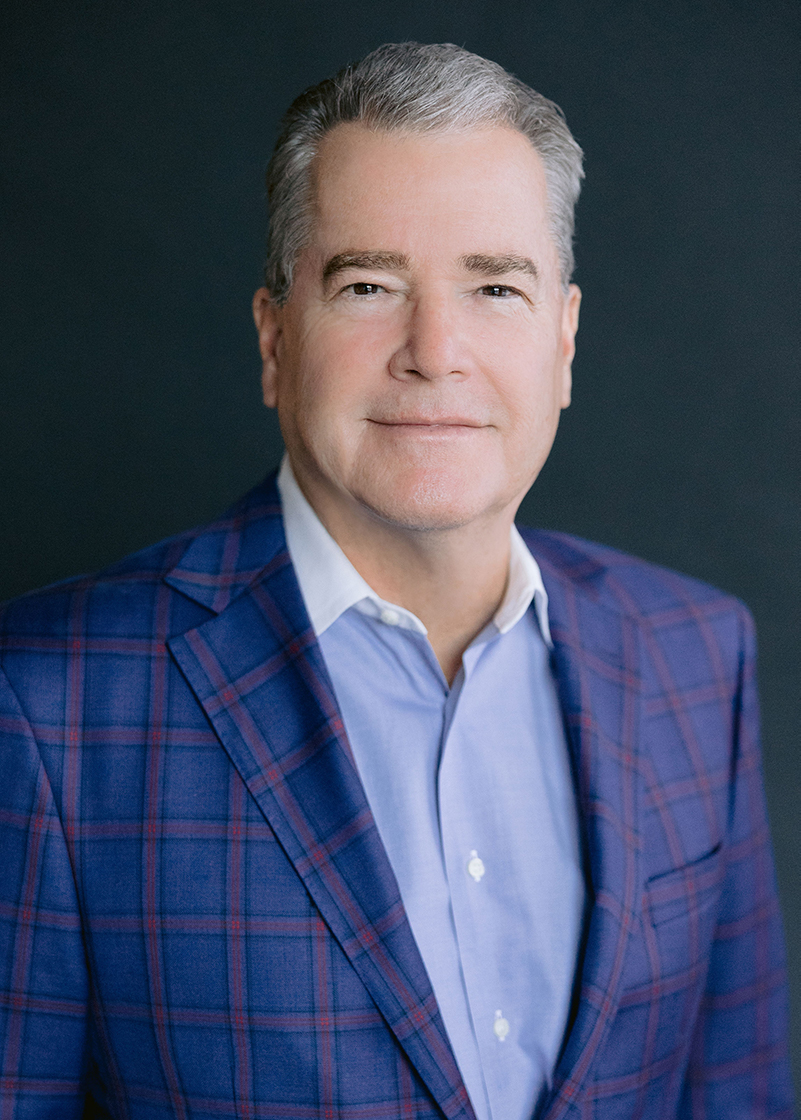
James Beckwith
About James Beckwith
James E. Beckwith, age 67, has served as President and Chief Executive Officer of Five Star Bancorp since 2003 and is a director of the Company and Bank . He holds a B.S. in Business Administration (Accounting) from San Francisco State University and is a graduate of Pacific Coast Banking School at the University of Washington . Under his tenure, FSBC has maintained steady profitability; recent S&P Global data show Net Income of $44.8m (FY22), $47.7m (FY23), and $45.7m (FY24), with revenues of $7.16m, $7.51m, and $6.45m respectively (see Performance table; values from S&P Global)*. The board separates the roles of CEO and Chair (independent chair: Robert T. Perry‑Smith), mitigating dual‑role governance risk .
Past Roles
| Organization | Role | Years | Strategic Impact |
|---|---|---|---|
| National Bank of the Redwoods | CFO and COO | Prior to 2003 | Executive finance/operations leadership; foundational banking ops experience supporting subsequent CEO role |
| California Bankers Association | Chair (past) | N/A | Industry leadership; policy and advocacy exposure |
| Sacramento Metro Chamber, Valley Vision, KVIE | Chair (past) | N/A | Community leadership; regional network and stakeholder engagement |
External Roles
| Organization | Role | Years | Strategic Impact |
|---|---|---|---|
| Greater Sacramento Economic Council | Private Sector Director | Current | Regional economic development; business attraction and policy influence |
| Sacramento State Univ. College of Business Advisory Council | Member | Current | Talent pipeline; academic-industry linkage |
| California Chamber of Commerce | Director | Elected 2024 | Statewide business advocacy; regulatory insight |
Fixed Compensation
| Year | Base Salary ($) | Target Bonus (% of Base) | Max Bonus (% of Base) | Actual Cash Bonus ($) |
|---|---|---|---|---|
| 2022 | 580,845 | 75% | 100% | 276,785 |
| 2023 | 608,678 | 75% | 100% | 582,796 |
| 2024 | 627,915 | 75% | 100% | 547,000 |
Additional items (2024): change in pension value (salary continuation agreement) was $(110,786) and other compensation $44,308 (auto, life insurance, 401(k) match, cell phone, club dues) .
Performance Compensation
- Annual bonus structure (NEOs): Discretionary plan with individual and corporate goals; a portion payable in stock awards (generally vesting over time); subject to company clawback policy adopted Oct 2, 2023 . Stock options are not currently used; no new option-like instruments were granted in 2024 .
- Long-term incentives (approved in 2025):
- CEO PSU and RSA grants: PSUs $220,000 (grant date around Jul 28, 2025), RSAs $220,000; under 2021 Equity Incentive Plan .
- PSU metric/payouts: 3-year average ROAA (to 12/31/2027) vs S&P Global Broad Market Index – Western Region peer set; payout at 60th/70th/80th percentile = 50%/100%/150% of target, vesting on 12/31/2027 if employed .
- RSAs vest in equal annual installments over 5 years from grant date, service-based .
- Similar program for other executives (PSUs/RSUs $100,000 each) approved Apr 17, 2025 .
- Outstanding equity and vesting cadence:
- 5/7/2021 grant: 25,713 unvested shares; 7-year equal annual vesting from one year after grant .
- 2/7/2024 grant: 20,000 unvested shares; 5-year equal annual vesting from one year after grant .
Detailed LTI table
| Award Type | Metric | Target/Thresholds | Payout Curve | Vesting |
|---|---|---|---|---|
| PSUs (2025 CEO award) | 3-yr avg ROAA vs S&P BMI – Western Region peers | Target at 70th percentile | 50% @ 60th; 100% @ 70th; 150% @ 80th+ | Vests 12/31/2027, subject to achievement and employment |
| RSAs (2025 CEO award) | Service | N/A | N/A | 5 equal annual tranches from grant date |
| Legacy RS (2021 CEO award) | Service | N/A | N/A | 7 equal annual tranches starting one year after grant |
Equity Ownership & Alignment
- Beneficial ownership: 486,381 shares (2.28% of outstanding as of Mar 21, 2025) .
- Vested vs unvested near term: includes 6,429 shares vesting within 60 days and 35,284 shares not vesting within 60 days as of Mar 21, 2025 .
- Pledging: 431,668 shares pledged as collateral to secure personal indebtedness (RED FLAG relative to alignment/forced-sale risk) . Company policy prohibits hedging and pledging absent board-approved exception .
- Ownership breakdown (market-value references use $30.09 as of 12/31/2024):
- 5/7/2021 unvested: 25,713 shares ($773,704) .
- 2/7/2024 unvested: 20,000 shares ($601,800) .
Ownership table
| Item | Value |
|---|---|
| Shares beneficially owned | 486,381 (2.28%) |
| Shares pledged | 431,668 |
| Unvested shares (2021 grant) | 25,713; 7-year ratable vest |
| Unvested shares (2024 grant) | 20,000; 5-year ratable vest |
| Shares vesting within 60 days (as of 3/21/2025) | 6,429 |
Signals:
- Time-based vesting in multiple tranches (5- and 7-year) creates periodic taxable events that can correlate with 10b5‑1 sales; executives may adopt 10b5‑1 plans per policy . Pledge introduces potential margin-call risk under adverse price scenarios despite policy restrictions .
Employment Terms
- Employment agreement: Effective Jan 3, 2022 (initial 3-year term, then 1-year auto-renewals unless 60-day non-renewal notice) .
- Target/Max bonus: 75% target; up to 100% maximum of base salary .
- Severance: If terminated without cause or resigns for good reason, cash severance equals 24 months of then-current base salary plus bonus; subject to release of claims and “best-net” 280G cutback (no tax gross-up) .
- Restrictive covenants: Confidentiality, employee non-solicitation, and non-disparagement obligations .
- Salary continuation/SERP: $175,000 per year for 10 years commencing at age 65 (or certain earlier-termination scenarios based on service); upon change in control followed within 24 months by separation for good reason, same $175,000/year for 10 years beginning at age 65 .
- Clawback: Company clawback policy adopted Oct 2, 2023 for erroneously awarded incentive compensation upon accounting restatements .
Board Governance
- Role: Director since 2003; President & CEO .
- Independence: Not independent (board majority independent; only Beckwith and David Nickum deemed non‑independent) .
- Leadership structure: Roles separated—CEO (Beckwith) and independent Board Chair (Robert T. Perry‑Smith); no requirement for Lead Independent Director; board periodically reviews structure .
- Committees: Audit (Perry‑Smith Chair; Kashiwagi; Reynoso), Compensation (Riggs Chair; Lucas; Ramos), Governance & Nominating (Allbaugh Chair; Deary‑Bell; Perry‑Smith); all committee members are independent .
- Director pay: Beckwith receives no additional director compensation (officer-only compensation) .
- Hedging/pledging policy: Prohibits hedging and pledging absent exceptions; also restricts margin accounts .
Director Compensation (as a Director)
- Not applicable—no separate fees or equity for Beckwith as he is compensated as an officer .
Performance & Track Record
Company performance context (S&P Global):
-
Annual | Metric | FY 2022 | FY 2023 | FY 2024 | |---|---:|---:|---:| | Revenues ($) | 7,157,000* | 7,511,000* | 6,453,000* | | Net Income ($) | 44,801,000* | 47,734,000* | 45,671,000* | Values retrieved from S&P Global.
-
Recent quarters | Metric | Q4 2024 | Q1 2025 | Q2 2025 | Q3 2025 | |---|---:|---:|---:|---:| | Revenues ($) | 1,666,000* | 1,359,000* | 1,810,000* | 1,966,000* | | Net Income ($) | 13,317,000* | 13,111,000* | 14,508,000* | 16,344,000* | Values retrieved from S&P Global.
Strategic execution highlights (qualitative context): management underscores growth in agriculture, manufactured housing/RV, storage, student housing (Berkeley), construction industries/deposits, Bay Area C&I/CRE, and government/nonprofit deposit niches per Q3’25 call commentary by Beckwith .
Compensation Structure Analysis
- Shift toward performance equity: Introduction of PSUs tied to relative ROAA aligns LTI with multi-year profitability vs peers (payout 50–150% of target) .
- Continued use of time-vest RS/RSAs: 5–7 year vesting promotes retention but can reduce performance sensitivity vs pure PSU mix .
- No options/repricing: Company does not currently grant stock options, reducing risk of underwater option repricings (a positive governance signal) .
- Clawback adoption: Post‑2023 clawback policy reduces risk of paying for misstated results .
- Guaranteed vs at‑risk: CEO’s annual cash bonus remains discretionary and at‑risk, with stock components historically used (2024: stock awards reported at $439,400) .
Related Party Transactions (context)
- Ordinary‑course loans/deposits with insiders are permitted and monitored; as of Dec 31, 2024, ~$14.5m loans outstanding to directors/executives/major shareholders and affiliates; no loans were nonaccrual, past due, restructured, or potential problem loans .
Equity Grant Detail (Unvested at 12/31/2024)
| Grant Date | Unvested Shares | Market Value (12/31/2024) | Vesting Schedule |
|---|---|---|---|
| 5/7/2021 | 25,713 | $773,704 | 7 equal annual installments from one year after grant |
| 2/7/2024 | 20,000 | $601,800 | 5 equal annual installments from one year after grant |
Employment & Contracts Summary
| Term | Provision |
|---|---|
| Agreement term | Effective 1/3/2022; initial 3 years; auto-renew 1-year terms unless 60-day non-renewal |
| Target/Max bonus | 75% target; 100% max of base salary |
| Severance | 24 months base salary + bonus upon termination without cause/for good reason; release required; 280G “best-net” (no gross‑up) |
| SERP/Salary continuation | $175k annually for 10 years at age 65 (or earlier based on service); similar benefit upon CIC + separation for good reason within 24 months |
| Covenants | Confidentiality; employee non‑solicit; non‑disparagement |
Board Service Considerations (Dual-Role Implications)
- CEO + Director (not Chair): Board has separated Chair and CEO; current independent Chair (Perry‑Smith) and independent committees provide oversight, mitigating common dual‑role concerns .
- Independence: Beckwith not independent; board majority independent supports checks and balances .
Investment Implications
- Alignment vs risk: The 2025 PSUs introduce clearer pay‑for‑performance linkage (relative ROAA), a positive for alignment. However, the large share pledge (431,668 shares) introduces forced‑sale risk in drawdowns; maintain vigilance for any pledge reductions or policy changes .
- Retention and selling pressure: Multi‑year time‑vest RS/RSAs (5–7 years) create steady vest events that can lead to periodic 10b5‑1 sales; monitor Form 4s around anniversary dates to gauge supply dynamics .
- Severance economics: 2x salary+bonus severance and a defined SERP provide retention but add cost in transitions; absence of 280G gross‑up and presence of a clawback are shareholder‑friendly mitigants .
- Performance context: Net income remained resilient through FY24 and improved sequentially in 2025 quarters (per S&P Global); management targets niche growth segments (ag, MHC/RV, storage, government/nonprofit, Bay Area C&I/CRE), which can support TSR if credit/rate management remains disciplined .
Notes: *Values retrieved from S&P Global.