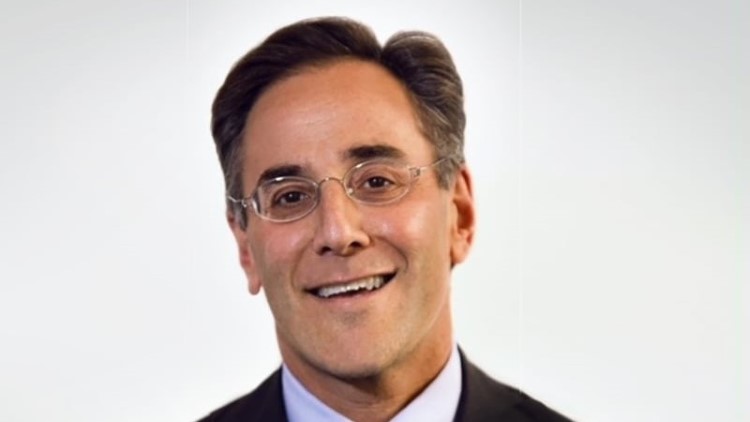
Michael J. Sacks
About Michael J. Sacks
Michael J. Sacks, age 62, is Chairman of the Board and Chief Executive Officer of GCM Grosvenor Inc. (since formation in July 2020) and has led GCM Grosvenor (the operating firm) since 1994 after joining in 1990 . He holds a B.S. in Economics from Tulane, a general course certificate from the London School of Economics, an MBA from Northwestern’s Kellogg School, and a JD from Northwestern Pritzker School of Law . Under his leadership, GCM Grosvenor grew into one of the largest independent open-architecture alternative asset platforms . Company performance indicators over his recent public-company tenure include rising fee-related earnings (FRE) and a positive TSR since 2022, albeit below the peer group TSR, with Net Income variability typical of alt-asset managers .
| Performance Metric | 2021 | 2022 | 2023 | 2024 |
|---|---|---|---|---|
| Total Shareholder Return (Value of $100) | $81 | $62 | $77 | $110 |
| Peer Group TSR (S&P 1500 Financials) (Value of $100) | $135 | $121 | $135 | $175 |
| Net Income ($000s) | $21,482 | $19,820 | $12,774 | $18,695 |
| Fee-Related Earnings ($000s) | $120,401 | $128,513 | $139,942 | $166,351 |
Past Roles
| Organization | Role | Years | Strategic Impact |
|---|---|---|---|
| GCM Grosvenor (operating firm) | Chief Executive Officer | 1994–present | Built platform into large independent open-architecture alternatives manager |
| GCM Grosvenor | Joined firm | 1990–1994 | Early tenure preceding CEO role |
| GCM Grosvenor Inc. (public) | Chairman & CEO | 2020–present | Led public company governance and strategy post-business combination |
External Roles
| Organization | Role | Years | Notes |
|---|---|---|---|
| CION Grosvenor Infrastructure Fund; CION Grosvenor Infrastructure Master Fund, LLC | Director | 2024–present | Closed-end management investment companies sub-advised by GCM Grosvenor |
| Non-profit boards | Director | Ongoing | Multiple civic/non-profit boards (not individually specified) |
Board Governance and Service
- Combined roles: Sacks serves as both Chairman and CEO; Board determined this structure supports unified leadership; a Lead Independent Director (Samuel C. Scott III) provides independent oversight .
- Controlled company: GCMG is a “controlled company” under Nasdaq rules; it does not maintain a compensation or nominating committee; the Audit Committee is fully independent .
- Director designation rights: GCM V has rights to designate all seven directors until the Sunset Date, effectively controlling director elections alongside the GCMH Equityholders .
- Committee roles: Sacks is not on the Audit Committee; Audit members are Blanton, Cornelli, Helfand (Chair), and Scott; each meets heightened independence standards and financial literacy; multiple financial experts identified .
- Attendance: Board met 5 times and Audit met 4 times in 2024; each director attended at least 75% of applicable meetings; Sacks attended the 2024 annual meeting .
- Compensation governance: As a controlled company with no compensation committee, Sacks and President Levin participated in Board deliberations on executive compensation in 2024 (raises independence concerns) .
Fixed Compensation
| Year | Base Salary ($) | Bonus ($) | Stock Awards ($) | All Other Compensation ($) | Total ($) |
|---|---|---|---|---|---|
| 2022 | 4,014,500 | — | — | 1,381,074 | 5,395,574 |
| 2023 | 4,277,200 | — | — | 1,582,211 | 5,859,411 |
| 2024 | 4,417,800 | — | — | 1,052,226 | 5,470,026 |
- All Other Compensation detail (2024): $1,047,370 for personal non-commercial air travel (capped at $1.5 million per year, CPI-escalated, per employment agreement) and $4,856 carried interest distributions .
- Salary escalator: Annual base salary set at $3.7 million as of 2020, multiplied by a CPI-based escalation; actual 2024 salary was $4,417,800 .
Performance Compensation
| Component | Metric/Structure | Weighting | Target | Actual | Payout | Vesting |
|---|---|---|---|---|---|---|
| CEO Annual Bonus | Not applicable (no bonus paid) | N/A | N/A | N/A | $0 | N/A |
| CEO Equity Awards | No RSUs/options granted in 2024 | N/A | N/A | N/A | $0 | N/A |
Program design (company-wide, for other NEOs) uses discretionary annual bonuses (pool tied to operating results) and RSUs (3–4 year vesting) alongside carried interest and profit-sharing interests; 2024 performance measures considered include Fee-Related Earnings, Adjusted EBITDA, Adjusted Net Income, Fee-Paying AUM, and fund performance, but specific weightings/targets are not disclosed .
Equity Ownership & Alignment
| Item | Detail |
|---|---|
| Beneficial Ownership | 145,135,246 Class A-equivalent shares (including exchangeable units) and 144,235,246 Class C shares; 74.9% combined voting power as of April 9, 2025 . |
| Form of Control | Stockholders’ Agreement grants GCM V rights to designate all directors until the Sunset Date; holders of Class C currently control ~75% voting power; “controlled company” status maintained . |
| Outstanding CEO Equity | No outstanding RSUs/options for Sacks at 12/31/2024 . |
| Hedging/Pledging Policy | Company prohibits hedging and pledging by officers, directors, immediate family, and controlled entities . |
| Pledged Interests (Exception) | Entities controlled by Sacks (Grosvenor Holdings, Grosvenor Holdings II, GCM Grosvenor Management, and GCM Progress Subsidiary) pledged large blocks of GCMH common units (exchangeable into Class A) as collateral for senior loans; pledge remains until obligations fulfilled . |
| Ownership Guidelines | Not disclosed. |
Red flag: The pledge of exchangeable common units by entities controlled by Sacks introduces potential margin/forced-sale risk despite the company’s anti-pledging policy, and should be monitored closely by investors .
Employment Terms
| Term | Key Economics / Provisions |
|---|---|
| Agreement Dates | Employment agreement dated 10/26/2007, amended 10/5/2017 and 8/2/2020 . |
| Role & Term | Chairman & CEO; term ends upon death, disability, termination for cause or without cause after Sunset Date, or resignation . |
| Base Salary | $3.7m (from 1/1/2020) escalated by CPI; 2024 actual $4,417,800 . |
| Perquisites | Personal non-commercial air travel up to $1.5m annually, CPI-escalated . |
| Severance (Post-Sunset) | If Sacks resigns or is terminated without cause following Sunset Date: separation payment equal to 25% of compensation for 1 year; $1,500/hour for work above 40 hours per month during that year . |
| Death/Disability | 12 months continuation of base salary . |
| Non-Compete/Non-Solicit | 2-year non-compete and non-solicit; confidentiality and IP assignment; exceptions as specified . |
| Change-in-Control | None of the NEOs (including Sacks) are entitled to change-in-control payments; RSUs accelerate only upon death/disability, not CoC; for other terminations, unvested RSUs forfeit . |
| Clawback | Clawback policy adopted in 2023 and amended in 2024 to comply with Nasdaq Rule 5608 . |
Related Party Transactions and Structures (Governance Considerations)
- Profit-sharing partnerships: Sacks controls “Holdings” and “Management LLC,” through which executives (including Sacks) receive distributions; certain distributions to other NEOs are discretionary by the managing member (Sacks), creating potential conflicts in compensation allocation .
- Private aircraft usage: Personal use by certain NEOs, including Sacks, with significant company cost; aggregation disclosed and calculated at charter rates .
Say-on-Pay & Shareholder Feedback
- 2024 say-on-pay approval was 91%; the company did not materially change its program and next say-on-pay will be held in 2027 .
Compensation Structure Analysis (Signals)
- CEO pay structure: Heavy fixed-pay orientation (CPI-linked base; sizable perqs), with no equity awards or annual bonus to Sacks in 2022–2024, indicating limited direct performance linkage at the CEO level .
- Company-wide incentives: Increased reliance on multi-year RSU vesting (moving from 3 to 4 years beginning in 2025) and carried interest align a broad set of executives with long-term outcomes, but bonuses remain discretionary without disclosed weightings/targets (reduced transparency) .
- Governance independence: Absence of a compensation committee and participation by Sacks/Levin in compensation deliberations increase independence concerns typical of controlled companies .
Risk Indicators & Red Flags
- Pledging: Large exchangeable unit pledges by entities controlled by Sacks pose potential selling pressure risk if collateral values fall or covenants tighten .
- Controlled Company: Concentrated voting control (~75% combined voting power held by Key Holders) and director designation rights reduce minority investor influence .
- No Compensation Committee: Compensation decisions are not overseen by an independent compensation committee; management participates in comp deliberations .
- Perquisites: Significant personal aircraft usage cost for CEO .
- CoC Economics: No change-in-control protections or automatic equity acceleration (other than death/disability) may reduce retention in a transaction scenario for broader NEOs (neutral-to-positive for shareholders) .
Investment Implications
- Alignment: Sacks’ outsized voting control and beneficial ownership suggest strong long-horizon alignment, but pledging of exchangeable units introduces leverage/forced-sale risk that can exacerbate stock volatility in stress scenarios .
- Governance discount risk: Controlled-company exemptions (no comp committee, board designation rights) and insider participation in compensation decisions may merit a governance discount relative to peers with stronger independent oversight .
- Incentive design: While firmwide variable comp leans into multi-year RSUs and carried interest tied to operating/investment performance, the CEO’s largely fixed-pay profile and lack of disclosed quantitative bonus metrics limit pay-for-performance transparency at the very top .
- Execution track record: FRE growth and improving TSR from 2022 to 2024 indicate operational momentum; however, TSR trails the peer group over the same period, framing the bar for value creation going forward .