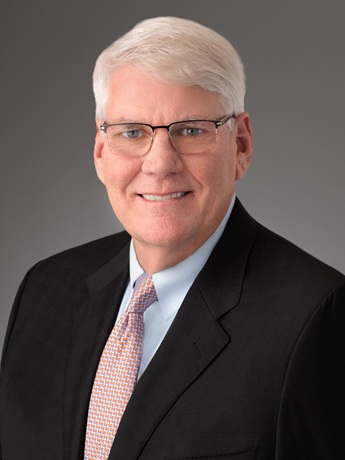
Daryl A. Kenningham
 GROUP 1 AUTOMOTIVE
About Daryl A. Kenningham
Daryl A. Kenningham, age 60, is President and Chief Executive Officer of Group 1 Automotive (since January 2023) and a director (since 2022); he serves on the Board’s Finance/Risk Management Committee. He holds a B.A. in Psychology from the University of Michigan and an MBA from the University of Florida, and has 13 years of company tenure as of 2024–2025 . Operationally, Group 1 reported parts and service revenue growth of 12.1% as-reported and 4.6% same-store in 2024, and 10.6% and 9.0% respectively in 2023, underlining aftersales execution focus . Pay-versus-performance disclosure shows the value of an initial $100 investment in GPI reached $313.79 in 2023 (peer group $268.90), with 2023 net income of $601.6m, while Say‑on‑Pay support at the 2024 meeting was ~98% .
Past Roles
| Organization | Role | Years | Strategic impact |
|---|---|---|---|
| Group 1 Automotive | CEO; President; COO; President U.S. Operations; Regional VP (West; East) | CEO since Jan 2023; President since Aug 2022; COO Aug–Dec 2022; 2017–Aug 2022; 2016–2017 (West); 2011–2016 (East) | Led strategy and operations; 2023 highlights included revamping M&A strategy with ~$1.1B annualized acquired revenues and disposals of 9 dealerships . |
| Ascent Automotive | Chief Operating Officer | Dec 2010–Apr 2011 | Operational leadership during period preceding Group 1 roles . |
| Gulf States Toyota/USA Logistics | Senior executive roles; President (USA Logistics) | 1998–2011 | Distribution/financial services leadership deepening OEM/distribution expertise . |
| Nissan Motor Corporation (U.S./Japan) | Sales, marketing, vehicle distribution roles | 1988–1998 | OEM-side commercial and international experience . |
External Roles
| Organization | Role | Years | Notes |
|---|---|---|---|
| Darden Restaurants, Inc. | Director | Current | Public company directorship; committee roles not disclosed here . |
Fixed Compensation
| Year | Base Salary ($) |
|---|---|
| 2022 | 890,399 |
| 2023 | 1,100,000 |
| 2024 | 1,250,000 |
Performance Compensation
Annual Incentive Plan (AIP) – 2024 Design and Outcome
- Opportunity levels (as % of base salary): Threshold 70%, Target 140%, Max 280% .
- Metrics and weights: Adjusted net income from continuing operations (80%); Parts & service gross profit (20%) .
- Committee positively adjusted adjusted net income for the June 2024 CDK cyber incident given effective management response and rapid operational recovery .
| Metric (Weight) | Threshold | Target | Maximum | 2024 Result | CEO Payout as % of Base |
|---|---|---|---|---|---|
| Adjusted Net Income from Continuing Operations (80%) | $446m | $557m | $613m | $548m (adjusted) | 107.5% |
| Parts & Service Gross Profit (20%) | $1,157m | $1,285m | $1,478m | $1,368m | 40.0% |
| Total AIP Payout (CEO) | — | — | — | — | 147.5% |
| Year | Actual AIP Paid ($) |
|---|---|
| 2024 | 1,843,761 |
| 2023 | 1,849,705 |
| 2022 | 1,514,281 |
Long‑Term Incentives (LTI) – Structure, Mix, and Vesting
- 2024: CEO LTI target increased to $5.0m; committee cited strong 2024 performance .
- 2023: LTI $3.5m, 50% performance shares (PSUs), 50% restricted stock; 2023 PSUs scheduled to vest on Dec 31, 2024 with share release Dec 31, 2025 (subject to performance) .
- 2025 PSU metrics: Adjusted EPS (50%) and relative TSR (50%), replacing ROIC to better align with management influence and market practice; restricted stock vests ratably over 3 years .
| Grant Year | Target LTI Value ($) | Mix | Key Performance Metrics | Vesting Schedule |
|---|---|---|---|---|
| 2024 | 5,000,000 | Not explicitly split; prior mix referenced below | Not disclosed for 2024 here | RS vests ratably over 3 years |
| 2023 | 3,500,000 | 50% PSUs; 50% Restricted Stock | PSUs: company performance; 2025 doc indicates ROIC replaced by adj. EPS in 2025 | RS: ~33%/33%/34% in 2024/2025/2026; PSUs vest 12/31/2024, release 12/31/2025 (if earned) |
Other policy features:
- No current stock option grants; company does not have a current option grant practice .
- Clawback: NYSE‑compliant recoupment of incentive-based compensation upon restatement; excludes base salary, discretionary cash, and time‑vested equity .
Equity Ownership & Alignment
| Item | Detail |
|---|---|
| Beneficial ownership (as of Mar 19, 2025) | 43,741 shares; less than 1% of outstanding |
| Restricted shares included (voting, not dispositive) | 20,905 shares |
| Shares held via trust | 22,482.46 in Kenningham Management Trust |
| Shares outstanding (reference) | 13,041,128 as of Mar 19, 2025 |
| CEO stock ownership guideline | 6x base salary |
| Compliance statement | Directors and officers have met or are expected to meet guidelines within 5 years |
| Hedging/pledging | Prohibited for directors and officers (no hedging, no pledging) |
| Equity plan overhang/capacity | 293,040 securities to be issued upon exercise of outstanding rights; 1,127,810 remaining available; weighted avg exercise price “—” (reflecting full‑value awards) |
Insider reporting note: Three late Form 4s (four transactions) were reported for Mr. Kenningham in the most recent year reviewed .
Employment Terms
| Provision | Terms |
|---|---|
| Contract/agreements | Incentive compensation, confidentiality, non‑disclosure and non‑compete agreement effective June 6, 2011; amended Aug 24, 2022 to set base salary at $1.1m . |
| Non‑compete | Two years post‑termination; other restrictive covenants apply . |
| Severance (without cause) | Cash equal to one year of base salary at most recent rate; pro‑rated AIP bonus; accelerated vesting of outstanding restricted stock (subject to award terms and covenants) . |
| Change‑in‑control (“Corporate Change”) | Double‑trigger approach for payments/vesting; certain definitions include involuntary termination or good‑reason conditions in connection with a corporate change (no excise tax gross‑up) . |
| Disability | Regular salary paid for up to 120 days . |
| Deferred compensation | NEOs may defer up to 50% salary and up to 100% incentive; 2024 Group 1 guaranteed crediting rate was 8.5%; above‑market earnings for CEO in 2024 totaled $179,731 (no pension plan) . |
Board Governance
- Board service: Director since 2022; member, Finance/Risk Management Committee; CEO is not Chair; an independent Non‑Executive Chair (Charles L. Szews) has served since May 2023, mitigating CEO/Chair concentration risk .
- Independence: As CEO, not independent; 7 of 9 director nominees are independent; Audit, CHR, and Governance committees are fully independent .
- Board engagement/attendance (2024): 98.1% overall attendance at six Board meetings; 99.4% overall at combined Board/committee meetings; 100% attendance at 2024 annual meeting .
- Director pay: Non‑employee directors receive cash and equity retainers; CEO receives no compensation for Board service .
Compensation Structure Analysis
- 2024 CEO pay mix moved further toward equity: base salary increased to $1.25m; AIP paid $1.84m; LTI target raised to $5.0m from $3.5m in 2023, emphasizing long‑term alignment .
- AIP design tightened to financial metrics (80% adjusted net income; 20% parts & service gross profit) with outcome at 147.5% of base; the committee positively adjusted adjusted net income for the CDK outage—important to monitor for precedent on discretion .
- PSU metric evolution: 2025 awards shift to 50% adjusted EPS and 50% rTSR (replacing ROIC), aligning with peer practice and management line‑of‑sight; restricted stock continues to vest over three years (retention) .
- Governance risk controls: robust stock ownership guidelines (CEO 6x salary), clawback policy, prohibition on hedging/pledging, and independent Chair structure; Say‑on‑Pay support ~98% in 2024 suggests investor alignment .
- Process flag: late Section 16 filings (3 Form 4s, four transactions) noted for Mr. Kenningham; not uncommon but worth tracking .
Performance & Track Record
- Aftersales execution: parts and service revenues grew 12.1% as‑reported and 4.6% same‑store in 2024; 10.6% and 9.0% respectively in 2023, indicating consistent service growth initiatives (workforce, digital scheduling, facilities) .
- Strategic portfolio management under his leadership included 2023 M&A strategy revamp with ~$1.1B annualized acquired revenues and nine dealership dispositions, indicating focus on scale and optimization .
- Pay-versus-performance: 2023 TSR “value of $100” at $313.79 vs $268.90 for peer group; net income $601.6m, signaling strong relative value creation in the disclosed period .
Director Compensation (for reference)
- Non‑employee director annual cash retainer $65,000 and equity retainer ~$225,000 (RS or RSUs) in 2024; committee chair retainers $25,000–$30,000; awards vest immediately and settle upon retirement/death/disability; CEO receives no director compensation .
Equity Vesting and Potential Selling Pressure
- Time‑based restricted stock vests ratably over 3 years; performance shares from the 2023 grant vest 12/31/2024 with release 12/31/2025 if earned—these scheduled events can create periodic liquidity windows for executives .
- CEO held 20,905 restricted shares (voting but not dispositive) as of Mar 19, 2025, implying a pipeline of unvested equity; hedging and pledging are prohibited, and ownership guidelines apply .
Say‑on‑Pay & Shareholder Feedback
- 2024 Say‑on‑Pay support was approximately 98%; the CHR Committee made no significant structural changes following this vote, citing alignment with shareholder interests .
Compensation Committee and Peer Practices
- CHR Committee responsibilities include setting CEO goals, assessing performance, approving executive pay program changes, and engaging an independent compensation consultant; pay levels are assessed versus a compensation peer group, with bases targeted around market median .
- Performance peer group used in pay‑versus‑performance includes Lithia, AutoNation, Sonic, Penske, and Asbury .
Investment Implications
- Alignment: High at‑risk pay, larger 2024 LTI, and 2025 PSU metrics (adj. EPS/rTSR) enhance pay‑for‑performance linkage; robust ownership rules, clawback, and no hedging/pledging strengthen governance and reduce agency risk .
- Liquidity windows: Three‑year RS vesting and PSU release schedules, plus 20,905 restricted shares outstanding, suggest periodic supply from routine vesting rather than option exercises, given no current option grants .
- Retention/CoC: Two‑year non‑compete and one‑year salary severance with double‑trigger CoC protections balance retention with moderate severance exposure (no excise tax gross‑ups), limiting windfall risk in strategic transactions .
- Monitoring items: Use of positive AIP adjustment for the CDK incident and late Section 16 filings (minor process risk) warrant attention; Say‑on‑Pay (~98%) and independent Chair structure mitigate broader governance concerns .