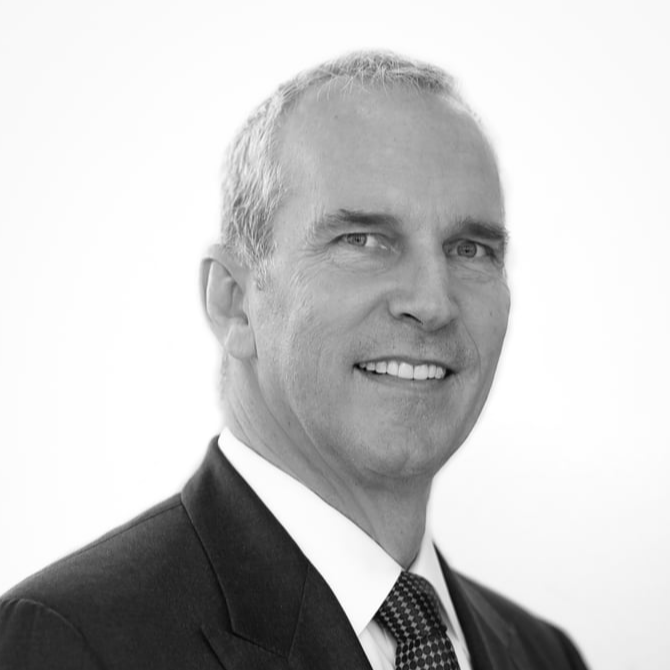
Owen Kratz
 HELIX ENERGY SOLUTIONS GROUP
About Owen Kratz
- President & CEO of Helix Energy Solutions Group (HLX); director since 1990; age 70; B.S. from State University of New York .
- Tenure highlights: COO (1990–1997), President (1993–1999), CEO (1997–2006; resumed Feb 2008–present), Executive Chairman (Oct 2006–Feb 2008), Chairman of the Board (May 1998–July 2017) .
- 2024 performance context: Revenue $1.36B, Adjusted EBITDA ~$303M (+~10% YoY), Net income $56M (vs. prior-year losses), Free Cash Flow $163M (highest in two decades), backlog $1.4B, and negative Net Debt of ~$53M .
- TSR: 195% total shareholder return over 2022–2024, ranking 3rd of 19 in the PSU peer group; stock closed $9.32 on 12/31/2024 .
Past Roles
| Organization | Role | Years | Strategic Impact |
|---|---|---|---|
| Helix/Cal Dive International (predecessor) | Saturation diving supervisor; client relations/marketing/estimating | Joined 1984 | Technical/operator roots underpin credibility with offshore clients and execution focus |
| Helix | Chief Operating Officer | 1990–1997 | Built operational base through industry cycles |
| Helix | President | 1993–Feb 1999 | Commercial leadership during growth period |
| Helix | Chief Executive Officer | Apr 1997–Oct 2006; Feb 2008–present | Led strategic pivot to well intervention/energy transition services |
| Helix | Executive Chairman | Oct 2006–Feb 2008 | Board-level strategy continuity during leadership transition |
External Roles
| Organization | Role | Years | Notes |
|---|---|---|---|
| Cal Dive International, Inc. (public company; former HLX subsidiary) | Director | Feb 2006–Dec 2011 | External public board experience in adjacent subsea services |
Fixed Compensation
| Metric | 2022 | 2023 | 2024 |
|---|---|---|---|
| Base Salary | $700,000 | $800,000 | $800,000 (flat YoY) |
| Director Fees (for board service) | $0 | $0 | $0 |
| Total Compensation | 2022 | 2023 | 2024 |
|---|---|---|---|
| Summary Comp Table Total | $6,356,663 | $7,023,160 | $5,675,840 |
Notes: CEO base unchanged in 2024; no board fees (compensated only as employee) .
Performance Compensation
Short‑Term Incentive (STI) Design (2024)
- Weighting: 90% Adjusted EBITDA; 10% Sustainability KPIs (Emissions, Safety, Engagement) .
- EBITDA thresholds: Threshold $224M; Target $320M; Max $376M .
- Actuals: Adjusted EBITDA $303M; management recommended no Safety payout; Emissions/Engagement pro‑rated; total payout at 76.2% of target .
| STI Element | Weight | Target/Threshold | Actual | Payout |
|---|---|---|---|---|
| Adjusted EBITDA | 90% | Threshold $224M; Target $320M; Max $376M | $303M | Included in total 76.2% outcome |
| Sustainability KPIs (Emissions, Safety, Engagement) | 10% | Qualitative scorecard | No Safety payout; prorated Emissions/Engagement | Included in total 76.2% outcome |
| Overall STI Payout (Kratz) | — | Target $1,200,000 | — | $914,400 (76.2% of target) |
Long‑Term Incentive (LTI) Program
- Mix: 50% PSUs (3-year cliff), 50% RSUs (3-year ratable) .
- PSU metrics (equal weight): Relative TSR vs. Performance Peer Group and cumulative Free Cash Flow (FCF); payout 0–200% .
- TSR thresholds: 25th percentile ≈ 3.2% (TSR half), 55th = 100%, 80th = 200% .
- FCF thresholds over 3 years: < $275M = 0%; $375M = 100%; ≥ $475M = 200% .
- 2024 Grants to Kratz: 175,097 PSUs; 175,097 RSUs; grant date 1/1/2024 .
- Realized: 2022 PSUs (performance period 2022–2024) paid at 200% based on TSR rank (3rd/19) and cumulative FCF ($315M); Kratz realized $9,140,776 in stock in early 2025 plus $1,613,068 cash for a portion .
| 2024 LTI Award (Kratz) | Units/Value | Vesting | Metric Details |
|---|---|---|---|
| PSUs | 175,097 units | Cliff after 3 years | 50% Relative TSR (25th/55th/80th → ~3.2%/100%/200%); 50% 3‑yr FCF (<$275M/ $375M/ ≥$475M → 0%/100%/200%) |
| RSUs | 175,097 units | 1/3 annually over 3 years | Time‑based; payout in stock or cash at Committee discretion |
Equity Ownership & Alignment
- Beneficial ownership: 7,766,696 shares (5.1% of outstanding) .
- Unvested/Outstanding awards (as of 12/31/2024):
- RSUs: 192,308 (2022 grant), 162,602 (2023), 175,097 (2024) .
- PSUs: 576,923 (2022 performance period ended 12/31/2024), 243,902 (2023; ends 12/31/2025), 175,097 (2024; ends 12/31/2026) .
- Options: None granted or outstanding; no exercises in 2024 .
- Ownership guidelines: CEO required ownership = 6x base salary; all covered persons in compliance as of 12/31/2024 .
- Hedging/pledging: Hedging prohibited; pledging allowed only under stringent limits with Board approval; no outstanding pledges by any directors/officers at this time .
| Ownership Snapshot | Value/Count |
|---|---|
| Beneficial Shares | 7,766,696 (5.1%) |
| Unvested RSUs (total) | 192,308 + 162,602 + 175,097 = 529,? units (see line detail) |
| Unvested PSUs (by grant) | 576,923 (2022); 243,902 (2023); 175,097 (2024) |
Note: PSU payouts may be in stock or cash at Committee discretion; vesting events (e.g., 2023 PSUs on 12/31/2025; 2024 PSUs on 12/31/2026) can create periodic liquidity events but are subject to trading windows and payout form .
Employment Terms
| Provision | Key Terms |
|---|---|
| Employment coverage | Base salary, STI participation, LTI, and standard executive benefits . |
| Severance (without Cause / Good Reason) | 2x base salary for Kratz; vesting of equity that would vest within 12 months; prior-year STI paid; target STI for year of termination paid timing per plan . |
| Change-in-Control (CIC) | Double-trigger: upon CIC + termination without Cause/for Good Reason within 2 years → lump sum 2.99x (salary + STI target) for Kratz; immediate vesting of all equity; 18 months COBRA; Kratz has excise tax gross‑up (others do not) . |
| Non-compete / Non-solicit | 1-year non-compete and 1-year non-solicit post-termination . |
| Clawbacks | SEC/NYSE-compliant Mandatory Recoupment Policy (erroneous incentive comp) and Supplemental policy (misconduct causing material harm; includes time‑vested awards) . |
| Perquisites/Pension | No perquisites; no pension/SERP; executives receive employee-standard benefits only . |
Illustrative potential payouts (12/31/2024 assumptions): CIC with qualifying termination total for Kratz ~$27.9M (cash severance $5.98M; RSU/PSU acceleration; COBRA), per proxy methodology and price of $9.32 .
Board Governance & Service
- Board role: Kratz is a non-independent director (CEO) on a seven-member board; 86% of Board independent; independent Chairman (William L. Transier) and all standing committees composed entirely of independent directors .
- Board service: Director since 1990; Chairman from 1998–2017; not listed as a member of any standing committees (consistent with CEO status) .
- Board cadence/attendance: 15 Board meetings in 2024; each director attended ≥75% of Board and committee meetings; non‑management directors meet in regular executive sessions (independent Chair presides) .
- Director compensation: Kratz receives no additional pay for Board service .
Implications: Dual-role risk (CEO+director) mitigated by an independent Chairman, majority independent board, and fully independent committees with regular executive sessions .
Compensation Structure Analysis
- Alignment: High at-risk mix (86% of CEO target comp is at-risk); long-dated equity with rigorous TSR/FCF hurdles aligns with shareholder value creation across cycles .
- Cash vs. equity: No options granted in recent years; equity delivered via RSUs/PSUs—lower volatility vs. options and tighter linkage to absolute and relative performance; no repricings noted .
- Metric calibration: STI requires “significantly exceed budget” to hit target; 2024 paid at 76.2% despite EBITDA beat, reflecting KPI discipline (no Safety payout) .
- Shareholder feedback: 95% Say-on-Pay support in 2024 for 2023 compensation, indicating strong investor alignment .
- Peer benchmarking: Independent consultant (WTW) retained; benchmarking and performance peer groups refreshed with clear screening methodology (list below) .
2024 Benchmarking Peer Group (selected for pay comparisons)
Archrock; ChampionX; Core Laboratories; Dril‑Quip; Expro Group; Forum Energy Tech; Helmerich & Payne; Newpark; NexTier; Oceaneering; Oil States; ProPetro; RPC; TETRA Technologies; Tidewater .
Vesting Schedules & Potential Selling Pressure
- RSUs: Annual vesting on grant anniversaries (e.g., 1/1/2024 grant vests in equal thirds over 3 years) .
- PSUs: Cliff vest post 3-year performance periods (e.g., 2023 PSU performance period ends 12/31/2025; 2024 ends 12/31/2026) with payout 0–200% based on TSR/FCF; form (stock/cash) at Committee discretion .
- Realized 2022 PSUs: 200% payout (TSR rank 3/19; strong FCF); Kratz realized ~$9.14M in stock plus ~$1.61M cash in early 2025; similar future PSU cliffs could create episodic supply depending on payout form and trading windows .
Related Party Transactions, Hedging, Pledging, Say-on-Pay
- Related party transactions: None requiring disclosure for 2024 .
- Hedging: Prohibited; Pledging: highly restricted; no current pledges by directors/officers .
- Say-on-Pay: 95% approval for 2023 compensation (voted in 2024) .
Equity Detail (Kratz) – As of 12/31/2024
| Category | Count | Market/Payout Basis |
|---|---|---|
| Unvested RSUs (2022) | 192,308 | $9.32 per share FV reference in proxy tables . |
| Unvested RSUs (2023) | 162,602 | $9.32 per share FV reference in proxy tables . |
| Unvested RSUs (2024) | 175,097 | $9.32 per share FV reference in proxy tables . |
| Unvested PSUs (2023, ends 12/31/2025) | 243,902 | Payout depends on TSR percentile and cumulative FCF . |
| Unvested PSUs (2024, ends 12/31/2026) | 175,097 | Payout depends on TSR percentile and cumulative FCF . |
Employment & Contracts – Economics Summary
| Scenario | Core Economics |
|---|---|
| Termination without Cause / Good Reason | 2x base salary; prior-year STI; full target STI for year of termination; 12‑month forward equity vesting acceleration [Kratz] . |
| CIC only | Equity vests at formulaic performance levels; no cash severance unless termination . |
| CIC + Qualifying Termination | 2.99x (salary + STI target) cash; full equity vest; 18 months COBRA; excise tax gross‑up applies to Kratz . |
| Restrictive Covenants | 1‑year non‑compete and non‑solicit . |
| Clawbacks | Mandatory (restatement) and Supplemental (misconduct/material harm); includes time‑vested awards . |
Performance & Track Record (selected)
- Financial delivery: Revenue to $1.36B; Adjusted EBITDA ~$303M (+~10% YoY); net income $56M; FCF $163M (two‑decade high); negative Net Debt ~$53M .
- Commercial outcomes: Backlog of ~$1.4B at 12/31/2024; new multi‑year contracts at improved rates .
- Capital structure: Redeemed convertibles; extended primary credit facility to 2029; ongoing share repurchases .
- Relative performance: 3‑yr TSR 195% (3rd/19) driving maximum PSU payout for 2022 grant .
Compensation Committee Analysis
- Members: John V. Lovoi (Chair), Paula Harris, T. Mitch Little; all independent .
- Consultant: WTW retained; independence confirmed; responsible for peer selection and program design benchmarking .
- Program governance: No hedging; stringent pledging; robust clawbacks; stock ownership guidelines (CEO 6x salary) .
Investment Implications
- Alignment and incentive quality: High at‑risk mix with rigorous TSR/FCF PSUs and disciplined STI calibration supports pay‑for‑performance; 95% Say‑on‑Pay indicates investor support .
- Retention and overhang: Significant unvested RSUs/PSUs provide strong retention; upcoming PSU cliffs (2025/2026) could create episodic supply depending on payout form and trading windows, though Committee can settle in cash to mitigate market impact .
- Governance risk flags: CEO is a director but not Chair; independent Chair and fully independent committees mitigate dual-role concerns; Kratz’s CIC agreement includes a 2.99x multiple and an excise tax gross‑up—shareholder‑unfriendly but disclosed and limited to CEO; robust clawbacks and no hedging offset risk .
- Execution risk: Performance targets include high bars (e.g., STI requires “significantly exceed budget” for target payout), focusing management on sustained EBITDA/FCF delivery; 2024 payout at 76.2% despite EBITDA beat highlights discipline around safety and sustainability KPIs .