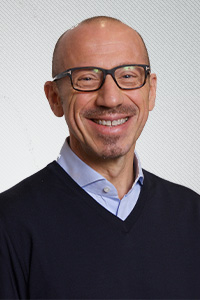
Luca Savi
 ITT
ITTAbout Luca Savi
Luca Savi, age 59, has served as CEO, President and Director of ITT Inc. since January 2019, following prior roles as President of Motion Technologies and Chief Operating Officer; earlier career stops include Comau (Fiat Group), Honeywell, Shell, and Ferruzzi-Montedison . Under his leadership, ITT delivered a 216% TSR through 12/31/2024 (vs. S&P 500 159% and S&P 400 Mid-Cap 106%), increased ROIC to 15.3% in 2024, expanded adjusted operating margin by 430 bps since 2018, grew adjusted EPS by 81% (10% CAGR), and grew market cap from ~$4B to ~$12B by year-end 2024 . In 2024, ITT achieved ~7% organic revenue growth, 80 bps adjusted operating margin expansion to 17.7% (approx. 150 bps excluding temporary M&A dilution), adjusted EPS +12%, cash from operations >$560M, free cash flow $439M (12% margin), and $1.6B year-end backlog .
Past Roles
| Organization | Role | Years | Strategic Impact |
|---|---|---|---|
| ITT Inc. | SVP & President, Motion Technologies | Nov 2011–Feb 2016 | Led largest business unit; deepened end-market exposure and operational execution . |
| ITT Inc. | EVP & President, Motion Technologies | Feb 2016–Jan 2017 | Drove growth, innovation and profitability in friction products . |
| ITT Inc. | EVP & Chief Operating Officer | Jan 2017–Aug 2018 | Oversaw enterprise operations, productivity, and supply chain . |
| ITT Inc. | President & Chief Operating Officer | Aug 2018–Jan 2019 | Prepared CEO transition; strengthened execution discipline . |
| Comau (Fiat Group) | CEO, Comau North America | 2007–2009 | Led manufacturing systems operations in North America . |
| Comau (Fiat Group) | COO, Comau Body Welding | 2009–2011 | Managed advanced manufacturing systems globally . |
External Roles
| Organization | Role | Years | Strategic Impact |
|---|---|---|---|
| MSA Safety Incorporated | Director; Chair, Compensation & Talent Management Committee | Current | External governance experience; insight into talent/compensation best practices . |
Fixed Compensation
| Component | 2024 | 2025 |
|---|---|---|
| Base Salary ($) | $1,150,000 | $1,200,000 (approved +4.3%) |
| Target Bonus % of Salary (AIP) | 135% | 135% (unchanged) |
| Target AIP Amount ($) | $1,552,500 | $1,620,000 |
| Actual Bonus Paid for 2024 ($) | $2,313,230 (149% of target; paid Mar-2025) |
Performance Compensation
Annual Incentive Plan (AIP) — 2024 Design and Results
| Metric | Weighting | Threshold | Target | Maximum | 2024 Result | Payout |
|---|---|---|---|---|---|---|
| Adjusted EPS ($) | 20% | 5.11 | 5.68 | 6.24 | 5.93 | 144.5% |
| Free Cash Flow ($mm) | 25% | 387 | 455 | 523 | 472 | 125.5% |
| Adjusted Operating Margin (%) | 20% | 16.4% | 17.2% | 18.1% | 17.9% | 172.7% |
| Organic Revenue ($mm) | 20% | 3,264 | 3,626 | 3,989 | 3,694 | 118.8% |
| Individual/Team Goals | 15% | n/a | n/a | n/a | Strong strategic execution; awarded at 200% for CEO | 200% |
| Notes: Financial metrics are non-GAAP, with special items excluded per AIP policy . CEO AIP payout was 149% of target for 2024 . |
Long-Term Incentives (LTI) — 2024 Grants and 2022 PSU Payout
| LTI Element | Grant Mix/Value | Vesting/Performance | Outcome |
|---|---|---|---|
| 2024 RSUs | 40% of LTI; $2,120,000 target value | Time-based, generally 3-year vesting | Outstanding per award schedule . |
| 2024 PSUs | 60% of LTI; $3,180,000 target value | 3-year cliff; 50% ROIC, 50% Relative TSR | Ongoing performance per targets . |
| 2022–2024 PSUs (paid 2025) | n/a | TSR at 65th percentile; ROIC 14.7% vs 14.8% target | 123.3% of target . |
CEO Retention Plan (adopted Oct 30, 2024)
| Component | Grant Value | Vesting | Triggers/Notes |
|---|---|---|---|
| Initial RSU | $7,000,000 (grant 10/30/2024) | Vests 12/31/2028 if continuously employed | Designed to retain CEO through 2028 . |
| PEAR Awards (annual RSUs) | Performance-scaled: $0 if PSU payout <105%; $4M at 105–119.9%; $5M at 120–139.9%; $6M at 140–159.9%; $7M at ≥160% | Grants 2025–2028 vest 12/31/2028 or 1st anniversary, whichever later; 2029 grant vests at 1st anniversary | CEO received $5,000,000 PEAR grant in Mar-2025 . |
| Separation Treatment | Voluntary resignation pre-12/31/2028 forfeits PEARs; death/disability/Company termination without cause → pro-rated retention awards (subject to non-compete compliance); good reason within 2 years of CoC → retain all granted awards (subject to non-compete compliance) | Non-compete compliance required for vesting | Governance-driven response to investor feedback/market recruitment risk . |
Equity Ownership & Alignment
| Item | Detail |
|---|---|
| Beneficial Ownership | 224,973 shares total; 159,043 directly owned; 65,930 stock units; no options outstanding . |
| Shares Outstanding | 80,968,457 as of 3/25/2025 → Ownership ≈ 0.28% (224,973 ÷ 80,968,457) . |
| Unvested RSUs at 12/31/2024 | 22,535 (3/4/2022 grant); 20,040 (3/3/2023); 16,565 (3/4/2024); 48,335 (10/30/2024 retention grant); market values $3,219,801; $2,863,315; $2,366,807; $6,906,105 respectively . |
| Unvested PSUs at 12/31/2024 | 43,395 (2022 award); 62,430 (2023); 51,230 (2024); market values $6,200,278; $8,919,998; $7,319,742 respectively . |
| Stock Vested in 2024 | 72,428 shares vested; value realized $9,285,270 . |
| Stock Ownership Guidelines | CEO must hold 6x base salary; only certain holdings count (unvested PSUs excluded); as of 12/31/2024, all NEOs met or are on track . |
| Hedging/Pledging | Prohibited for directors/executives; no shares pledged by directors/executives . |
| Trading Plans | Rule 10b5-1 permitted with cooling-off periods; designed to manage insider trading risk . |
| Options | Company no longer grants options; no unvested options outstanding . |
Insider supply considerations: sizable retention RSU tranche vests in late 2028; ongoing PSU/RSU vesting may create periodic sellable supply, though 10b5-1 practices and ownership guidelines tend to moderate disposal pace .
Employment Terms
| Provision | Key Terms |
|---|---|
| Severance (without cause) | Senior Executive Severance Pay Plan: CEO receives 12 months of base salary; subsidized healthcare up to 6 months; up to 1 year outplacement; severance ceases if Code of Conduct or non-compete violations occur . |
| Change-in-Control (CoC) | Double-trigger required for equity vesting; CoC severance plan pays lump sum equal to 3x base salary + 3x annual bonus (CEO level); additional lump sum for retirement savings contributions; subsidized healthcare (6 months); outplacement (1 year); “best-net” cutback to avoid excise tax . |
| AIP/Deferred Plans under CoC | AIP, Deferred Compensation Plan, Supplemental Retirement Savings Plan accelerate on single trigger for CoC; equity remains double-trigger . |
| Clawback | SEC-compliant clawback covers AIP and equity; recoupment on restatement (no-fault) and for fraud/willful misconduct leading to restatement . |
| Tax Gross-ups | No tax gross-ups (except for international assignment/relocation) . |
| Non-Compete | Non-competition compliance required to continue severance payments; retention awards vesting conditioned on non-compete compliance . |
| Definitions of CoC | SEC/NYSE-standard triggers, including 20%+ beneficial ownership via Schedule 13D or tender/exchange offer, etc. . |
Potential post-employment values as of 12/31/2024 illustrate magnitude: termination not for cause total ~$17.1M; CoC termination total ~$40.0M (includes cash severance $3.45M, AIP $4.657M, equity $31.558M, supplemental plan $0.242M, other benefits $0.042M) .
Performance & Track Record
- Strategy and capital deployment: $1.2B deployed in 2024 (≈2.7x free cash flow), including >$860M M&A (Svanehøj, kSARIA), dividend +10% and $200M total capital return via dividends and buybacks; portfolio repositioning toward marine/clean energy/defense and reduced automotive exposure .
- Operational execution: Completed high-performance brake pad facility in Termoli, Italy; secured platform awards pre-completion; began production in early 2025 .
- 2024 KPIs: 7% organic revenue growth; adjusted EPS +12%; adjusted operating margin +80 bps to 17.7% (≈+150 bps ex temporary M&A dilution); orders +10%; $1.6B backlog; >$560M cash from operations; $439M FCF (12%) .
- Shareholder value: 2024 TSR 21% (outperformed S&P 400 Capital Goods by 560 bps); outperformance over prior 3-year period; market cap eclipsed $11.5B .
- Sustainability and safety: Scope 1/2 GHG -5% vs 2021; emissions intensity -20%; 11 sites with solar; injury frequency <0.4; philanthropic spend +7% vs 2022 .
Board Governance
- Role: CEO & Director since Jan 2019 (not independent under NYSE due to employment) .
- Board structure: Independent Chairman (Timothy H. Powers) separate from CEO role; regular executive sessions; strong governance policies (proxy access, majority voting, stock ownership guidelines) .
- Committees: Savi does not serve on Board committees; Chairman serves ex-officio on committees, and is a member of Audit .
- Attendance: In 2024, Board held 11 meetings and committees held 25; all directors attended ≥75% of aggregate meetings; practice is all directors attend annual meeting .
- Director compensation: As a management director, Savi receives no Board compensation; non-management directors receive $100,000 cash + $155,000 RSUs, with additional retainers for Chair and committee chairs .
Dual-role implications: Separation of Chair and CEO mitigates concentration of power; Board annually reviews leadership structure and maintains majority independent directors; Savi’s non-independence is standard for sitting CEOs; stock ownership and hedging/pledging policies strengthen alignment .
Say-on-Pay & Shareholder Feedback
- Say-on-Pay support: 97.9% approval at the 2024 annual meeting .
- Engagement: Fall 2024 outreach contacted ~70% of outstanding shares; engaged ~53%; investor feedback encouraged adoption of CEO retention plan given performance and external recruitment risk .
Compensation Peer Group (Benchmarking)
For 2024 decisions, the committee used a 20-company representative peer group (e.g., AMETEK, Flowserve, IDEX, Ingersoll Rand, Hubbell, Lincoln Electric, Nordson, Pentair, Curtiss-Wright, Graco, Sensata, Watts Water, Woodward, Crane, Enpro, Barnes, Moog, ESAB; later replaced Carlisle with Chart Industries) and considered market survey data; CEO pay was positioned considering performance and competitive market .
Compensation Structure Analysis
- Mix shifts and alignment: Heavy emphasis on performance pay via AIP and PSUs; RSUs provide retention; 2024 AIP weighting increased FCF from 20% to 25% and reduced individual goals from 20% to 15% to emphasize cash conversion .
- One-time retention awards: CEO Retention Plan (time-based RSU + performance-earned annual retention RSUs) adopted in response to investor feedback and market recruitment risk; awards are time-bound and performance-linked; not indicative of recurring guarantees .
- Best practices: Double-trigger CoC vesting; clawback policy; no option repricing; no golden parachutes; ownership requirements; prohibition on hedging/pledging .
Risk Indicators & Red Flags
- Hedging/pledging: Prohibited; no pledges reported for directors/executives .
- Option repricing: Prohibited; options program phased out; no unvested options outstanding .
- Tax gross-ups: None (except limited relocation cases) .
- Say-on-Pay: Strong approval reduces governance risk .
- Related party transactions: Overseen under formal RPT policy; N&G Committee reviews/approves; no specific adverse items disclosed for Savi .
Equity Ownership & Alignment — Summary Table
| Metric | Value |
|---|---|
| Shares Beneficially Owned | 224,973 (159,043 direct; 65,930 stock units) |
| Ownership % of Outstanding | ~0.28% (224,973 ÷ 80,968,457) |
| Unvested RSUs (units; value) | 22,535 ($3,219,801); 20,040 ($2,863,315); 16,565 ($2,366,807); 48,335 ($6,906,105) |
| Unvested PSUs (units; value) | 43,395 ($6,200,278); 62,430 ($8,919,998); 51,230 ($7,319,742) |
| Stock Vested in 2024 | 72,428; $9,285,270 value realized |
| Ownership Guidelines | CEO 6x salary; NEOs meeting/on-track |
| Hedging/Pledging Policy | Prohibited; none pledged |
Employment Terms — Key Economics Table (as of 12/31/2024)
| Scenario | Cash Severance | AIP | Equity | Supplemental Plan | Other Benefits | Total |
|---|---|---|---|---|---|---|
| Termination Not for Cause | $1,150,000 | $— | $15,884,053 | $— | $41,912 | $17,075,965 |
| CoC + Termination w/Good Reason | $3,450,000 | $4,657,500 | $31,558,168 (PSUs at ≥ last payout) | $241,500 | $41,912 | $39,959,080 |
Investment Implications
- Retention and alignment: The CEO Retention Plan materially anchors Savi through 2028, with performance-conditioned PEARs linking incremental awards to PSU outcomes (ROIC/Relative TSR), supporting execution continuity and performance alignment .
- Potential supply events: Large RSU vest in late 2028 and ongoing PSU/RSU settlements may create episodic selling pressure; mitigated by 10b5-1 plans, ownership requirements, and prohibitions on hedging/pledging .
- Governance risk: Separation of Chair/CEO, strong say-on-pay support (97.9%), robust clawback and double-trigger CoC terms reduce governance and payout risk; absence of tax gross-ups/option repricing is shareholder-friendly .
- Performance track record: Multi-year TSR and ROIC outperformance, disciplined capital deployment, and margin expansion suggest continued value creation; retention mechanics and investor-backed plan design signal confidence in ongoing execution .
