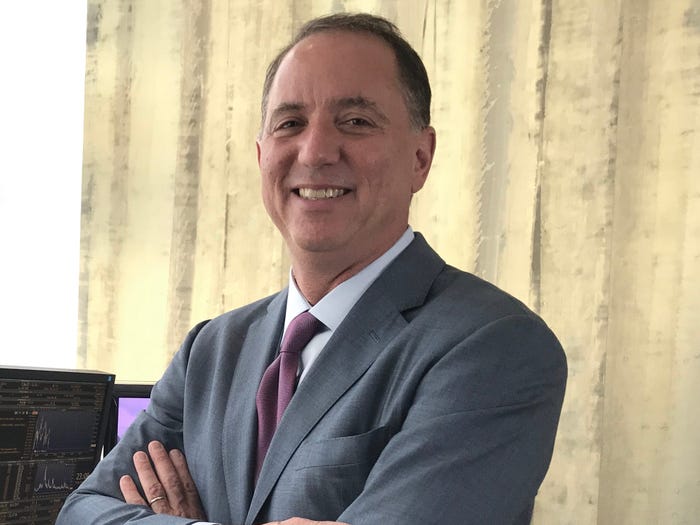
Rich Handler
 Jefferies Financial Group
About Rich Handler
Richard B. Handler is Jefferies’ Chief Executive Officer and a director since 2013; he has been with Jefferies Group since 1990 and has served as CEO since 2001, making him among the longest-tenured leaders on Wall Street. He holds an MBA from Stanford (1987) and a BA in Economics from the University of Rochester (1983), where he is Chairman of the Board of Trustees . In fiscal 2024 Jefferies delivered a 129% TSR, reflecting strong execution against its four performance pillars; company ROTE was 10.9% and net earnings were $669,273k, underscoring performance-linked pay outcomes .
Past Roles
| Organization | Role | Years | Strategic Impact |
|---|---|---|---|
| Jefferies Group | CEO; Chairman | CEO since 2001; Chairman since 2002 | Led growth and strategic direction, longest-serving CEO on Wall Street |
| Jefferies (post-combination) | CEO; Director | Director since 2013; CEO since 2013 | Continued leadership following Jefferies Group–Leucadia combination |
| Drexel Burnham Lambert | High Yield Bond Department | Pre-1990 | High yield markets experience foundational to Jefferies’ IB platform |
External Roles
| Organization | Role | Years | Strategic Impact |
|---|---|---|---|
| Landcadia Holdings II, III, IV (SPACs) | Director, Co-Chairman, President | 2019–2020; 2020–2021; 2021–2024 | Capital markets sponsorship, deal origination experience |
| University of Rochester | Chairman, Board of Trustees | Ongoing | Governance leadership at major academic institution |
| Handler Family Foundation | Chairman & CEO | Ongoing | Philanthropy, education access, environmental stewardship |
| Jefferies | Co-Chair, Global Diversity Council | Ongoing | Human capital and DEI leadership within firm |
Fixed Compensation
| Metric | FY 2022 | FY 2023 | FY 2024 |
|---|---|---|---|
| Base Salary ($) | 1,000,000 | 1,000,000 | 1,000,000 |
| Cash Bonus ($) | 10,000,000 | 8,400,000 | 12,000,000 |
| Stock Awards – Grant-Date Fair Value ($) | 20,432,812 | 14,283,382 | 9,356,074 |
| Option Awards – Grant-Date Fair Value ($) | — | — | — |
| Change in Pension Value ($) | 462,421 | — | 34,996 |
| All Other Compensation ($) | 25,002,191 (Leadership Continuity grant) | 2,452,648 (incl. dividend rights adj.) | 231,178 |
| Total Compensation ($) | 56,897,424 | 26,136,030 | 22,622,248 |
Notes:
- Directors who are employees do not receive separate director pay .
Performance Compensation
Incentive Mix, Targets, and 2024 Outcomes
| Component | Target Mix | 2024 Target | 2024 Actual Award | Vesting/Performance |
|---|---|---|---|---|
| Annual Cash Bonus | ~40% of incentive | CEO target $10m; cap $12m | $12,000,000 | Paid post-year review under four pillars |
| RSUs | ~30% of incentive | Sized post-year end | $9,000,000 (2024 performance award) | 3-year cliff vest; post-vest holding: ≥75% of after-tax shares for 3 years |
| PSUs | ~30% of incentive | Sized post-year end | $9,000,000 (2024 performance award) | 3-year performance; ROTE thresholds: 7.5% (75%), 10% (100%), 15% (150%) |
Four Pillars Weighting used to size awards: Financial Performance (65%), Capital Allocation (10%), Business Strength (10%), Leadership/Culture/Values (15%) . The Compensation Committee determined 2024 incentive compensation of $30m (cash $12m; PSUs $9m; RSUs $9m) based on exceeding expectations across pillars and CEO’s individual performance .
Grants of Plan-Based Awards (granted Dec 13, 2023 for FY 2023 performance)
| Grant Type | Grant Date | Threshold (shares) | Target (shares) | Max (shares) | Grant-Date Fair Value ($) |
|---|---|---|---|---|---|
| PSUs (ROTE-based) | 12/13/2023 | 89,976 | 119,968 | 179,952 | 3,620,016 |
| RSUs | 12/13/2023 | — | — | — | 5,736,058 (159,957 shares) |
Valuation and payout mechanics: PSUs earned based on 3-year ROTE; RSUs and PSUs fair value reflect illiquidity discounts for mandatory holding periods and probability of achieving ROTE goals .
Equity Ownership & Alignment
| Ownership Detail | Amount | Notes |
|---|---|---|
| Beneficial ownership (as of 1/27/2025) | 16,889,124 shares; 7.8% of class | Includes options and certain deferred/vested units per SEC rules |
| “Would beneficially own” assuming vesting at target | 18,823,584 shares; 8.6% | Assumes continued employment and target performance on unearned awards |
| Options exercisable (JEF) | 2,532,370 shares @ $22.69, expiring 12/5/2030 | In-the-money vs $79.14 market at 11/30/2024 |
| Options exercisable (VTS) | 228,933 shares @ $8.97, expiring 12/5/2030 | Related to Vitesse spin-off adjustments |
| Vested & non-forfeitable RSUs/deferred shares (not settleable in 60 days) | 8,774,666 shares | Reduces near-term sale capacity; settles per award terms |
| Shares in trusts/LLCs (shared voting/investment) | 1,396,034 shares | Family vehicles |
| Shares pledged (margin account) | 4,060,005 shares | Available as security for margin balances (pledging red flag) |
| Stock ownership guideline | 10x base salary ($10m) | CEO exceeds guideline; majority of direct comp is equity (≈68%) |
Anti-hedging: Directors and executives prohibited from hedging, short selling, or derivative transactions in company securities . Clawback: NYSE-compliant policy to recover excess cash/equity incentive comp (vested and unvested) upon restatement; 3-year lookback from determination date; applies to awards received on/after Oct 2, 2023 .
Outstanding Equity Awards (selected items, as of 11/30/2024)
| Category | Count | Market Value Basis |
|---|---|---|
| Unvested time-vest RSUs (JEF) | 163,846 | $12,966,756 @ $79.14/sh |
| Unearned PSUs (target, JEF) | 122,885 | $9,725,087 @ $79.14/sh |
| Other unvested RSU blocks (JEF) | 418,370; 616,719; 1,002,057 | $33,109,798; $48,807,140; $79,302,793 |
| Related unvested RSUs (VTS) | 46,420; 57,364 | $1,303,468; $1,610,771 @ $28.08/sh |
Employment Terms
| Scenario (as of 11/30/2024) | Estimated Payment ($) | Key Terms |
|---|---|---|
| Involuntary Termination following Change-in-Control | 185,713,127 | Includes $1,000,000 severance and vesting of unvested RSUs; double-trigger (no acceleration on COC alone) |
| Involuntary Termination (no COC) | 185,713,127 | Includes RSU vesting per policy |
| Death or Disability | 184,713,127 | RSUs vest automatically |
| Tax gross-up | None | No 280G excise tax gross-ups; no golden parachute severance; no acceleration on COC alone |
| Non-compete / Non-solicit / Garden leave | Not disclosed | — |
Deferred Compensation: Large legacy balances from pre-2013 deferrals; vested RSUs/deferred shares value $704,550,968 and self-directed deferred account $26,611,785 as of 11/30/2024; last self-directed deferral was in 2000 .
Board Governance
- Board service: Director since 2013; committee memberships: none (executive director) .
- Independence: Non-employee directors (other than SMBC nominee) deemed independent; Handler as CEO is not independent .
- Lead Independent Director: Linda Adamany; presides over executive sessions, agenda approvals, liaises with Chair/CEO; independent directors meet regularly in executive session .
- Board structure and attendance: Eight Board meetings in FY2024; all director nominees then serving attended ≥75% of meetings; all attended 2024 shareholder meeting .
- Chairman: Joseph S. Steinberg; presence of lead independent mitigates dual-role concerns of CEO as director .
- Director compensation: Employee-directors do not receive director pay .
Compensation Committee Analysis
- Committee composition: Independent directors; co-chairs Robert D. Beyer and Melissa V. Weiler (effective Jan 8, 2025); four meetings in FY2024 .
- Independent consultant: Pearl Meyer retained; committee determined no conflicts; peer benchmarking used to size targeted incentive comp .
- Program features: Strong pay-for-performance link; target majority performance-based comp; robust clawback; no option repricing; anti-hedging; 10x salary stock ownership guideline; no COC acceleration; no gross-ups .
Performance & Track Record
- Business strength achievements (2024): Ranked #5 global M&A ex-China; #6 global ECM ex-China; #6 combined M&A/ECM/lev fin globally; #3 financial sponsor M&A; notable transactions include $26B Diamondback–Endeavour merger, $18B SRS Distribution sale to Home Depot, $5B Darktrace sale to Thoma Bravo, $2B Vodafone Idea follow-on, $3B Italy sell-down of ENI/MPS, $1B NYCB equity raise .
- CEO contribution highlights: Global client engagement, recruiting, SMBC alliance cultivation, risk oversight, trading oversight, investor communications; resulted in 2024 incentive sizing above target .
Vesting Schedules and Insider Selling Pressure
- RSUs: 3-year cliff vest; post-vesting holding for ≥75% of after-tax shares for an additional 3 years, moderating near-term selling pressure .
- PSUs: 3-year performance period based on ROTE thresholds; payout 75%/100%/150% at 7.5%/10%/15% ROTE, respectively .
- Pledging: 4,060,005 shares are in a margin account as collateral, a governance red flag that can amplify selling pressure in stress scenarios .
- Anti-hedging: Prohibits hedging/derivatives/short selling by directors and executives .
Investment Implications
- Alignment is strong: Very high equity exposure (≈68% of direct compensation historically in equity), stringent ownership/holding requirements, and clawback enhance long-term orientation and reduce short-termism .
- Pay-for-performance discipline: Four-pillar framework with explicit ROTE PSU metrics, capped cash bonuses ($12m), and post-year-end sizing supports pro-cyclical incentive alignment; 2024 incentive of $30m reflects outperformance and 129% TSR .
- Retention risk: Large deferred/vested RSU balances and deep in-the-money options expiring 2030 suggest continued retention incentives; however, pledged shares introduce incremental risk under adverse market moves .
- Change-in-control economics: No single-trigger acceleration and no tax gross-ups mitigate governance concerns; double-trigger treatment with material RSU value creates meaningful event-driven exposure but avoids parachute optics .
- Trading signals: The mandatory holding periods and anti-hedging policy dampen immediate sale pressure after vest; monitor Form 4 activity and margin account dynamics given pledged shares to assess near-term flows and potential margin-related selling .
