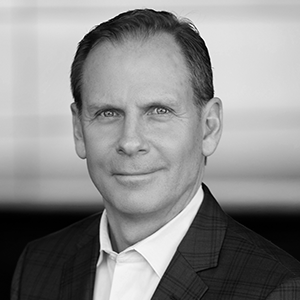
Martin Schroeter
 Kyndryl Holdings
About Martin Schroeter
Chairman and Chief Executive Officer of Kyndryl since 2021; age 60 as of 2025, with prior senior leadership roles at IBM including SVP Global Markets (2018–2020) and CFO (2014–2017) . Kyndryl’s FY2025 performance under his tenure: revenue $15.1B, adjusted EBITDA $2.5B, adjusted operating cash flow $968M, total signings $18.2B; 3-year TSR of 150% (top decile vs S&P MidCap 400) . External affiliations include Business Roundtable, Business Council, Council on Foreign Relations, and the U.S.-India CEO Forum .
Past Roles
| Organization | Role | Years | Strategic Impact |
|---|---|---|---|
| IBM | Senior Vice President, Global Markets | 2018–2020 | Led global sales, customer relationships, worldwide geographic operations, marketing and communications . |
| IBM | Senior Vice President & Chief Financial Officer | 2014–2017 | Led finance; financial expertise cited in Kyndryl board biography . |
| IBM Global Financing | General Manager | Not specified | Managed >$37B asset base, global financing risk/return discipline . |
| IBM | Various roles (Japan, U.S., Australia) | Not specified | Global leadership and operational experience in technology services . |
External Roles
| Organization | Role | Years | Notes |
|---|---|---|---|
| Business Roundtable | Member | Current | Senior U.S. business leaders forum . |
| Business Council | Member | Current | Executive leadership policy forum . |
| Council on Foreign Relations | Member | Current | Global policy organization . |
| U.S.-India CEO Forum | Member | Current | Bilateral business advisory forum . |
Fixed Compensation
| Component | FY2023 | FY2024 | FY2025 |
|---|---|---|---|
| Base Salary ($) | $1,000,000 | $1,075,000 | $1,175,000 |
| Target Bonus % of Salary | 200% | 200% | 200% |
| Actual Annual Cash Bonus ($) | $2,000,000 | $3,483,442 | $2,782,562 |
| Perquisites & Other ($) | $155,321 | $602,814 | $346,139 |
| CEO Pay Ratio | 354:1 (FY2025) | — | — |
Notes:
- FY2025 annual bonus funded by revenue, adjusted EBITDA, and corporate citizenship metrics; Martin’s AIP target was 200% of salary with payout determined at 118.4% of target pool .
- FY2025 personal security cost component disclosed: $42,233; no personal aircraft use in FY2025 (policy allows up to $200,000 incremental cost) .
Performance Compensation
Annual Incentive Plan (AIP) — FY2025
| Metric | Weight | Target | Actual | Payout vs Target | Vesting |
|---|---|---|---|---|---|
| Adjusted EBITDA | 60% | $2.5B | $2.6B (adjusted per plan) | 134% | Cash paid after FY close . |
| Revenue | 30% | $15.3B | $15.2B (adjusted per plan) | 94% | Cash paid after FY close . |
| Corporate Citizenship | 10% | Qualitative goals | Achieved per plan | 100% | Cash paid after FY close . |
Weighted payout 118.4%; Martin’s FY2025 AIP payout $2,782,562 .
Long-Term Incentives (PSUs/RSUs) — FY2025 Grant Design
| Metric (PSU) | Weight | Target/Payout Curve | Vesting Terms |
|---|---|---|---|
| Adjusted Operating Cash Flow | 50% | 80% threshold (25% of target); 100% target (50%); 120% max (75%) | 3-year performance period; committee certification on achievement . |
| Total Signings | 25% | 80% threshold (5%); 98–102% target (25%); 120% max (37.5%) | 3-year performance period . |
| Relative TSR vs S&P MidCap 400 | 25% | 25th percentile (12.5%); 50th (25%); 75th (37.5%); capped at 100% if absolute TSR negative | 3-year performance period; valuation cap updates described . |
| RSUs | 35% of LTI | Time-based | 4 equal annual installments starting grant anniversary . |
FY2025 grants (6/3/2024): RSUs 152,059 units; PSUs 283,042 target units; PSU tranches by metric per plan; RSUs vest ratably over four years .
Long-Term Incentive Value Mix — FY2025
| Component | Value ($) | % of Total LTI |
|---|---|---|
| RSUs | $4,025,000 | 35% |
| PSUs – AOCF | $3,737,500 | 32.5% |
| PSUs – Signings | $1,868,750 | 16.25% |
| PSUs – Relative TSR | $1,868,750 | 16.25% |
| Total LTI | $11,500,000 | — |
Historical PSU vesting example: “Launch PSUs” vested 50% on achieving 1.25x Initial Share Price (90-day average) during 12/16/2021–12/15/2024; Martin earned 152,170 shares; remainder forfeited .
Equity Ownership & Alignment
| Measure | Value |
|---|---|
| Shares owned directly/indirectly | 1,165,810 |
| Options exercisable + RSUs vesting within 60 days | 636,805 (481,535 options exercisable; 155,270 RSUs vesting) |
| Total beneficial ownership | 1,802,615 |
| Shares outstanding (record date) | 231,422,037 |
| Ownership as % of shares outstanding | ~0.78% (1,802,615 / 231,422,037) |
| Stock ownership guideline | 6x base salary for CEO; retention of 100% of shares until met |
| Compliance with guidelines | All NEOs in compliance |
| Hedging/Pledging | Prohibited for directors/executives |
| Clawbacks | SEC-compliant financial-statement clawback and supplemental misconduct clawback |
Outstanding Equity and Vesting (as of 3/31/2025)
| Instrument | Grant Date | Unvested/Outstanding | Terms |
|---|---|---|---|
| RSUs | 12/16/2021 | 59,174 units; vest fully 12/16/2025 | |
| RSUs | 8/1/2022 | 173,105 units; vest 8/1/2025 and 8/1/2026 | |
| RSUs | 8/1/2023 | 206,153 units; vest 8/1/2025, 8/1/2026, 8/1/2027 | |
| RSUs | 6/3/2024 | 152,059 units; vest over four years | |
| PSUs (max display) | 8/1/2023 | 755,798 units (performance-based; performance between target and max as of 3/31/2025) | |
| PSUs (target/max display) | 6/3/2024 | 353,965 units (performance-based; target for AOCF, above-target for Signings/TSR as of 3/31/2025) | |
| Stock Options | 12/16/2021 | 481,535 exercisable; 160,512 unexercisable; $17.78 strike; expire 12/16/2031; four-year vest |
FY2025 vesting realized: 366,612 shares vested (RSUs and PSUs); no option exercises .
Employment Terms
| Scenario (as of last business day FY2025) | Cash Severance | Equity Acceleration | Benefits | Other |
|---|---|---|---|---|
| Covered Termination (without Cause) | $5,182,562 | — | $45,001 (group health 18 months) | $7,500 financial advisory; $3,355 outplacement |
| Covered Termination following Change-in-Control | $9,600,000 | $51,994,977 | $45,001 | $7,500 financial advisory; $3,355 outplacement |
| Qualifying Retirement | — | $15,952,938 (continued RSU vesting per plan) | — | — |
| Disability | — | $51,994,977 | — | — |
| Death | — | $51,994,977 | — | — |
Key plan terms:
- Severance Plan: CEO receives 24 months’ base salary for covered termination; after Change-in-Control, 24 months’ base plus 2x target annual incentive; pro-rata bonus; 18 months health benefits; outplacement; financial advisory (Band B+) .
- “Qualifying retirement”: age ≥55 and ≥10 years of service (IBM service counts); continued RSU vesting subject to conditions; PSU prorated payout if retirement ≥1 year after grant .
- Non-compete: 12 months post-employment (24 months if continued RSU vesting); non-solicit 12 months (2 years upon retirement) .
- Golden parachute tax treatment: 280G “best net” cutback as needed .
Deferred compensation (Excess Plan):
- Company automatic contribution (FY2025): $257,307; FY2025 earnings $7,349; aggregate balance $545,491 (Kyndryl Excess Plan) .
Board Governance
- Dual role: Chairman & CEO, with Lead Independent Director (Stephen A.M. Hester) providing robust independent oversight (agenda/meeting approval, liaison role, presiding in executive sessions) .
- Committees: All independent; Martin does not receive separate director compensation .
- Board/committee attendance: Board met 6 times; committees met 16 times; 100% attendance in FY2025 .
Director Compensation (for context)
- Martin receives no additional compensation for board service (CEO/Chairman) .
Compensation Structure Analysis
- Pay mix emphasizes at-risk equity: CEO LTI $11.5M in FY2025 (RSUs/PSUs), with ~76% of total target compensation at-risk via LTI .
- AIP metrics tied to external reporting (revenue, adjusted EBITDA) and corporate citizenship; PSU metrics emphasize adjusted operating cash flow, signings, and relative TSR—TSR payouts capped if absolute TSR negative .
- No tax gross-ups; stringent clawbacks; no single-trigger equity/severance; hedging/pledging prohibited; option repricing not allowed without stockholder approval .
Say-on-Pay & Shareholder Feedback
- FY2024 Say-on-Pay support ~96%; CHC Committee maintained core program structure in response to support and engagement feedback .
- FY2023 Say-on-Pay support ~88% .
Investment Implications
- Alignment: Strong pay-for-performance design tied to adjusted EBITDA (AIP) and multi-year PSU metrics (AOCF, signings, relative TSR), plus ownership/retention policies (6x salary ownership requirement; clawbacks; no hedging/pledging) support management-stockholder alignment and reduce governance risk .
- Vesting calendar: Material RSU vesting dates (August/December), PSU certifications (3-year cycles), and option overhang could create episodic insider selling windows and supply pressure near vest dates; trading policy imposes quarterly windows and pre-approval mitigating optics .
- Dual-role oversight: Chairman/CEO structure mitigated by a robust Lead Independent Director role and fully independent committees; continued investor support (96% Say-on-Pay) suggests governance acceptable to shareholders .
- Retention: Severance/change-in-control economics provide stability while keeping payouts within market norms (no single-trigger; 280G “best net” cutback), lowering sudden-departure risk without aggressive entrenchment .
- Forward LTI simplification: FY2026 PSU design shifts to cumulative 3-year adjusted operating cash flow with TSR as a modifier, sharpening cash generation focus—material for FCF/valuation thesis .