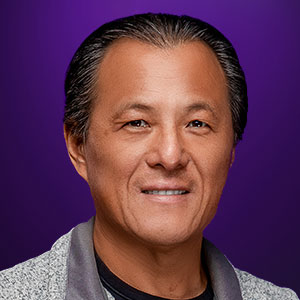
Anthony Hsieh
 loanDepot
About Anthony Hsieh
Founder of loanDepot with 35+ years in mortgage lending; currently Executive Chairman, Mortgage Operations (appointed March 2025) and designated to serve as interim CEO if no permanent CEO is in place after the 2025 annual meeting; age 60; director since February 2021; previously CEO (2021–2022) and Executive Chairman (2022–2023) . Investor-relevant performance context: company TSR converted an initial $100 to $35.06 (2022), $74.79 (2023), and $43.34 (2024), with net losses of $(610.4)M, $(235.5)M, and $(202.2)M respectively; management achieved positive adjusted net income in Q3 2024 triggering PSU vesting for executives .
Past Roles
| Organization | Role | Years | Strategic impact |
|---|---|---|---|
| loanDepot.com, LLC | Chief Executive Officer | 2009–2022 | Led growth of national mortgage platform; founded the company in 2009 . |
| loanDepot, Inc. | Chief Executive Officer | 2021–2022 | Public company leadership during market downturn . |
| loanDepot, Inc. | Executive Chairman | 2022–2023 | Board leadership and oversight . |
| loanDepot, Inc. | Executive Chairman, Mortgage Operations; interim CEO designation | 2025–present | Operational leadership; will serve as interim CEO if a permanent CEO isn’t appointed post-2025 AGM . |
| Home Loan Center (later part of LendingTree) | Founder/Leader | ~2001–2007 | Built first national online lender with full-spectrum mortgage products; led post-merger integration with LendingTree for three years . |
| LoansDirect.com | Owner/Leader | ~1989–1999 | Early digital mortgage brokerage platform . |
External Roles
| Organization | Role | Years | Notes |
|---|---|---|---|
| — | — | — | No other public company directorships disclosed . |
Fixed Compensation
| Component | 2024 Amount/Terms | 2025+ Terms | Notes |
|---|---|---|---|
| Base salary (executive) | — | $1 annual salary (Executive Chairman, Mortgage Operations) . | Effective March 2025 . |
| Monthly expense reimbursement | — | $75,000 per month . | Per March 2025 letter agreement . |
| Director retainer (cash) | $125,000 . | Continues while serving as director . | Non-employee director policy: $250,000 total (50% cash, 50% RSUs) . |
| Director equity (RSUs) | $124,999 grant date fair value; 60,386 RSUs granted 6/6/24 vesting on 8/31/24, 11/30/24, 2/28/25, 5/31/25 . | Continues while a director . | Grant price basis $2.07 on 6/6/24 . |
| Perquisites/other | $461,535 (legal/filing expenses and medical premium reimbursements) . | Not disclosed | Includes HSR and various legal expenses; medical premiums per 4/4/2023 settlement . |
Performance Compensation
| Award | Metric | Weighting | Target | Actual | Payout/vesting |
|---|---|---|---|---|---|
| 2025 Performance Stock Units (initial 1.5M PSUs) | Stock price hurdles using 30-trading day average closing price | Equal tranches at $3 / $5 / $7 | Achieve each price hurdle within 2 years | Not yet applicable | Vests in equal increments upon each hurdle; potential additional 1.5M PSUs on same terms if still interim CEO as of 3/1/2026 . |
Notes:
- Company-wide 2024 executive PSU goal (not specific to Hsieh) was one quarter of positive adjusted net income; achieved in Q3’24; those PSUs vested one-third at achievement, remainder vest 4/15/26 and 4/15/27 .
Equity Ownership & Alignment
| Item | Detail |
|---|---|
| Class A shares beneficially owned | 10,262,783 (includes 15,097 RSUs vesting within 60 days of record date) . |
| Class C shares beneficially owned | 118,751,788 (97.2% of Class C); held across entities he controls (JLSSAA Family Trust, JLSA, LLC, Trilogy Mortgage Holdings, TMI 6, TMI 7, TMI 8) . |
| Combined voting power | 50.1% due to 5:1 voting rights on Class C (and Class D) shares . |
| Ownership as % of Class A | 9.4% of Class A . |
| Control structure | As manager of Trilogy entities, Hsieh has voting control of Class C shares held for executives/directors until conversion to Class A; he has pecuniary interest in a portion of TMI 6 . |
| Hedging/pledging | Company policy prohibits hedging and pledging of loanDepot stock and use of margin accounts for insiders . |
| Exchange/registration rights | Class C/Holdco Units exchangeable 1:1 into Class A (subject to conditions/approvals); registration rights require company to maintain effective shelves and support sales by Hsieh and Parthenon; 2024 registration obligations noted . |
Implications:
- Large voting control and exchange rights can impact float and governance; anti-pledging policy reduces forced-sale risk, but registration rights facilitate potential selling activity when windows open .
Employment Terms
- Role and pay: Executive Chairman, Mortgage Operations (March 2025) with $1 base salary, $75,000 monthly expense reimbursement, and 1.5M PSUs with $3/$5/$7 price hurdles over two years; if still interim CEO by March 1, 2026, an additional 1.5M PSUs on same terms; continues to receive director compensation while role is expected to be temporary .
- Severance/COC: No individual severance or change-in-control economics for Hsieh disclosed in the 2025 proxy; company-wide clawback policy applies to executives .
- Clawback: NYSE 303A.14-compliant policy; recoupment of excess incentive comp over the three fiscal years preceding a required restatement; SOX 304 reimbursement provisions also noted .
Board Governance
- Status: Executive Chairman of the Board; Class III director (term ends 2027); Board designates him as Chairman under the Stockholders Agreement; no Lead Independent Director permitted without Hsieh Stockholders’ prior written approval .
- Controlled company: Hsieh Stockholders hold >50% voting power; company relies on NYSE controlled company exemptions (not required to have majority independent board; nom/gov and compensation committees currently independent) .
- Committees: No committee assignments disclosed for Hsieh; Audit, Compensation, and Nominating/Governance composed of independent directors .
- Executive sessions and attendance: Hsieh presided over executive sessions of non-management directors in 2024; all directors attended at least 75% of meetings; Board held 14 meetings in 2024 .
Director Compensation
| Year | Cash Fees | Stock Awards (Grant-date FV) | All Other Comp | Total |
|---|---|---|---|---|
| 2024 | $125,000 | $124,999 | $461,535 | $711,534 |
Program features:
- Standard non-employee director policy: $250,000 annually split 50% cash/50% RSUs; committee chair retainers: Audit $25,000; Compensation $20,000; Nominating/Gov $15,000; Lead Independent $75,000 .
- 6/6/24 grant: 60,386 RSUs vesting quarterly through 5/31/25 .
Compensation Structure Analysis
- Shift toward performance-based pay: For his 2025 executive role, compensation is almost entirely performance-levered via stock-price-hurdle PSUs (no cash bonus or equity without hurdles), aligning with shareholder outcomes .
- Guaranteed/expense elements: $1 salary is symbolic; $75,000 monthly allowance is sizable fixed cash, but structured as expense reimbursement .
- Company-wide program context: 2024 annual bonus pool funded at 65% of target given execution against strategic priorities during a severe market downturn; 2024 executive PSUs were tied to a one-quarter positive adjusted net income hurdle, achieved in Q3’24, with multi-year vesting for retention .
Related Party Transactions
- Stockholders Agreement: Ensures Hsieh remains Chairman and a Class III director, includes board designation and committee designation rights, and restricts adding a lead independent director without Hsieh Stockholders’ consent .
- Settlement and Cooperation Agreement (amended 3/6/2025): Extends standstill/voting terms through the 2026 nomination window; sets 2025 Class I nominees; transitions Martell off the Board .
- Tax Receivable Agreement (TRA): Company pays 85% of realized/deemed tax benefits from basis step-ups to continuing members (including Hsieh) and Parthenon; estimated $217.6M in aggregate payments through 2039 under simplifying assumptions; $2.6M paid for 2022 ($1.2M to Hsieh; $1.4M to Parthenon); early termination/change of control can accelerate payments .
- Company-paid expenses for Hsieh: 2024 “All Other Compensation” included HSR filing costs, legal expenses (S-3, Section 16/13D, antitrust, Corporate Transparency Act matters), and medical premiums per 4/4/2023 settlement .
Equity Ownership & Alignment (Detail Table)
| Class | Shares Beneficially Owned | % of Class | Voting rights per share | Notes |
|---|---|---|---|---|
| Class A | 10,262,783 | 9.4% | 1 | Includes 15,097 RSUs vesting within 60 days . |
| Class C | 118,751,788 | 97.2% | 5 | Held via entities controlled by Hsieh; he has voting/investment power; pecuniary interest only in part of TMI 6 . |
| Combined voting power | — | 50.1% | — | Based on aggregate multi-class vote . |
Policy constraints:
- Anti-hedging/pledging policy prohibits hedging, pledging, and margin accounts for insiders .
- Registration/Exchange framework enables conversions of Class C/Holdco Units into Class A and facilitates registered sales (shelf/demand/piggyback) .
Employment Terms (Vesting Schedules)
| Award | Grant/Term | Vesting |
|---|---|---|
| Director RSUs (60,386 granted 6/6/24) | 6/6/2024 | Vest 8/31/24, 11/30/24, 2/28/25, 5/31/25 . |
| 2025 PSUs (1.5M initial) | Effective March 2025 | Vest in three equal tranches upon 30-day average stock price reaching $3, $5, $7 within two-year period; potential additional 1.5M PSUs if interim CEO as of 3/1/2026 . |
Say-on-Pay & Shareholder Feedback
- Say-on-Pay support: Approximately 98.7% approval for 2023 executive compensation (voted in 2024), reinforcing shareholder support for compensation approach .
Risk Indicators & Red Flags
- Governance/control: Controlled company with Hsieh at 50.1% combined voting power; Stockholders Agreement entrenches his Chair role and limits appointment of a Lead Independent Director without Hsieh’s consent .
- TRA obligations: Potentially large, accelerated cash outflows under TRA in change-of-control/termination scenarios; could affect liquidity .
- Selling overhang: Registration rights and exchange mechanics could facilitate insider sales; company bore legal costs linked to registration/compliance in 2024; however, anti-pledging policy reduces margin-call risk .
Investment Implications
- Alignment: The $1 salary and stock-price-hurdle PSUs (at $3/$5/$7) create direct alignment with equity upside; continued director RSUs and the anti-pledging policy support alignment and reduce forced-sale risk .
- Control dynamics: 50.1% voting control and Stockholders Agreement provisions centralize governance influence with Hsieh, which can be stabilizing in execution but raises independence and minority-protection concerns (no Lead Independent Director) .
- Overhang/liquidity: TRA and registration/exchange rights point to potential future cash outflows and share supply; monitor S-3 shelf usage and Form 4 activity for timing of sales; the company funded insider-related legal/filing expenses in 2024, signaling active capital markets readiness .
- Execution track record: Company achieved positive adjusted net income in Q3’24, satisfying performance PSU criteria, but multi-year TSR remains volatile amid sector headwinds; Hsieh’s renewed operational role increases accountability for margin expansion and growth as housing/mortgage cycles normalize .