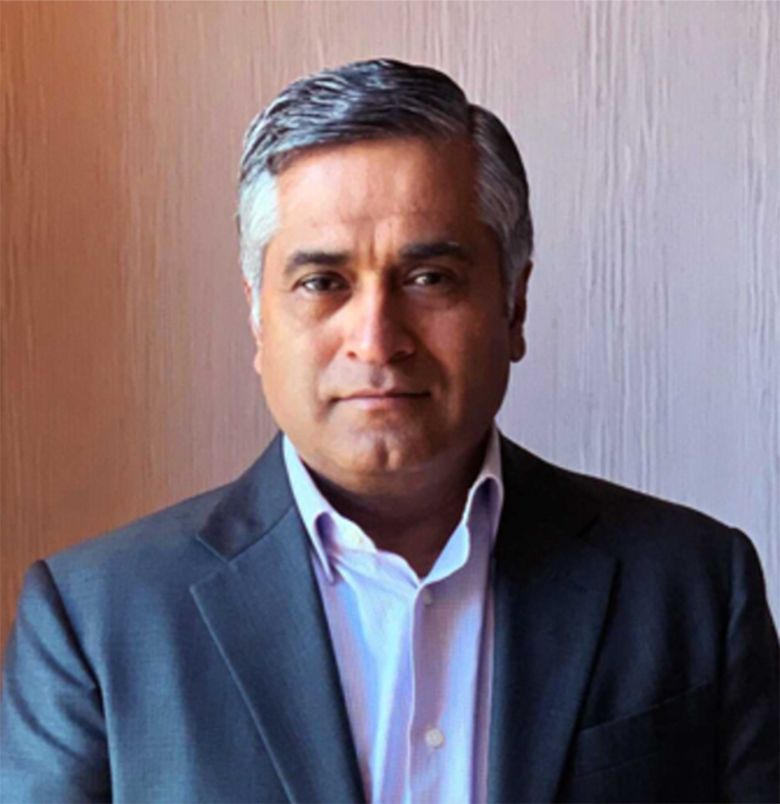
Dushyant Sharma
About Dushyant Sharma
Founder of Paymentus; Chairman, President and CEO; age 56; Bachelor of Engineering in Computer Science and Engineering from Marathwada University . Director since 2011 and Chairman since December 2013 . 2024 incentive outcomes hit or exceeded targets across all financial metrics (Revenue, Contribution Profit, Adjusted EBITDA, Adjusted EBITDA-LCS), with payouts at 120% of target and bonuses paid in March 2025 . Revenue expanded materially across FY 2021–FY 2024; EBITDA increased over the same period (see Performance Context table).
Past Roles
| Organization | Role | Years | Strategic Impact |
|---|---|---|---|
| Paymentus Holdings, Inc. | Founder; Chairman; President & CEO | Director since 2011; Chairman since Dec-2013; CEO since inception | Established and scaled billing and payment technologies platform |
| Derivion Corporation | Co-founder | 1998–2001 | Built SaaS electronic billing company; enabled digital bill presentment |
| Metavante Corporation | Executive (post-acquisition employment) | 2001–2004 | Continued leadership within banking/payment tech provider after Derivion acquisition |
External Roles
- No external public company directorships for Mr. Sharma are disclosed in the proxy .
Fixed Compensation
| Metric | FY 2023 | FY 2024 |
|---|---|---|
| Base Salary ($) | 350,000 | 358,551 |
| Target Incentive Opportunity ($) | — | 695,404 (2024 Program target) |
| Target Incentive (FY 2025 planning) ($) | — | 716,267 |
| All Other Compensation ($) | 13,838 | 16,174 |
| Total Reported Compensation ($) | 1,121,188 | 1,209,210 |
Notes:
- Target bonus percentage was not disclosed; target amounts are presented in dollars .
Performance Compensation
| Component | Weighting | Target | Actual Achievement | Payout % | Vesting/Payment Timing |
|---|---|---|---|---|---|
| Revenue | 20% (equal-weighted program) | Not disclosed | 118.6% of target | 120.0% | Paid Mar-2025 |
| Contribution Profit (non-GAAP) | 20% | Not disclosed | 111.5% | 120.0% | Paid Mar-2025 |
| Adjusted EBITDA | 20% | Not disclosed | 134.7% | 120.0% | Paid Mar-2025 |
| Adjusted EBITDA less Capitalized Software (Adjusted EBITDA-LCS) | 20% | Not disclosed | 179.9% | 120.0% | Paid Mar-2025 |
| Individual Performance | 20% | Discretionary range 0–120% | 120.0% | 120.0% | Paid Mar-2025 |
| Program Outcome (CEO) | — | Target $695,404 | — | 120.0% | Bonus paid: $834,485 |
Program design details:
- Minimum thresholds: Revenue/CP at 90% for payout; Adjusted EBITDA/Adjusted EBITDA-LCS at 80%; overachievement up to +10% payout per component .
Equity Ownership & Alignment
| Item | Detail |
|---|---|
| Total Beneficial Ownership | 22,635,893 Class B shares; 1 Class A share via Ashigrace; additional trusts as detailed in footnote (3) |
| Ownership % of Class B | 24.3% |
| Percent of Total Voting Power | 23.4% (Class A 1 vote; Class B 10 votes) |
| Options (Exercisable) | 3,304,870 options on Class B at $8.66; expiration 4/8/2029; fully vested |
| Options (Unexercisable) | None |
| RSUs (Unvested) | 1,100,000 RSUs granted 7/2/2025; quarterly vesting begins 8/15/2025; accelerated vesting upon death/disability, termination without cause or for good reason, or certain board nomination outcomes while not an employee/consultant |
| Hedging/Pledging | Prohibited: short sales; options/derivatives; hedging transactions; pledging or margin accounts |
| Ownership Guidelines | Not disclosed in the proxy for executives; directors/executives collectively own significant equity, aligning interests |
RSU vesting schedule: one-sixteenth each Quarterly Vesting Date (Feb 15, May 15, Aug 15, Nov 15) starting Aug 15, 2025, subject to continued service; with enumerated acceleration triggers per 8-K .
Employment Terms
| Provision | Outside Change-in-Control (CIC) Period | During CIC Period (3 months before to 1 year after CIC) |
|---|---|---|
| Base Pay Severance | 12 months of base salary (CEO) | Lump sum equal to 100% of base salary |
| Bonus | Prorated annual target bonus (CEO) | Prorated annual target bonus |
| COBRA | Up to 12 months company-paid (CEO) | Up to 12 months company-paid (CEO) |
| Equity | — | 100% acceleration of unvested time-based equity awards upon qualifying termination |
| 280G Tax Treatment | Best-net cutback; no excise tax gross-up | |
| At-will Status | Confirmatory employment letter; at-will | |
| Current Base Salary | $371,315 | |
| Target Incentive (FY 2025) | $716,267 | |
| Restrictive Covenants | RSU agreement addendum includes confidentiality obligations; compliance notices |
Definitions summarized:
- “Cause” and “Good Reason” are defined in the severance agreements, including material pay reduction, relocation >35 miles, failure to assume agreement by successor, or material breach; notice and cure periods apply .
Board Governance
- Board class: Class III director (continuing); founder; Chairman since Dec 2013; not independent given CEO role .
- Dual role implications: CEO + Chairman; Board appointed Lead Independent Director (Robert Palumbo) to enhance independent oversight and executive sessions; rationale and responsibilities documented .
- Controlled company status: AKKR controls majority voting power; company elects to comply with NYSE independence requirements despite eligible exemptions .
- Committee roles: Mr. Sharma is not listed on audit, compensation, or nominating and governance committees; these committees are independent and chaired by other directors (Audit: Ingram; Compensation: Palumbo; Nominating: Palumbo) .
- Meeting attendance: Each director attended at least 75% of board and committee meetings in 2024; seven directors attended the 2024 annual meeting .
- Director pay: Sharma received no separate director compensation as an employee director .
Related Party Transactions and Policies
- Stockholders agreement: Board nomination rights for AKKR and the Sharma parties; Mr. Sharma’s nomination rights while ≥5% ownership or serving as CEO .
- Family employment: Mr. Sharma’s spouse employed as a vice president (≈$0.3m compensation in 2024); director Gary Trainor’s son employed as a vice president (≈$0.4m compensation) and received RSUs ≈$0.4m (5-year vest) .
- Clawback: Policy for recovery of erroneously awarded incentive compensation adopted Oct 2023; applies to prior 3 fiscal years preceding a required restatement; no restatement in 2024 .
- Insider trading policy: 10b5‑1 plan requirements; prohibitions on short sales/derivatives/pledging/margin accounts .
Performance Context
| Metric | FY 2021 | FY 2022 | FY 2023 | FY 2024 |
|---|---|---|---|---|
| Revenue ($USD) | 395,524,000 | 497,001,000 | 614,490,000 | 871,745,000 |
| EBITDA ($USD) | 14,268,000* | 6,466,000* | 27,344,000* | 53,755,000* |
| EBITDA Margin (%) | 3.6073%* | 1.301%* | 4.4498%* | 6.1663%* |
Values marked with * retrieved from S&P Global.
Risk Indicators & Red Flags
- Hedging/pledging prohibited by policy (reduces alignment risk from collateralization) .
- No 280G tax gross-ups; best-net cutback reduces golden parachute risk .
- Section 16 compliance: reports filed timely in 2024 .
- Options: large fully vested option position (3,304,870 at $8.66, expiring 2029) could create liquidity decision points but no repricings since IPO .
- Controlled company governance; mitigated by current majority independent board and independent committees, plus Lead Independent Director structure .
Compensation Committee Analysis
- Compensation decisions made by independent Compensation Committee (chair Palumbo) with Compensia as advisor; peer group benchmarking referenced, but specific peer group composition not disclosed .
- Annual incentive plan uses four financial metrics plus individual performance, with clear payout matrices and thresholds; payouts reflect strong execution in 2024 .
Investment Implications
- Alignment and retention: The July 2025 grant of 1,100,000 RSUs to Sharma addresses prior absence of RSUs under the 2021 plan, improves market alignment, and introduces quarterly vesting with multiple acceleration triggers—supportive of retention yet potentially increasing future selling pressure as tranches vest .
- Control and governance: Sharma’s 23.4% total voting power and AKKR’s majority voting control define a controlled-company context, but the board currently maintains independent committees and a Lead Independent Director to mitigate dual-role risks .
- Pay-for-performance: 2024 incentives tied to Revenue, CP, and profitability metrics all achieved at 120% payout, consistent with strong operational performance and improving EBITDA profile; continued performance-based design and clawback policy strengthen alignment .
- Liquidity overhang: Fully vested deep in-the-money options and new RSU cadence could translate to periodic sales; hedging/pledging prohibitions mitigate leverage risks, but investors should monitor 10b5‑1 plan adoption and Form 4 activity for signals .