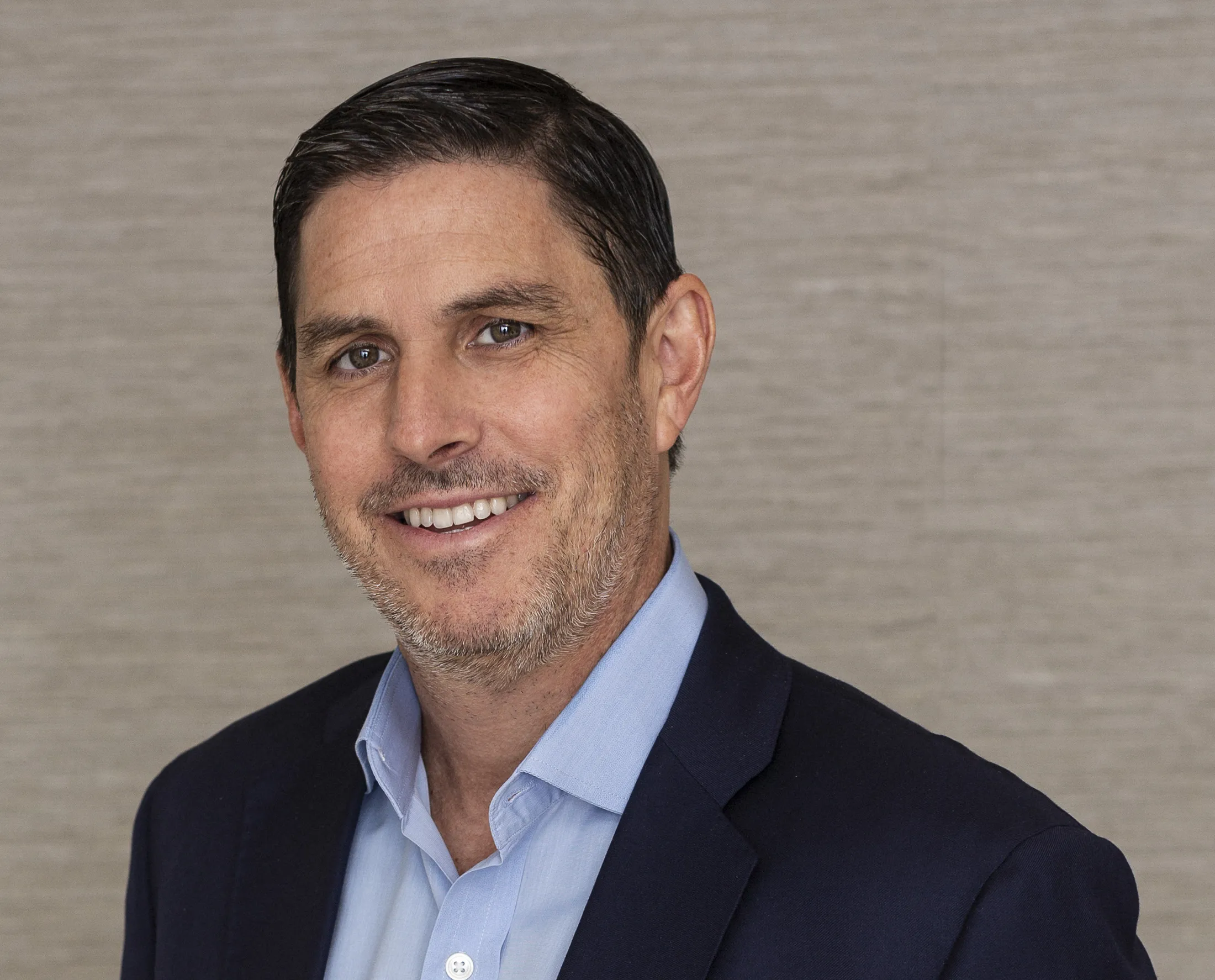
Andrew Bednar
About Andrew Bednar
Andrew Bednar is a Founding Partner of Perella Weinberg, Chief Executive Officer since January 2023, and a member of the board since June 2021; he previously served as Co‑President from March 2020 to January 2023 . Age 57, he holds a BS and MBA from Cornell University and a JD from Columbia University; earlier roles include Head of U.S. M&A at Bank of America and Managing Director at Goldman Sachs, beginning his career at Cravath in 1994 . Performance under his tenure shows cumulative TSR of 200 by 2024 versus 101 in 2023 and 79 in 2022, with revenues of $632m in 2022, $649m in 2023, and $878m in 2024; net income (loss) was $(32)m, $(112)m, and $(89)m respectively . The company cites revenue, adjusted net income, adjusted operating margin, and TSR as the most important measures linking pay to performance .
Past Roles
| Organization | Role | Years | Strategic Impact |
|---|---|---|---|
| Perella Weinberg | Founding Partner | Since 2006 | Founding leader; deep advisory business experience |
| Perella Weinberg | Co‑President | Mar 2020–Jan 2023 | Executive leadership; U.S. advisory co‑head prior to 2013 |
| Perella Weinberg | Chief Executive Officer | Jan 2023–present | CEO role separated from Chairman to enhance governance continuity |
External Roles
| Organization | Role | Years | Strategic Impact |
|---|---|---|---|
| PWP Capital Holdings LP (general partner) | Chief Executive Officer | Current | Oversight of former asset management business of PWP OpCo |
| Bank of America | Head of U.S. M&A | Until 2006 | Led U.S. M&A; member of Investment Banking Executive Committee |
| Goldman Sachs & Co. | Managing Director | Until 2006 | Senior investment banking leadership experience |
| Cravath, Swaine & Moore LLP | Attorney | Began 1994 | Legal foundation in corporate practice |
Board Governance
- Director since June 2021; currently a Class I director (reclassified from Class II in April 2025) and stood for election for the 2028 term .
- Not an independent director; the board is a “controlled company” under Nasdaq rules and does not maintain a majority of independent directors; independent committees exist and an independent director presides over executive sessions. Chairman and CEO roles are separated (Chairman: Peter A. Weinberg) .
- Committees: Audit (Ollila, Sherburne, Fascitelli, Mugford; Ollila Chair) and Compensation (Sherburne Chair; Ollila, Mugford, Fascitelli); Bednar is not listed as a member of either committee .
- Meeting cadence and attendance: Board met 4 times in 2024; Audit 7; Compensation 5; each director attended at least 75% of meetings .
Fixed Compensation
Multi‑year reported compensation (Summary Compensation Table):
| Metric ($) | 2022 | 2023 | 2024 |
|---|---|---|---|
| Base Salary | 500,000 | 500,000 | 500,000 |
| Cash Bonus | 2,527,750 | 4,846,000 | 22,895,500 |
| Equity Bonus Awards (ASC 718 FV) | 2,807,505 | 1,032,935 | 2,999,629 |
| Long‑Term Incentive Awards | — | 6,015,135 | — |
| Aggregate Incremental Accounting Expense | — | — | 975,555 |
| All Other Compensation | 10,500 | 10,500 | 10,500 |
| Total | 5,845,755 | 12,404,570 | 27,381,184 |
Additional presentation of annual compensation as viewed by the Compensation Committee:
| Component | 2022 | 2023 | 2024 |
|---|---|---|---|
| Cash (Annual Incentive) | 2,527,750 | 4,846,000 | 22,895,500 |
| RSUs (Annual Incentive) | 1,097,250 | 2,904,000 | 3,604,500 |
| Total Annual Compensation View | 4,125,000 | 8,250,000 | 27,000,000 |
Notes:
- 2024 RSUs for annual incentive bonuses vest in equal installments over three years; grant‑date fair value for 2024 performance RSUs: $3,636,553 (Bednar) .
- 2024 cash bonus included a $7,000,000 portion subject to a repayment agreement with retention terms consistent with RSU forfeiture provisions .
Performance Compensation
Annual incentive design and LTIP mechanics:
| Metric/Instrument | Weighting | Target | Actual | Payout | Vesting |
|---|---|---|---|---|---|
| Annual Incentive (Cash + RSUs) | Discretionary; multi‑year lens; factors include commercial contribution and leadership | No formulaic targets disclosed | N/A | 2024 cash $22,895,500; 2024 performance RSU grant‑date FV $3,636,553 | RSUs generally vest over 3 years |
| Performance‑based LTIPs (CEO Promotion and Original LTIP) | Price‑based | Stock price hurdles: $15, $20, $25, $30 (20 of any 30 consecutive trading days before 5th anniversary; linear interpolation) | Highest metric achieved in 2024: $24.99 | Performance awards vesting in 2024: 968,964 units for Bednar | Service‑based vest at 3rd and 5th anniversaries; 50% of amount earned before first vest date remains outstanding to second vest date |
Equity Ownership & Alignment
Beneficial ownership and unvested awards:
| Item | Detail |
|---|---|
| Shares Beneficially Owned (Class A) | 341,107; <1% |
| Voting Power | <1% combined voting power for Bednar |
| Outstanding Unvested Awards (12/31/2024) | 2,765,268 units; market value $65,923,989 |
| Composition of Unvested Awards | 384,232 service‑based RSUs; 2,381,036 performance‑based LTIPs |
Alignment policies:
- Ownership guidelines: CEO required to hold equity equal to 5x base salary; compliance expected within five years from appointment/adoption .
- Anti‑hedging: Hedging transactions prohibited for directors and employees .
- Lock‑ups and pledging restrictions: PWP OpCo units held by working partners generally subject to 3–5 year lock‑up restricting sale, pledge, options, shorts, and hedging; lock‑up may be reinstated/extended for 12 months following resignation without good reason .
- No stock options granted by the company .
Employment Terms
Termination and change‑of‑control economics (equity vesting value estimates at $23.84 close on 12/31/2024):
| Scenario | Bednar Value ($) |
|---|---|
| Death or Disability | 54,901,041 |
| Retirement | 1,543,330 |
| Termination Without Cause or for Good Reason | 35,880,583 |
| Termination Without Cause or for Good Reason Following a Change in Control (within 24 months) | 54,901,041 |
Key terms:
- No cash severance benefits for NEOs upon termination .
- Change‑in‑control measurement: performance conditions measured at change‑in‑control based on greater of change‑in‑control price, highest 20/30‑day closing price pre‑CIC, and $15; awards continue to vest subject to service‑based vesting; service‑based vesting fully satisfied upon qualifying termination within 24 months post‑CIC (double‑trigger on service component) .
- Restrictive covenants: perpetual confidentiality and non‑disparagement; 180‑day client/customer non‑solicit; investor non‑solicit 180 days/1 year; one‑year employee non‑solicit; forfeiture of units if resigns without good reason and competes within one year .
Performance & Track Record
Company performance indicators relevant to compensation alignment:
| Metric | 2022 | 2023 | 2024 |
|---|---|---|---|
| Revenue ($m) | 632 | 649 | 878 |
| Net Income (Loss) ($m) | (32) | (112) | (89) |
| Cumulative TSR (index of $100) | 79 | 101 | 200 |
Pay versus performance context:
- CAP (Compensation Actually Paid) to CEO: $(9,469,511) in 2022; $24,919,916 in 2023; $85,738,459 in 2024, reflecting strong equity value movement tied to TSR and equity valuations under Item 402(v) adjustments .
- Most important performance measures used by the committee: Revenue, Adjusted Net Income, Adjusted Operating Margin, TSR .
Compensation Peer Group
- Evercore Inc.; Houlihan Lokey, Inc.; Lazard, Inc.; Moelis & Company; PJT Partners Inc. (used for 2024 executive compensation review; consultant Exequity engaged and determined independent) .
Say‑on‑Pay & Shareholder Feedback
| Item | 2025 Result |
|---|---|
| Say‑on‑Pay Votes | For: 268,428,713; Against: 39,659,086; Abstain: 1,107,885; Broker Non‑Vote: 9,739,606 |
| Approval Rate (computed from votes cast) | ~86.8% (268,428,713 ÷ (268,428,713 + 39,659,086 + 1,107,885)) |
Additional voting outcomes (2025):
- Andrew Bednar re‑elected as Class I director: For 284,732,279; Withheld 24,463,405; Broker non‑vote 9,739,606 .
- Frequency of say‑on‑pay: “Three Years” received 263,601,224 votes .
Compensation Structure Analysis
- Large discretionary cash annual incentive in 2024 ($22.9m) alongside three‑year RSU vesting indicates emphasis on near‑term commercial contribution while retaining service‑based equity for alignment and retention; portion of cash ($7m) subject to repayment agreement mirroring RSU forfeiture terms strengthens retention incentives .
- Shift toward performance‑based LTIPs with stock price hurdles and service‑based gates creates explicit linkage to shareholder value creation; 968,964 performance awards vested in 2024 upon achieving $24.99 hurdle and service milestone .
- No stock options granted, reducing repricing risk; clawback policy adopted Dec 1, 2023 for restatement situations; anti‑hedging policy enhances alignment .
Equity Ownership & Alignment Details
- Beneficial ownership as of March 17, 2025: 341,107 Class A shares; <1% of combined voting power; directors/executive officers as a group (10 persons) hold 1,905,491 Class A and 26,190,514 Class B‑1 (VoteCo), representing 81.42% combined voting power .
- Unvested equity concentrated in performance‑based LTIPs (2,381,036 units) and service‑based RSUs (384,232 units); market value $65.9m at 12/31/2024 .
- Lock‑up and anti‑hedging policies restrict pledge/hedge of OpCo units; no explicit pledging disclosures for Class A shares in proxy; ownership guidelines at 5x base salary for CEO .
Employment Contracts, Severance, and Change‑of‑Control
- Employment agreements amended and restated effective Jan 1, 2023 when Bednar became CEO; provide eligibility for discretionary annual bonuses and equity awards (LTIPs) under Incentive Plan with embedded restrictive covenants .
- No cash severance; equity continued/accelerated vesting depends on termination scenario and CIC double‑trigger conditions for service-based vesting satisfaction .
Investment Implications
- Alignment: Heavy equity‑linked LTIPs with explicit stock price hurdles and service‑based gates tie realized pay to TSR and tenure; anti‑hedging and lock‑up policies reduce misalignment risk .
- Retention: Large unvested award value ($65.9m) and three‑year RSU cycles, plus a $7m cash bonus repayment feature, suggest strong retention hooks; absence of cash severance limits exit optionality and indicates confidence in equity‑based retention .
- Governance risk: Controlled company structure with outsized VoteCo approval rights and no lead independent director may temper governance quality; however, key committees are independent and meeting attendance metrics are acceptable .
- Pay‑for‑performance: 2024 CAP surged alongside TSR and revenue, and say‑on‑pay support (~86.8%) was strong, indicating investor acceptance of the pay outcomes tied to performance .