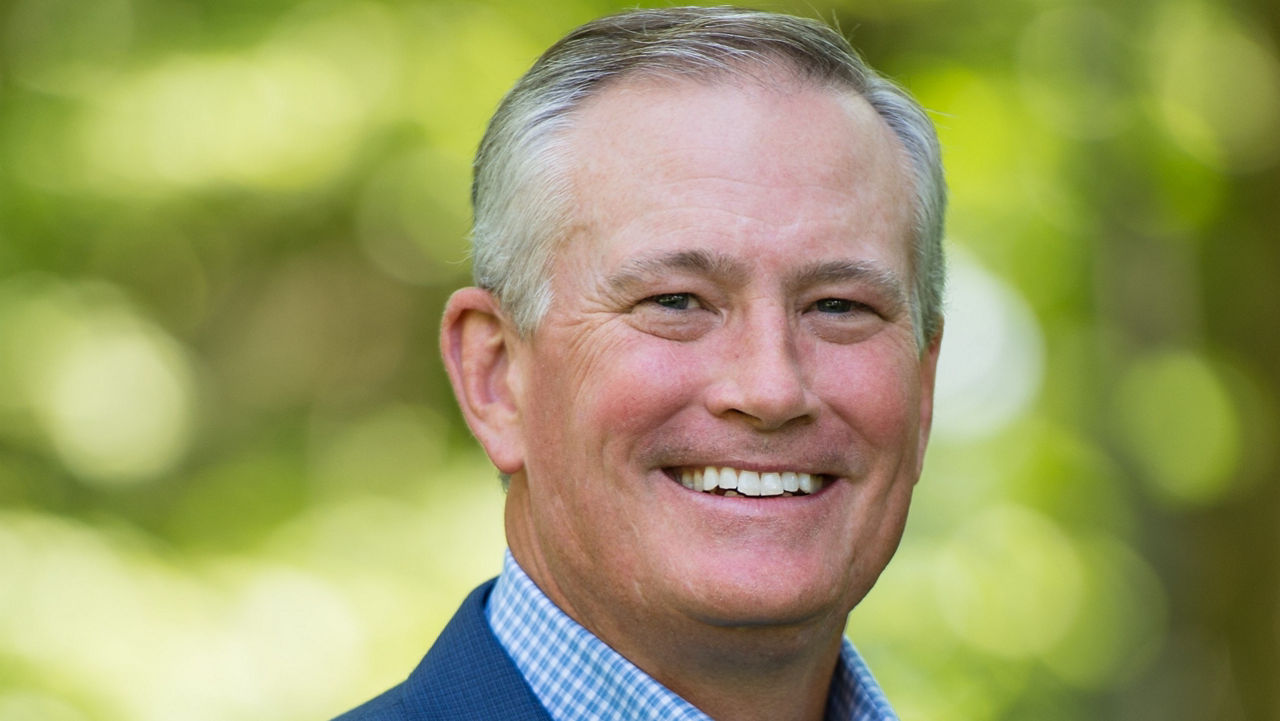
Brian J. Blaser
 QuidelOrtho
About Brian J. Blaser
Brian J. Blaser, age 60, is President and Chief Executive Officer of QuidelOrtho and has served as a director since May 15, 2024; he became CEO on May 6, 2024. He previously served as Executive Vice President, Diagnostic Products at Abbott Laboratories (2012–June 2019) and held leadership roles at Ortho Clinical Diagnostics (Johnson & Johnson), Eastman Kodak, and General Motors; he holds an MBA (RIT) and a BSc in Mechanical Engineering Technology (University of Dayton) . In 2024, QuidelOrtho reported $2.8B revenue with Adjusted EBITDA of $542.9M; net income was a loss of $(2,052.0)M while compensation “actually paid” disclosures showed company TSR of $59.38 vs a $100 2020 base, reflecting a challenged equity backdrop as integration and end‑market normalization continued .
Past Roles
| Organization | Role | Years | Strategic impact |
|---|---|---|---|
| Abbott Laboratories | Executive Vice President, Diagnostic Products | 2012–Jun 2019 | Led global diagnostics (core lab, point of care, rapid, molecular), bringing extensive scale and operating discipline to growth and portfolio execution . |
| Abbott Laboratories | Various strategic, operational, diagnostics roles | 2004–2012 | Broad functional leadership across Abbott diagnostics businesses supporting global commercial and ops execution . |
| Ortho Clinical Diagnostics (J&J) | Leadership roles in operations, finance, engineering | Not disclosed | Directly relevant to current QuidelOrtho business; operational and engineering leadership in IVD manufacturing and product lines . |
| Eastman Kodak | Leadership roles | Not disclosed | Manufacturing/engineering leadership experience in complex tech operations . |
| General Motors | Leadership roles | Not disclosed | Early-career engineering/operations experience in high-scale environment . |
External Roles
| Organization | Role | Years | Notes |
|---|---|---|---|
| Quanterix Corp. | Director | 2023–2024 | Public company board; governance experience in life sciences tools . |
| Meridian Bioscience Inc. | Director (prior) | Not disclosed | Diagnostics peer experience (historical) . |
| McKinsey & Company | Senior Advisor (prior) | Not disclosed | Strategic advisory exposure . |
| University of Dayton School of Engineering | Advisory Council Chair | Current | Academic/industry linkage; talent pipeline . |
| Advanced Medical Technology Association (AdvaMed) | Director | Current | Industry policy and advocacy role . |
Fixed Compensation
| Component | Terms / 2024 Amount |
|---|---|
| Base salary | $1,000,000 (pro-rated for 2024 start) . |
| 2025 base salary change | No merit increase approved for 2025 (recent hire) . |
| Perquisites (2024) | $100,512 aggregate: travel/housing reimbursement ($80,000) and legal fee reimbursement ($20,512) . |
Performance Compensation
2024 Annual Cash Incentive (ACI)
- Design: 70% Company Component, 30% Individual Component; Company metrics 40% Revenue and 60% Adjusted EBITDA; linear payout between threshold/target/max; Adjusted EBITDA must be met to fund plan (unless exception) .
- 2024 Company results vs goals:
| Metric | Threshold | Target | Maximum | Actual |
|---|---|---|---|---|
| Revenue ($M) | 2,619 | 2,757 | 2,895 | 2,779 |
| Adjusted EBITDA ($M) | 550 | 550 | 605 | 557 |
- Payout and payment: The Compensation Committee approved payouts at 105% of target for both the Company and Individual Components; Blaser received $863,014 for 2024 ACI (subject to final audit), consistent with plan design .
| Executive | 2024 ACI Payout ($) |
|---|---|
| Brian J. Blaser | 863,014 |
- 2025 ACI opportunity (as % of base): CEO threshold 26.3%, target 125.0%, max 187.5% .
Long-Term Incentives (LTI)
- Structure (pay-for-performance tilt): For the CEO, 60% performance-based RSUs (TSR PSUs), 40% time-based RSUs starting 2024; continued in 2025 .
- Performance metric: Relative TSR vs S&P Midcap 400 Health Sector Index over a 3-year period; payout 0–200% with 50% at 25th percentile, 100% at 50th, 200% at ≥75th; capped at 100% if absolute stock price declines over period .
| Grant Year | Vehicles | Target Shares | Vesting / Performance Period | Notes |
|---|---|---|---|---|
| 2024 (annual LTI) | TSR PSUs | 93,416 | 5/6/2024–12/31/2026 relative TSR; payout 0–200% | CEO LTI mix 60% PSUs / 40% RSUs . |
| 2024 (annual LTI) | Time-based RSUs | 62,277 | 3-year, ratable annually on grant anniversary | Part of $7M 2024 LTI value . |
| 2024 (sign-on) | TSR PSUs | 66,725 | Same TSR terms as above | One-time sign-on grant $3.0M fair value . |
| 2025 (annual LTI) | TSR PSUs | 96,507 | 1/1/2025–12/31/2027 relative TSR; payout 0–200% | CEO LTI mix maintained . |
| 2025 (annual LTI) | Time-based RSUs | 64,338 | 3-year, ratable annually | 2025 CEO LTI target $7.0M . |
Equity Ownership & Alignment
- Beneficial ownership: 20,759 shares (comprised of RSUs vesting within 60 days of March 24, 2025), representing less than 1% of outstanding shares .
- Ownership guidelines: CEO must hold stock equal to 6x base salary and retain 50% of net shares until meeting guideline; compliance tracked; five-year window from later of hire/promotion or May 27, 2022 .
- Hedging and pledging: Company policy prohibits hedging and pledging by employees and directors; no approvals have been granted to permit pledging .
- Deferred compensation: Blaser did not elect to defer ACI under the Employee Deferred Compensation Plan for 2024 or 2025 .
- Upcoming vesting/selling pressure:
- Time-based RSUs from May 15, 2024 grant vest one-third annually on each anniversary through 2027; potential scheduled releases may increase near-term liquidity unless net share retention is required for guideline progress .
- TSR PSUs from 2024 and 2025 cycles settle after performance periods ending 12/31/2026 and 12/31/2027, respectively; payout contingent on relative TSR and absolute cap .
Employment Terms
| Term | Key provisions |
|---|---|
| Employment | At-will; offer letter dated April 30, 2024 . |
| Target/Max Bonus | Target ≥125% of base; maximum ≥150% of target (offer letter baseline) . |
| 2024 Equity on Hire | $7.0M annual LTI (60% PSUs/40% RSUs) plus $3.0M sign-on PSUs; standard 3-year vest/performance . |
| Severance & CIC (general) | If terminated without cause outside of CIC window: 2x (base + average bonus), $25,000 transition allowance, up to 2 years continued health coverage; if within 30 days before/2 years after CIC and not for cause or resign for good reason: same cash benefits plus immediate vesting of equity (PSUs at greater of target or actual to CIC date) . |
| CEO modifications | During first 3 years from May 6, 2024: non-CIC severance also triggers upon company material breach; bonus portion uses greater of two-year average bonus or target; time-based RSUs granted in 2024 vest fully upon non-CIC qualifying termination . |
| Clawbacks | Amended and restated clawback policy (Jan/Feb 2025) to comply with Nasdaq Rule 5608 plus supplemental discretionary clawback for misconduct or restatements; covers incentive comp, stock price/TSR-based and other awards . |
Illustrative Potential Payments (as of 12/27/2024)
| Scenario | Cash Salary | Cash Bonus | Equity Acceleration | Other |
|---|---|---|---|---|
| Without Cause (non‑CIC) | $2,000,000 | $3,562,500 | — | $25,000 |
| CIC Qualifying Termination | $2,000,000 | $3,562,500 | $9,841,997 (RSUs/PSUs at target) | $25,000 |
Note: CEO healthcare continuation not applicable as of 12/27/2024 due to concurrent coverage .
Board Governance
- Board service: Director since 2024; not independent due to CEO role; no committee assignments .
- Leadership structure: Independent Chair (Kenneth F. Buechler); CEO and Chair roles separated, which mitigates dual-role concentration concerns; non-employee directors meet in regular executive sessions .
- Independence and attendance: All directors except Blaser are independent under Nasdaq rules; directors averaged >97% attendance at Board/committee meetings in 2024 .
- Director pay: The CEO receives no additional director compensation .
- Ownership guidelines (directors): 5x annual cash retainer; 5-year compliance window from May 27, 2022 or appointment .
Compensation Structure Analysis
- Increasing performance risk: In 2024 the Compensation Committee shifted a greater percentage of senior executive equity to performance-based RSUs (relative TSR), and maintained this approach in 2025 for CEO/CFO, signaling stronger pay-for-performance alignment .
- ACI design aligned to operating results: 2024 ACI weighted 60% to Adjusted EBITDA and 40% to Revenue; 2024 results exceeded targets modestly, yielding 105% payouts for both Company and Individual components, including Blaser .
- Clawback rigor: Updated Nasdaq-compliant and supplemental discretionary clawback policies expand recovery triggers, tightening governance around incentive pay .
- Equity plan capacity and dilution: 2025 proposal to add 6.2M shares increased potential overhang to 12.99% if approved (from 3.80%), extending plan life to 2035; burn rate averaged 1.6% over FY22–FY24 amid lower stock price .
- Shareholder support: Say-on-pay passed with >94% support at the 2024 annual meeting, indicating investor backing for program design .
Performance & Track Record
- 2024 operating highlights: Revenue $2.783B; non-respiratory revenue $2.279B; respiratory revenue $504M; Labs revenue +1.0% constant currency; ex-COVID and non-core, Labs +3.9% constant currency; respiratory ex-COVID +4.4% constant currency .
- Pay-versus-performance indicators: 2024 “compensation actually paid” disclosures show Company TSR of $59.38 (base 2020=100), peer group TSR of $105.42, Adjusted EBITDA $542.9M, Net loss $(2,052.0)M, reflecting integration headwinds and market normalization post-COVID .
- Controls remediation: EY reported material weaknesses in 2024 (revenue/accounts receivable/accrued rebates information reliance; deferred tax assets assessment; and a remediated interim goodwill impairment control weakness), with company remediation underway and auditor transition to KPMG for FY2025 .
Equity Ownership & Alignment (Detail)
| Item | Detail |
|---|---|
| Beneficial ownership | 20,759 shares; <1% of outstanding . |
| Unvested awards (12/29/2024) | TSR PSUs: 66,725 (sign-on) and 93,416 (annual); Time RSUs: 62,277 (annual) . |
| Guidelines | CEO 6x salary; 50% net share retention until met . |
| Hedging/Pledging | Prohibited; no pledging approvals in effect . |
Compensation Peer Group (for benchmarking)
2024 peer group includes: Align Technology, Bio-Rad, Bruker, Dentsply Sirona, Enovis, Envista, EXACT Sciences, Hologic, ICU Medical, Insulet, Integra LifeSciences, Masimo, PerkinElmer, Teladoc Health, Teleflex, The Cooper Companies, Waters, West Pharmaceutical . The Committee targets moderate yet competitive cash pay and uses a greater proportion of performance-based equity for senior executives; no formulaic benchmarking .
Compensation Committee and Consultant
The Compensation Committee (Chair: Edward L. Michael; members: Mary Lake Polan, Joseph D. Wilkins Jr.) oversees executive pay and succession, engages Compensia as its independent consultant, and determined that programs do not create risks reasonably likely to have a material adverse effect .
Employment Contracts, Severance, and Change-of-Control Economics (CEO)
- Cash multiple: 2x (base + average bonus or target per CEO modification window) .
- Equity acceleration: Double-trigger on CIC Qualifying Termination; PSUs at greater of target or actual through CIC; CEO’s 2024 time RSUs also vest on certain non‑CIC terminations in first three years .
- Illustrative 12/27/2024 values: Non‑CIC termination $5.59M cash + $25k allowance; CIC termination adds ~$9.84M equity acceleration (target basis) .
Board Service Considerations for Blaser (CEO + Director)
- Dual role implications: CEO serves as director but not Chair; independent Chair structure and fully independent committees mitigate concentration of power; Blaser is not independent due to employment .
- Committee roles: None (CEO is not on Board committees) .
- Director compensation: Not applicable; CEO receives no director fees .
Investment Implications
- Alignment and incentives: CEO’s equity is majority performance-based via multi-year relative TSR PSUs with a cap if absolute price declines, aligning realized pay with shareholder returns; strong clawbacks and high ownership guideline (6x salary) reinforce alignment .
- Near-term selling pressure: Scheduled vesting from 2024 time-based RSUs (ratable over 3 years) could create modest periodic liquidity, though 50% net share retention and guideline progress temper selling; PSU outcomes (2026/2027) are market/peer dependent .
- Retention and risk: Robust severance and accelerated vesting under CIC support retention through integration and portfolio execution; CEO-specific modifications increase certainty in first three years, but double-trigger design avoids single-trigger windfalls .
- Governance and dilution watch: 2025 equity plan share increase (raising potential overhang to ~13% if approved) is notable; monitor burn-rate discipline, future award sizing, and progress remediating 2024 internal control weaknesses; say‑on‑pay support (>94%) suggests investor tolerance but continued scrutiny is warranted amid TSR underperformance .
