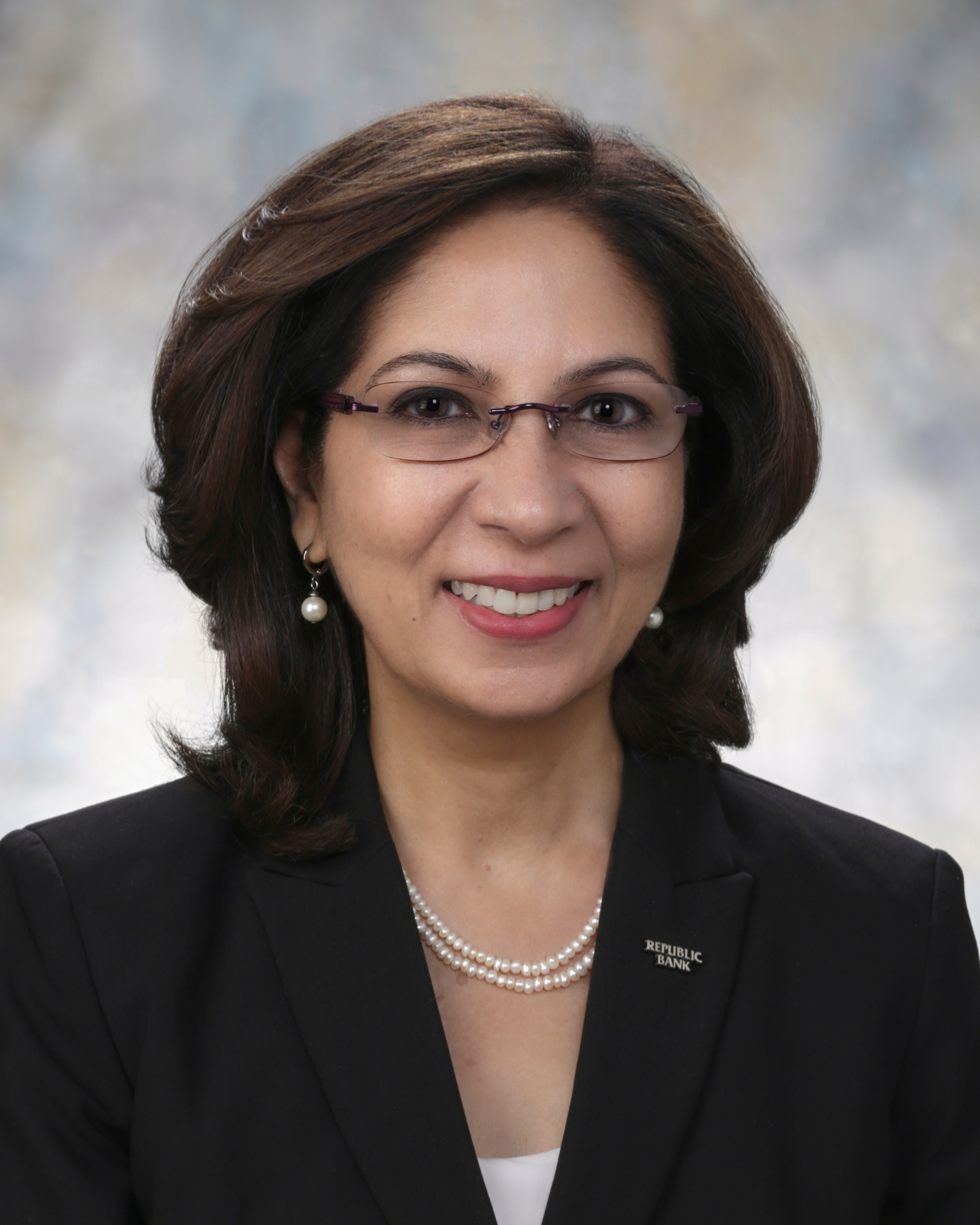
Steven E. Trager
About Steven E. Trager
Executive Chair & CEO of Republic Bancorp, Inc. (RBCAA) and Executive Chair of Republic Bank & Trust Company. Age 64; director since 1988. Education: JD, University of Louisville Brandeis School of Law; BBA in Finance, University of Texas at Austin . Under his leadership framework (Exec Chair/CEO with a separate Bank CEO), RBCAA delivered 2024 net income of $101.4 million (+12% YoY), ROA 1.47% and ROE 10.50%, and Gross Operating Profit (pre‑tax net income) of $127.7 million (+13% YoY) . Shareholder returns were strong: 2024 total return of 30.3% and two‑year total return of 81.5% versus the NASDAQ Bank Index at 20.6% and 16.4%, respectively .
Past Roles
| Organization | Role | Years | Strategic impact |
|---|---|---|---|
| Republic Bancorp, Inc. | Executive Chair & CEO | 2021–present | Oversight of holding company; governance, capital allocation, long‑term strategy |
| Republic Bank & Trust Company | Executive Chair | 2021–present | Chairs bank board; oversight of bank leadership and risk |
| Republic Bancorp, Inc. & Republic Bank & Trust Company | Chairman & CEO | 2012–2021 | Led combined entities through growth, diversification of Core Bank and RPG |
| Republic Bancorp, Inc. | President & CEO | 1998–2012 | Built operating platform; M&A and segment expansion |
| Republic Bank & Trust Company | General Counsel | 1988 (career start) | Legal and regulatory foundation during expansion phase |
External Roles
| Organization | Role | Years | Strategic impact |
|---|---|---|---|
| Kentucky Bankers Association | Past Chair | n/a | Industry policy and advocacy leadership |
| Federal Reserve Bank of St. Louis – Louisville Branch | Former Board Member | n/a | Regional monetary/credit insights |
| Louisville Regional Airport Authority | Former Board Member | n/a | Civic and infrastructure oversight |
| University of Louisville Board of Overseers | Past Chair | n/a | Higher education/community engagement |
| Fund for the Arts (2016 Campaign) | Campaign Chair | 2016 | Community leadership, fundraising |
| Bellarmine University | Former Trustee | n/a | Governance in higher education |
Fixed Compensation
Multi‑year NEO summary for Steven E. Trager (all $):
| Metric | 2022 | 2023 | 2024 |
|---|---|---|---|
| Salary | 441,657 | 450,320 | 459,326 |
| Bonus (cash, discretionary) | 40,000 | — | — |
| Stock Awards | — | — | — |
| Option Awards | — | — | — |
| Non‑Equity Incentive Plan Compensation | 280,000 | 240,000 | 400,000 |
| All Other Compensation | 42,695 | 46,067 | 48,204 |
| Total | 804,352 | 736,387 | 907,530 |
Base salary trajectory and approved increases:
| Item | 2024 | 2025 |
|---|---|---|
| Approved Base Salary ($) | 460,000 | 475,000 |
| Approx. % Increase YoY | 2.0% | 3.3% |
Perquisites detail (2024): auto allowance/vehicle use, life insurance, club memberships, parking; total $48,204 .
Performance Compensation
Primary annual incentive metric for Chair/CEO is Total Company Gross Operating Profit (GOP). For 2024, payout scaled by budgeted GOP tiers; Maximum was achieved.
| Metric | Weighting | Target definition | Actual | Payout | Pay timing |
|---|---|---|---|---|---|
| Total Company GOP (pre‑tax net income) | Primary metric (committee may consider personal performance) | Entry 70% at $120m; Mid 85% at $124m; Max 100% at $128m | Max achieved (company reported GOP $127.7m, +13% YoY) | $400,000 (100% of potential) | Paid Mar 2025 per plan convention |
2024 incentive structure for Chair/CEO (goals):
| Level | % of Potential | GOP Goal ($mm) |
|---|---|---|
| Entry | 70% | 120 |
| Mid | 85% | 124 |
| Maximum | 100% | 128 |
Notes:
- Company explains stock price is not used for annual bonuses due to thin trading/volatility; committee emphasizes consistent earnings and long‑term value creation .
Equity Ownership & Alignment
| Ownership item | Amount / % |
|---|---|
| Class A Common shares beneficially owned | 8,399,127 (48.4% of Class A outstanding) |
| Class B Common shares beneficially owned | 1,940,091 (90.2% of Class B outstanding) |
| Combined A+B shares | 10,339,218 (50.3%–53.0% depending on basis disclosed; table shows 53.0% of combined shares) |
| Executive officers and directors as a group (25) – combined voting power | ~73% of combined voting power; ~56% of total shares outstanding |
| Voting structure | Class A = 1 vote; Class B = 10 votes |
| Outstanding equity awards (as of 12/31/24) | None for Steven E. Trager |
| Deferred compensation participation | None for Steven E. Trager in 2024 |
| Hedging/pledging | Hedging prohibited; pledging/margin accounts not permitted for NEOs/Directors |
| Ownership guidelines | Company maintains stock ownership requirements for NEOs and Directors; explicit 2x salary guideline disclosed for CEO/Bank, CFO, Pres/RPG, CIOO (not specified for Chair/CEO) |
Ownership structure details: significant holdings via Teebank Family LP and Jaytee Properties LP; Steven serves as trustee/co‑general partner roles, shares voting authority through partnership voting committees; includes spouse and family foundation holdings; also small 401(k) holdings .
Employment Terms
Change‑in‑Control (CIC) severance agreements apply to NEOs including Chair/CEO (company generally does not offer employment agreements to NEOs).
| Provision | Summary |
|---|---|
| CIC trigger and severance | Upon a termination by the company without cause or by the executive for good reason following a CIC: cash severance = 2x base salary + average bonus over prior 3 years; payable over 24 months (12 months for CIOO) |
| Benefits continuation | Welfare benefits maintained up to 2 years post‑termination (1 year for CIOO) |
| Equity/deferred comp | Equity (options/restricted/performance stock) becomes fully vested; company match under deferred comp vests upon CIC; Chair/CEO held no unvested equity at 12/31/24 |
| Non‑compete / non‑solicit | Two (2) years, apply whether or not a CIC occurs; restrictive covenants incorporated into equity awards |
| Tax gross‑ups | No excise tax gross‑ups; cutback applies only if it yields higher after‑tax value |
| CIC definition (control family) | Includes a person acquiring greater voting power than “Trager Family Members” as a group, or Trager Family Members’ combined voting power dropping below 25% |
| Estimated payout (if triggered 12/31/24) | $1,065,834 for Chair/CEO (no 280G cutback expected at that value) |
Clawback: Company maintains a Dodd‑Frank/NASDAQ compliant incentive compensation recovery policy for current/former executive officers tied to financial restatements (3‑year lookback) .
Board Governance
- Board service history and roles: Director since 1988; current roles Executive Chair & CEO of Company and Executive Chair of Bank .
- Committee roles: Company’s standing committees (Audit, Compensation, Nominating, Risk) are comprised of independent directors; committee rosters do not list Steven E. Trager (typical for executive directors) .
- Dual‑role implications: Board intentionally separated the Bank CEO role (Bank CEO: Logan Pichel since 2021) while maintaining combined Company Executive Chair/CEO. A Lead Independent Director (Mark A. Vogt) leads independent oversight and independent director sessions occur at least twice per year .
- Independence/controlled company: RBCAA is a “controlled company” under NASDAQ due to Trager family voting control, but did not elect the majority‑independent exemption for 2025; a majority of nominees are independent .
- Nominating dynamics: Trager Family Members recommended all 2025 director nominees to the Nominating Committee .
- Attendance: Each incumbent Director except A. Scott Trager attended at least 75% of 2024 board meetings; nine of fifteen attended the 2024 annual meeting .
Director Compensation (context)
Non‑employee directors received in 2024: ~$25,000 stock retainer (460 Class A shares at 5/15/24 close) plus $4,000 per board meeting and $1,000 per committee meeting; committee chairs received $10,000 cash retainers. Employee directors (including Steven E. Trager) receive no additional board compensation .
Compensation & Incentives – Structure and Signals
- Pay mix: For Chair/CEO in 2024, salary (~51%), annual bonus (~44%), other (~5%); stock awards/options typically not granted to Chair/CEO given substantial personal equity holdings .
- Primary metrics: Gross Operating Profit (GOP) is the central metric for Chair/CEO and most NEOs; 2024 achieved Maximum level .
- Governance discipline: No employment agreements; clawback in place; no hedging/pledging; stock ownership guidelines; anti‑short‑termism rationale for excluding share price from annual bonus due to thin trading/liquidity dynamics .
- Peer benchmarking: Committee reviews peer data (e.g., MCB, GDOT, CASH, TBBK, LKFN, CTBI, SRCE, PRK, FBK, SYBT, PFC, GABC, FSFG, CHCO, SBCF) but relies primarily on internal recommendations from Chair/CEO and CEO/Bank .
- Say‑on‑Pay: 2023 support exceeded 99%; 2025 advisory vote on NEO compensation is on the ballot .
Related‑Party, Concentration & Red Flags
- Concentrated control: Steven E. Trager beneficially owns ~53% of combined shares and 90.2% of Class B; combined with multi‑class voting, the executive/board group controls ~73% voting power—strong alignment but governance concentration risk .
- Family ties: Family relationships on board (cousins and uncle/nephew) and Trager family nomination influence could raise independence/perception considerations .
- Counter‑balances: Prohibitions on hedging/pledging, existence of Lead Independent Director, majority‑independent board and independent committees mitigate some governance risks .
Investment Implications
- Alignment and overhang: Extremely high insider ownership (c.53% combined shares; 90%+ of Class B) creates tight float and strong long‑term alignment; anti‑pledging and lack of unvested equity for the Chair/CEO reduce forced‑sale/vesting‑related selling pressure .
- Performance linkage: Chair/CEO cash bonus is tightly linked to GOP and achieved maximum payout for 2024, consistent with net income and pre‑tax profit growth (+12% NI; +13% GOP), supporting a pay‑for‑performance narrative .
- Governance watch‑items: Controlled‑company dynamics and family influence in nominations warrant continued monitoring of board independence and related‑party structures (Teebank/Jaytee), though the company did not elect the controlled‑company independence exemption for 2025 and maintains independent committees .
- Shareholder returns: Strong 1‑ and 2‑year TSR outperformance (30.3% and 81.5% vs index) suggests investor confidence in the current leadership structure and operating execution, albeit with segment‑specific risks (e.g., TRS ERA loss variability) managed via revised contracts and risk caps disclosed in 4Q24 .