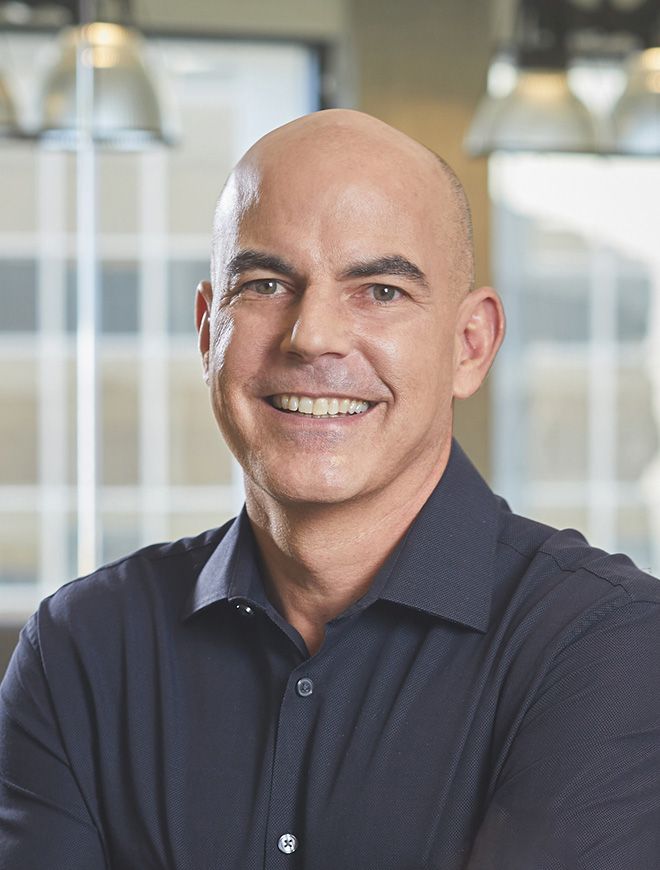
Michael Frankel
About Michael Frankel
Michael S. Frankel is Co-Chief Executive Officer and a director of Rexford Industrial Realty, Inc., serving as a board member since the IPO in 2013; he is 62 years old, holds a BA in political economy from UC Berkeley and an MBA from Harvard Business School . Under his co-leadership, REXR delivered 2024 net income of $285.9M (+15% YoY), Core FFO/share growth of 6.8%, and consolidated NOI of $711.8M (+17% YoY) . Over five years, REXR achieved 37.0% net income CAGR, 15.4% Core FFO/share CAGR, and 29.9% consolidated NOI CAGR, with TSR since the 2013 IPO outpacing peer indices .
Past Roles
| Organization | Role | Years | Strategic Impact |
|---|---|---|---|
| Rexford Industrial LLC / Rexford Sponsor LLC | Managing Partner | — | Co-managed predecessor/current businesses focused exclusively on infill Southern California industrial real estate . |
| Management company acquired at formation | Chief Financial Officer | — | Finance leadership through formation transactions, establishing public company platform . |
| L.E.K. Consulting | Strategy Consultant | — | Advised leading investment institutions on strategic decisions . |
| “C3” (Comcast subsidiary) | Investment professional | — | Led private equity investments at a corporate PE platform . |
| Melchers & Co. | Vice President | — | Ran U.S.-Asia operations; significant international experience (China, SE Asia, France) . |
External Roles
| Organization | Role | Years | Notes |
|---|---|---|---|
| UC Berkeley Fisher Center for Real Estate & Urban Economics | Policy Advisory Board member | — | External industry advisory role . |
| Urban Land Institute | Member | — | Industry engagement and network . |
| State of California | Licensed Real Estate Broker | — | Professional credential . |
| Public company boards | — | — | None (other public company directorships: None) . |
Fixed Compensation
| Year | Base Salary ($) | Notes |
|---|---|---|
| 2022 | 825,000 | Base pay increased in 2023. |
| 2023 | 1,000,000 | — |
| 2024 | 1,000,000 | No raise for 2024 . |
| 2025 | 1,000,000 | No salary increase for 2025 . |
Additional benefits: All other compensation for 2024 was $17,548, which includes a $2,000 401(k) match; medical benefits are included in “All Other” .
Performance Compensation
Annual Cash Incentive (STI) – 2024 Design and Outcome
| Item | Detail |
|---|---|
| Opportunity (Co-CEOs) | Threshold 100% of base; Target 200%; Maximum 275% of base . |
| Metric weights | Core FFO/share 35%; Consolidated Portfolio NOI Growth 35%; Qualitative 20%; ESG 10% . |
| Core FFO/share target and result | Target set at $2.30; actual 2024 Core FFO/share was $2.34 . |
| NOI growth target and context | Consolidated Portfolio NOI target required 10% growth; company reported 17% consolidated NOI YoY growth in 2024 . |
| ESG target | Multiple goals (e.g., ≥10 MW solar commitments, LEED program, training/DEI goals) were achieved or exceeded in 2024 . |
| Payout | Paid at the maximum (275% of base) for Frankel . |
| Settlement | Frankel elected to receive 100% of his STI in LTIP Units; $2,750,000 value, 70,512 fully vested LTIP Units granted in early 2025 . |
Detailed scorecard context (qualitative): $1.5B of accretive investments; 8.1M SF of leasing with 38.9% net effective re-leasing spreads; operating leverage improved (NOI margin +50 bps to 77.2%); capital raised $2.0B; low leverage (26.5% net debt/EV) .
Long-Term Incentives (LTI) – 2024 Grants
| Component | Units / Value | Vesting / Performance | Notes |
|---|---|---|---|
| Service-Vesting LTIP Units (2024) | 89,978 units; grant-date fair value $3,515,364 | Ratable vesting 1/3 on 11/16/2025, 11/16/2026, 11/16/2027 | Beginning with 2025 grants, a one-year post-vest holding period applies to service-vesting LTIP Units . |
| Performance-Vesting LTIP Units (2024) | Relative TSR base: 123,719; Core FFO/share base: 123,720; Target award 109,973 units; Threshold 54,987; Maximum 302,426; grant-date fair value $5,860,193 | 3-year performance; RTT metric measured from grant; Core FFO/share growth measured 2025–2027; cliff vest after performance period (Dec 2027) | Absolute TSR modifier: ≤0% TSR reduces payout by 25 pts; 10% adds 0; 20% adds 25 pts; ≥30% adds 50 pts; overall LTI maximum reduced vs prior years . |
| Approved target values (2024 LTI) | $3.78M service + $4.62M performance = $8.40M target value | — | — |
Program rigor signals: 2024 changes lowered maximum payout leverage, streamlined metrics to Relative TSR and Core FFO/share, and added an absolute TSR modifier; service-vested units will have a 1-year post-vest holding period starting 2025 grants . For earlier LTI cycles, 2021 performance units ultimately paid 100% of target, with management noting 67% of the 2021 grant-date value forfeited due to performance hurdles, evidencing enforcement of downside .
Equity Ownership & Alignment
Beneficial Ownership and Structure (as of April 3, 2025)
| Item | Amount |
|---|---|
| Total beneficial ownership (shares and units) | 1,148,499 |
| Ownership as % of common shares | <1% |
| Vested Service-Vesting LTIP Units | 535,378 |
| Vested Performance-Vesting LTIP Units | 613,121 |
Unvested/Unearned Awards and Vesting Overhang (as of 12/31/2024)
| Award | Unvested/Unearned Units | Vesting/Performance Period |
|---|---|---|
| 2022 Service-Vesting LTIP Units | 22,246 | Final tranche vests 11/8/2025 . |
| 2023 Service-Vesting LTIP Units | 45,331 | Vests 12/21/2025 and 12/21/2026 . |
| 2024 Service-Vesting LTIP Units | 89,978 | Vests 11/16/2025, 11/16/2026, 11/16/2027 . |
| 2022 Performance-Vesting LTIP Units (base units) | 108,762 | Performance period through 11/7/2025 . |
| 2023 Performance-Vesting LTIP Units (base units) | 110,810 | Performance period through 12/20/2026 . |
| 2024 Performance-Vesting LTIP Units (base units) | 123,720 | Relative TSR through ~11/16/2027; Core FFO/share 1/1/2025–12/31/2027 . |
Alignment and risk controls:
- Executive stock ownership guidelines: Co-CEOs must hold 6x base salary; all NEOs met guidelines or are within the compliance window as of April 14, 2025 .
- Anti-hedging and anti-pledging: Company policy prohibits hedging and pledging by officers and directors (with narrow exceptions requiring conditions); no pledging by Frankel is indicated in the proxy .
- Insider trading policy formalized; policy filed as an exhibit to the 2024 10-K .
Employment Terms
Key Contractual Economics (Co-CEO agreement)
- Term/renewal: Automatically renews annually; company nominates Co-CEOs for director election each term .
- Severance triggers and multiple (without cause / good reason / non-renewal by company): Lump sum equal to 3x the sum of base salary, average annual cash incentive (3 years), and average annual equity awards (with specified exclusions); pro-rata bonus; accelerate time-based equity; 18 months of company-paid healthcare .
- Change-in-control: Time-based equity accelerates for current NEOs upon a CIC (performance units follow award-specific rules); the company adopted “double-trigger” for future executives in 2021 (not modifying existing awards for current Co-CEOs) .
- Performance unit treatment at CIC: Detailed formulas pro-rate/assess Relative TSR and Core FFO/share and apply the absolute TSR modifier, vesting immediately prior to CIC based on period elapsed and performance to date (nuanced by whether CIC occurs within year 1 or thereafter) .
- Clawback: SEC/NYSE-compliant clawback policy effective Oct 2, 2023; mandatory recovery of erroneously awarded incentive-based compensation, plus discretionary recovery for non-financial performance or time-based comp in cases of misconduct .
- Non-solicitation: 12 months post-termination for Co-CEOs .
- Tax: No excise tax gross-ups; “best pay cap” to optimize after-tax outcome under Sections 280G/4999 .
Estimated Payouts if Triggered on 12/31/2024 (Frankel)
| Scenario | Cash Severance ($) | Health ($) | Equity Acceleration ($) | Total ($) |
|---|---|---|---|---|
| Death/Disability | 2,750,000 | — | 21,010,512 | 23,760,512 |
| Qualifying termination (no CIC) | 22,198,750 | 45,828 | 21,010,512 | 43,255,090 |
| CIC (no termination) | — | — | 9,811,386 | 9,811,386 |
| Qualifying termination in connection with CIC | 22,198,750 | 45,828 | 9,811,386 | 32,055,964 |
Board Governance
| Item | Detail |
|---|---|
| Board service | Director since IPO (2013) . |
| Role | Co-Chief Executive Officer and Director . |
| Independence | Not independent (management director) . |
| Committee roles | None (all standing committees are fully independent) . |
| Attendance | Incumbent directors attended 100% of regular board and committee meetings in 2024; board attendance 97.5% overall . |
| Leadership structure | Separation of Chairman and Co-CEOs; Tyler Rose expected to become Independent Chairman post-2025 annual meeting . |
| Director compensation | Co-CEOs receive no additional director compensation . |
Dual-role implications: Frankel’s status as Co-CEO and director is mitigated by a majority-independent board, fully independent committees, independent executive sessions, and an independent Chair/Lead Independent Director governance structure .
Compensation Structure Analysis
- At-risk pay dominance: Approximately 91% of Co-CEOs’ target total direct compensation is variable/at-risk, linked to company performance and multi-year vesting .
- Program tightening after investor feedback: 2024 say-on-pay support was 62%; the committee removed largest peers from the comp peer set, reduced maximum LTI payout leverage (from 300% to 275%), streamlined LTI metrics to Relative TSR and Core FFO/share, added absolute TSR modifier, and instituted a one-year post-vest holding period for 2025+ service-vesting units; increased formulaic STI weighting to 80% in 2025 .
- Evidence of rigor: Co-CEOs’ 2021 performance LTI settled at target overall with significant value forfeiture (company disclosed ~67% forfeited vs grant-date value for each Co-CEO), reflecting enforcement of tougher hurdles .
- No options; equity is full-value LTIP units (reduces risk-taking incentive vs options) .
- Clawback and prohibition on hedging/pledging bolster alignment and risk control .
Related Party Transactions and Other Governance Considerations
- Tax Matters Agreement from the IPO provides certain formation limited partners (including Frankel) opportunities to guarantee debt to defer tax; as of 12/31/2024, the company provided Frankel the opportunity to guarantee $2.8M of debt; Audit Committee oversees related-party transactions policy .
- Section 16 compliance: One delinquent Form 4 for Frankel in 2024 (timely reporting issue on an LTIP Unit grant) noted by the company .
- No material legal proceedings involving directors or officers .
Investment Implications
- Alignment is strong: High at-risk equity mix, rigorous multi-year LTI design with a negative absolute TSR modifier, prohibitions on hedging/pledging, and meaningful ownership guidelines all support long-term alignment and reduce agency risk .
- Retention vs dilution: Significant unvested service and performance LTIP units vest through 2025–2027, offering retention but creating periodic supply events (notably November and December vesting dates); Co-CEOs’ election to take STI in fully vested LTIP units adds immediate liquidity potential, though a 1-year post-vest hold will apply to service units granted in 2025+ .
- Contractual downside protection: Co-CEO severance and CIC economics are robust (3x base+bonus+equity averages, with single-trigger acceleration of time-based awards for current NEOs upon CIC), which can be shareholder-unfriendly in an acquisition context, partially mitigated by best-pay-cap and no excise tax gross-ups; future officers are subject to double-trigger .
- Performance execution risk: 2024 STI paid at maximum and 2024 financial/operational execution was strong, yet interim tracking for some open LTI cycles (e.g., 2023 grant tracking below threshold) highlights the risk to realized pay if relative TSR or Core FFO/share growth underperform peers/targets; governance changes post-62% say-on-pay should be monitored for investor acceptance in 2025–2026 .