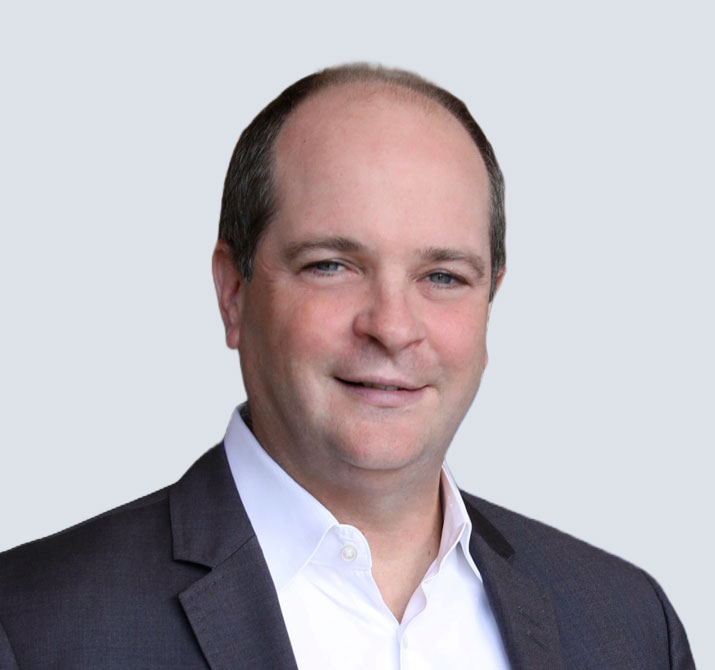
Michael Farrell
 RESMED
About Michael “Mick” Farrell
Michael Farrell, 53, is Chairman and Chief Executive Officer of ResMed (RMD). He became CEO in March 2013 and was appointed Chairman in 2023. He holds a B.E. (Hons) from UNSW, an M.S. in Chemical Engineering and an MBA from MIT/Sloan . Under his leadership in FY2025, ResMed delivered 10% revenue growth to $5.1B, operating income up 28%, net income up 37%, and diluted EPS up 37% YoY; GAAP operating cash flow was $1.8B and free cash flow ~$1.7B; the NYSE one‑year TSR was 34% vs. S&P 500 at 14% (five‑year 7% vs. 15%) . As of July 31, 2025, market cap was ~ $40B .
Past Roles
| Organization | Role | Years | Strategic impact |
|---|---|---|---|
| ResMed | Chairman of the Board | 2023–present | Combined leadership of board and management; board cites efficiency and clear lines of authority with Lead Director oversight . |
| ResMed | Chief Executive Officer & Director | Mar 2013–present | Scaled devices and digital ecosystem; FY25: 10% rev, margin expansion, strong FCF; TSR recovery to top-decile vs U.S. peers 1-yr . |
| ResMed | President, Americas | 2011–2013 | Ran largest commercial region; execution foundation for later global strategy . |
| ResMed | SVP, Global Sleep Apnea Business | 2007–2011 | Led diagnostic and therapeutic business; product and commercial leadership . |
| Management consulting (incl. Arthur D. Little) | Consultant for biotech/chemicals/metals | Pre‑2007 | Strategy and operations experience across industrials and healthcare . |
External Roles
| Organization | Role | Years | Notes |
|---|---|---|---|
| Zimmer Biomet (NYSE: ZBH) | Lead Independent Director; member Comp & Mgmt Development and Quality/Reg/Tech committees | 2014–present | Independent oversight at large-cap medtech; cross-pollination in quality, robotics and digital . |
| AdvaMed | Chair, International Business Committee | Current | Advocacy and policy engagement in global medtech . |
| UC San Diego Foundation; Rady Children’s; Father Joe’s Villages | Trustee/Volunteer | Current | Community leadership roles . |
Fixed Compensation
| Element | FY2025 | FY2024 | FY2023 |
|---|---|---|---|
| Base Salary (USD) | $1,214,150 | $1,168,987 | $1,128,211 |
| Stated FY base salary for planning | $1,235,000; +4.2% YoY | $1,185,000 | — |
| Target Bonus (% of salary) | 133% effective FY25 (5% target increase effective Dec 2024) | — | — |
| Actual STI (cash) | $1,646,743 (102% of target) | $1,613,032 | $1,510,264 |
| All Other Compensation | $113,584 | $138,728 | $230,191 |
| Total Reported Compensation | $14,674,543 | $14,120,829 | $13,868,641 |
Notes:
- FY2025 base salary “planning” figure reflects committee‑approved salary effective Dec 1; Summary Compensation Table shows cash paid during the July–June fiscal year .
Performance Compensation
Short‑Term Incentive (STI) – FY2025
- Design: 50% Corporate Adjusted Net Sales, 50% Corporate Adjusted Operating Profit for CEO; payouts entirely formulaic (no discretion) .
- Results: Corporate weighted earnout 102% (actual above targets); CEO STI paid 102% of target .
| Metric | Weight | Target | Actual | % of goal | Payout basis |
|---|---|---|---|---|---|
| Adjusted Net Sales (Corporate) | 50% | $5,129M | $5,137M | 100.16% | 100.54% |
| Adjusted Operating Profit (Corporate) | 50% | $1,828M | $1,847M | 101.04% | 103.47% |
| Corporate Weighted Earnout | — | — | — | — | 102.00% |
Plan adjustments (FX budgeting, SBC, amortization of intangibles, etc.) reconciled to GAAP are disclosed .
Long‑Term Incentive (LTI) – FY2025 grants (approved value $11.7M; mix 50% PSUs, 25% options, 25% RSUs)
| Instrument | Metric/terms | Shares (target) | Grant-date fair value |
|---|---|---|---|
| PSUs – Relative TSR (vs S&P 500) | 3‑yr; 45%–200% payout; cap at 100% if absolute TSR negative | 10,505 | $2,925,117 |
| PSUs – Absolute TSR | 4‑yr; 0/50/100/200% at 5%/10%/15% CAGR; banking of 25% at 3‑yr target; 30‑day averages | 10,965 | $2,924,914 |
| RSUs (performance‑earned on Q3/Q4 adjusted earnings; then time‑vest) | 1/3 vest annually from grant date; 100% of FY2025 RSUs earned | 12,289 | $2,925,028 |
| Options (7‑yr; FMV strike; 1/3 vest annually on Nov 11) | Strike $249.56 (11/25/24 grant) | 33,036 | $2,925,007 |
PSU tracking as of FY2025 year‑end:
- FY2024 Absolute TSR PSUs trending to 200% payout; FY2024 Relative TSR PSUs trending ~182% at 6/30/25; FY2022/2023 Absolute TSR PSUs at 0% at $258 stock; at $275.61 (record date), FY2023 and FY2025 Absolute TSR move into 50%–100% ranges .
Upcoming vesting and potential supply
- Executive RSUs earned in Nov 2024 vest 1/3 annually; specific scheduled vesting for Michael Farrell: 10,568 RSUs in FY2026; 6,424 RSUs in FY2027; plus 4,098 banked PSUs vest in FY2027 (subject to service) .
- Options vest in equal annual tranches each Nov 11 (see Equity Awards table below) .
Equity Ownership & Alignment
- Beneficial ownership: 611,640 shares (<1% outstanding; 145,940,728 shares outstanding at 9/23/25). Includes 160,473 options and 14,664 RSUs counted as beneficially owned within 60 days .
- Stock ownership guidelines: CEO 600% of salary; other NEOs 300% .
- Pledging/hedging: Prohibited for directors and officers .
- Insider trading: 10b5‑1 plans encouraged .
- FY2025 realized equity/cash from equity: Michael Farrell exercised 113,460 options ($15.71M value realized) and had 16,337 shares vest ($4.12M value) .
Outstanding equity detail (6/30/25):
| Award | Exercisable | Unexercisable | Strike | Expiry | Notes |
|---|---|---|---|---|---|
| Options (Grant 11/25/2024) | — | 33,036 | $249.56 | 11/25/2031 | Vest 1/3 on Nov 11 of 2025, 2026, 2027 . |
| Options (Grant 11/16/2023) | 18,489 | 36,979 | $148.90 | 11/16/2030 | Remaining vest 1/2 on Nov 11 of 2025 and 2026 . |
| Options (Grant 11/16/2022) | 24,379 | 12,190 | $224.58 | 11/16/2029 | Remaining vest on Nov 11, 2025 . |
| Options (older grants) | 59,894 | — | $146.34 | 11/21/2026 | Fully exercisable . |
| Options (older grants) | 40,047 | — | $101.64 | 11/14/2025 | Fully exercisable . |
| RSUs (earned; unvested) | 16,992 | — | — | — | 1/3 annual vest from grant . |
| Un‑earned PSUs (as of 6/30/25) | — | See PSU lines below | — | — | Relative/Absolute TSR programs . |
Vesting schedule for earned RSUs and banked PSUs (remaining):
- FY2026 RSUs: 10,568; FY2027 RSUs: 6,424; FY2027 banked PSUs: 4,098 .
Employment Terms
- Employment status: At‑will; no cash severance outside change‑of‑control (CoC) arrangements .
- CoC agreements: Double‑trigger equity acceleration; PSUs earned on truncated performance to date; cash severance multiples: CEO 2.0× (salary + higher of last 3‑year actual STI or current target STI); other NEOs 1.5×; no excise tax gross‑ups; “best‑pay” cutback; limited tax gross‑up only on medical/dental benefits .
- Agreement term and auto‑renewal: Current agreements run through March 1, 2028 for all employed NEOs (except GCs’ agreement July 1, 2026) with automatic 3‑year renewals .
- Non‑compete/non‑solicit: For two‑year (CEO) CoC payout period, non‑solicit and competitive activity restrictions (California carve‑out consistency noted) .
- Potential payouts (illustrative, as of 6/30/25 stock prices): CoC + qualifying termination: Cash $7,471,750; health/benefit $63,307; equity acceleration $20,975,782; total $28,576,152. CoC (no termination): equity acceleration value $20,975,782 .
Board Governance and Farrell’s Board Service
- Board status: Farrell is Chairman & CEO (combined since 2023); board cites efficiency and clear accountability; mitigants include a strong Lead Independent Director (Ronald Taylor), independent committee chairs, and executive sessions of independents at every meeting .
- Independence: Board determined nine of eleven nominees are independent; Michael Farrell is not independent (executive); Peter Farrell (founder) is a non‑executive employee and not independent .
- Committees: Farrell serves on no committees; all committees are fully independent .
- Attendance and process: Directors (except Peter Farrell post‑surgery) achieved 100% FY2025 attendance; independents meet in executive session each meeting .
- Related party context: Michael is Peter Farrell’s son; compensation decisions for each exclude the other and follow related‑party transaction policy .
Director compensation context (non‑executives): Annual cash retainer $70k (FY2025) rising to $75k (FY2026) plus ~$260k equity, with additional retainers for chairs and Lead Director; all non‑execs elected 100% RSUs in FY2025; director equity vests in full by next annual meeting; hedging/pledging prohibited; director ownership guideline 5× retainer .
Compensation Structure Analysis (Pay‑for‑Performance levers)
- Mix and changes: CEO LTI target increased to $11.7M from $11.2M; 50% PSUs (now 50/50 Absolute and Relative TSR since FY2024), 25% options, 25% RSUs (others chose 100% RSUs for non‑PSU portion) .
- Stringent PSUs: FY2021 Absolute TSR PSUs forfeited (except previously banked 25%), evidencing no payout without sustained TSR; FY2024 Absolute TSR PSUs tracking at max under stronger price performance .
- Governance protections: Robust clawback compliant with SEC/NYSE; double‑trigger CoC; no option repricing without shareholder approval; hedging/pledging prohibited; CEO stock ownership guideline 600% salary; 10b5‑1 plans encouraged .
- Say‑on‑Pay: 84% support in 2024 (up from 82% in 2023), below historical ~90%; company attributes some variance to dual‑listing pay model differences (U.S. vs Australia) .
Director/Executive Peer Groups (benchmarking)
- U.S. peer group (19 medtech/life‑science tools names incl. Agilent, Boston Scientific, Dexcom, Edwards, IDEXX, Intuitive Surgical, Teleflex, Waters, etc.) used for FY2025 decisions; Australian peer set also reviewed for context .
- Pay philosophy: U.S. market median orientation, heavier at‑risk equity vs. Australian norms; continued use of relative TSR PSUs .
Performance & Track Record (highlights during tenure)
- FY2025 performance: Revenue $5.1B (+10% cc), operating income $1.685B (+28% GAAP; +19% non‑GAAP), net income $1.401B (+37% GAAP; +23% non‑GAAP), EPS $9.51 (+37% GAAP; +24% non‑GAAP), FCF ~$1.7B; NYSE 1‑yr TSR 34% (99th percentile vs U.S. peers) .
- Capital return: FY2025 dividends ~$311M ($0.53/qtr) and buybacks ~$300M; FY2026 dividend raised ~13% to $0.60 and buybacks guided ~$150M/quarter .
- Execution risks addressed: Supply constraints and diagnostic bottlenecks; emerging GLP‑1 dynamics; increased marketing and digital funnel buildout; acquisitions in digital diagnostics (NightOwl, Somnoware, VirtuOx) .
Equity Ownership & Trading Pressure Watchlist
- Near‑term supply: Annual vesting cluster around Nov 11 each year (options and RSUs), plus FY2027 banked PSUs; monitor 10b5‑1 filings and Form 4s around those windows .
- FY2025 realizations: Significant option exercises by CEO (113,460) in FY2025; company policy encourages trading plans; hedging/pledging banned, which reduces structural sell pressure risk .
Employment Terms (Severance & CoC economics)
| Provision | CEO Terms |
|---|---|
| CoC definition & window | Double‑trigger within 6 months before to 1 year after CoC . |
| Cash multiple | 2.0× (salary + higher of last 3‑yr actual STI or current STI target) . |
| Equity | Options/RSUs accelerate on double‑trigger; PSUs earned on truncated performance through event/date . |
| Benefits | Continued medical/dental during payout period; limited gross‑up only for medical/dental; “best‑pay” 280G cutback; Section 409A compliant . |
| Restrictive covenants | Non‑solicit and competitive activity restrictions during 2‑yr payout period (CA law caveat) . |
| Agreement term | Through Mar 1, 2028; auto‑renew 3‑yr terms thereafter . |
| Illustrative payout (6/30/25) | CoC+qual term total $28.58M (cash $7.47M; benefits $0.06M; equity $20.98M) . |
Board Governance (dual‑role implications)
- Combined Chair/CEO role acknowledged; board asserts benefits outweigh risks given Lead Independent Director powers (agenda, executive session leadership, liaison role) and fully independent committees; ongoing evaluation of structure .
- Independence posture: 9 of 11 nominees independent; related‑party safeguards applied given founder/son relationship .
Investment Implications
- High at‑risk pay alignment: 91% of CEO direct compensation at risk in FY2025; PSU design (absolute and relative TSR with caps/floors) tightly links realized pay to shareholder returns; forfeiture of FY2021 absolute TSR PSUs underscores rigor . This supports long‑term alignment but amplifies sensitivity to share‑price trajectories around PSU measurement windows.
- Supply/flow watch: Annual vesting cadence (Nov 11) for options/RSUs, plus banked PSUs in FY2027, and demonstrated option exercises in FY2025, create identifiable trading windows; monitor 10b5‑1 adoptions and Form 4s near those dates .
- Retention risk mitigants: Competitive U.S.‑oriented pay mix, robust CoC (2.0× CEO), and equity runway; no cash severance outside CoC; strong clawback and no repricing reduce governance risk premium .
- Governance overlay on dual role: Lead Independent Director structure, independent committees, and 100% (save one instance) attendance mitigate Chair/CEO combination risk; say‑on‑pay support 84% shows broad—though not universal—investor acceptance amid dual‑listing pay tensions .