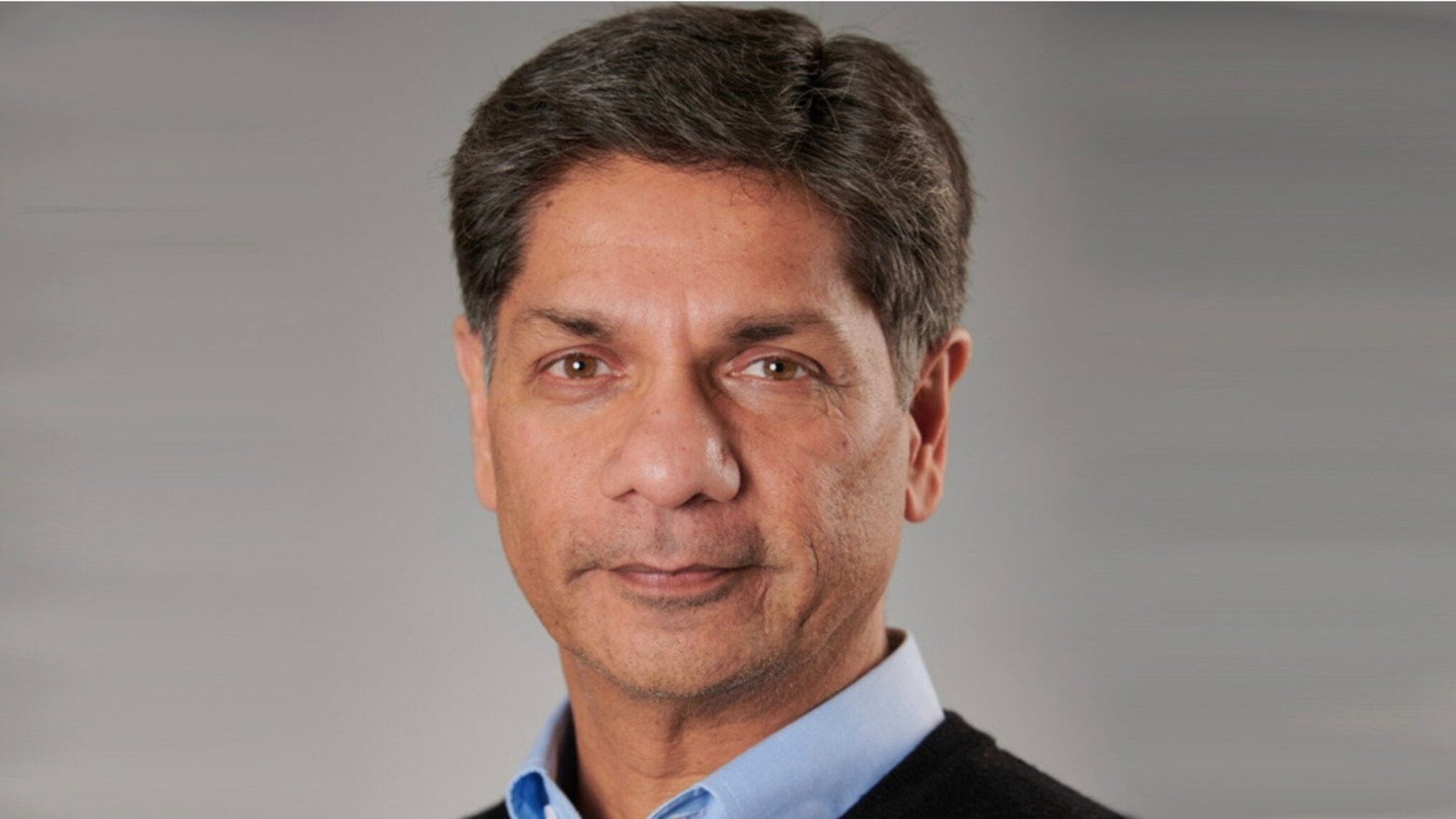
Prahlad Singh
About Prahlad Singh
Prahlad R. Singh, PhD, is President and CEO of Revvity (RVTY) and has served on the board since 2019; he is 60 years old and has held Revvity leadership roles since 2014 after senior positions at GE Healthcare, Philips Healthcare, DuPont Pharmaceuticals and Bristol-Myers Squibb Medical Imaging . He holds a PhD in chemistry (University of Missouri–Columbia) and an MBA (Northeastern University); his research has led to patents and peer-reviewed publications, and he currently serves on the board of Amphenol Corporation, ALDA’s board, and the Massachusetts General Hospital President’s Council . FY2024 performance under his leadership included GAAP EPS of $2.30 (vs. $1.44 in FY2023), adjusted EPS of $4.90 (vs. $4.65), GAAP revenue of $2,755 million (vs. $2,751 million), and GAAP operating income of $347 million (vs. $301 million), reflecting operating margin expansion to 12.6% from 10.9% . Pay-versus-performance analysis emphasizes adjusted revenue, adjusted EPS, organic growth, and free cash flow conversion as the most important financial measures linking compensation to performance, with compensation actually paid analyzed relative to cumulative TSR and the S&P 500 Life Sciences Tools & Services Index .
Past Roles
| Organization | Role | Years | Strategic impact |
|---|---|---|---|
| Revvity (RVTY) | President & CEO | Dec 30, 2019–present | Led strategic transformation; oversaw divestiture discussions of Applied, Food & Enterprise Services and brand transfer; advanced digital/AI, launched integrated e-commerce platform; drove emission and hazardous waste reductions; succession planning . |
| Revvity (RVTY) | President & COO | Jan 2019–Dec 2019 | Preceded CEO appointment; executive leadership continuity . |
| Revvity (RVTY) | President, Diagnostics | 2014–2016 | Led Diagnostics business and later promoted to SVP (2016) and EVP (2018) . |
| GE Healthcare | General Manager, Women’s Health | 2012–2014 | Managed mammography and bone densitometry businesses . |
| GE Healthcare; Philips Healthcare | Senior roles in strategy, BD, M&A | — | Senior executive roles in strategy and transactions . |
| DuPont Pharmaceuticals; Bristol-Myers Squibb Medical Imaging | Regional and leadership roles | — | Managed Asia Pacific and Middle East region; progressive leadership roles . |
External Roles
| Organization | Role | Years | Strategic impact |
|---|---|---|---|
| Amphenol Corporation | Director | Current | Public company board experience . |
| Analytical, Life Sciences & Diagnostics Association (ALDA) | Director | Current | Industry network and governance . |
| Massachusetts General Hospital President’s Council | Member | Current | Healthcare ecosystem engagement . |
Fixed Compensation
| Metric | FY 2022 | FY 2023 | FY 2024 |
|---|---|---|---|
| Base salary ($) | $1,050,000 | $1,086,539 | $1,100,000 |
| Target bonus % of base | — | — | 135% |
| Non-Equity Incentive Plan Compensation ($) | $2,152,763 | $315,563 | $2,530,440 |
| All Other Compensation ($) | $25,309 | $32,477 | $54,839 |
| Total compensation ($) | $10,576,998 | $9,130,624 | $11,926,615 |
Performance Compensation
Short-Term Incentive (Global ICP) structure and outcomes (FY2024)
| Metric | Weighting | Minimum (50%) | Target (100%) | Maximum (200%) | Result | Achievement % |
|---|---|---|---|---|---|---|
| Organic Revenue Growth | 40% | 0.0% | 2.0% | 4.0% | 1.0% | 65% |
| Adjusted EPS | 40% | $4.50 | $4.65 | $4.90 | $4.95 | 200% |
| Free Cash Flow Conversion | 20% | 70% | 80–85% | 100% | 96% | 180% |
| Overall Achievement | — | — | — | — | — | 142% |
| Payout element | Value |
|---|---|
| Corporate performance factor | 142% |
| Individual performance modifier (Singh) | 120% |
| Approved GICP award ($) | $2,530,440 (170% of target) |
Strategic objectives tied to the individual modifier included completing divestiture/brand transfer, organizational restructuring, digital/AI and e-commerce initiatives, emissions/waste reductions, and succession/talent development .
Long-Term Incentive Program (LTIP)
| Component | Allocation | Vesting | 2024 grant detail |
|---|---|---|---|
| PRSUs | 50% | 3-year, performance-based | Grant 2/5/2024: Threshold 15,881; Target 39,702; Maximum 95,285; Fair value $4,125,038 |
| Stock Options | 25% or 50% via equity choice | Time-based; vest 1/3 annually over 3 years; 7-year term | Options 2/5/2024: 110,111 shares; exercise price $104.635; grant-date fair value $4,116,298 |
| LTIP target opportunity (CEO) | — | — | 750% of base salary (2024 target, raised from 700% to align toward 50th percentile) |
Notes: PRSU payouts include a relative TSR performance modifier of ±20% at threshold/maximum per grant design; award values determined using closing stock price ($103.90) on grant date .
Option Exercises and Stock Vested (FY2024)
| Item | Shares | Value realized ($) |
|---|---|---|
| Options exercised | 49,367 | $2,237,008 |
| Stock awards vested | 35,539 | $3,753,629 |
Equity Ownership & Alignment
| Ownership measure (as of Feb 14, 2025) | Quantity | Notes |
|---|---|---|
| Stock (aggregate) | 106,258 | — |
| Stock-based holdings (indirect/deferred) | 37,163 | Includes 401(k)/deferred comp holdings |
| Acquirable within 60 days | 212,336 | Options/RSUs acquirable within 60 days |
| Total beneficially owned | 355,757 | Less than 1% of class |
| Shares outstanding (record date) | 120,147,286 | Context for % ownership |
| CEO stock ownership guideline | 5x base salary | All NEOs in compliance as of 2/14/2025 |
| Hedging/derivatives | Prohibited | — |
| Pledging of company stock | Prohibited for officers | — |
| Insider trading plans | 10b5-1 plans required for NEO trades; max duration one year; waiting period; company approval | — |
Outstanding Equity Awards at FY2024 year-end (Singh)
| Instrument | Exercisable (#) | Unexercisable (#) | Exercise price ($) | Expiration | Vesting notes |
|---|---|---|---|---|---|
| Stock Options (2/5/2031) | 0 | 110,111 | 104.635 | 2/5/2031 | Vest 1/3 per year |
| Stock Options (2/16/2030) | 13,687 | 27,374 | 133.200 | 2/16/2030 | Vest 1/3 per year |
| Stock Options (2/4/2029) | 23,789 | 11,895 | 184.605 | 2/4/2029 | Vest 1/3 per year |
| Stock Options (2/5/2028) | 39,470 | 0 | 144.330 | 2/5/2028 | Vest 1/3 per year |
| Stock Options (1/30/2027) | 47,580 | 0 | 96.060 | 1/30/2027 | Vest 1/3 per year |
| Stock Options (2/5/2026) | 25,525 | 0 | 92.090 | 2/5/2026 | Vest 1/3 per year |
| Time-based restricted stock (2/16/2023) | — | 14,272 | — | — | Vests 100% at 3-year anniversary; market value $1,598,321 at $111.99 |
| PRSUs (2/5/2024 target) | — | 39,702 | — | — | 3-year performance vesting; target payout value $4,446,227 at $111.99 |
| PRSUs (2/16/2023 target) | — | 28,544 | — | — | 3-year performance vesting; target payout value $3,196,643 at $111.99 |
| PRSUs (2/4/2022 target) | — | 20,087 | — | — | 3-year performance vesting; target payout value $2,249,543 at $111.99 |
Employment Terms
| Scenario (as of 12/29/2024) | Cash severance | Benefits | Equity vesting | Total |
|---|---|---|---|---|
| Termination by Company without Cause (non-CIC) | Base salary $2,200,000; prior-year bonus $631,126 | Lump-sum health $46,024; perquisites $20,736 | — | $2,897,886 |
| Disability | — | As per STD/LTD top-ups: 66⅔% weekly up to $2,500; 60% monthly up to $15,000 (Company pays difference) | Restricted stock $2,723,149; options $809,866; PRSUs $9,892,413 | $13,425,428 |
| Death | — | — | Restricted stock $2,723,149; options $809,866; PRSUs $9,892,413 | $13,425,428 |
| Change in Control (no termination) | — | — | — | — |
| Upon Change in Control AND termination without Cause or for Good Reason (double trigger; within 36 months) | Full salary: $3,300,000; prior-year bonus: $946,689; pro rata bonus: $315,563 | Lump-sum health $69,036; perquisites $31,104 | Accelerated vesting: restricted stock $2,723,149; options $809,866; PRSUs $9,892,413 | $18,087,820 |
Change-in-control framework: three-year employment continuity; option exercise period extension to later of third anniversary of CIC or one-year post-termination (not beyond original term); equity acceleration only upon qualifying termination post-CIC, consistent with 2010 policy changes . Excise tax treatment: no gross-up; “best-of” approach—greater of after-tax with excise or reduced to safe harbor threshold . Employment agreements include non-compete, non-solicitation, and non-disclosure provisions to mitigate retention risk and ensure protection of company interests .
Board Governance
- Board service and independence: Singh has been a director since 2019 and is not independent; the board has nine independent directors and one employee director (Singh) . Non-Executive Chair (Alexis P. Michas) and separation of CEO/Chair roles are intended to strengthen oversight; independent directors meet in executive session before/after each regular board meeting . The board met six times in FY2024; all directors attended at least 75% of combined board/committee meetings .
- Committees and participation: Singh is not listed as a member of any standing board committees; compensation & benefits, audit, and nominating & corporate governance committees are fully independent .
- Dual-role implications: Independence concerns from CEO-director dual role are mitigated by the independent chair structure, executive sessions, and Singh’s exclusion from portions of meetings where his compensation is determined .
Compensation Benchmarking and Pay Mix
- Peer group used for 2024 pay comparisons: Agilent, Avantor, Bio-Rad, Bio-Techne, Bruker, Catalent, Cooper, Danaher, Exact Sciences, Hologic, Illumina, QIAGEN, QuidelOrtho, Thermo Fisher, Waters; RVTY revenue at 25th percentile and market cap at 45th percentile of the peer set at time of analysis . Market positioning policy targets median over time; actual pay flexes with performance .
- Pay mix: In 2024, 89% of CEO target compensation was at risk; 75% delivered via long-term equity; half of LTIP equity vests solely on financial performance (PRSUs) .
Performance Compensation Details
| Plan element | Metric | Weighting | Target | Actual | Payout/Notes |
|---|---|---|---|---|---|
| Global ICP (FY2024) | Organic revenue growth | 40% | 2.0% | 1.0% | 65% achievement |
| Global ICP (FY2024) | Adjusted EPS | 40% | $4.65 | $4.95 | 200% achievement |
| Global ICP (FY2024) | FCF conversion | 20% | 80–85% | 96% | 180% achievement |
| Global ICP overall | Corporate achievement | — | — | — | 142% |
| Singh modifier | Individual performance | — | — | — | 120% modifier; Approved award $2,530,440 (170% of target) |
| LTIP PRSUs (2024 grant) | Financial goals + relative TSR modifier | — | 100% target shares | In-progress (3-year cycle) | Threshold 50% with -20% TSR mod; Max 200% with +20% TSR mod |
Equity Award Grant Details (2024)
| Type | Grant date | Shares/Units | Exercise price ($) | Closing price ($) | Grant-date fair value ($) |
|---|---|---|---|---|---|
| PRSU | 2/5/2024 | Threshold 15,881; Target 39,702; Max 95,285 | — | 103.90 | 4,125,038 |
| Stock Options | 2/5/2024 | 110,111 | 104.635 | 103.90 | 4,116,298 |
| GICP target (cash) | 2024 | — | — | — | Target $1,485,000 |
Related Governance Policies
- Clawback: Global ICP includes recoupment for restatements due to material noncompliance with financial reporting laws; committee has right to recover excess .
- Securities trading: 10b5-1 plan requirements; waiting periods; pre-clearance; derivatives and short sales prohibited; pledging prohibited .
Investment Implications
- Pay-for-performance alignment: High variable pay mix and PRSU-heavy LTIP anchor compensation to adjusted EPS, organic growth, FCF conversion, with relative TSR modifier—supporting alignment, though discretionary individual modifiers can amplify payouts beyond formulaic results (Singh at 120% in 2024) .
- Retention and change-in-control economics: Singh’s double-trigger CIC package totals $18.1M including 3x “full salary” (base + prior bonus) and full equity acceleration—strong retention incentives but creates potential event-driven payout risk; absence of excise tax gross-up is shareholder-friendly .
- Selling pressure and supply: 2024 exercises and vesting were material (49,367 options exercised; 35,539 shares vested); trading must occur via 10b5-1 plans, and pledging is prohibited—reducing opportunistic or leveraged selling risk .
- Ownership alignment: Beneficial ownership is <1% of shares outstanding; compliance with 5x salary ownership guideline is affirmed—alignment present but absolute stake is modest relative to free float .
- Governance checks on dual role: CEO-director status is balanced by an independent chair, executive sessions, and exclusion from parts of meetings deciding his own pay—mitigating independence concerns .
- Peer benchmarking: Compensation strategy targets median vs. a robust life sciences tools peer set; RVTY’s scale positioning (revenue 25th percentile) suggests vigilance on pay inflation as targets moved to the 50th percentile and CEO LTIP to 750% of salary .