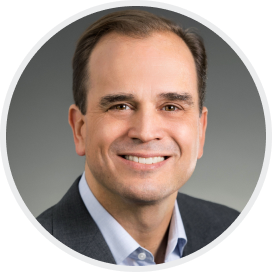
Jonathan Witter
 SLM
SLMAbout Jonathan Witter
Chief Executive Officer and Director of SLM Corporation since April 2020, with prior senior leadership roles spanning Hilton (Chief Customer Officer), Capital One (President, Retail & Direct Banking), Morgan Stanley (COO, Retail Banking Group; President, Morgan Stanley Private Bank), and Wachovia (EVP, Head of General Bank Distribution). Expertise includes banking, financial services, capital markets, operations, and customer experience . Under SLM’s 2024 performance, net income was $590M, diluted EPS $2.68, originations $7.0B (+10% YoY), net charge-offs fell to $332.5M, and 11.6M shares were repurchased; three‑year TSR (12/31/21–12/31/24) was 51.23% vs 4.83% for the peer group, reflecting execution and capital return discipline . Witter serves as principal executive officer, signing the company’s SOX 302/906 certifications .
Past Roles
| Organization | Role | Years | Strategic impact |
|---|---|---|---|
| SLM Corporation | Chief Executive Officer; Director | Apr 2020–present | Leads banking/financial services strategy, operations, and capital return; focuses on profitable private education lending and stakeholder engagement . |
| Hilton Worldwide Holdings | EVP & Chief Customer Officer | 2017–2020 | Drove customer experience at scale . |
| Capital One Financial | President, Retail & Direct Banking; President, Retail & Small Business Banking; EVP, Retail Banking | 2010–2017 | Led consumer banking growth and operations . |
| Morgan Stanley | COO, Retail Banking Group; President, Morgan Stanley Private Bank | 2009–2010 | Built bank operating capabilities . |
| Wachovia (now Wells Fargo) | EVP, Head of General Bank Distribution | 2004–2009 | Led branch/distribution strategy . |
External Roles
| Organization | Role | Years | Notes |
|---|---|---|---|
| Sallie Mae Bank (wholly owned subsidiary) | Director | 2020–present | Affiliate bank board service . |
Fixed Compensation (CEO – 2024)
| Item | 2024 Value | Notes |
|---|---|---|
| Base Salary | $1,100,000 | No change vs 2023 (0.0%) . |
| Target Bonus % of Salary (AIP) | 150% | CEO target opportunity . |
| Actual Annual Incentive Paid | $3,052,500 | Based on 150% AIP funding and individual goals . |
Performance Compensation
2024 Annual Incentive Plan (AIP) – Funding Metrics and Outcomes
| Metric | Weight | Target | Actual | Award Factor | Funding Contribution |
|---|---|---|---|---|---|
| Adjusted Income Per Share | 40% | $8.07 | $8.41 | 146% | 58% . |
| Loan Originations | 25% | $6.862B | $7.013B | 160% | 40% . |
| Adjusted Non‑interest Expenses | 20% | $551.5M | $536.0M | 162% | 32% . |
| Net Charge‑Offs | 15% | $355.2M | $332.5M | 145% | 22% . |
| Total AIP Funding | 150% (cap) . |
AIP design used four balanced, formulaic metrics—Adjusted Income Per Share, Originations, Adjusted Non‑interest Expenses, and Net Charge‑Offs—with CRO risk assessments, clawback provisions, and committee discretion to mitigate excessive risk-taking .
2024 Long‑Term Incentive (LTI) Design and CEO Grants
| Component | CEO Weighting | 2024 Grant Value | Vesting / Metric |
|---|---|---|---|
| RSUs | 40% | $2,900,000 | Vests 1/3 annually over 3 years . |
| PSUs (Relative TSR) | 60% | $4,350,000 (target) | Cliff vests in 2027 based on relative TSR vs defined peer indices; 0–200% payout; 1‑year holding post‑vesting . |
| Grant Timing | — | — | Annual grants made Feb 16, 2024 during open window; committee‑approved schedule . |
| CEO 2024 LTI Total | — | $7,250,000 | As approved by Compensation Committee . |
Realization Check – 2022 PSU Vesting (occurred in 2025)
| Item | Witter |
|---|---|
| PSU Performance Period | Feb 18, 2022–Feb 18, 2025 . |
| Payout vs Target | 170% at ~85th percentile relative TSR . |
| Target Shares | 141,971 . |
| Actual Shares Delivered (incl. DEUs) | 241,351; subject to 1‑year holding until Feb 24, 2026 . |
Equity Ownership & Alignment
| Holder | Shares Owned | Vested Options | Total Beneficial Ownership | % of Class |
|---|---|---|---|---|
| Jonathan W. Witter | 1,131,035 | 441,501 | 1,572,536 | <1% . |
- Stock ownership guidelines: CEO must hold 6× base salary; EVP level 3×. All current NEOs (incl. CEO) were in compliance as of 12/31/24 .
- Hedging and pledging of company stock by directors/executives are prohibited under the Securities Trading Policy, supporting alignment and risk control .
- Equity award practices: annual, pre‑scheduled grant timing; no option backdating; company currently does not grant options broadly; no timing around MNPI .
Employment Terms
- Change‑in‑Control (CIC) Severance (Amended and Restated CIC Severance Plan, effective Jun 18, 2024): Double‑trigger coverage for terminations without cause/for good reason occurring within 6 months before or 24 months after a CIC; CEO multiple = 2.5× (base salary + target bonus); COBRA subsidy for a specified period; outplacement; equity awards generally continue if assumed, but if not assumed they vest at the greater of target or actual performance (as determined) .
- Executive Severance/CIC frameworks govern potential payments outside CIC and at CIC (see Potential Payments section), with award acceleration terms set in the 2021 Omnibus Plan and award agreements .
- Clawbacks: Company maintains an Adjustment Standard and a Financial Restatement Compensation Recovery Policy, enabling recoupment or reduction of incentive compensation and severance in specified misconduct/restatement scenarios; policy filed as Exhibit 97.1 to the 2024 10‑K .
- Tax gross‑ups: Company indicates no excise tax gross‑ups as part of compensation practices (“What We Don’t Do”) .
Board Governance (Director Service, Committees, Independence)
- Board service: Director of SLM since April 2020; also Director of Sallie Mae Bank .
- Independence: Witter is not independent (Executive); Board was 91% independent as of 12/31/24; all key committees comprised solely of independent directors .
- Board leadership: Independent Board Chair (Mary Carter Warren Franke); roles of Chair and CEO are separated; regular executive sessions of independent directors .
- Committees: Witter does not serve on Board committees; committee memberships and chairs are fully independent (e.g., Compensation Chair: Mark L. Lavelle) .
- Attendance: Board met 14 times in 2024; all incumbent directors met ≥75% attendance except a documented one‑time variance for another director due to a family emergency; 12/12 attended the 2024 annual meeting .
Say‑on‑Pay & Shareholder Feedback
| Year | Say‑on‑Pay Support |
|---|---|
| 2020 | 94.4% |
| 2021 | 89.3% |
| 2022 | 98.6% |
| 2023 | 98.1% |
| 2024 | 96.6% |
Sustained high support reflects investor alignment and responsiveness; program features include high at‑risk pay, formulaic AIP, 60% PSU weighting for CEO, double‑trigger CIC, and independent consultant (Aon) without conflicts .
Compensation Peer Group (Benchmarking; used for NEO pay-setting)
Ally Financial (ALLY); Axos Financial (AX); BankUnited (BKU); Commerce Bancshares (CBSH); Credit Acceptance (CACC); Enova (ENVA); F.N.B. (FNB); LendingClub (LC); LendingTree (TREE); OneMain (OMF); Prosperity Bancshares (PB); SoFi (SOFI); Synovus (SNV); Upstart (UPST) .
Performance & Track Record (Selected disclosures)
- 2024 highlights: Net income $590M; diluted EPS $2.68; originations $7.0B (+10% YoY); total non‑interest expenses $642M (down YoY); net charge‑offs $332.5M (down YoY); total assets $30.1B; repurchased 11.6M shares .
- Three‑year TSR through 12/31/24: 51.23% vs 4.83% peer group, 56.30% S&P Supercomposite Consumer Finance Sub‑Industry, and 11.11% S&P 400 Regional Bank Sub‑Industry; ranked ~60th percentile vs peer group .
Compensation Structure Analysis (Signals)
- Mix and risk: CEO LTI 60% PSUs tied to relative TSR with 3‑year performance and 1‑year hold; RSUs vest 3 years. This raises performance and retention linkage while limiting windfalls .
- AIP emphasis: Four balanced metrics (earnings, growth, cost discipline, credit quality) with CRO risk reviews and clawbacks; 2024 funded at 150% with strong performance across all metrics .
- CIC economics: CEO 2.5× base+target under double‑trigger; equity acceleration only if not assumed and at target/actual—guardrails reduce entrenchment risk while preserving retention through uncertainty .
- Governance protections: No excise tax gross‑ups; hedging/pledging prohibited; independent comp committee and advisor .
Vesting Schedules & Insider Selling Pressure
- Near‑term unlock: 2022 PSUs vested at 170% in Feb 2025 with a mandatory hold until Feb 24, 2026—creating a potential liquidity window thereafter; annual RSU tranches continue vesting over 2024–2026 .
- Ownership guidelines and trading policy (including pre‑clearance and hedge/pledge prohibitions) moderate opportunistic selling risk .
Employment Terms (Severance/Change‑of‑Control Economics)
| Provision | CEO Terms |
|---|---|
| CIC protection window | 6 months pre‑CIC to 24 months post‑CIC . |
| Cash severance multiple | 2.5× (Base Salary + Target Bonus) . |
| Equity on CIC | If not assumed: time‑based vests; PSUs at greater of target or actual; if assumed: continue per award terms . |
| Benefits | COBRA subsidy (specified period) and outplacement services . |
| Clawbacks | Adjustment Standard and Restatement Recovery Policy . |
| Tax gross‑ups | None (per program practices) . |
Director Service: History, Committees, Independence Implications
- Dual roles: CEO and Director; not independent; mitigated by independent Board Chair and fully independent key committees (Audit/Comp/Nominating) operating with regular executive sessions .
- Board/committee attendance practices and independence thresholds appear robust; no director‑specific independence exceptions disclosed for Witter beyond executive status .
Other Policies/Programs Relevant to Alignment
- Share ownership guidelines: CEO 6× salary; compliance confirmed at year‑end 2024 .
- Deferred comp and supplemental 401(k) plans available to executives; no pension/SERP benefits disclosed; limited perquisites .
- Related‑party transactions policy and Regulation O adherence; no specific RPTs disclosed for Witter .
Investment Implications
- Alignment: High at‑risk mix (60% TSR‑linked PSUs; AIP tied to earnings/growth/cost/credit) plus strict hedging/pledging ban and robust clawbacks support investor alignment and reduce asymmetry risk .
- Retention/Transition: CIC double‑trigger at 2.5× base+target with equity treatment only if not assumed provides competitive, market‑standard protection without single‑trigger acceleration—adequate retention with limited governance overhang .
- Trading signals: Watch the Feb 24, 2026 PSU hold release as a potential liquidity event; ongoing RSU vesting could add periodic supply—tempered by ownership guidelines and policy constraints .
- Governance overhang: Strong say‑on‑pay support (96.6% in 2024; ≥89% past 5 years) and independent committee/advisor reduce risk of shareholder pushback on pay .
- Execution risk: AIP metrics emphasize adjusted EPS, origination growth, operating expense control, and credit outcomes; sustained achievement is necessary to maintain elevated AIP/LTI realizations; CRO oversight and clawbacks provide downside controls .
Note: All compensation, ownership, policy, and governance data above are sourced from SLM’s 2025 DEF 14A unless otherwise indicated. Earnings certifications are from the Q3 2025 Form 10‑Q exhibits .