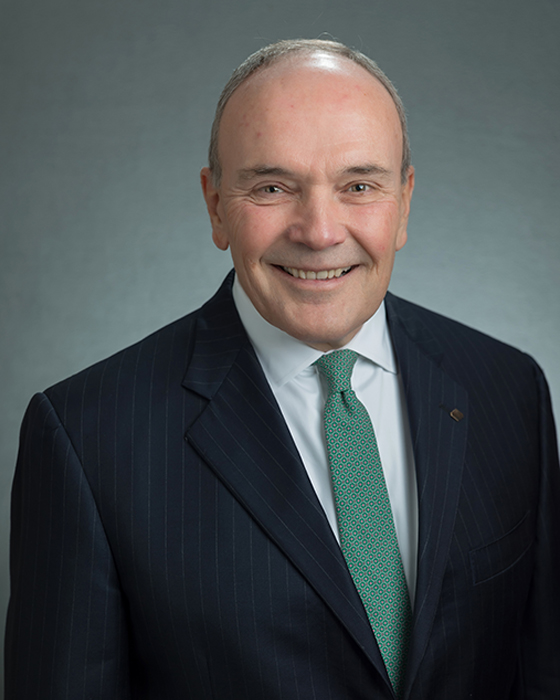
Duane Dewey
 TRUSTMARK
About Duane Dewey
Duane A. Dewey, age 66, is President and CEO of Trustmark Corporation and Trustmark National Bank since January 1, 2021, and a director since 2020; he previously served as President & COO (2020), COO (2019), and President of Corporate Banking (2008–2018), with 21 years at Trustmark and 39 years in financial services . Company performance under his tenure includes 2024 adjusted continuing net income of $186.3 million and adjusted diluted EPS of $3.04 versus $2.60 in 2023 (+17% YoY) , five-year TSR turning a hypothetical $100 into $120.56 in 2024 while ROATE was 12.71% in 2024 . The Board reports strong pay-for-performance alignment, with 2024 MIP payouts averaging 199% of target and PSUs for the 2022–2024 period vesting at 181% of target .
Past Roles
| Organization | Role | Years | Strategic Impact |
|---|---|---|---|
| Trustmark National Bank | President & Chief Operating Officer | 2020 | Executive oversight across retail and institutional banking; drove operational and financial performance |
| Trustmark National Bank | Chief Operating Officer | 2019 | Led operations spanning mortgage, wealth management, insurance; enhanced efficiency |
| Trustmark National Bank | President, Corporate Banking | 2008–2018 | Led corporate banking across diverse geographies and lines of business; provided operational and strategic perspective |
External Roles
| Organization | Role | Years | Strategic Impact |
|---|---|---|---|
| National Association of Corporate Directors (NACD) | Member | N/A | Governance expertise and director education; supports board service effectiveness |
Fixed Compensation
| Metric | 2024 | 2023 | 2022 |
|---|---|---|---|
| Salary Paid ($) | $858,500 | $841,667 | $783,333 |
| Base Salary In-Effect ($) | $867,000 | $850,000 | — |
| Base Salary YoY Change (%) | 2.00% | — | — |
| Target Annual Bonus (% of Salary) | Policy |
|---|---|
| 80% (2024 target) | 2024 MIP bonus ranges: 50% of target at threshold, 100% at target, 200% at maximum |
Performance Compensation
Annual Management Incentive Plan (MIP) – 2024 CEO Metrics, Weighting, Targets and Outcomes
| Metric | Weight | Threshold | Target | Maximum | Actual | Performance Factor | Payout (% of Target) |
|---|---|---|---|---|---|---|---|
| EPS | 50% | $2.16 | $2.54 | $2.92 | $3.15 | 2.00 | 100% |
| Efficiency Ratio | 20% | 69.64% | 66.32% | 63.00% | 62.70% | 2.00 | 40% |
| NPAs/Total Loans + ORE | 10% | 0.98% | 0.82% | 0.66% | 0.65% | 2.00 | 20% |
| Adjusted Non-Interest Expense (Core) ($mm) | 20% | $521.825 | $511.593 | $501.361 | $500.440 | 2.00 | 40% |
| Total | 100% | — | — | — | — | — | 200% |
| Annual Bonus Mechanics | Amounts |
|---|---|
| Threshold/Target/Max Dollar Opportunities (2024) | $346,800 / $693,600 / $1,387,200 |
| Actual 2024 Bonus Paid (NEIP) | $1,387,200 |
Long-Term Equity Incentives – Design and 2024 Grants
| Equity Vehicle | Weight | Design |
|---|---|---|
| PSUs | 50% | 3-year performance (2024–2026) on ROATE (50%) and relative TSR (50%); 0–200% payout; dividend equivalents only on PSUs up to target; settled in shares post-period |
| RSUs (time-based) | 50% | Cliff vest at 3rd anniversary of grant; dividend equivalents vest with shares; settled in shares when vested |
| 2024 Grant Details | PSUs | RSUs |
|---|---|---|
| Grant Date | 2/14/2024 | 2/14/2024 |
| Share Count/Target | 15,812 (Target); 2,767 (Threshold); 31,624 (Max) | 15,811 |
| Grant Date Fair Value ($) | $421,674 | $422,154 |
| Target LTI Award Values | $425,000 (PSUs at target) | $425,000 (RSUs) |
| Grant Pricing Basis | 10-day avg stock price $26.88 (2/1/24–2/14/24) | 10-day avg stock price $26.88 (2/1/24–2/14/24) |
| PSU Performance – 2022–2024 Cycle | Target PSUs Granted | Actual PSUs Earned |
|---|---|---|
| Dewey | 12,244 | 22,162 (181%) |
| Options | Status |
|---|---|
| Stock Options Outstanding/Awarded | None (no options outstanding; no option awards in 2022–2024) |
Equity Ownership & Alignment
| Beneficial Ownership | Shares | % of Outstanding |
|---|---|---|
| Dewey (as of 1/31/25) | 111,711 | <1% (percent not shown where <1%) |
| Shares Outstanding (includes unvested restricted stock) | 60,765,271 | — |
| Outstanding Equity Awards at 12/31/24 | Unvested RSUs (#) | Market Value ($) | Unearned PSUs (#) | Market/Payout Value ($) |
|---|---|---|---|---|
| 2/16/2022 | 12,244 | $433,070 (at $35.37) | 22,162 | $783,870 |
| 2/15/2023 | 14,096 | $498,576 | 14,097 | $498,611 |
| 2/14/2024 | 15,811 | $559,235 | 15,812 | $559,270 |
| Total | 42,151 | $1,490,881 | 52,071 | $1,841,751 |
| Valuation Basis | — | $35.37 closing price (12/31/24) | — | $35.37 closing price (12/31/24) |
| Vesting Mechanics | Details |
|---|---|
| RSUs | Cliff vest at 3rd anniversary of grant (e.g., 2/16/2025; 2/15/2026; 2/14/2027) subject to service |
| PSUs | Vest post 3-year period based on ROATE and relative TSR (e.g., 2024–2026 for 2024 grant) |
| Dividends on Unvested RS/RSUs | Accumulate and vest only with corresponding shares; no equivalents on PSUs above target |
| Value Realized on Vesting (2024) | 33,450 shares; $901,394 |
| Hedging/Pledging | Prohibited; no director or executive officer currently has pledged stock |
| Executive Ownership Guidelines | CEO 5x base salary; unvested time-based restricted stock counts; pledged shares excluded; until compliant, must hold 100% of shares from awards; Dewey expected to satisfy over time |
Employment Terms
| Term | Provision |
|---|---|
| Employment Agreement | Effective Jan 1, 2021; amended Apr 23, 2024 to extend through Dec 31, 2027 |
| Minimum Base Salary | $700,000; subject to annual review; can be reduced if broader senior exec salaries are reduced |
| Annual Bonus Target | 75% of base; may be increased up to 100% post-2021 subject to Board approval |
| Equity Eligibility | Eligible for equity awards as determined by Human Resources Committee |
| Non-CIC Severance | 2× (base salary + average bonus of prior 3 years) + 24 months health benefits; accelerated pro-rata vesting of unvested equity per plan |
| CIC Severance (double-trigger within 2 years) | 3× (base salary immediately prior to CIC + average bonus prior 3 years) + 36 months health benefits + accelerated vesting (time/service satisfied; performance based on results through quarter-end before CIC) |
| Tax Treatment | “Best net” approach to avoid 280G excise tax; reduction only if increases after-tax proceeds |
| Definitions | Cause, Good Reason, Change in Control definitions summarized; full agreements on SEC (10.2 to 8-K 10/27/2020; Amendment 10-ar to 10-Q 5/7/2024) |
Potential Payments (as of 12/31/24 assumptions)
| Component | Non-CIC Termination (Without Cause/Good Reason) | CIC Termination (Within 2 Years; Double-Trigger) |
|---|---|---|
| Severance | — | $1,746,427 |
| Covenant Payment | $3,492,854 | $3,492,854 |
| Restricted Stock – Accelerated Vesting | $1,723,645 | $2,106,140 |
| Executive Deferral Plan | — | — |
| Health & Welfare Benefits | $78,820 | $118,230 |
| Total | $5,295,319 | $7,463,651 |
Retirement and Deferred Compensation
| Plan | Years Credited | Present Value of Accumulated Benefit | 2024 Pension Value Change |
|---|---|---|---|
| Executive Deferral Plan | 21 | $1,348,636 | $12,410 increase (reported in SCT change in pension value) |
Perquisites and Other Compensation (2024)
| Category | Amount ($) |
|---|---|
| Personal Use of Company Aircraft | $34,573 |
| Automobile Allowance/Company Car | $5,386 |
| Dividends on Unvested Time-Based Restricted Stock | $38,779 |
| Club Dues | $10,305 |
| 401(k) Match | $20,700 |
| NQDC Plan Company Contributions | $30,000 |
| Total | $139,743 |
Clawback Policy
Comprehensive executive clawback policy adopted October 24, 2023 consistent with Rule 10D-1 and Nasdaq; recovery applies to cash/equity incentive compensation tied to financial reporting measures for the three completed fiscal years prior to restatement .
Board Governance
| Attribute | Details |
|---|---|
| Board Service | Director since 2020; age 66 |
| Independence | Employee director; not independent |
| Committees | Executive Committee member |
| Executive Committee Meetings (2024) | 2 |
| Lead Independent Director | Richard H. Puckett, Chair/Lead Director of Executive and Nominating & Governance |
| Governance Practices | Nine independent directors; independent sessions without management; formal charters reviewed annually; retirement age 75; stock ownership requirements; CEO succession planning process |
| Director Compensation | Employee directors receive no board/committee compensation |
Performance & Track Record
| Measure | 2020 | 2021 | 2022 | 2023 | 2024 |
|---|---|---|---|---|---|
| Company TSR – Value of $100 Initial Investment | $82.09 | $100.46 | $111.19 | $92.30 | $120.56 |
| Net Income ($ thousands, GAAP) | $160,025 | $147,365 | $71,887 | $165,489 | $223,009 |
| ROATE (%) | 11.71% | 10.38% | 10.78% | 12.95% | 12.71% |
| Adjusted Continuing Net Income ($ mm) | $155.1 | $147.3 | $136.5 | $159.2 | $186.3 |
| Adjusted Diluted EPS ($) | — | — | — | $2.60 | $3.04 |
Compensation Structure Analysis
- 2024 MIP paid at 200% of target for CEO metrics, reflecting above-target EPS, efficiency, credit quality, and expense management; annual bonus paid was $1,387,200 .
- LTI is balanced 50% PSUs (ROATE and relative TSR) and 50% time-based RSUs; PSUs for 2022–2024 vested at 181% of target, reinforcing pay-for-performance linkage .
- No stock options outstanding or granted in 2022–2024, reducing repricing risk; equity mix emphasizes RSUs/PSUs .
- CEO pay ratio for 2024 was 52:1, within typical regional bank ranges for scale, with compensation actually paid to CEO $4.05 million .
- No discretionary bonuses in 2022–2024 and no tax gross-ups for executives; hedging prohibited and pledging limited with none outstanding among directors/executives .
Equity Ownership & Alignment (Additional Signals)
- Dewey’s beneficial ownership of 111,711 shares aligns interests; executive ownership guideline requires CEO to hold shares equal to 5× base salary, with unvested time-based restricted stock counting toward compliance; Dewey expected to satisfy over time and must retain 100% of shares from awards until compliant .
- Upcoming vesting milestones may create mechanical trading pressure around cliff dates (RSUs: 2022 grant vests 2/16/2025; 2023 grant vests 2/15/2026; 2024 grant vests 2/14/2027), and PSU settlements post 12/31/2026 for 2024 grant, subject to performance outcomes .
Employment & Change-of-Control Economics
- Contract extended through Dec 31, 2027; non-CIC severance at 2× salary+avg bonus plus benefits; CIC (double-trigger) severance at 3× salary+avg bonus plus benefits and accelerated vesting; “best net” 280G approach reduces parachute only if after-tax proceeds increase .
- Potential payout modeling as of 12/31/24: $5.30 million non-CIC vs $7.46 million CIC, with significant covenant and equity acceleration components .
- Executive Deferral Plan present value of accumulated benefit for Dewey: $1,348,636 with 21 credited years; payments subject to 162(m) deductibility rule delays .
Board Service Considerations and Dual-Role Implications
- Dewey is an employee director (not independent) and sits on the Executive Committee; Board maintains governance controls including independent sessions, lead independent director (Puckett) chairing Executive and N&G when Board Chair is not independent, and robust ownership/clawback policies to mitigate dual-role risks .
Investment Implications
- Pay-for-performance alignment is strong: 200% MIP payout on disciplined metrics and 181% PSU vesting support execution quality; this is supportive for retention and strategic continuity .
- Upcoming RSU cliff vesting and PSU settlements represent identifiable windows for potential insider-related supply; monitor Form 4s around February anniversaries and post-2026 PSU settlement dates for trading signals .
- CIC protection is robust (3× multiple and broad acceleration), which reduces sale-friction retention risk but could raise parachute optics; “best net” excise mitigation moderates overpayment risk .
- Alignment policies are favorable: 5× salary ownership requirement, clawback adoption, and anti-hedging/pledging stance improve governance quality and reduce red flags for investors .
- No stock options outstanding and no repricing history reduce governance concerns; equity mix emphasizes PSUs/RSUs, which are less prone to misalignment than options in volatile rate environments for regional banks .