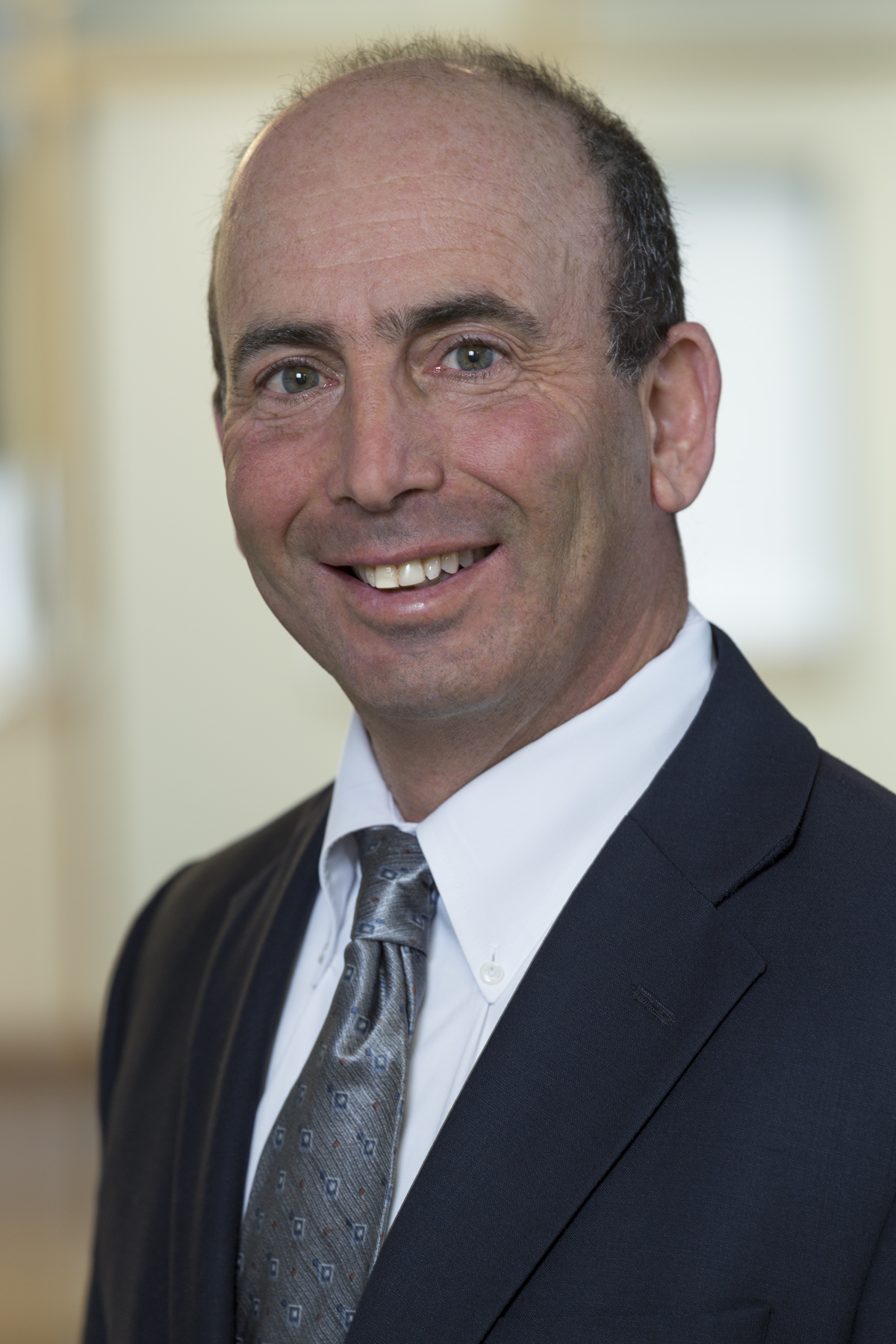
Samuel Landy
About Samuel Landy
Samuel A. Landy, 64, is President and Chief Executive Officer of UMH Properties, Inc., serving as CEO since 1995 and as a director since 1992; he is an attorney-at-law with extensive REIT leadership and operations experience . Under his leadership, UMH delivered strong operating and shareholder outcomes in 2024: Rental and Related Income +9%, Community NOI +10%, Normalized FFO +27% (per share +8% to $0.93), same-property NOI +10%, and occupancy +70 bps; UMH was KeyBanc’s best-performing manufactured housing REIT by TSR in 2024, increased equity market cap 48% YoY, and reduced net debt to total market cap to 20.8% . Over the past five years, total shareholder return (TSR) was ~51% (≈10% CAGR), outperforming the MSCI U.S. REIT Index (RMS) at 23.5%; UMH ranks in the top 20% of REITs by TSR over 1-, 5-, and 10-year horizons .
Past Roles
| Organization | Role | Years | Strategic Impact |
|---|---|---|---|
| UMH Properties, Inc. | Vice President | 1991–1995 | Senior leadership prior to ascension to CEO; contributed to early REIT operating framework . |
| UMH Properties, Inc. | Director | 1992–present | Long-tenured director providing continuity and strategic oversight during portfolio growth . |
External Roles
| Organization | Role | Years | Strategic Impact |
|---|---|---|---|
| Monmouth Real Estate Investment Corporation | Director | 1989–2022 | Cross-REIT board experience informing capital markets and real estate finance decisions . |
Fixed Compensation
Multi-year CEO compensation (as reported):
| Metric (USD) | FY 2022 | FY 2023 | FY 2024 |
|---|---|---|---|
| Salary | $766,000 | $766,000 | $842,600 |
| Bonus (holiday/other) | $29,462 | $29,462 | $32,386 |
| Stock Awards (RSU/PSU grant-date fair value) | $785,492 | $1,776,111 | $1,778,812 |
| Option Awards (grant-date fair value) | $0 | $91,450 | $0 |
| Non-Equity Incentive Plan (STIP) | $1,177,000 | $766,000 | $842,600 |
| All Other Compensation (primarily 401(k) contribution) | $11,600 | $12,200 | $13,200 |
| Total | $2,769,554 | $3,441,223 | $3,509,598 |
Observations:
- 2024 STIP equaled 100% of base salary ($842,600), consistent with “Target” achievement .
- Equity is the largest pay component, with PSUs/RSUs dominating long-term incentives in 2023–2024; few/zero options for the CEO post-2023 .
Performance Compensation
Short-Term Incentive Program (STIP)
| Element | Weighting | Target Framework | 2024 Actual | Payout Basis |
|---|---|---|---|---|
| Normalized FFO per share growth | 75% | CEO payout as % of base salary: Threshold 50% (1–4.99%), Target 100% (5–9.99%), Max 150% (>10%) | +8.1% YoY (to $0.93), achieving Target | CEO STIP paid at Target (100% of base salary) |
| Discretionary/Individual & Company goals (TSR, occupancy, same-property NOI, sales, G&A, rental home growth, acquisitions/expansions/JV, capital raising/refi, ESG) | 25% | Committee assessment | Committee awarded remaining 25% at Target based on 2024 execution | Included in 2024 STIP outcome |
Long-Term Incentive Program (LTIP, 2023–2025 cycle; annual grants)
| Instrument | Weighting | Mechanics | Vesting |
|---|---|---|---|
| Time-based RSUs | 1/3 | Shares = award $ / grant-date price | Ratable over 3-year contract term |
| PSU – Strategic Milestones | 1/3 | Nine metrics over 3 years; Threshold 4/9, Target 6/9, Max 9/9. Metrics: Normalized FFO/share +10%; TSR +15%; same-property occupancy +150 bps; NOI +10%; sales +15%; acquisitions $50M; development 600 sites (incl. JV/OZ); capital raising $150M; ESG (ISS metrics, energy retrofits in 30 communities/homes, water submetering in 10 communities) | Earnout at period end |
| PSU – Relative TSR | 1/3 | Relative TSR vs MSCI US REIT Index; Threshold 25th pct, Target 55th, Max 75th | Earnout at period end |
2024 CEO equity grants:
| Grant Type | Grant Date | Shares (Target) | Grant-Date Fair Value (USD) |
|---|---|---|---|
| RSU (time-based) | 3/26/2024 | 35,634 | $558,022 |
| PSU – Strategic (Target) | 3/26/2024 | 35,634 | $558,023 |
| PSU – TSR (Target) | 3/26/2024 | 35,633 | $662,767 |
Vesting/realization in 2024:
- CEO had 53,196 shares vest; realized value $856,459; no option exercises in 2024 .
Equity Ownership & Alignment
| Item | Detail |
|---|---|
| Beneficial ownership | 1,418,531 shares; 1.71% of outstanding |
| Composition | Includes 12,020 shares owned by spouse; 44,216 joint; 48,023 Landy 2022 Family Trust; 48,000 EWL Grandchildren Fund; 161,800 shares issuable via options; 404,151 unvested restricted stock; excludes 17,700 not-yet-exercisable options; 92,690 shares held in UMH 401(k) for his benefit (co-trustee; disclaims others) |
| Pledging (RED FLAG) | 113,886 shares in a margin account; 627,146 shares pledged as loan collateral |
| CEO ownership guideline | 6x base salary required; policy includes various forms of ownership |
| Compliance | CEO holds ~31x base salary in UMH shares as of 12/31/2024—well above guideline |
| Hedging policy | Anti-hedging and derivatives prohibition for insiders |
| Clawback | 3-year no-fault clawback for short- and long-term incentives upon restatement/material error, limited exceptions |
Vesting Schedules and Overhang (Potential Selling/Delivery Supply)
- Unvested stock awards at 12/31/2024: 316,239 shares (market value $6,592,054; RSUs/PSUs valued at $18.88 for RSU/PSU-Strategic; PSU-TSR modeled at $27.29 for accounting) .
- Scheduled vesting: 68,569 (2025), 213,693 (2026), 21,979 (2027), 11,998 (2028) shares .
- Options outstanding (CEO): 50,000 @ $14.25 (exp. 1/19/2027), 50,000 @ $15.04 (exp. 4/4/2027), 50,000 @ $13.09 (exp. 4/2/2028), plus 5,900/23,600 @ $14.36 (exp. 3/21/2033) exercisable/unexercisable .
- 2024 realizations: CEO had no option exercises; vesting of 53,196 shares occurred .
Implication: Large scheduled RSU/PSU vesting through 2026 could create periodic supply; significant share pledging introduces counterparty/liquidity risk in stress scenarios .
Employment Terms
| Term | Summary |
|---|---|
| Agreement | Amended and Restated Employment Agreement effective 1/1/2023; initial 3-year term; auto-renews annually thereafter unless terminated |
| Pay elements | Base salary, annual cash bonus (STIP) tied to corporate/financial metrics, and LTIP (RSU, PSU-Strategic, PSU-TSR) |
| Benefits | Standard executive benefits (vacation, life/health insurance, 401(k) participation) |
| Severance (no-Cause/Good Reason/non-renewal/death/disability) | Cash: 3x (or 1x for death/disability) of base salary + average bonus over prior 3 years; paid over 36 months (12 months for death/disability), unless within 24 months of Change in Control (CoC), then lump sum, subject to 409A |
| Equity on separation | Unvested options/time-based equity vest ratably over 36 months post-termination (12 months for death/disability) as if employed |
| Change in Control | Employment agreements: double-trigger cash severance (3x base+bonus) in lump sum on qualifying termination within 24 months; equity plan provides double-trigger vesting or single-trigger if awards are not assumed by acquirer |
| No gross-ups | No excise tax gross-ups; no single-trigger acceleration in employment agreements; no option repricing; minimum one-year vesting on awards (5% carveout) |
| Estimated payouts (12/31/2024 scenario) | CEO: $13,191,710 for termination not for cause/for good reason; same amount for qualifying termination after CoC; $5,914,144 for death or disability |
Board Governance
- Role/tenure: CEO and Director since 1992; not Chairman (Chairman is Eugene W. Landy) .
- Independence: Board deems Samuel A. Landy non-independent; UMH separates Chair and CEO and has an independent Presiding Director (Matthew I. Hirsch) presiding over executive sessions .
- Committee roles: As an executive director, he is not listed as a member of the Audit, Compensation, or Nominating & Corporate Responsibility Committees (those are fully independent) .
- Attendance: All directors attended all Board and committee meetings in 2024 .
Say-on-Pay & shareholder feedback:
- 2024 Say-on-Pay support exceeded 88% of votes cast, indicating broad shareholder approval for executive pay design .
Compensation peer group and positioning:
- Peer set includes diversified and residential REITs (e.g., BNL, ELME, EPRT, TRNO, NHI); updates reflect relative size and ISS peers .
- CEO total compensation is below median and average of Comparable REIT CEOs; below the 25th percentile versus REITs with similar employee counts (per 2024 Nareit Survey/Korn Ferry advise) .
Investment Implications
- Alignment positives: High at-risk mix via PSUs/RSUs; clear STIP metric weighting (75% tied to Normalized FFO/share); robust ownership requirements, anti-hedging, and clawback; CEO exceeds ownership guideline by ~5x+ (31x base salary) .
- Performance execution: 2024 operating metrics (NOI/FFO/occupancy) and capital markets progress support Target STIP payout; multi-year TSR outperformance suggests LTIP constructs are directionally aligned with investor returns .
- Red flags: Significant share pledging by CEO (≈741k pledged/margin combined) could amplify downside risk in market stress and may conflict with best practices; large scheduled RSU/PSU vesting through 2026 may create periodic supply pressure .
- Governance structure: Separate Chair/CEO and independent committees mitigate some dual-role concerns, but family concentration on the board (Eugene W. Landy, Michael P. Landy, and Samuel A. Landy as non-independent) warrants monitoring for succession and independence dynamics .
- Change-in-control economics: Double-trigger, 3x base+bonus with continued vesting typical for REITs; no gross-ups, no single-trigger; terms are shareholder-friendlier than many legacy plans, though absolute payout scale (~$13.2M modeled) is material .
Overall: Pay design is largely performance-linked with measured governance enhancements (clawback, anti-hedging, ownership). The principal risk flag is the magnitude of pledged shares, which could influence trading dynamics and risk management posture in adverse markets. Continuous monitoring of vesting events, any Form 4 activity, and progress against 2023–2025 LTIP metrics is advised .