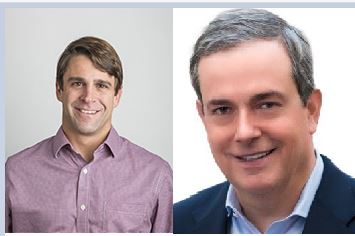
Sandy Douglas
 UNITED NATURAL FOODS
About Sandy Douglas
J. Alexander (Sandy) Miller Douglas, age 64, has served as UNFI’s Chief Executive Officer and as a director since August 2021; prior roles include CEO of Staples (2018–2021) and President of Coca‑Cola North America during a 30‑year tenure at The Coca‑Cola Company, with early career roles at Procter & Gamble . Under his leadership in fiscal 2025, UNFI delivered approximately $32B in net sales (+4.6% YoY on a comparable 52‑week basis) and $552M Adjusted EBITDA (+8.7% YoY), reduced debt by ~$230M, and lowered net leverage by 0.7x, aligning pay outcomes with performance as FY23–25 PSUs paid at 45% of target and FY25 annual incentives paid ~121% of target . Say‑on‑Pay support remained strong at 93.9% in December 2024 (92.7% the prior year), reflecting shareholder endorsement of compensation design changes emphasizing multi‑year cumulative targets and free cash flow alignment .
Past Roles
| Organization | Role | Years/Notes | Strategic Impact |
|---|---|---|---|
| Staples, Inc. | Chief Executive Officer | Apr 2018–Jun 2021 | Led business‑to‑business distribution platform transformation . |
| The Coca‑Cola Company | President, Coca‑Cola North America; Global Chief Customer Officer; various sales/marketing roles | 30‑year tenure; President through Feb 2018 | Oversaw ~$10B flagship market with consumer and B2B operations . |
| Procter & Gamble | Sales and sales management | Early career | Built foundational CPG commercial and customer leadership experience . |
External Roles
| Organization | Role | Years |
|---|---|---|
| UNFI | Director | Since Aug 2021 . |
| Wawa Inc. | Director | Since May 2020 . |
Fixed Compensation
| Metric | FY 2024 | FY 2025 | FY 2026 (effective Nov 9, 2025) |
|---|---|---|---|
| Base Salary ($) | $1,050,000 | $1,050,000 | $1,150,000 (↑9.5%) . |
| Target Bonus ($) | — | $1,575,000 target under AIP for FY25 | Target bonus set to 161% of salary (policy percentage) . |
| Target LTI Award ($) | — | $6,375,000 | $7,750,000 (↑ to align with market median; +19% overall target comp change with salary/bonus adjustments) . |
Performance Compensation
Annual Incentive – FY 2025
| Element | Target ($) | Actual Payout ($) | Payout (% of Target) | Performance Metrics / Notes |
|---|---|---|---|---|
| CEO AIP | $1,575,000 | $1,908,648 | ~121% (companywide AIP payout) | Metrics: Adjusted EBITDA and Free Cash Flow; no discretionary adjustments related to the Q4 FY25 cybersecurity incident . |
- For FY 2026, the Compensation Committee raised the AIP maximum from 150% to 200% to better align with market practice and incentivize outperformance; a four‑point payout curve requires significant outperformance for higher payouts .
Long‑Term Incentives – FY 2025 Grants (granted Dec 19, 2024)
| Award Type | Grant Date | Shares at Target (#) | Max (#) | Grant‑Date Fair Value ($) | Vesting | Performance Metrics / Modifiers |
|---|---|---|---|---|---|---|
| PSUs | 12/19/2024 | 145,936 | 291,872 | $4,118,314 | Cliff at 3 years | 3‑yr cumulative Core Adjusted EPS (60%) and 3‑yr cumulative Free Cash Flow (40%); Relative TSR ±10% modifier; PSU payout capped at 200% including TSR modifier for awards on/after 12/19/2024 . |
| RSUs | 12/19/2024 | 97,291 | — | $2,549,997 | 1/3 annually beginning 12/19/2025 | Time‑based vesting; retention‑focused . |
Prior PSU Cycle – FY 2023–2025
| Cycle | Metrics | Final Payout |
|---|---|---|
| FY23–FY25 PSUs | Adjusted EPS and Adjusted ROIC; Relative TSR modifier applied | 45% of target; TSR modifier reduced payout by 10% . |
Equity Ownership & Alignment
Beneficial Ownership (as of Oct 22, 2025)
| Holder | Shares Beneficially Owned | % Outstanding |
|---|---|---|
| J. Alexander (Sandy) Miller Douglas | 315,107 (includes 600 held by spouse) | <1% . |
Outstanding Awards at FY‑End (as of Aug 1–2, 2025; NYSE close $27.01)
| Award Type | Unvested/Unearned Shares (#) | Market/Payout Value ($) | Notes |
|---|---|---|---|
| RSUs | 236,656 | $6,392,079 | RSUs vest 1/3 annually beginning one year post‑grant . |
| PSUs | 661,784 | $17,874,786 | PSUs shown at maximum (200%); three‑year performance cycles; Relative TSR modifier applies; post‑Dec 2024 grants capped at 200% inclusive of TSR . |
FY 2025 Vesting Activity
| Shares Vested (#) | Value Realized ($) | Shares Surrendered for Taxes (#) |
|---|---|---|
| 111,415 | $2,497,832 | 24,191 . |
Ownership Policies and Alignment
- CEO stock ownership guideline: 6x base salary; officers must comply within five years; due to sustained stock price decline, the five‑year accumulation period was reset at end of FY25; as of Aug 2, 2025, executives were in compliance or on track .
- Hedging and pledging of company stock are prohibited for directors and executive officers; trading is restricted to open windows with preclearance or under Rule 10b5‑1 plans established in open windows .
- No stock options outstanding or exercised in FY25 for the CEO (option activity reported as zero) .
Employment Terms
Severance and Change‑in‑Control (CIC) Framework
- UNFI adopted an Executive Severance Plan on Sep 25, 2025; most executives transitioned as legacy agreements expired, while Mr. Douglas remains on his existing severance agreement until expiration; protections include restrictive covenants (confidentiality indefinite; non‑compete/non‑solicit generally one year post‑employment under severance plan; two years for CIC agreements following qualifying termination) .
- CIC benefits are double‑trigger (requires both a CIC and a qualifying termination); no excise tax gross‑ups .
- CEO severance/CIC multiples: 2x base and 2x target bonus on severance; 2.5x base and 2.5x target bonus on CIC; prorated bonus based on actual performance in both cases; lump‑sum medical benefit of $70,000 (severance) or $87,500 (CIC) .
Potential Payments if Terminated on Aug 2, 2025 (CEO)
| Scenario | Cash Severance Pay ($) | Medical Benefits ($) | Acceleration of Stock Awards ($) | Total ($) |
|---|---|---|---|---|
| Separation from Service Without Cause (incl. Good Reason) | $7,158,648 | $70,000 | $7,853,779 | $15,082,427 . |
| Termination Without Cause not qualifying as Separation from Service without Cause | $7,158,648 | $70,000 | — | $7,228,648 . |
| Termination Without Cause or Resignation for Good Reason following CIC | $8,471,148 | $87,500 | $15,329,471 | $23,888,119 . |
| Death or Disability | $1,575,000 target bonus | — | $15,329,471 | $16,904,471 . |
- Equity treatment on death/disability: unvested RSUs vest; PSUs vest at target; unexercisable options (if any) forfeited; vested options exercisable up to one year or original expiry, whichever earlier .
- Plan‑level separation mechanics include prorated vesting for qualifying separations and retirement‑eligibility continued vesting, subject to release and committee discretion .
- Robust clawback and recoupment policies in addition to NYSE‑mandated clawback (Rule 10D‑1), covering restatements, material inaccuracies, and misconduct causing material financial or reputational harm, with potential forfeiture and recovery and required disclosure of recoupment actions .
Board Governance
- Board service: Director since Aug 2021 (not independent due to CEO role); UNFI maintains an independent, non‑executive Chair (Jack Stahl) and 9 of 10 directors are independent; all committees are fully independent .
- Committee roles: Mr. Douglas does not serve on Audit, Compensation, or Nominating & Governance Committees per the committee matrix .
- Board operations: The Board met eight times in FY25; non‑employee directors held executive sessions after each regular quarterly meeting; all directors attended at least 75% of Board and committee meetings; committee charters updated June 2025 .
- Director compensation: The CEO receives no additional compensation for Board service (non‑employee director compensation program excludes executives) .
- Outside board limits: UNFI policy caps CEO and executive officers at a maximum of two public company boards inclusive of UNFI; independent directors capped at four public boards .
Performance & Track Record
- FY 2025 execution: Delivered net sales of ~$32B (+4.6% on 52‑week basis) and Adjusted EBITDA of $552M (+8.7% on 52‑week basis); reduced total debt by ~$230M to $1.86B and lowered net leverage by 0.7x YoY, consistent with the refreshed strategy focused on efficiency, network optimization, working capital and reduced capital intensity .
- Cybersecurity incident: In Q4 FY25, UNFI experienced unauthorized IT activity; Board and Audit Committee provided oversight with near‑daily updates; no positive discretion applied to incentive payouts related to the incident .
- Shareholder outcomes: FY23–25 PSUs paid at 45% of target (rigorous targets; TSR modifier reduced payout by 10%); Say‑on‑Pay approvals of 93.9% (Dec 2024) and 92.7% (prior year) .
Compensation Committee, Peer Group, and Program Design
- The Compensation Committee (independent directors with FW Cook as independent consultant) targets pay near market median to mitigate retention risk; for FY26, raised CEO target LTI, salary, and target bonus % (to 161%) to address below‑median positioning while maintaining a heavy at‑risk mix (CEO 88%) .
- Comparator group updated for FY25 (removed Rite Aid and CDW; added Tyson Foods) with UNFI at ~71st percentile on revenue but ~13th percentile on market cap vs peers; committee also uses Willis Towers Watson retail/wholesale survey data .
- Program enhancements responsive to investors: added Free Cash Flow to STI and LTI; moved to 3‑year cumulative PSU targets (Core Adjusted EPS 60%/FCF 40%); capped PSU payouts at 200% inclusive of TSR .
Director Compensation (for completeness; CEO excluded)
- Non‑employee director program: $110,000 annual cash retainer; $150,000 for Independent Chair; committee chair retainers ($30,000 Audit; $20,000 Compensation; $20,000 Nominating & Governance); annual RSUs valued at $175,000; stock ownership guideline of 5x cash retainer; hedging and pledging prohibited .
Investment Implications
- Alignment and performance sensitivity: High at‑risk pay (CEO 88%) with multi‑year PSU metrics (EPS/FCF) and TSR modifier, and low FY23–25 PSU payout (45%) indicate discipline; FY25 AIP at ~121% reflects operating momentum in EBITDA and FCF, but structure mitigates windfalls via caps and clawbacks .
- Near‑term selling pressure and dilution watch: Significant unvested RSUs and maximum‑level PSUs outstanding (aggregate potential 898k+ shares for CEO at FY25 price basis) and annual RSU vesting cycles can create periodic sell‑to‑cover tax activity; equity plan share increase (requesting +1.5M shares) suggests continued equity usage—monitor burn rate and vesting calendars .
- Retention vs. transaction incentives: CEO severance (2x) and CIC (2.5x) with double‑trigger and prorated bonuses provide downside protection without single‑trigger acceleration; strong restrictive covenants and absence of tax gross‑ups are shareholder‑friendly .
- Governance quality offsets dual‑role concerns: Independent Chair, fully independent committees, robust clawback/recoupment, and anti‑hedging/pledging policies mitigate risks associated with CEO/director dual roles and support oversight quality .
- Execution focus: FY25 results (sales growth, EBITDA growth, deleveraging) and compensation metrics’ shift to FCF align incentives to balance growth and balance sheet health; continued delivery on network optimization and working capital is key to sustaining above‑target AIP payouts and PSU realizations .
Data Appendices
Multi‑Year CEO Compensation (Summary Compensation Table)
| Metric | FY 2023 | FY 2024 | FY 2025 |
|---|---|---|---|
| Salary ($) | $1,050,000 | $1,070,192 | $1,050,000 |
| Stock Awards ($) | $5,135,192 | $5,029,570 | $6,668,311 |
| Option Awards ($) | — | — | — |
| Non‑Equity Incentive Plan Compensation ($) | — | $1,508,072 | $1,908,648 |
| All Other Compensation ($) | $16,250 | $11,500 | $28,216 |
| Total ($) | $6,201,442 | $7,619,334 | $9,655,175 |
