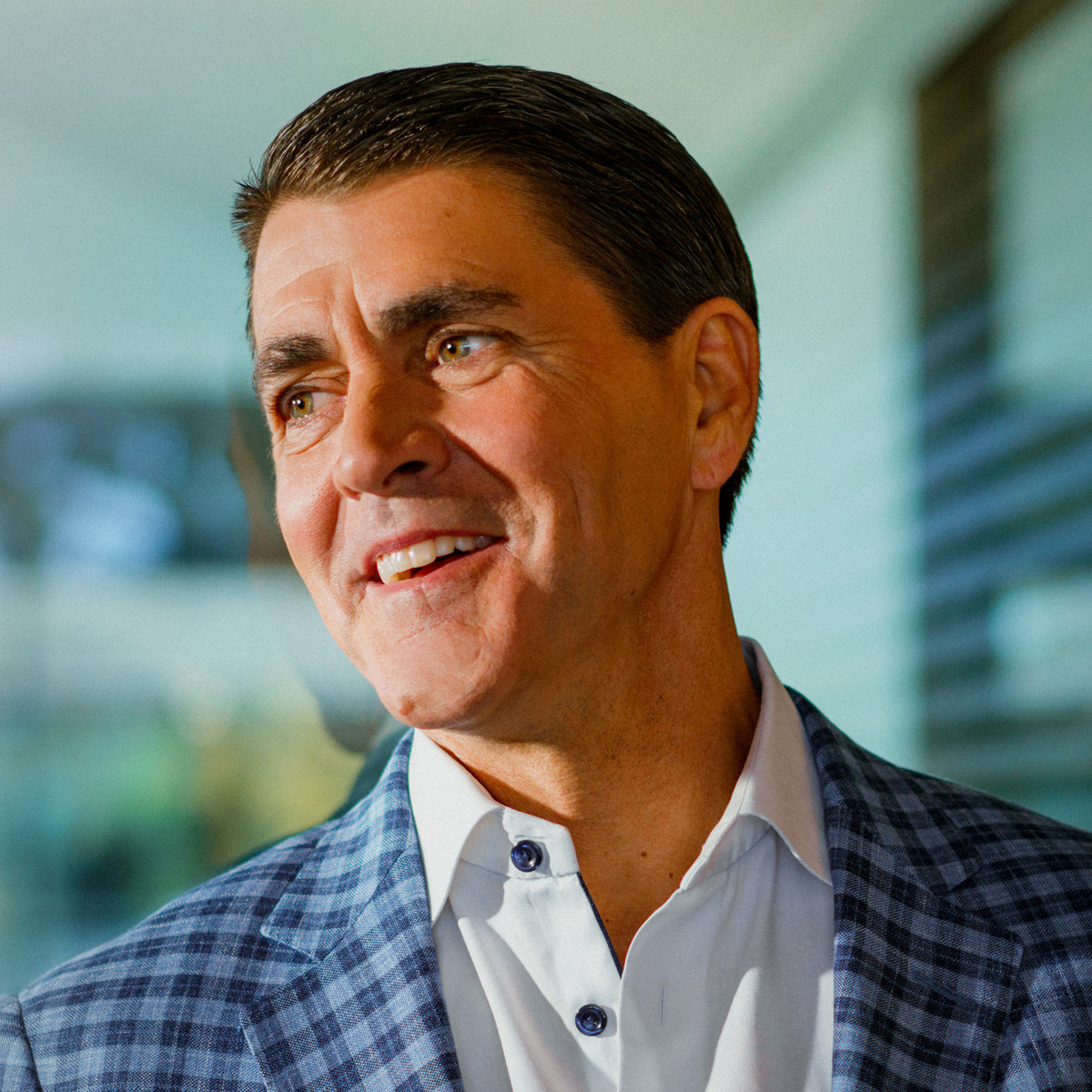
Carl M. Eschenbach
 Workday
About Carl M. Eschenbach
Workday’s Chief Executive Officer since February 1, 2024 (Co‑CEO from December 20, 2022), age 58; director since 2018. Background includes President & COO at VMware, partner at Sequoia, and multiple public tech boards; education: DeVry University electronics technician diploma . Under his tenure in FY2025, Workday delivered 16% total revenue growth to $8.4B, 17% subscription revenue growth to $7.7B, and 15% operating cash flow growth to $2.5B . Say‑on‑pay approval was 82%; the company will add PSUs and profit metrics to FY2026 pay design .
Past Roles
| Organization | Role | Years | Strategic impact |
|---|---|---|---|
| VMware, Inc. | President & COO | 2012–2016 | Scaled enterprise software operations; strong operating leadership grounding |
| Sequoia Capital Operations, LLC | General Partner (2016–Dec 2022); Venture Partner (current) | 2016–present | Enterprise investing/operator perspective; network access |
| Inktomi, 3Com, Lucent, EMC | Sales leadership roles | Prior to 2012 | Deep go‑to‑market expertise for scaling Workday |
External Roles
| Organization | Role | Years | Notes |
|---|---|---|---|
| Palo Alto Networks, Inc. | Director | 2013–present | Current public board |
| Aurora Innovation, UiPath, Zoom, Snowflake | Director | 2016–Mar/Apr 2023 | Prior public boards; stepped down 2023 |
Fixed Compensation
| Element | FY2025 Amount | Notes |
|---|---|---|
| Base salary | $1,000,000 | Approved annual base |
| Target bonus (% of salary) | 150% | CEO target under cash bonus plan |
Summary compensation (CEO)
| Year | Salary ($) | Bonus ($) | Stock Awards ($) | Non‑Equity Incentive Plan ($) | All Other ($) | Total ($) |
|---|---|---|---|---|---|---|
| 2025 | 1,000,000 | — | 23,909,133 | 1,225,500 | 38,559 | 26,173,192 |
| 2024 | 1,000,000 | — | — | 1,500,000 | 21,664 | 2,521,664 |
| 2023 | 119,231 | — | 102,563,097 | — | 2,981 | 102,685,309 |
Perquisites/other CEO items (selected): 401(k) match, minor gift gross‑ups, car service, imputed income for occasional personal air charter use; no tax gross‑ups on aircraft usage .
Performance Compensation
Annual cash bonus design (FY2025)
| Metric | Weight | Target | Actual Result | Payout vs Target | Notes |
|---|---|---|---|---|---|
| Adjusted subscription revenue | 80% | $7.770B | $7.701B | 82.4% | Threshold $7.671B; linear interpolation; if threshold not met, no funding for either metric |
| Customer satisfaction score | 20% | 95%+ | 92.9% | 79% (cap 100%) | Expanded to include acquired products |
| Overall plan payout | — | — | — | 81.7% | CEO paid 81.7% of target |
CEO FY2025 bonus payout
| Target (% salary) | Paid ($) | % of Target |
|---|---|---|
| 150% | 1,225,500 | 81.7% |
Equity awards and vesting
- FY2025 annual RSU: 93,490 shares granted 4/24/2024; grant date fair value $23,909,133; vests 25% after 1 year then quarterly over 12 quarters (service‑based) .
- New‑hire equity (Dec 2022): RSUs plus market‑based PVUs with three tranches tied to stock price hurdles; monthly service vesting and 1‑year holding period after release .
- PVU tranches status (as of 1/31/2025):
- Tranche 1 ($194.80): 101,217 sh; 42,175 earned & vested; 59,042 earned & unvested
- Tranche 2 ($233.76): 101,217 sh; 42,175 earned & vested; 59,042 earned & unvested
- Tranche 3 ($272.72): 101,216 sh; unearned .
PVU detail (as of 1/31/2025)
| Tranche (Performance period) | Price hurdle | Tranche size | Earned & vested | Earned, unvested | Not earned |
|---|---|---|---|---|---|
| Tranche 1 (Years 1–3) | $194.80 | 101,217 | 42,175 | 59,042 | — |
| Tranche 2 (Years 2–4) | $233.76 | 101,217 | 42,175 | 59,042 | — |
| Tranche 3 (Years 3–5) | $272.72 | 101,216 | — | — | 101,216 |
FY2026 design changes (introduced post‑FY2025):
- 25% of executive equity in PSUs; earned over 3 fiscal years on “Profitable Growth” (adjusted subscription revenue and adjusted non‑GAAP operating margin), cap 150%; earned PSUs vest at end of 3‑year period .
- Cash bonus adds non‑GAAP operating margin; 80% weighting to financials (adjusted subscription revenue dollars + non‑GAAP operating margin) .
Clawback and trading/hedging:
- Nasdaq‑compliant recoupment policy for restatements; recovery up to 3 years .
- Hedging and pledging of company stock prohibited; executives generally must use Rule 10b5‑1 plans; quarterly trading blackout periods apply .
Equity Ownership & Alignment
Beneficial ownership (as of April 7, 2025)
| Holder | Class A Shares | Class B Shares | % Voting Power |
|---|---|---|---|
| Carl M. Eschenbach | 249,355 (incl. 18,978 RSUs & 6,748 PVUs vesting within 60 days) | — | <1% |
Outstanding awards (as of 1/31/2025)
| Award type | Shares unvested | Notes |
|---|---|---|
| RSUs (4/24/2024 grant) | 93,490 | Service vesting |
| RSUs (12/28/2022 grant) | 151,826 | Service vesting |
| PVUs earned & unvested (Tranches 1–2) | 118,084 | Service vesting monthly through 12/5/2027 |
| PVUs unearned (Tranche 3) | 101,216 | Requires price hurdle achievement |
| Shares vested in FY2025 | 138,331 | Value realized on vesting $35,811,101 |
Ownership/pledging policies and guidelines
- CEO ownership guideline: 6x CEO base salary; directors (other than CEO/Executive Chair): $600,000 . Compliance status not disclosed.
- Hedging/pledging prohibited; no short sales or exchange funds; margin pledging prohibited .
Insider reporting
- Section 16(a) late filings disclosed for Mr. Eschenbach on March 3, 2024 and June 11, 2024 .
Employment Terms
Status and start dates
- Co‑CEO appointment December 20, 2022 (employment agreement executed; at‑will); sole CEO effective February 1, 2024 .
Key employment/equity terms (Dec 20, 2022 agreement)
- Base salary $1,000,000; target bonus 150% .
- New‑hire equity: RSUs (multi‑year) and PVUs tied to stock price hurdles; PVUs split into 3 tranches with 5‑year performance window; monthly service vest; 1‑year post‑release holding .
- CIC treatment: time‑based awards fully accelerate upon qualifying CIC termination (double‑trigger design per policy); PVUs accelerate only to the extent the relevant price hurdles are met at the CIC price .
- Non‑compete: up to 2 years post‑CIC if acceleration benefits are received, as a condition to benefits .
Executive Severance Policy (current; selected CEO economics assuming 1/31/2025)
| Scenario | Cash severance | Target bonus | COBRA | Accelerated equity (intrinsic value) | Total |
|---|---|---|---|---|---|
| Non‑CIC Qualifying Termination | $2,500,000 | $1,500,000 | $52,310 | $29,177,498 | $33,229,808 |
| CIC Qualifying Termination (double‑trigger) | $2,000,000 | $3,000,000 | $104,619 | $70,732,615 | $75,837,234 |
Other design features: no single‑trigger CIC acceleration; no tax gross‑ups for parachute payments .
Performance & Track Record
Company operating performance
- FY2025 highlights: Total revenue $8.446B (+16% YoY), subscription revenue $7.718B (+17%), operating cash flow $2.5B (+15%) .
Recent financials (last 8 quarters; $USD)
| Metric | Q3 2024 | Q4 2024 | Q1 2025 | Q2 2025 | Q3 2025 | Q4 2025 | Q1 2026 | Q2 2026 |
|---|---|---|---|---|---|---|---|---|
| Revenues | $1,866,000,000* | $1,922,000,000* | $1,990,000,000* | $2,085,000,000* | $2,160,000,000* | $2,211,000,000* | $2,240,000,000* | $2,348,000,000* |
| EBITDA | $157,000,000* | $151,000,000* | $147,000,000* | $191,000,000* | $246,000,000* | $250,000,000* | $289,000,000* | $330,000,000* |
| Operating Income | $88,000,000* | $79,000,000* | $72,000,000* | $112,000,000* | $165,000,000* | $159,000,000* | $205,000,000* | $249,000,000* |
| Values retrieved from S&P Global.* |
Annual financials (last 2 fiscal years; $USD)
| Metric | FY 2024 | FY 2025 |
|---|---|---|
| Revenues | $7,259,000,000* | $8,446,000,000* |
| EBITDA | $465,000,000* | $825,000,000* |
| Operating Income | $183,000,000* | $499,000,000* |
| Values retrieved from S&P Global.* |
Notable strategic achievements
- Unveiled Workday Illuminate (AI) and announced Workday Agent System of Record; closed HiredScore and Evisort acquisitions; joined S&P 500 and Fortune 500 .
Board Governance (including dual‑role implications)
- Board service: Director since 2018; no committee assignments .
- Leadership structure: CEO (Eschenbach) and Executive Chair (co‑founder Aneel Bhusri) roles separate; Mark Hawkins is Lead Independent Director and Vice Chair .
- Independence/committees: 10 of 12 directors independent; all committees 100% independent .
- Dual‑role considerations: While the Chair is an executive (Executive Chair), the Board employs a Lead Independent Director, regular executive sessions, and majority‑independent structure to mitigate concentration risk .
Director compensation (context for dual service)
- Non‑employee director RSU annual value $320,000 (plus role/committee premia), but as CEO, Eschenbach does not receive director fees . He appears on the director slate and is a management director nominee .
Compensation Peer Group (benchmark context)
| Peer companies (FY2025 set) |
|---|
| Activision Blizzard; Adobe; Atlassian; Autodesk; Block; CrowdStrike; Electronic Arts; Intuit; Okta; Palo Alto Networks; Salesforce; ServiceNow; Shopify; Snowflake; Splunk; Twilio; VMware; Zoom |
| Design note: The company reviews peers but does not benchmark to fixed percentiles; it evaluates broader factors (role scope, experience, market data) . |
Say‑on‑Pay & Shareholder Feedback
| Vote year | Approval | Response |
|---|---|---|
| 2024 (on FY2024 comp) | 82% | Engagement with 25 institutions; introduced FY2026 PSUs and added profitability metrics; rotated lead independent director and comp committee membership . |
Risk Indicators & Red Flags
- Trading/pledging/hedging controls: Robust insider‑trading policy, mandatory 10b5‑1 usage for directors/executives, hedging/pledging prohibited .
- Clawback policy: Nasdaq‑compliant recoupment for restatements (Section 16 officers) .
- Late Section 16 filings: Disclosed late Form 4s for the CEO in March and June 2024 .
- Related‑party transactions: None disclosed involving the CEO; other related‑party items involved a founder‑affiliated partner entity (incl. arms‑length implementations, lease) .
Investment Implications
- Pay alignment and retention: CEO comp is heavily equity‑weighted (RSUs + PVUs), with PVUs tied to meaningful price hurdles and monthly service vesting—aligning with TSR while creating steady vesting that could add mechanical selling via 10b5‑1 plans; hedging/pledging bans and blackout periods reduce opportunistic behavior .
- Change‑in‑control risk economics: Double‑trigger CIC design (no single‑trigger acceleration); PVUs accelerate only if hurdles met at deal price; CEO severance quantification indicates sizable equity acceleration sensitivity to price at termination/CIC .
- Governance quality: Separation of CEO and Chair with a Lead Independent Director and fully independent committees helps mitigate dual‑role concerns; 82% say‑on‑pay support and adoption of PSUs in FY2026 improve pay‑for‑performance optics .
- Execution track record: FY2025 delivered strong growth and cash flow alongside AI product momentum and index inclusion; continued operational leverage (EBITDA and operating income higher on S&P Global data) supports incentive attainment potential in FY2026 .
